
Saltwater pools are easier on skin and cheaper to maintain than chlorine — but salt still takes a toll on decorative concrete. As splashed water evaporates, jagged salt crystals form on the surface and slowly abrade the sealer. Here's how to choose the right sealer and keep a saltwater pool deck looking new. (These tips apply to chlorine pools too.)
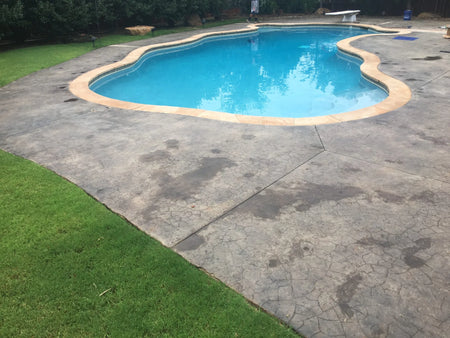
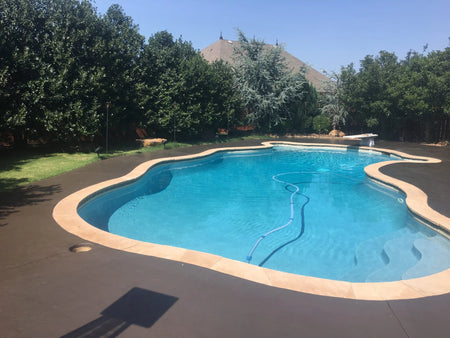
What is the best sealer for a saltwater pool deck?
A solvent-based acrylic in a satin finish — our EasySeal™ Satin — is the winner. It seals against abrasion and saltwater absorption; choose satin over high-gloss, because gloss gets slippery when wet. Add OxiGrip™ to the last coat for traction. For smooth, never-sealed concrete, a Penetrating Sealer & Hardener is a matte, one-time, highly salt-resistant option.
Is the white residue salt or hard water?
First confirm the cause. Irrigation often leaves hard-water deposits and a milky, powdery residue. Apply full-strength vinegar to a spot — if it dissolves, it's mineral deposit. If not, power-wash the salt off carefully without damaging the sealer, and let the deck fully dry before judging the result.
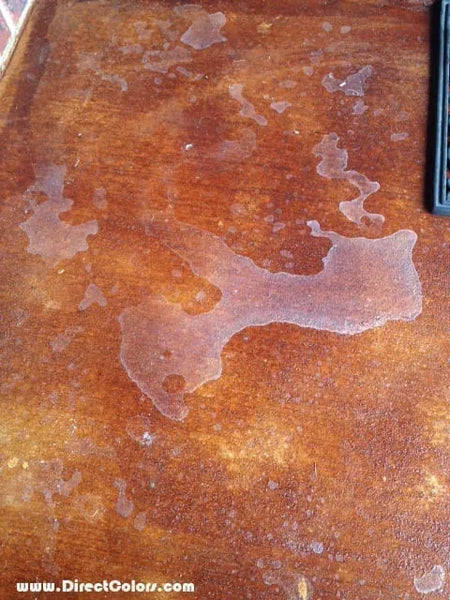
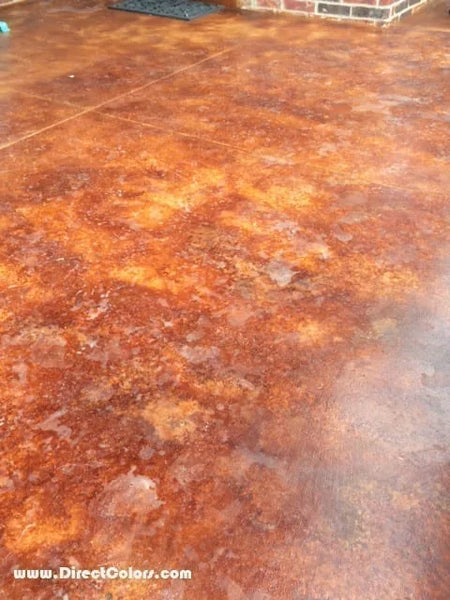
How often should I reseal a saltwater pool deck?
Most acrylic-sealed pool decks need resealing every two to three years. Once clean and dry, spray the sealer and let it dry, then repeat — two coats beat one with acrylics. A polyurea/polyurethane/urethane sealer needs light sanding before recoating, so know what was used last.
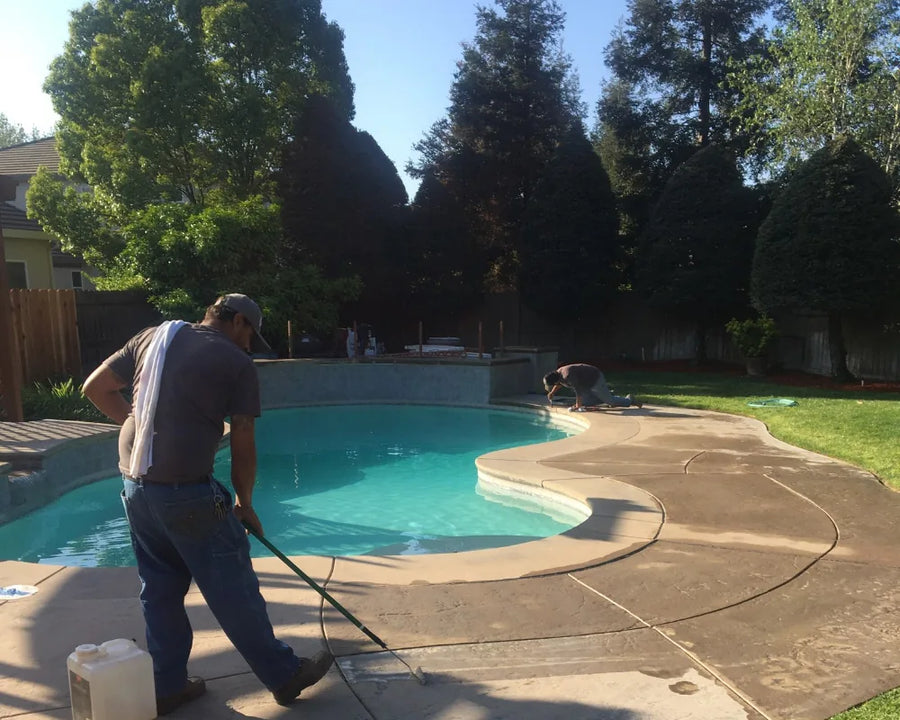
Resealing a pool deck — spray on clean, dry concrete; two coats.
How do I protect the deck day to day?
Rinse the concrete with a garden hose after heavy pool use. Salt can wear the sealer over time, but hosing off after parties makes a real difference in both appearance and long-term durability.
What's next
- Color ideas & real projects → Stained Concrete Pool Deck Ideas
- How to stain a pool deck → How to Stain a Concrete Pool Deck
- Sealer basics → Concrete Pool Deck Sealer Guide
- Shop → Concrete Sealers
Direct Colors. Shawnee, OK. Manufacturing the full decorative concrete system since 1997.


