
The worn leather look is one of the most striking finishes you can put on a concrete floor, a rich, mottled, multi-tone surface that reads like aged, hand-rubbed leather. It's the finish that makes a basement, game room, or living area feel warm, custom, and one-of-a-kind, and it's a favorite of ours to share because no two floors ever come out the same. This guide is the complete resource for achieving it: the right product, the right technique, the exact color combinations our customers reach for most, and real projects for each one. If you've ever called and asked "which colors give me that leather look?", this page is the answer.
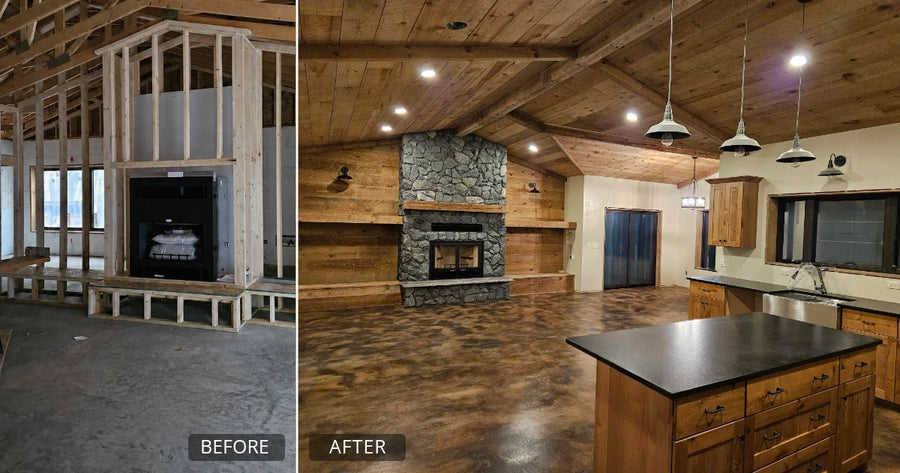
Before and after: a worn leather look floor in EverStain™ Coffee Brown and Desert Amber. A customer project by Clayton Foster.
In this guide
- What the "leather look" actually is
- Which stain is best, and why acid stain does the work for you
- The technique: wet-on-wet acid staining
- The color combinations (with real customer projects)
- Full step-by-step: how to get the leather look
- Advanced alternative: the leather look with water-based ColorWave™
- Leather look FAQs
What is the "leather look" on concrete floors?
The leather look, also called the worn leather, aged leather, or vintage leather finish, is a decorative concrete floor with soft, cloud-like color variation and no hard lines, so the surface looks like a large panel of tanned, worn-in leather. It gets its depth from layering two or three warm acid-stain colors that blend into each other and react differently across the slab. Because acid stain reacts with the concrete itself, every floor develops its own character: darker patinas where the stain pools, lighter sun-kissed areas where it thins, and a mottled, hand-finished quality you can't get from paint or a single flat color.
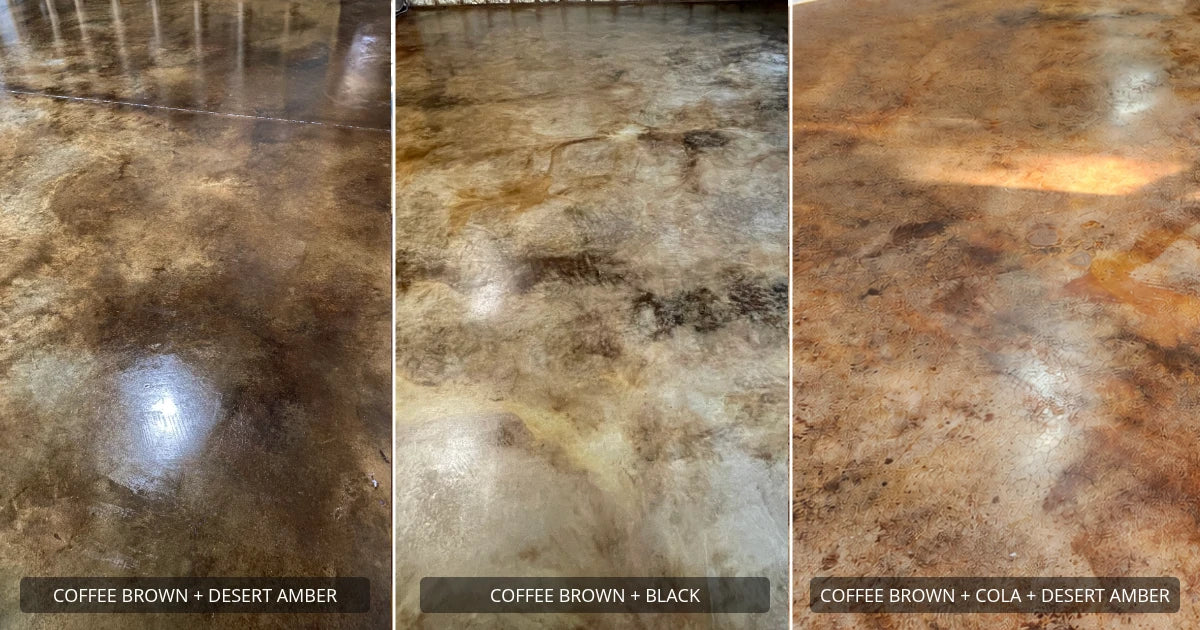
Three leather look color combinations, all made with wet-on-wet EverStain™ acid stain, proof that no two floors ever come out the same.
It's a finish that photographs beautifully, it's one of our most-pinned looks on Pinterest, and it works especially well on interior floors: basements, rec and game rooms, living rooms, hallways, kitchens, and garage-to-living-space conversions.
See real EverStain™ projects, before and after →
Which stain product is best for the leather look?
EverStain™ acid stain is the best product for the leather look, and it's not close. The reason is how acid stain works. It's a reactive stain: the acid and metallic salts chemically react with the lime in the concrete to create translucent, variegated, permanent color. That reaction is what produces the mottled, leathery depth for you. You choose the colors and lay them down; the concrete does the artistic blending on its own. That's why acid stain is so forgiving for this look: the variation you're after is a feature of the chemistry, not something you have to hand-paint.
The technique: wet-on-wet acid staining
The single most important technique for the leather look is wet-on-wet. Instead of letting one color dry before adding the next, you apply your second (and third) color while the first is still damp. The colors bleed into one another and react together, creating the soft, borderless transitions that make concrete look like leather rather than like tile or stone.
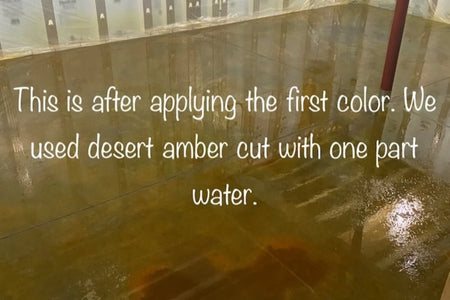
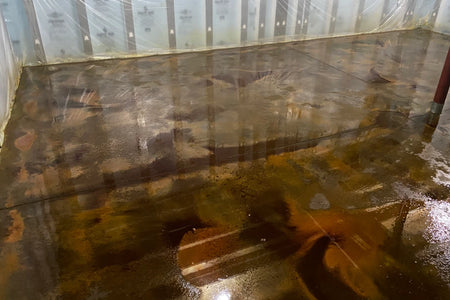
Wet-on-wet: Coffee Brown goes on while the Desert Amber is still wet, so the two blend and react together.
A few principles that make it work:
- Lightest color first. Lay down your base tone (often Desert Amber or Malayan Buff), then add the deeper colors (Coffee Brown, Cola, Black) into it while it's damp. It's much easier to add darkness than to take it away.
- Work in sections and keep a wet edge. Blend each new area into the last so you don't get hard start/stop lines. Spray, then feather with a brush, sponge, or rag for extra movement.
- Let the reaction do the work. The color you see wet is not the final color. The reaction develops over hours. Resist the urge to overload the floor.
- Vary your hand. Real leather is irregular. Change your spray distance and overlap so no two areas match. Random beats uniform every time.
Want the full color-layering walkthrough? See Using Two or More Acid Stain Colors, and for reaction timing, How to Acid Stain Concrete.
Rather have someone walk you through it? Call us at (877) 255-2656.
Leather look color combinations (with real customer projects)
This is the part customers call about most: which colors give the leather look? Every combination below is EverStain™ acid stain. Keep your recipe within the acid-stain line, since color names don't cross over to other products. These four are the combinations our customers submit for project photos again and again, from warm and rustic to cool and modern.
| Color combination | Leather look | Best for |
|---|---|---|
| Desert Amber + Coffee Brown | Soft, warm, sun-kissed | The most popular. Neutral, rustic, farmhouse spaces |
| Coffee Brown + Cola + Desert Amber | Vibrant, rich, dramatic | Bold statement rooms, game rooms, high color variation |
| Coffee Brown + Black | Deep, bold, high-contrast | Dramatic, aged, dark-patina leather |
| Black + Malayan Buff + Seagrass | Subtle, cool, understated | Modern, marble-like, neutral palettes |
- Desert Amber + Coffee Brown: Soft, warm, sun-kissed. The most popular. Best for neutral, rustic, farmhouse spaces.
- Coffee Brown + Cola + Desert Amber: Vibrant, rich, dramatic. Best for bold statement and game rooms.
- Coffee Brown + Black: Deep, bold, high-contrast. Dramatic, aged, dark-patina leather.
- Black + Malayan Buff + Seagrass: Subtle, cool, understated. Modern, marble-like, neutral palettes.
Not sure which combination is right for your concrete? An acid stain trial kit comes with three colors, perfect for testing and practicing any of these combinations on a hidden area or a spare piece of concrete before you commit to the whole floor. Since acid stain reacts differently on every slab, it's the best way to see your exact colors first.
Shop Acid Stain Trial Kits: test your color combo first →
1. Desert Amber + Coffee Brown: the most popular
This is the combination people reach for most, and for good reason: it's the softest, warmest, most natural-looking leather tone. Desert Amber lays down golden, tan highlights; Coffee Brown grounds it with rich mid-brown depth. The result is a sun-kissed, rustic finish with gentle transitions, right at home in farmhouse, industrial, and neutral interiors.
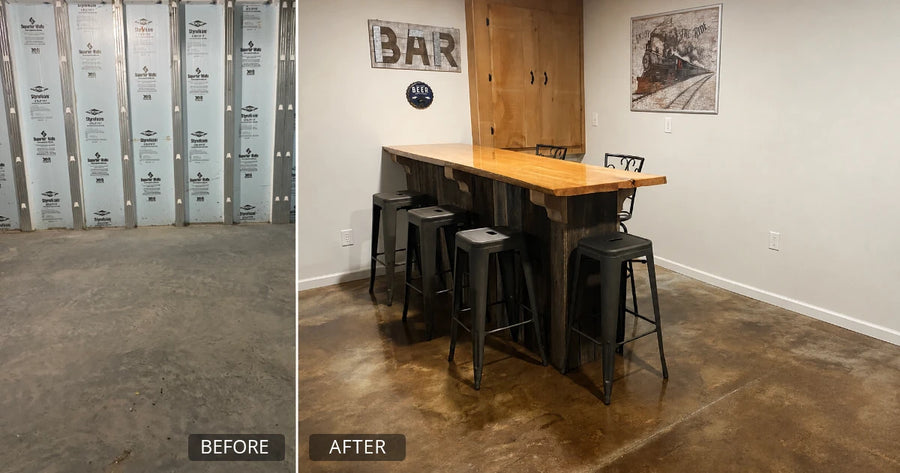
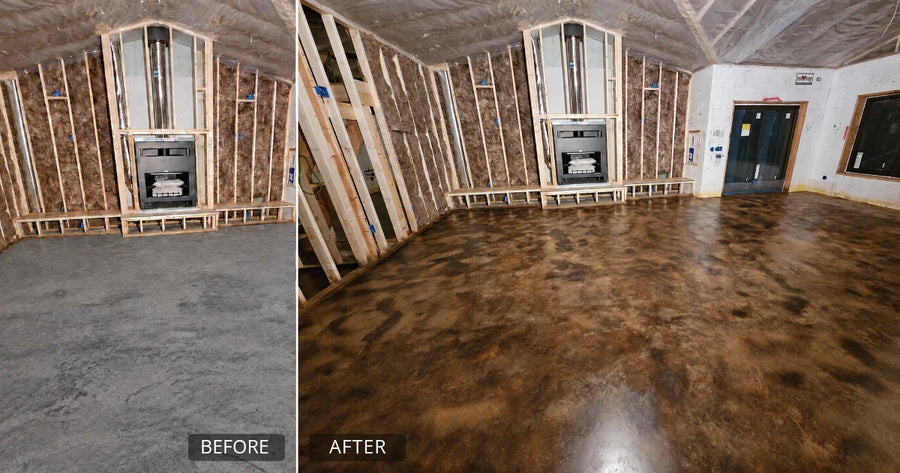
Before and after: Kimberly Raley's 400 sq. ft. basement in EverStain™ Desert Amber and Coffee Brown.
Kimberly Raley used exactly this pair on a 400 sq. ft. basement rec room, done over 8 days before drywall went up. In her words: "We are very amateur DIYers, so if we can do this, anyone can! We chose Desert Amber and Coffee Brown as our two-color acid stain process." The space was styled French-country farmhouse with a reclaimed-wood feature wall and a sliding barn door, and the leather-look floor tied it together so well they planned to repeat it in phase two of the basement.
Clayton Foster used the same Desert Amber + Coffee Brown pair. Here's his before and after:
Before and after: Clayton Foster's Desert Amber and Coffee Brown floor.
2. Coffee Brown + Cola + Desert Amber: vibrant and dramatic
Add Cola to the mix and the look turns richer and more dynamic. This three-color recipe gives the boldest, most multi-dimensional leather finish, with strong transitions between warm mid-browns and deep cola tones over a Desert Amber base. It's the choice for a room that's meant to make a statement.
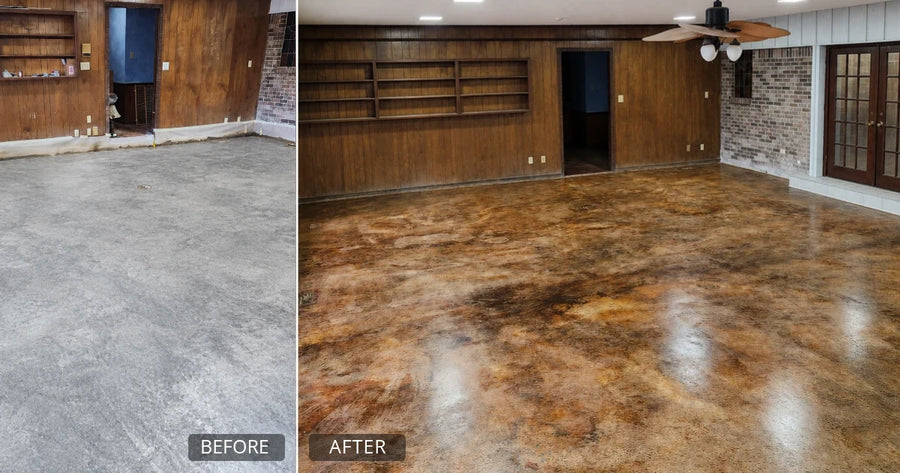
Before and after: Lawrence Stilman's 864 sq. ft. game room in EverStain™ Coffee Brown, Cola, and Desert Amber.
Lawrence Stilman used this trio to remodel an 864 sq. ft. game room in Lonoke, Arkansas, start to finish in just 4 days, sealed with EasySeal™ and finished with wax and polish. The floor became the centerpiece of the room, with the depth and warmth of aged leather anchoring the whole space.
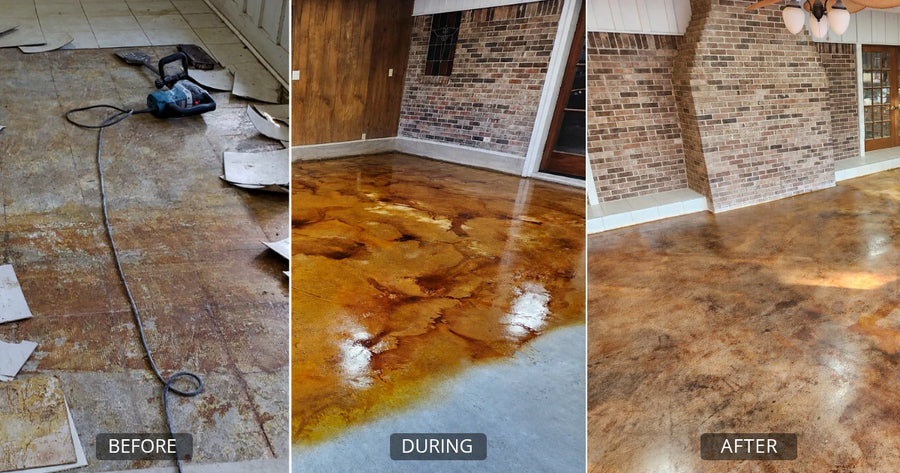
The same game room from bare slab, through wet-on-wet application, to the finished floor.
3. Coffee Brown + Black: deep and dramatic
For the darkest, most aged leather, pair Coffee Brown with Black. The Black adds dramatic contrast and shadow, creating striking transitions between medium and near-black tones, the look of a well-worn, darkened leather with rich patina. It's bold, high-contrast, and full of depth.
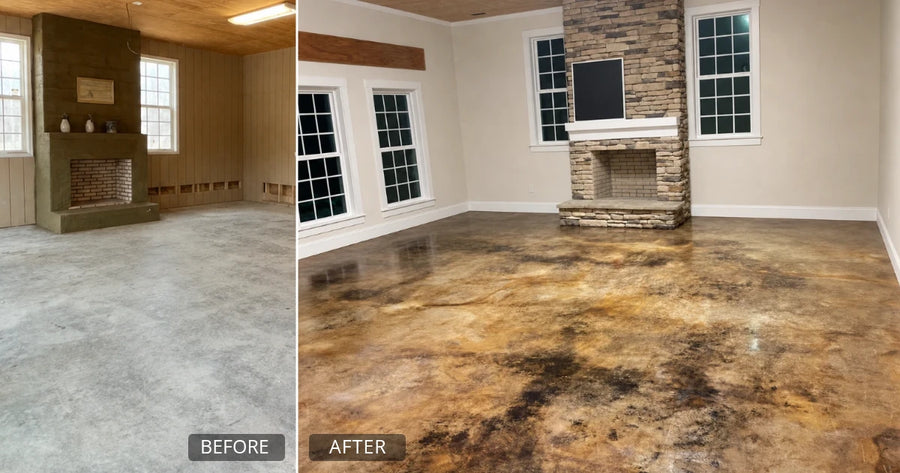
Before and after: a deep, high-contrast leather look in EverStain™ Coffee Brown and Black. A customer project by Karissa Hutchison.
Karissa Hutchison used this pair for a rich, worn-leather floor, Coffee Brown and Black laid wet-on-wet, then sealed and topped with ProWax Polish™ for a smooth, polished finish. The high contrast makes every variation in the stain read, giving the floor the depth of aged, darkened leather.
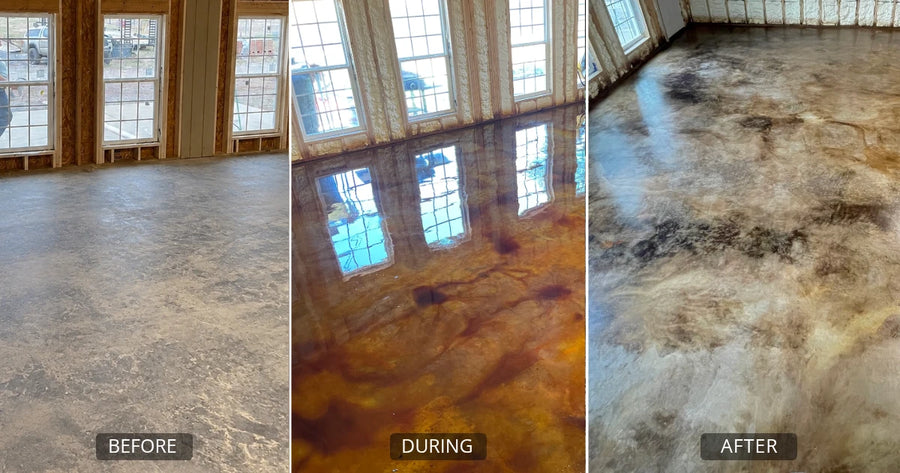
Wet-on-wet application through to the sealed, polished result, Karissa Hutchison's Coffee Brown and Black floor.
4. Black + Malayan Buff + Seagrass: cool and understated
The surprise favorite. Instead of warm browns, this trio goes cool and neutral: Malayan Buff and Seagrass add soft, earthy highlights while Black grounds the look without overpowering it. The effect is the most subtle and modern of the four, smoother, more marble-like, and less dramatic, a refined worn-leather finish for contemporary spaces.
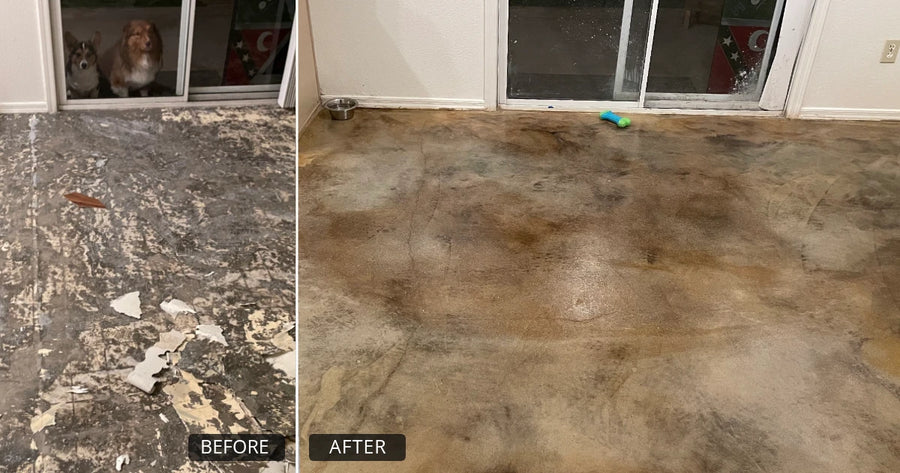
Before and after: Brendan Crouse's 900 sq. ft. remodel in EverStain™ Black, Malayan Buff, and Seagrass.
Brendan Crouse and his wife used this combination across 900 sq. ft. of living room, hallway, and kitchen, replacing tired carpet and vinyl. They were after a modern, "marble-style" finish that would hold up for 10+ years, done in 5 days. His hard-won tips are some of the best we've collected:
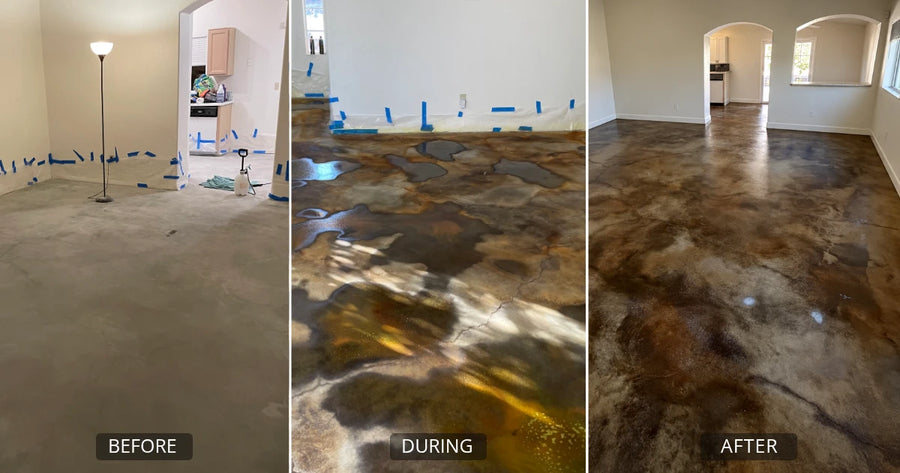
The same 900 sq. ft. remodel from bare slab, through application, to the finished floor.
How to get the leather look, step by step
Here's the full process from bare slab to finished, sealed leather-look floor. It follows the standard acid-staining workflow, with wet-on-wet layering as the heart of it.
- Clean and prep the concrete. Remove any dirt, oil, coatings, or sealer with a cleaner or degreaser so the acid stain can react evenly. See concrete surface preparation.
- Etch smooth, machine-troweled floors. Many basement and interior slabs are troweled so smooth they resist staining. Etch them with a concrete etcher to open the surface. Wear spiked shoes and rinse the etch completely before it dries. Dried etch leaves footprints that are miserable to remove (Kimberly's floor took ~12 scrubbings and a hand sander). Clean up the etch while it's still wet.
- Choose your colors. Pick one of the combinations above. Buy a trial kit and test on a hidden area first. Acid stain reacts differently on every slab, so a sample tells you what your concrete will actually do.
- Apply wet-on-wet. Spray the lightest color first with a pump-up sprayer, then add the deeper colors while the surface is still damp so they blend and react together. Feather with a brush or rag for movement, keep a wet edge, and vary your hand for irregular, leathery color.
- Let it react. Give the stain time to develop. The wet color is not the final color. See acid stain reaction times for guidance.
- Neutralize and clean thoroughly. Neutralize with ProClean Neutralizer™, then rinse and scrub until nothing but clear water comes up. Removing all residue is non-negotiable. Leftover residue will keep the sealer from bonding. A shop vac with a squeegee makes this dramatically faster. See how to neutralize acid stain.
- Seal. Once the floor is bone-dry, apply a sealer. For interiors we recommend a low-odor water-based sealer like AcquaSeal™, two thin coats, 12 hours apart, applied with a 3/8-inch nap roller (not a sprayer) for the most even result.
- Wax for longevity. Finish with ProWax Polish™. It protects the sealer in high-traffic areas and can be reapplied without stripping and resealing, the easiest way to keep the floor looking new.
See every stage. Kimberly's Desert Amber + Coffee Brown basement, from the etching lesson to the finished floor, proof of how different each stage looks before the final result:
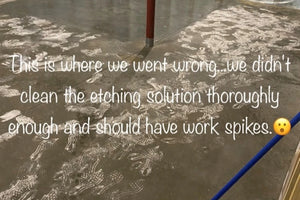
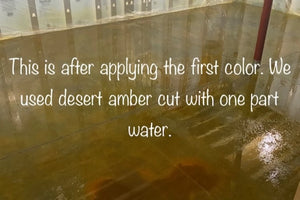
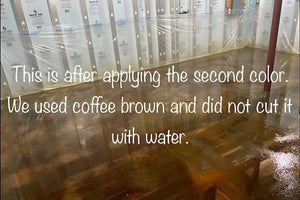
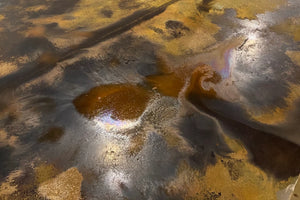
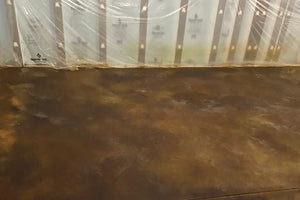
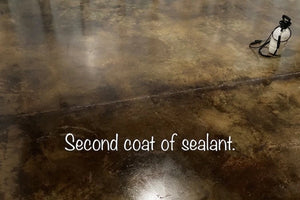
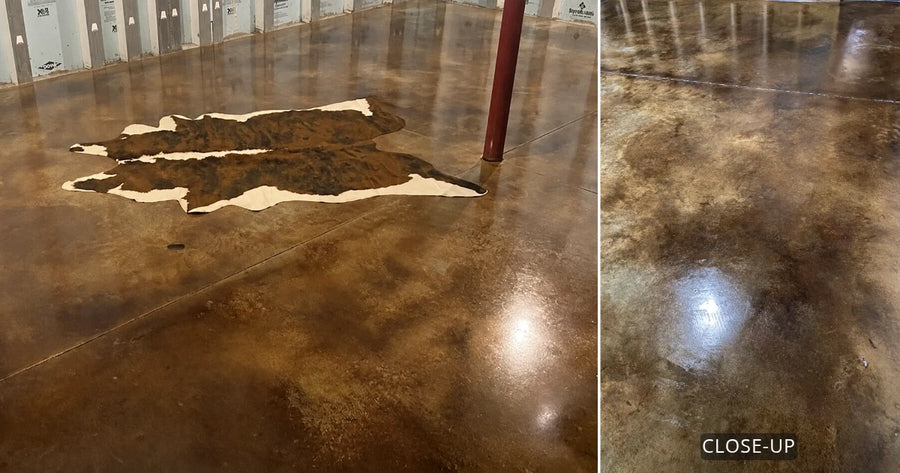
7. The finished, sealed leather-look floor, Kimberly's Desert Amber and Coffee Brown basement.
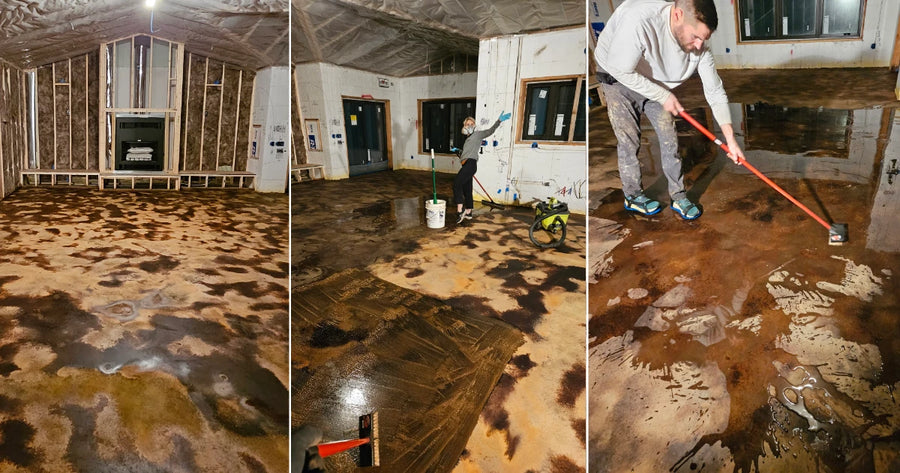
The residue step in action: neutralize, scrub, shop-vac, and rinse again until the water runs clear. Clayton Foster's project.
Advanced alternative: the leather look with water-based ColorWave™
We've had customers achieve a convincing leather look with ColorWave™ water-based stain as well. The barndominium floor below used Persimmon, Molasses, and Steel to beautiful effect. It's worth knowing this is possible, with one important caveat.
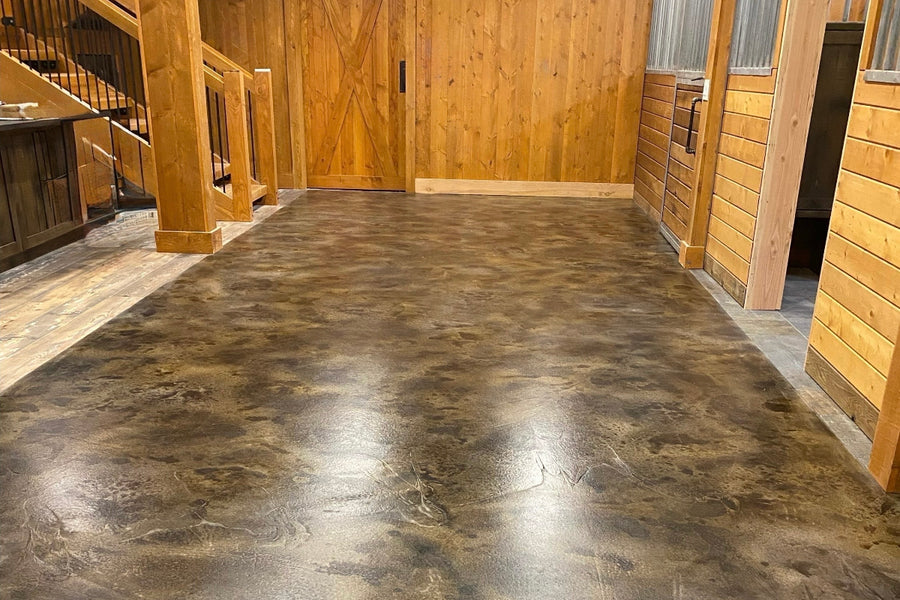
A worn leather look achieved with water-based ColorWave™ in Persimmon, Molasses, and Steel, a barndominium project by Dave and Peggy Minehan.
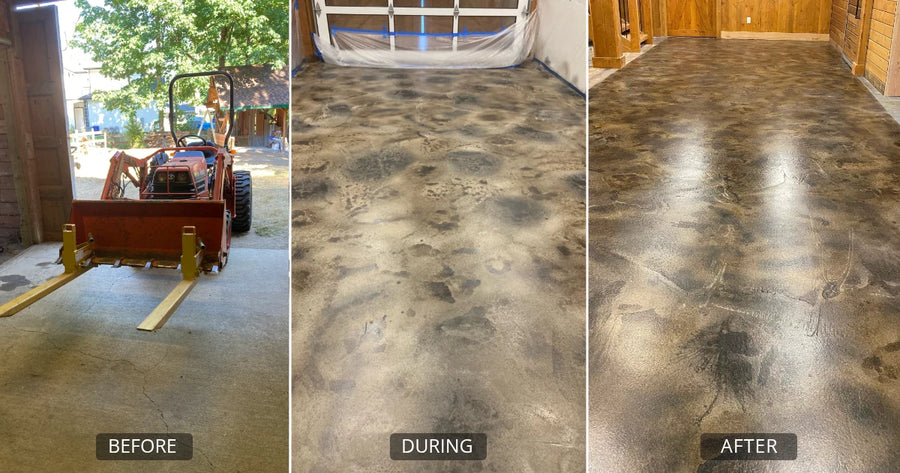
The same barndominium from bare slab, through hand-applied color, to the finished leather look. A project by Dave and Peggy Minehan.
Leather look concrete floor FAQs
What is the leather look on concrete floors?
It's a decorative acid-stained finish with soft, mottled, multi-tone color variation that makes concrete look like aged, worn leather. It's created by layering two or three warm acid-stain colors that react with the concrete, giving each floor a unique, hand-finished depth with no hard lines.
What is the best stain for a leather look on concrete?
EverStain™ acid stain. Because acid stain reacts chemically with the concrete, it produces the mottled, variegated color that makes the leather look, automatically. You choose the color combination and the reaction does the blending, which is why acid stain is the easiest and most reliable route to this finish.
What technique creates the leather look?
The wet-on-wet technique. You apply your second and third acid-stain colors while the first is still damp, so the colors bleed into one another and react together. That's what creates the soft, borderless transitions that read as leather rather than tile or stone.
What are the best acid stain color combinations for a leather look?
The four our customers use most are: Desert Amber + Coffee Brown (soft and warm, the most popular); Coffee Brown + Cola + Desert Amber (rich and dramatic); Coffee Brown + Black (deep and high-contrast); and Black + Malayan Buff + Seagrass (cool, subtle, and modern). All are EverStain™ acid stain.
Can you get a leather look with a water-based stain?
Yes, but it takes more skill. A water-based stain like ColorWave™ doesn't react with the concrete, so it won't create the variation on its own. You have to build the leather look by hand. Acid stain is easier because the chemical reaction produces the mottled color for you.
Is the leather look good for basement and interior floors?
It's one of the best applications. Basements, rec and game rooms, living rooms, hallways, and kitchens all suit it well. For interiors, use a low-odor water-based sealer like AcquaSeal™ and finish with ProWax Polish™ for durability.
Will my floor look exactly like the photos?
No, and that's the point. Because acid stain reacts with your specific concrete, every leather-look floor comes out one-of-a-kind. Two floors done with the same colors will differ in their patterns and depth. Always test your colors on a hidden area first with a trial kit so you know how your slab will react.
How do you protect and maintain a leather-look floor?
Neutralize and clean thoroughly, seal with two thin coats, then apply ProWax Polish™. The wax takes the wear in high-traffic areas and can be reapplied without stripping and resealing, keeping the finish looking new for years.
What's Next
- The full staining method → How to Acid Stain Concrete
- Layering colors wet-on-wet → Using Two or More Acid Stain Colors
- Neutralizing before you seal → How to Neutralize Concrete Acid Stain
- Prepping the slab → Concrete Surface Preparation
- Shop → EverStain™ Acid Stains · Trial Kits · ProWax Polish™
Direct Colors. Shawnee, OK. Manufacturing the full decorative concrete system since 1997.


