
Staining is the fastest, most affordable way to transform an outdoor concrete patio, driveway, pool deck, or walkway — and it's genuinely a do-it-yourself project. The only real decision up front is which stain to use, because the right one depends on your surface and the look you're after. This page is the map: a quick overview of every option, how to tell which is right for you, and a link to the full step-by-step for your specific project.
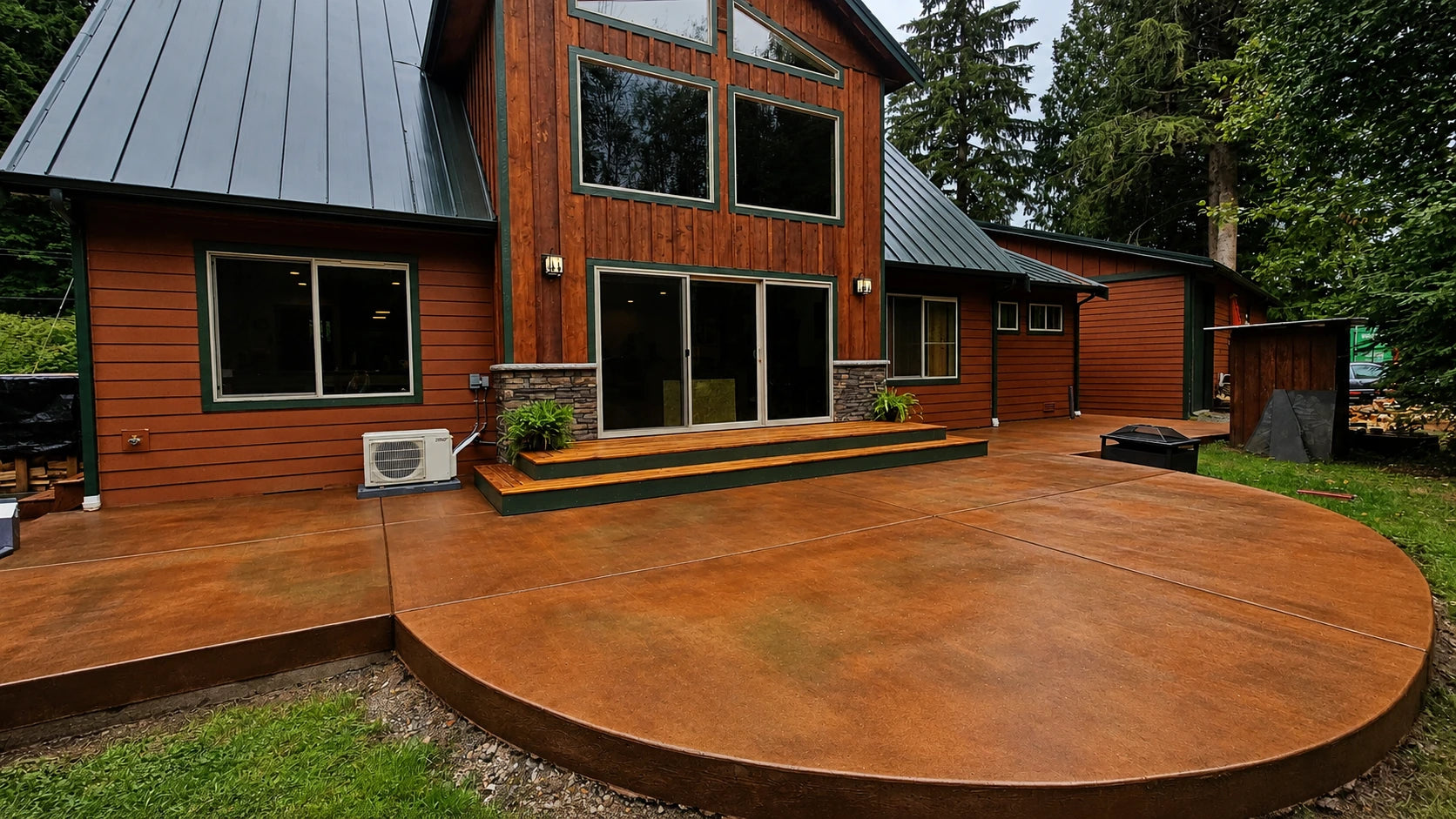
The right stain turns tired outdoor concrete into the best-looking surface in the yard.
Which stain is right for your concrete?
There are four ways to add color to outdoor concrete. Each has a look it does better than anything else — here's the quick version, with a link to the full guide for each.
| Product | The look | Best for |
|---|---|---|
| Antiquing™ Stain | Antique & aged — light high points, rich recesses | Stamped & textured concrete; reviving a faded stamped patio |
| ColorWave™ (water-based) | Smooth, even, uniform color | A consistent, modern all-over color |
| EverStain™ Acid Stain | Marbled, variegated, one-of-a-kind | Clean, bare, good-quality concrete |
| EasyTint™ / AcquaTint™ tinted sealer | Even, semi-transparent color — colors & seals in one step | The fastest way to add or refresh a uniform color |
- Antiquing™ Stain — antique, aged look with light highs and rich recesses. Best for stamped & textured concrete and reviving faded stamped patios.
- ColorWave™ (water-based) — smooth, even, uniform color. Best for a consistent, modern all-over color.
- EverStain™ Acid Stain — marbled, variegated, one-of-a-kind. Best for clean, bare, good-quality concrete.
- EasyTint™ / AcquaTint™ tinted sealer — even, semi-transparent color that colors and seals in one step. The fastest way to refresh a uniform color.
Pick your look
Have a specific look in mind? Jump straight to the guide that shows how to get it.
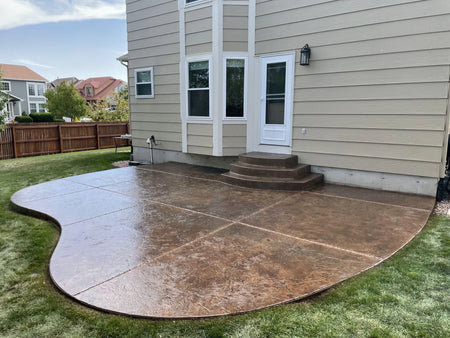

Prefer something else? Acid stain gives a marbled, one-of-a-kind look, and a tinted sealer gives smooth, even color.
Guides by surface & project
Or start from the concrete you're working on:
- Stamped or textured patios, driveways & pool decks → How to Recolor Faded Stamped Concrete
- Smooth, bare concrete → How to Apply Acid Stain to Concrete
- Patios → Stained Concrete Patio Ideas
- Driveways → Concrete Stain for a Driveway
Every outdoor stain, in three moves
Whichever product you choose, the outdoor staining process comes down to the same three steps. Your product's guide has the full detail, but here's the shape of the whole project so you know what you're signing up for.
Common questions
Can I stain outdoor concrete myself?
Yes. Outdoor concrete staining is one of the most DIY-friendly upgrades there is — most projects need only a pump sprayer, the stain, and a sealer, and finish over a weekend. Follow the step-by-step guide for your chosen product and test your color first.
Which stain should I use on stamped or textured concrete?
Antiquing™ is the answer for stamped and textured concrete — it settles into the pattern for a realistic, aged look no other stain can reproduce. One rule applies whatever stain you choose: the concrete must be clean, bare, and unsealed. If it was ever sealed, strip the old sealer off completely before staining — stain can't properly absorb into or react through a sealer.
Do I have to seal stained concrete?
Yes. Sealing protects the color from sun, weather, and traffic, and it brings the color to its full richness. For outdoor surfaces, plan to reseal every 2–3 years — a simple clean-and-recoat, no re-staining needed.
How long does stained outdoor concrete last?
The color itself is long-lasting — reactive and topical stains both become part of or bond into the surface. The sealer is the wear layer and is what you refresh over time. Reseal every 2–3 years outdoors and the finish can look great for many years.
What's Next
- Stamped & textured → How to Recolor Faded Stamped Concrete
- Wood look → How to Make Concrete Look Like Wood
- Marbled, reactive → How to Apply Acid Stain to Concrete
- One-step color → Tinted Sealer Colors: Before & After
- Shop → Antiquing™ Stain · EverStain™ Acid Stains · ColorWave™ · Tinted Sealers · Trial Kits
Direct Colors. Shawnee, OK. Manufacturing the full decorative concrete system since 1997.


