
Acid staining a concrete basement floor adds color and character for very little money. This is one DIYer's real second-time-around project — a sectioned basement where the laundry/workout area got an Azure Blue and Coffee Brown acid-stained floor — with every step, from prep to final wax.
Prefer to listen? Shawna Turner covered the fast alternative to acid stain for a basement floor. The player is at the end of this article.
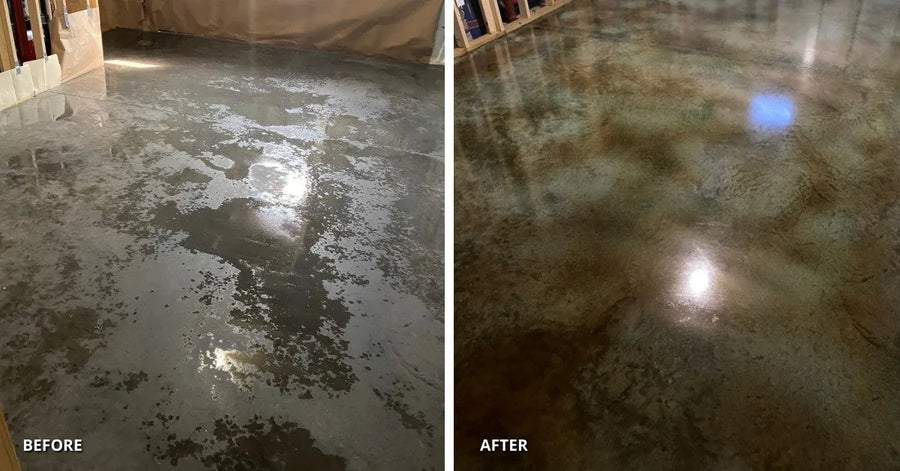
Before and after — a basement floor acid-stained with EverStain™ Azure Blue and Coffee Brown.
— Kimberly Raley
Their basement is split into three zones — a 400 sq. ft. rec room, a 300 sq. ft. laundry/workout area, and a 638 sq. ft. storage section — and this project tackled the laundry/workout floor.
1. Clean & etch
Vacuum or sweep, then mop with a concrete cleaner and degreaser. Apply an etching solution and let it sit about an hour — longer than the usual 20 minutes here, because the floors were machine-troweled — then rinse thoroughly.
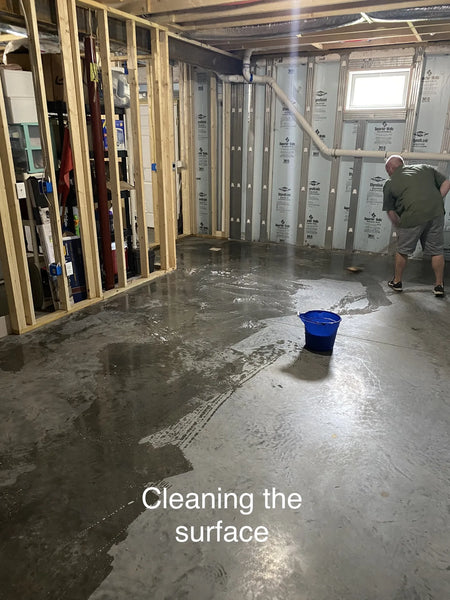
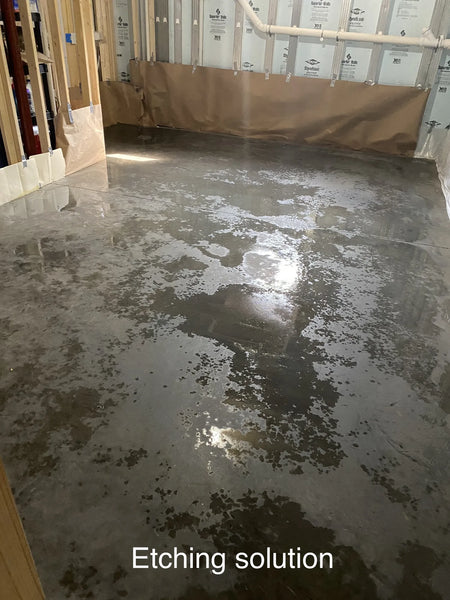
2. Spray the base color
Wearing long sleeves, pants, goggles, and gloves, apply acid stain with a pump-up sprayer. Using the wet-on-dry technique, the Azure Blue went down first and dried for about five hours.
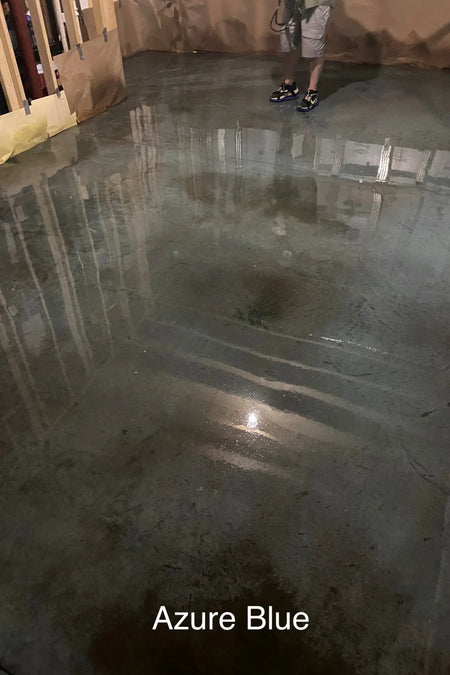
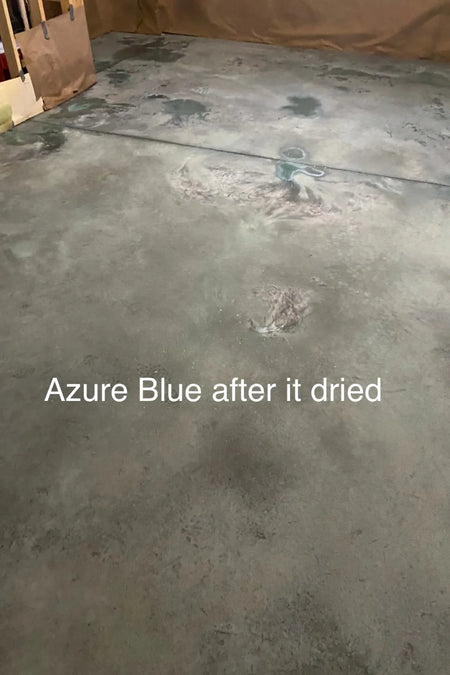
3. Add the accent color
Coffee Brown is rich and dominant, so they used it sparingly — only half of what they'd ordered — layered over the Azure Blue for depth.
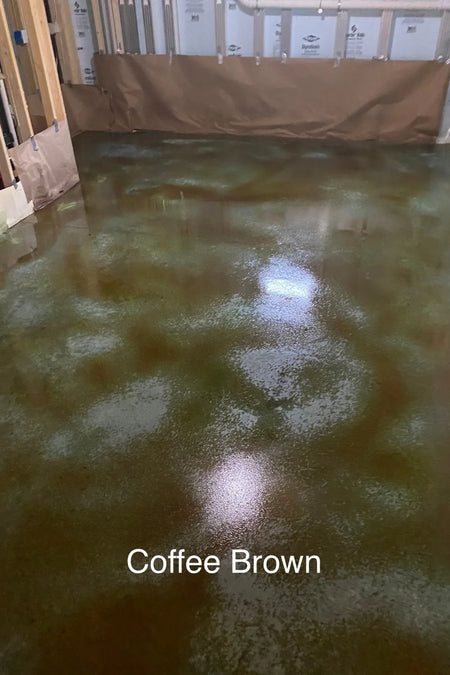
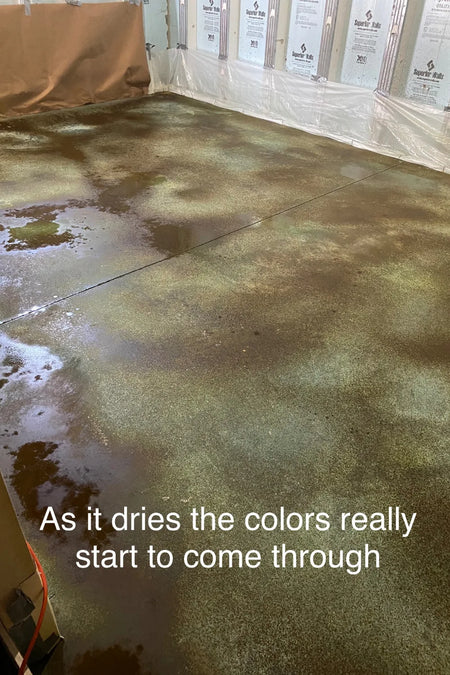
For more on combining colors, see How to Layer Two Acid Stain Colors, and for timing, How Long to Leave Acid Stain on Concrete.
4. Neutralize & rinse
Neutralize with a bucket of water and baking soda, worked in with a sponge mop, then clean up with degreaser — a couple of hose rinses before scrubbing it down.
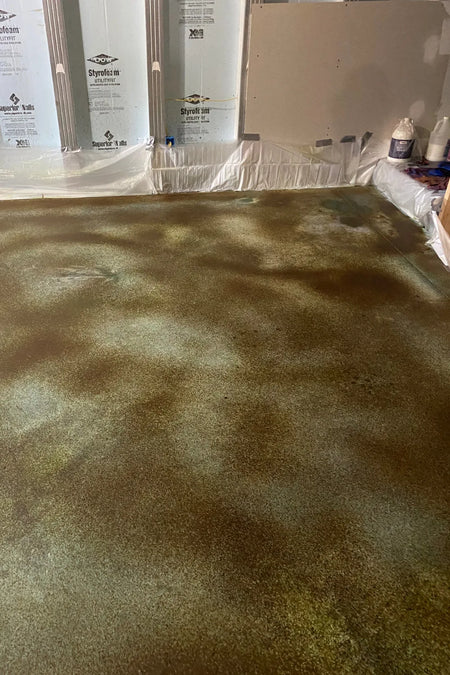
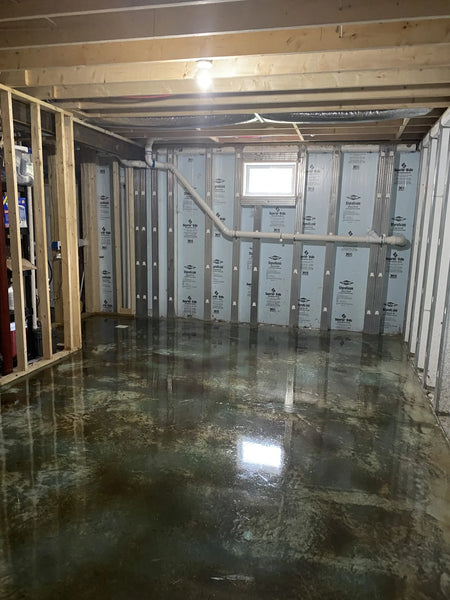
— Kimberly Raley
More detail here: How to Neutralize Concrete Acid Stain.
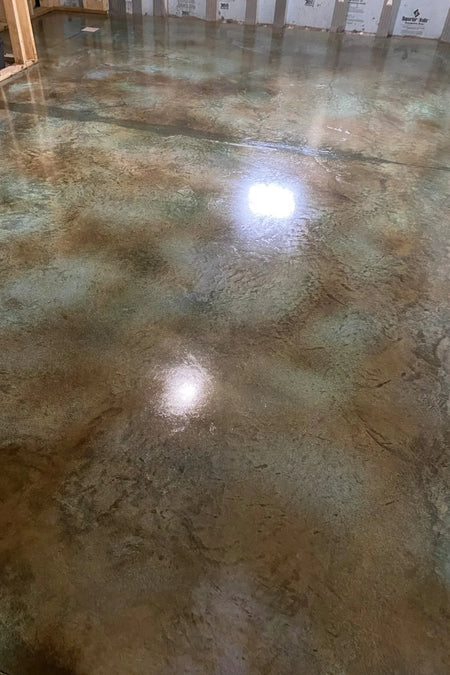
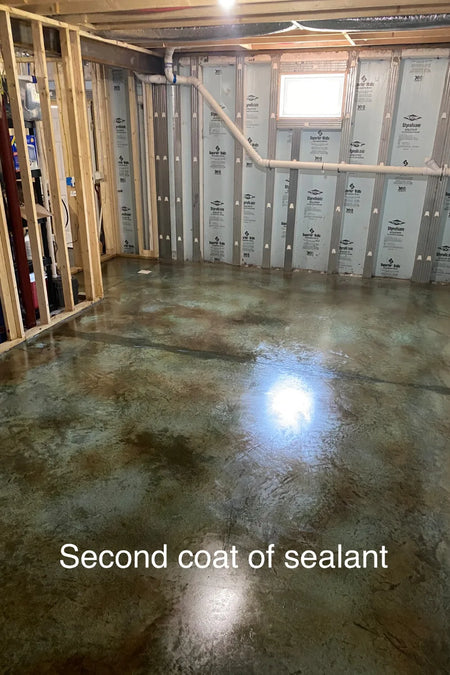
5. Seal
For basements, where smell and ventilation matter most, a water-based sealer is nearly odorless and safe around family and pets. Once fully dry, spray and squeegee the first coat, pushing mostly forward to limit lines. Apply thin coats to avoid puddling and let each dry 12 hours.
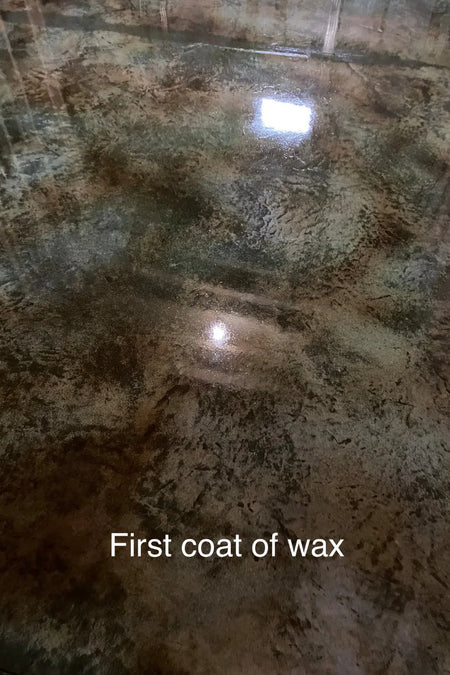
6. Wax
Finish with ProWax Polish™: soak a trim-pad applicator, wring it out, and spread a thin, milky coat — it dries clear. Smooth out any foaming, let it dry 12 hours, apply a second coat, then wait 24 hours before using the floor.
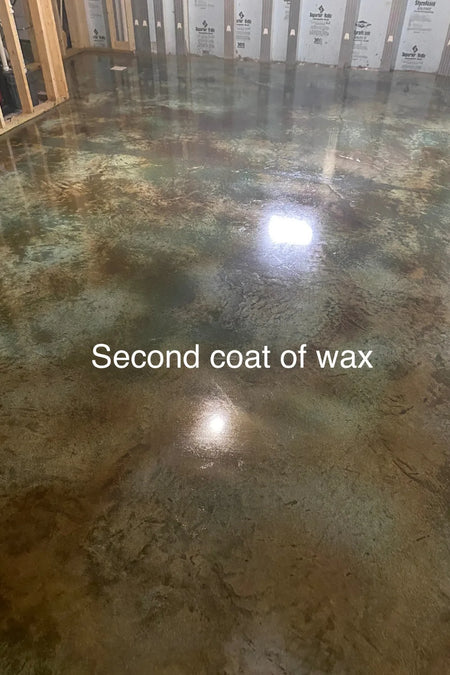
More from this basement
The same DIY approach turned other sections of the home into a warm rec room and, elsewhere, a bright acid-stained art studio.
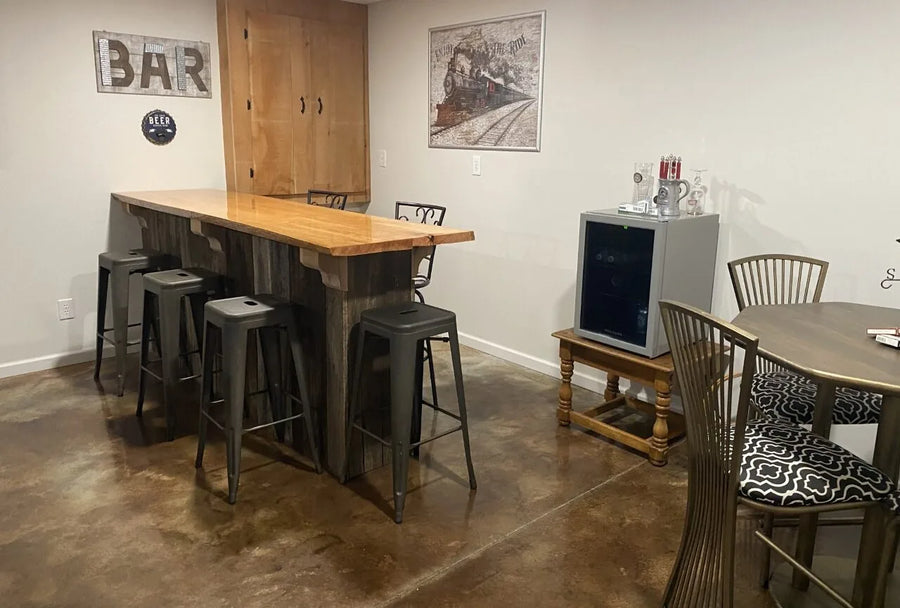
A finished Coffee Brown and Desert Amber rec-room floor elsewhere in the home.
Common questions
What is the fastest way to color a basement floor?
A tinted sealer, not acid stain. EasyTint™ goes on in one or two coats depending on the color and gloss you want, then gets waxed — the whole job runs about 48 hours including dry time. Acid stain gives a variegated look a tinted sealer cannot match, but if the priority is speed or cost, this is the route.
Will a tinted sealer look like floor paint?
No, because it is translucent rather than opaque. The character of the concrete still reads through the color, which is exactly what separates it from paint. That also means the slab underneath still matters — you are tinting it, not covering it.
Why use a water-based sealer in a basement?
Odor. A basement is a confined space, often with poor ventilation, and solvent fumes become genuinely unpleasant there. Water-based products are low odor and can be applied in an occupied home. This is the same reasoning that runs through all our basement advice.
How do concrete dye and tinted sealer work together?
Base color first, accents second. One or two coats of tinted sealer change the overall floor color, then Vibrance™ dye goes on top for contrast — Stormy Gray, Charcoal, Black and White are the usual picks for an industrial look on a gray floor. Apply a coat of sealer before spraying the dye, and note the dye dries essentially instantly, so the pace is set by the prep rather than the color.
Listen to this episode
Direct Colors DIY Home Improvement · Episode 31
Fast, Easy Basement Floor Color Options
Tommy Carter and Shawna Turner · 5 min 32 sec · read the full transcript
What's Next
- Full basement how-to → How to Stain a Concrete Basement Floor
- See more projects → Stained Concrete Basement Floor Ideas
- Layer two colors → How to Layer Two Acid Stain Colors
- Shop → EverStain™ · Trial Kits
Direct Colors. Shawnee, OK. Manufacturing the full decorative concrete system since 1997.


