
A stained concrete basement floor adds color, character, and durability to a space that is usually left bare — and it is one of the most affordable ways to finish a basement. But basements come with their own rules: moisture, old carpet glue, paint, and hard-troweled slabs all have to be dealt with before you pick a color. This guide walks the whole process, from testing your slab to choosing between acid stain, water-based stain, dye, and colored sealer.
Prefer to listen? Shawna Turner covered moisture testing, profiling and sealer choice for basements. The player is at the end of this article.
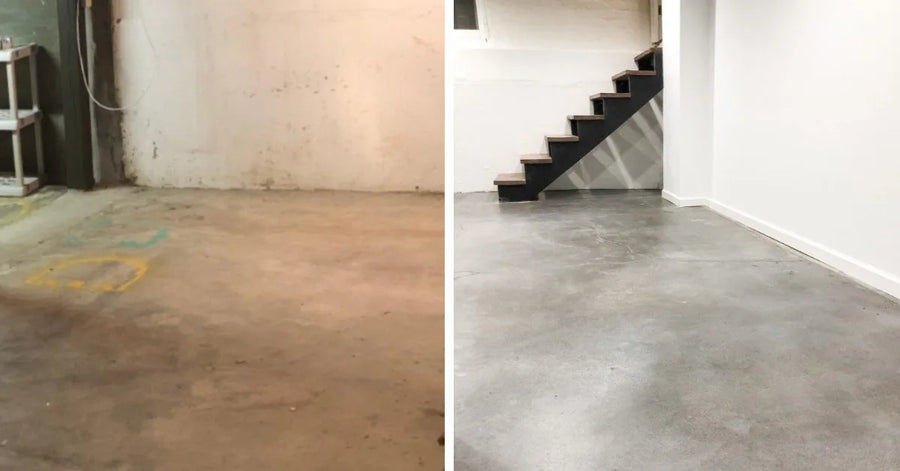
A basement floor transformed with Vibrance™ dye in Charcoal, White, and Stormy Gray — from bare slab to a polished modern finish.
Start With a Concrete Stain Trial Kit →
Start here: check for moisture
Before anything else, rule out water. Basements are prone to drainage changes, foundation cracks, and moisture rising up through the slab — and the wrong sealer will trap that vapor and fail. Inspect for leaks and dampness first, and address them before you stain.
To test slab humidity, tape a sheet of plastic tightly to the floor with duct tape and leave it for at least 48 hours. If condensation forms underneath, choose a breathable sealer or a cure-and-seal that lets water vapor pass through the coating.
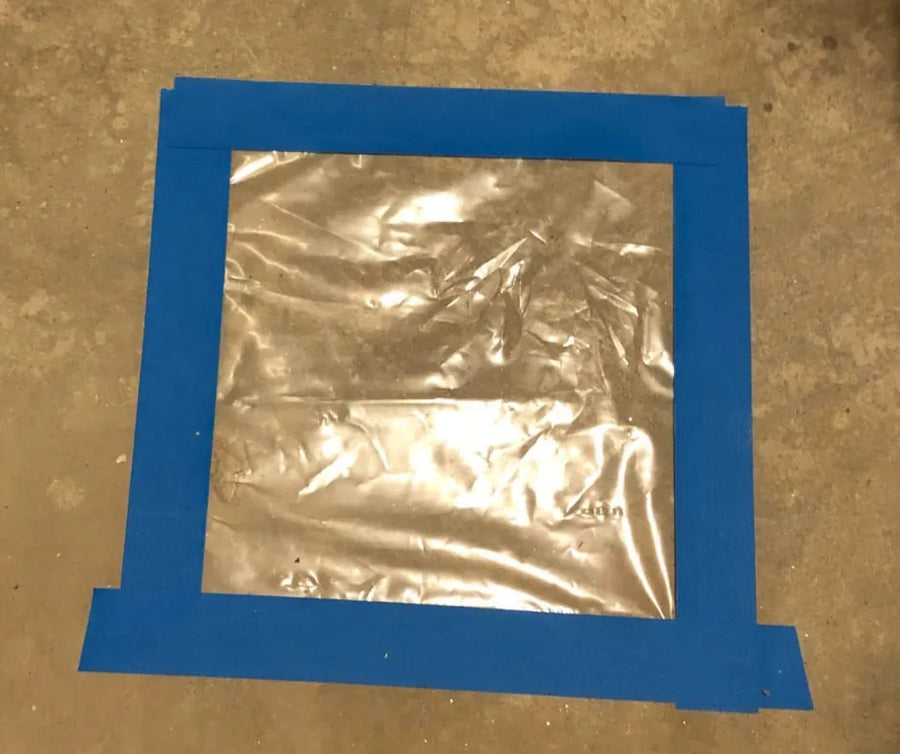
The plastic-sheet humidity test — tape it down for 48 hours and check for condensation before choosing a sealer.
Is your slab too smooth? The water test
A smooth, dense, or power-troweled slab can be hard to stain because it won't absorb color evenly. To check, pour some water on the concrete and watch what it does. If it soaks in, you're good. If it beads up or absorbs poorly, the surface is too tight and needs to be profiled first.
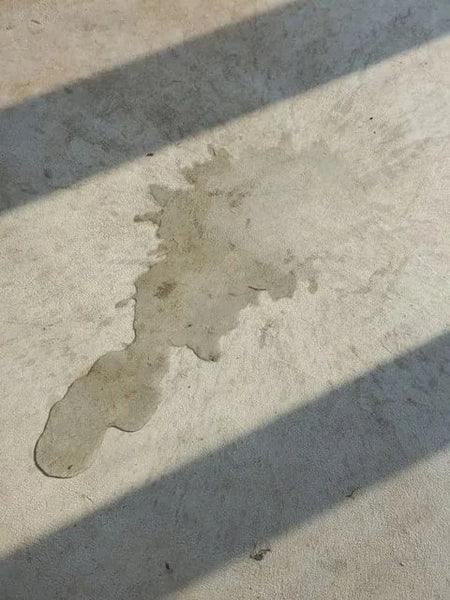
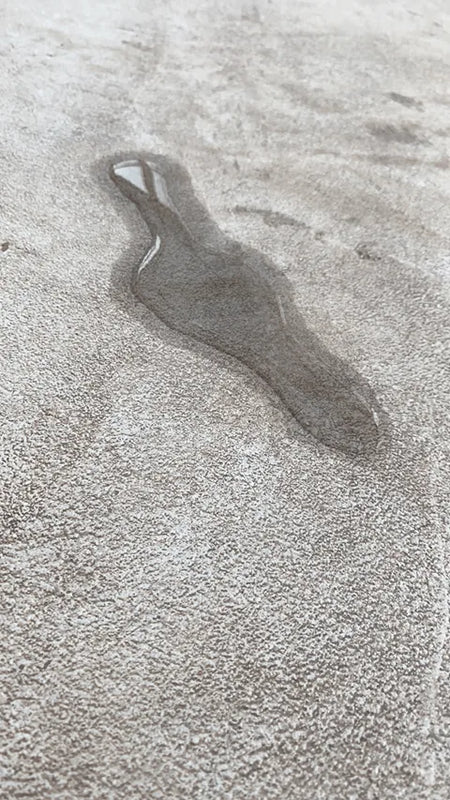
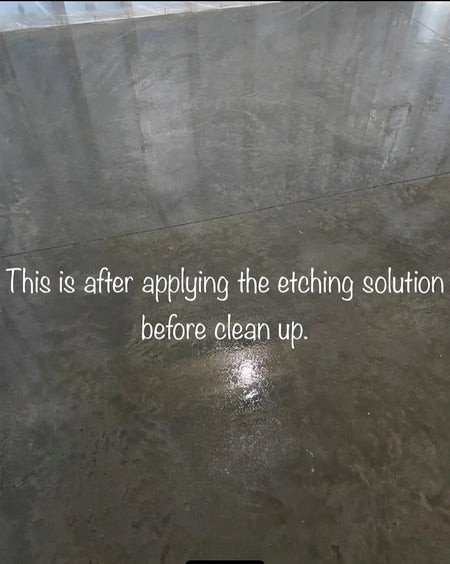
To open the pores, apply a profiling product like CitrusEtch™ concrete etcher mixed with water through a pump sprayer. After 15–20 minutes, rinse with clear water and repeat the water test. If the slab is extremely smooth or machine-troweled, you may need a full-strength floor prep or mechanical grinding.

Strip old glue, paint & coatings
Most basement floors have had carpet, tile, or paint at some point. Every bit of glue, sealer, paint, and drywall mud has to come off before staining — low-odor Mastic Remover and Soy Gel Stripper are good choices for enclosed basement spaces. Once stripped, clean the floor thoroughly with ProClean™ concrete cleaner and degreaser, rinse well, and let it dry completely.
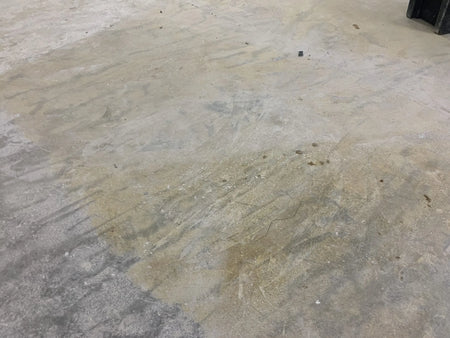
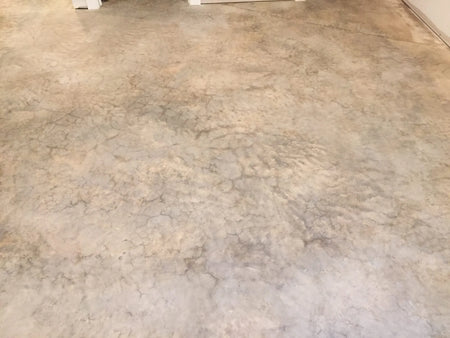
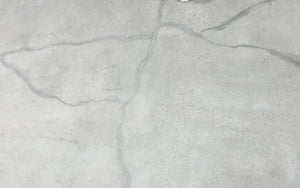
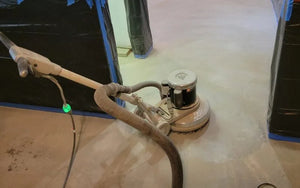
For stubborn paint or carpet glue, renting a concrete grinder gives you a clean slate. Repair any cracks with concrete patch and sand the repairs smooth so they don't telegraph through the finished color.
Choose your stain
The best product depends on the look you want and the condition of your slab. Here are the four options for a basement floor, each shown on a real customer project.
Acid stain — mottled, permanent, natural stone
EverStain™ acid stain reacts chemically with the lime in the concrete for a permanent, UV-stable, marbled finish. It's the most popular basement look — but because it's semi-transparent, the slab's own color and condition shape the result, so always test first.
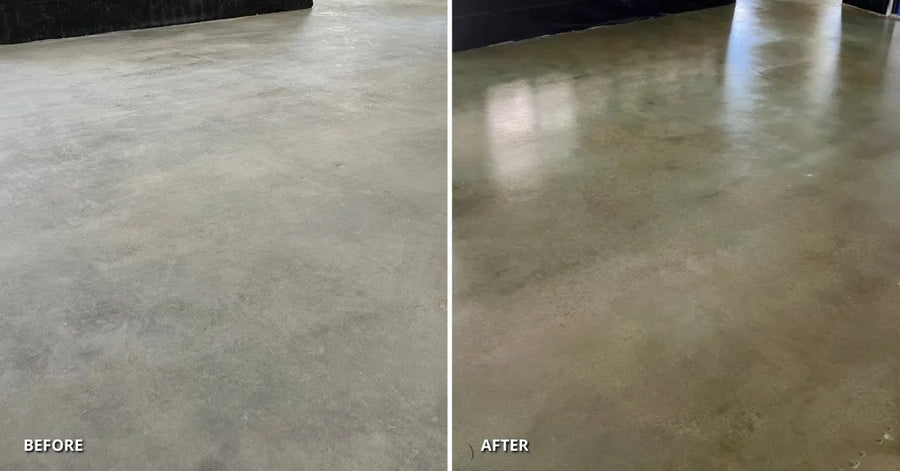
Before and after — Blackish and Seagrass EverStain™ acid stain on a concrete basement floor.
For the full walkthrough, see Acid Staining Your Basement Floor: A Step-by-Step Guide and our basement floor gallery.
Water-based stain — wide color range, predictable, low odor
ColorWave® water-based stain is easy to apply and clean up, comes in a wide range of colors, and doesn't react chemically — so the final color is more predictable and there's no strong smell. Spray it in slightly circular motions with irregular overlaps for a natural look.
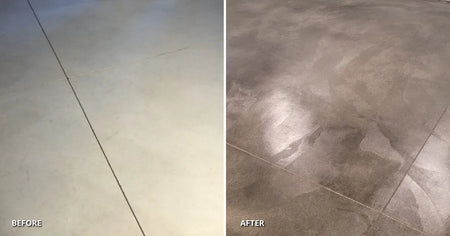
Concrete dye — bold, even, controllable color
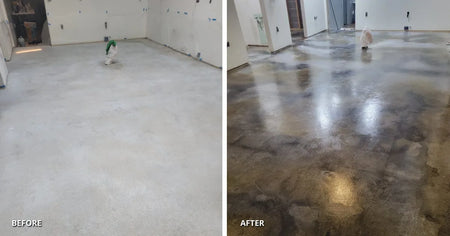
Vibrance™ dye is mixed with acetone and sprayed on in thin coats (up to four) for deep, consistent color that penetrates the pores of the concrete. It's the tool when you want solid, high-impact color rather than a mottled one. Caution: acetone is highly flammable — mix by hand, never with an electric mixer, and work in a well-ventilated area.
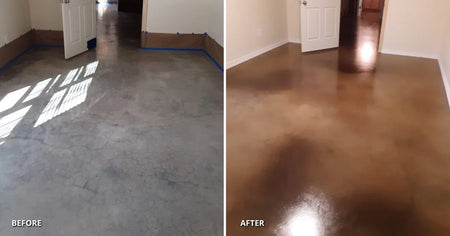
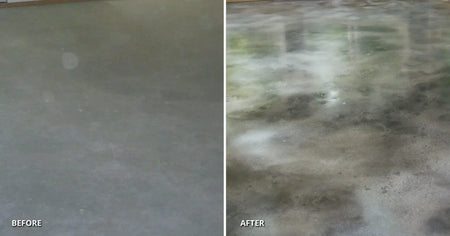
See it on a real basement in Lighten Up Your Basement With White Concrete Stain.
Colored sealer — one-step color and protection
AcquaTint™ tinted sealer is an acrylic that colors and seals in one step — rolled or sprayed on in thin, even coats. It's the simplest option for a subtle or bold color change with built-in protection, and it's low-odor for interior work.
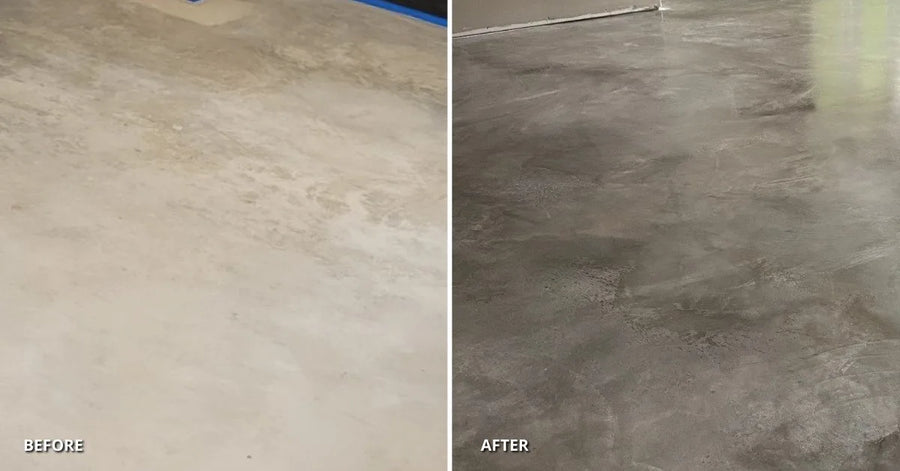
Before and after — AcquaTint™ Charcoal colored sealer on a concrete floor.
Sealing & wax
Whatever color you choose, seal it. For basements — where odor and ventilation are the biggest concerns — we generally recommend water-based sealers: they're nearly odorless and safe to apply with family and pets in the home. Match the sealer to your stain type and follow the label. For extra durability and easy cleaning, finish with a compatible concrete floor wax on top of the sealer.
Common questions
How do I know if my basement floor needs profiling before acid staining?
Pour water on it. If it beads for several seconds rather than soaking in, the surface is too smooth and closed to take stain. Basements and garages are usually the smoothest slabs in the house, so expect to profile. CitrusEtch™ cut 1:1 with water, sprayed from a garden sprayer and rinsed off with clear water 15–20 minutes later, handles most slabs; use it full strength on very smooth concrete. Grind instead if there is significant paint, glue or drywall mud.
How do I check a basement slab for moisture before sealing?
Tape a small sheet of plastic tight to the floor with duct tape and leave it at least 48 hours. Condensation underneath means vapor is coming up through the slab, and you need a breathable or cure-and-seal sealer that lets water vapor pass through the coating. Do this before you choose a sealer — and fix any actual seepage before you finish the floor at all.
Can I use a solvent-based sealer in a basement?
Only in a walk-out basement with doors and windows open, and even then with caution. Basements are usually poorly ventilated and solvent fumes become overwhelming in a confined space — this is a safety point, not a preference. Breathable water-based sealers are the sensible choice underground: AcquaSeal™, or ProSeal Li™ where you want no film at all.
Which acid stain colors work in a basement?
All ten EverStain™ colors can be used, but light matters more down there than anywhere else. Basements are often poorly lit, and Coffee Brown or Blackish can tip the room into a dungeon. Those two also have the strongest smell during application, so you will want ventilation to the outside or a respirator. Test combinations on the actual slab before committing.
Listen to this episode
Direct Colors DIY Home Improvement · Episode 13
Acid Staining Basement Floors
Amie Nolen and Shawna Turner · 8 min 14 sec · read the full transcript
What's Next
- See real projects → Stained Concrete Basement Floor Ideas
- Acid-stain a basement step by step → Acid Stain Concrete Basement Floor
- Go light & bright → White Concrete Stain & Overlay Basement Floors
- How to apply acid stain → How to Apply Acid Stain to Concrete
- Shop → EverStain™ · Trial Kits
Direct Colors. Shawnee, OK. Manufacturing the full decorative concrete system since 1997.


