
Winterizing outdoor concrete means keeping water out of it before the first freeze.
 OnePatch and repair
 TwoReseal
 ThreeCover countertops
 FourBring decor inside
 FiveDrain what stays out
Already cold where you are? Jump to how cold is too cold to seal.
Water that soaks in freezes and expands, and concrete has nowhere to put that pressure, so it cracks and flakes from the inside. Five steps do it: patch cracks, reseal, cover countertops, bring portable decor inside, and drain what you cannot move.
A bottle of water in the freezer has crinkled sides so it can expand without bursting; concrete has no such option.
Prefer to listen? Shawna Turner covered freeze-thaw damage and fall sealing in a short podcast episode. The player is at the end of this article.
Before the first freeze
Temperatures are the application ranges on each Direct Colors data sheet, checked October 2026.
Shop Acrylic Concrete Sealers →
Patch and repair
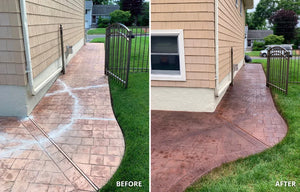
Fix cracks and broken patches now, while you still can. A patching compound handles small cracks and tack holes; larger areas take patching compound combined with a cement-based overlay. Every crack you leave is somewhere water will get in and freeze.
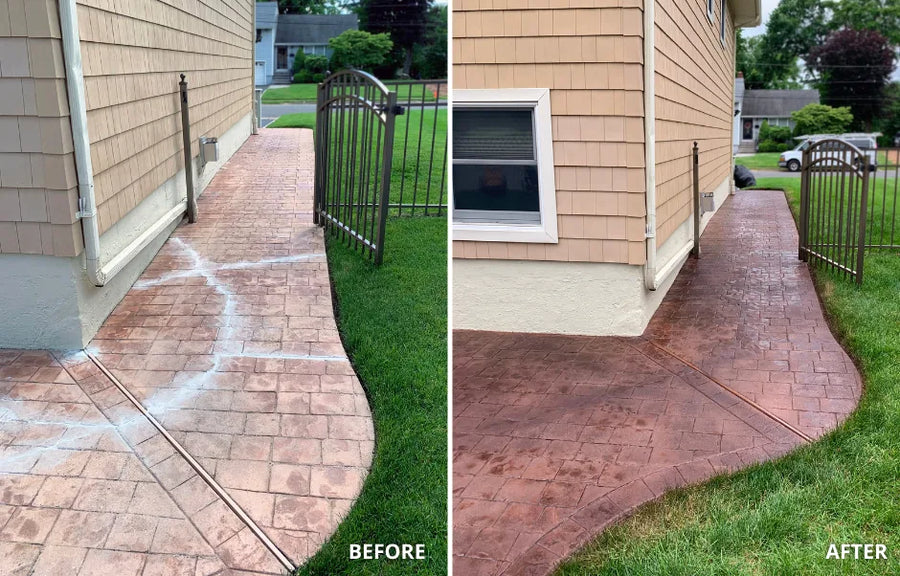
Repairing concrete cracks before winter.
Reseal: early fall is the moment
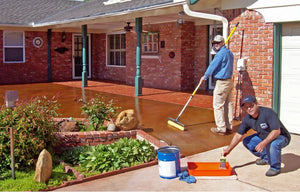
Sealing is the actual defense. A penetrating sealer sinks in and fills the pores so water cannot, creating a non-porous surface rather than a film on top. Not sure the old sealer is still working? The water test tells you in a minute.
Still time to seal? It depends on the sealer. EasySeal™ and EasyTint™ go on down to 40°F, ProSeal Li™ needs air and surface above 45°F, and the water-based HydroCryl™, AcquaSeal™ and AcquaTint™ need 60°F. Compare all four sealers.
Cool nights bring a second trap. The slab has to stay at least 5°F above the dew point while the sealer dries, or it turns milky. How to check the dew point.
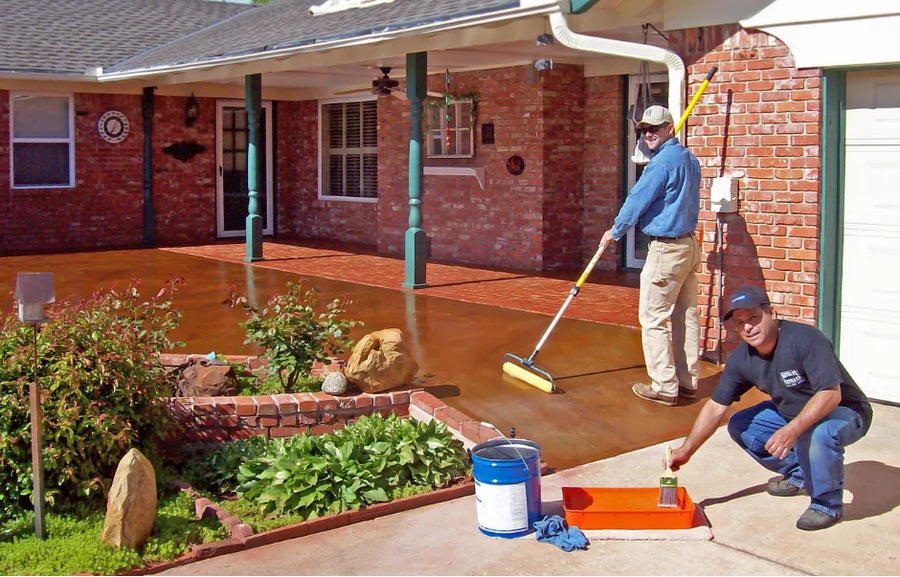
Sealing a patio while the weather is still warm.
Cover outdoor countertops
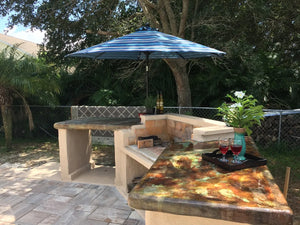
Seal them, then cover them anyway. Tarps or heavy plastic, securely fastened, especially where there are sinks, cooktops or any other cut in the concrete, since those edges are where water gets in.
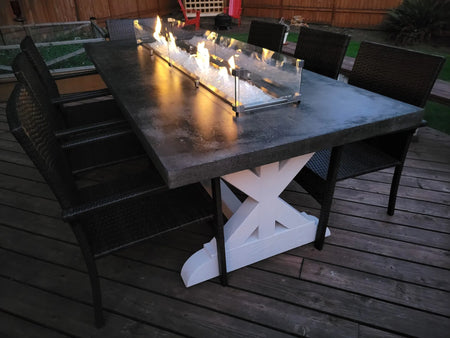
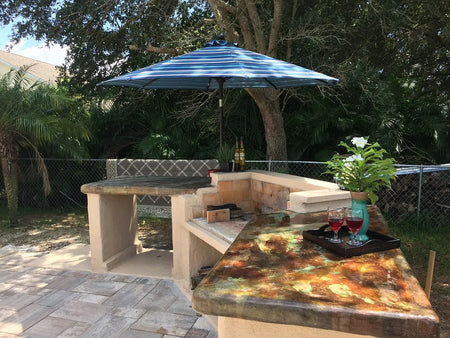
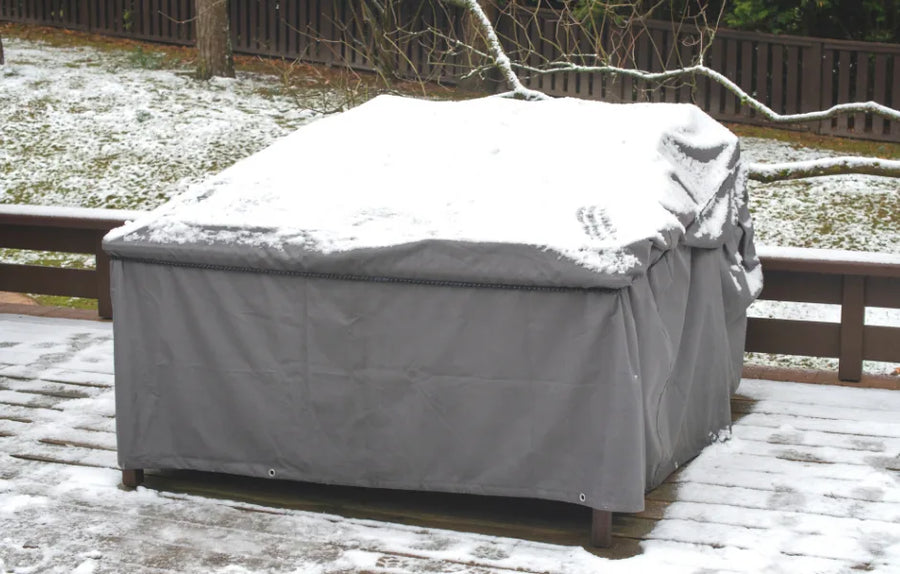
Covering outdoor furniture for the season.
Bring portable decor inside
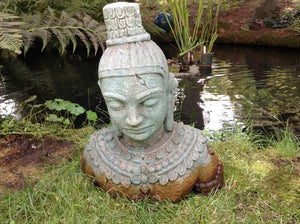
Statues, garden gnomes, movable fountains and birdbaths all come in, to the garage or shed. Turn them into temporary indoor decor, or put them somewhere covered. If they genuinely must stay out, wrap them securely in heavy plastic.
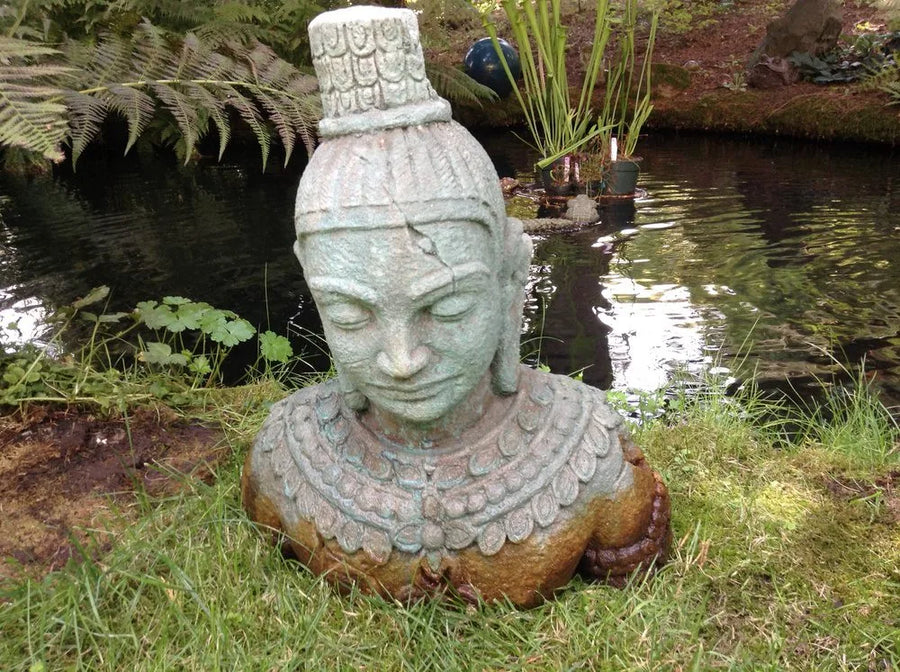
A stained garden statue: small enough to bring in for the winter.
Prepare what you cannot move
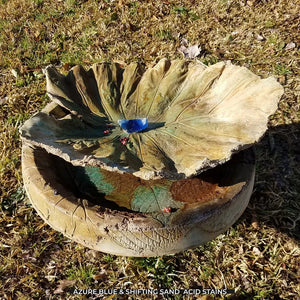
Large fountains and birdbaths hold water, and water that freezes in a bowl is what cracks it.
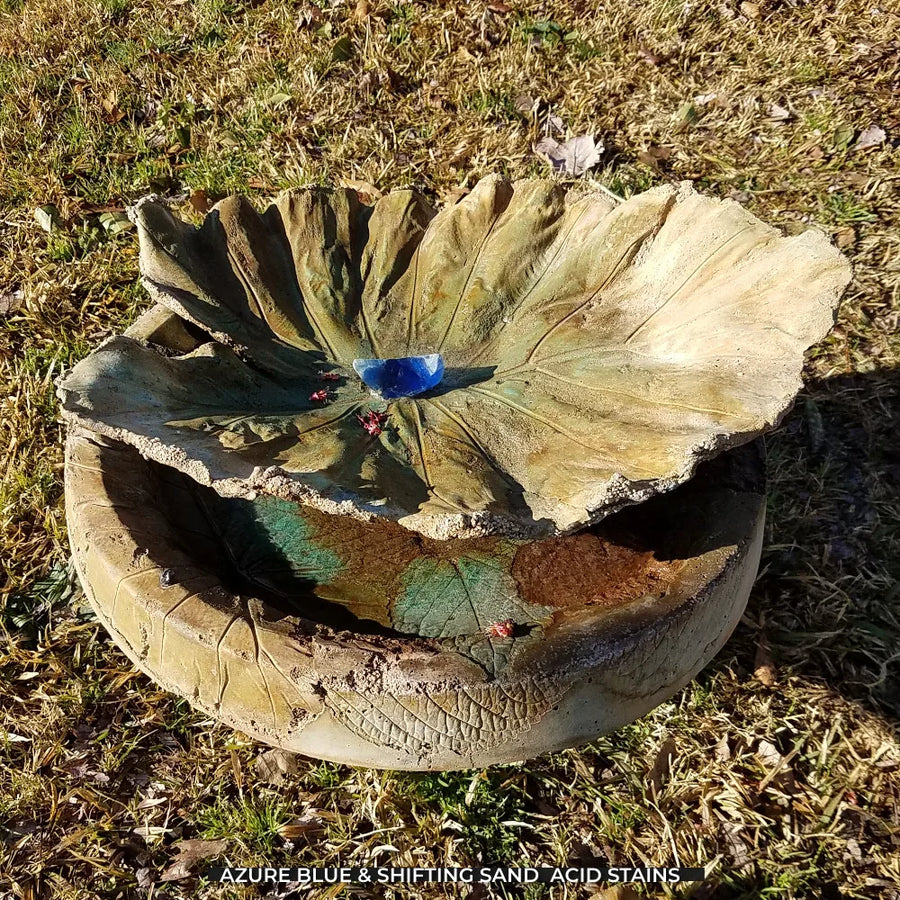
A stained concrete birdbath. Drain it before the first freeze.
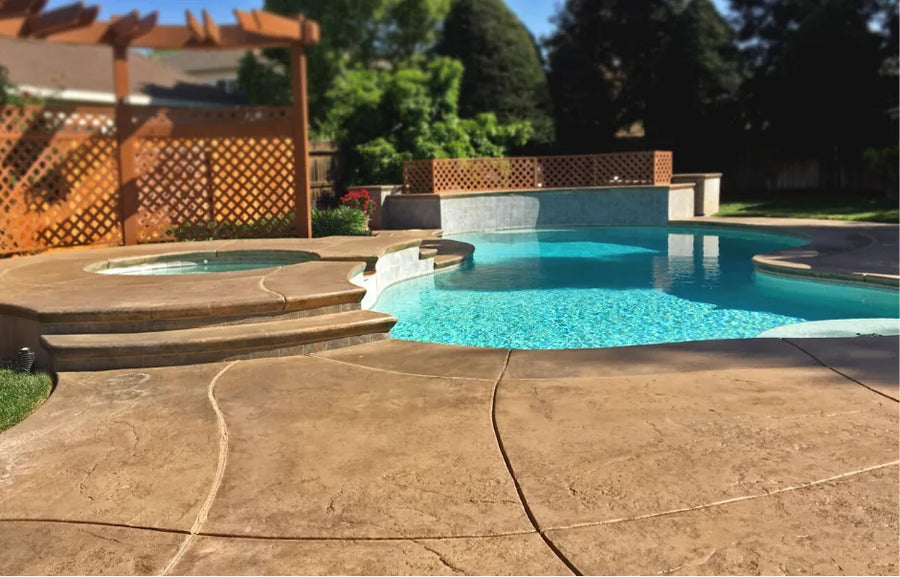
Spring will be back soon.
Which sealer should you use before winter?
Use EasySeal™ if you are sealing late in the season: of these four it is the only one that goes on down to 40°F. Use HydroCryl™ on driveways and garages, ProSeal Li™ on bare or acid-stained concrete you do not want to change color, and AcquaSeal™ on light-duty surfaces where low odor matters.
| Sealer | 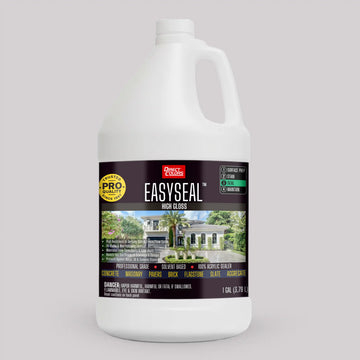 EasySeal™ EasySeal™ |
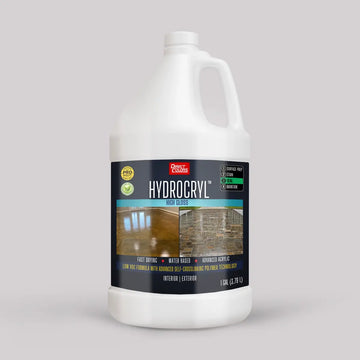 HydroCryl™ HydroCryl™ |
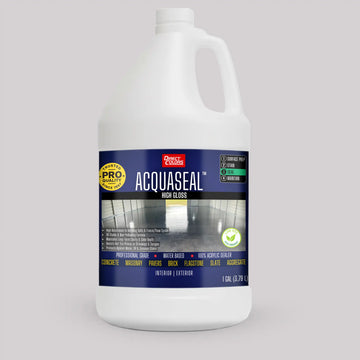 AcquaSeal™ AcquaSeal™ |
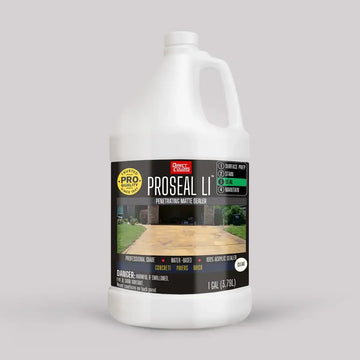 ProSeal Li™ ProSeal Li™ |
|---|---|---|---|---|
| Apply between | 40°F to 95°F | 60°F to 95°F | 60°F to 95°F | Above 45°F, air and surface |
| Best for | Sealing late in the season. Stained patios and walkways. | Driveways and garages. Resists hot tire pickup, gasoline and brake fluid. | Light-duty surfaces where low odor matters. | Driveways, sidewalks and porches you want to keep looking the same. Salt-resistant. |
| Type | Solvent-based acrylic | Water-based acrylic | Water-based acrylic | Water-based penetrating sealer, no surface film |
| Finish and look | Satin or gloss. Deepens the color. | Gloss, satin or matte. | Gloss or satin. | Matte. No shine, no color change. |
| Time between coats | 6 to 12 hours | 2 hours | 2 hours | One coat. A second only on very old or very porous slabs. |
| Goes over | Bare or stained concrete, or an older solvent-based acrylic. Not over water-based sealers. | Bare or stained concrete. Not over solvent-based sealers. | Bare or stained concrete. Not over solvent-based sealers. | Bare or acid-stained concrete only. Not over other stains, sealers or coatings. |
| Watch out for | Not resistant to brake fluid or gasoline. Strong odor, so ventilate. | Do not let it freeze in storage. | Do not let it freeze in storage. | Not for surfaces that sit under standing water. |
-
EasySeal™40°F to 95°FSolvent-based acrylic. Satin or gloss. Deepens the color. Best for: Sealing late in the season. Stained patios and walkways. Time between coats: 6 to 12 hours. Goes over: Bare or stained concrete, or an older solvent-based acrylic. Not over water-based sealers. Watch out for: Not resistant to brake fluid or gasoline. Strong odor, so ventilate.
-
HydroCryl™60°F to 95°FWater-based acrylic. Gloss, satin or matte. Best for: Driveways and garages. Resists hot tire pickup, gasoline and brake fluid. Time between coats: 2 hours. Goes over: Bare or stained concrete. Not over solvent-based sealers. Watch out for: Do not let it freeze in storage.
-
AcquaSeal™60°F to 95°FWater-based acrylic. Gloss or satin. Best for: Light-duty surfaces where low odor matters. Time between coats: 2 hours. Goes over: Bare or stained concrete. Not over solvent-based sealers. Watch out for: Do not let it freeze in storage.
-
ProSeal Li™Above 45°F, air and surfaceWater-based penetrating sealer, no surface film. Matte. No shine, no color change. Best for: Driveways, sidewalks and porches you want to keep looking the same. Salt-resistant. Time between coats: One coat. A second only on very old or very porous slabs. Goes over: Bare or acid-stained concrete only. Not over other stains, sealers or coatings. Watch out for: Not for surfaces that sit under standing water.
All four cover about 200 sq ft per gallon and need fully cured concrete: 28 days for the acrylics, 21 to 28 days for ProSeal Li™. The tinted versions follow their base: EasyTint™ goes on down to 40°F like EasySeal™, and AcquaTint™ needs 60°F like the other water-based sealers.
From each product's data sheet, checked October 2026.
Shop Acrylic Concrete Sealers →
Common questions
Why seal outdoor concrete before winter rather than in spring?
Because the damage happens over the winter, and some of it cannot be undone. If the sealer has aged a few years, water gets underneath it and you get flaking or milky spotting: repairable, but avoidable. On a solvent-based sealer such as EasySeal™ or EasyTint™, EasyRepair™ re-dissolves white haze and lets the film level again, with no stripping. The worse outcome is spalling, where water infiltrates the slab itself and the surface breaks away from the substrate through repeated freeze-thaw. That is difficult and costly to repair, so the fall application is the cheap move.
What is spalling?
Spalling is when water infiltrates the slab itself and, through repeated freeze-thaw, the surface breaks away from the substrate. It is difficult and costly to repair, which is why sealing in the fall is the cheap move.
What should I use on a driveway if I don't want to change its color?
ProSeal Li™ Penetrating Concrete Sealer, on bare or acid-stained concrete; it does not work over other stains, sealers or coatings. It soaks in and fills the pores so water and ice cannot, and it dries completely matte with no color change, so it protects a porch or driveway without altering how it looks. It is also notably salt-resistant, which matters wherever de-icing salt goes down every winter. Densifying the slab is what buys the freeze-thaw resistance.
How do I protect outdoor countertops and concrete decor over winter?
Cover what you cannot move. If the outdoor kitchen is unused and unprotected from precipitation, a plastic sheet or tarp over the countertop keeps ice and snow off the sealer. Bring smaller décor indoors where you can, and make sure anything left outside is properly sealed, especially birdbaths and fountains, which collect water and then freeze it.
How cold is too cold to apply concrete sealer?
It depends on the sealer. Solvent-based EasySeal™ and EasyTint™ can go on down to 40°F (4°C). Water-based HydroCryl™, AcquaSeal™ and AcquaTint™ need 60°F (15°C) or warmer. The five acrylics top out at 95°F (35°C). Penetrating ProSeal Li™ needs air and surface above 45°F (7°C). Whatever the sealer, keep the slab at least 5°F above the dew point while it dries, or it can turn milky.
Will a concrete birdbath crack in winter?
It can, if water sits in the bowl and freezes. Water expands as it freezes, and a full bowl has nowhere to put that pressure. Drain it, turn the bowl upside down and cover it with a tied-down tarp. If it cannot be inverted, fill the bowl with towels or other absorbent material first. Or keep the water from freezing with an electric birdbath heater. Seal the bowl before winter, so less water soaks into the concrete itself.
Listen to this episode
Direct Colors DIY Home Improvement · Episode 5
Winterizing Outdoor Concrete
Amie Nolen and Shawna Turner · 3 min 31 sec · read the full transcript
What's Next
- Sealer choice → The Best Concrete Sealer
- Sealing on a cool day → How to Apply Concrete Sealer
- Is the old sealer still working? → Concrete Surface Preparation
- Fountains and birdbaths → How to Stain a Concrete Fountain
- Spring restoration → Restoring Shine
- Shop → ProSeal Li™ · EasySeal™ · EasyRepair™
Direct Colors. Shawnee, OK. Manufacturing the full decorative concrete system since 1997.


