
A swirl finish is put into wet concrete with a trowel, a broom or a power trowel moved in overlapping arcs, and it leaves the slab with a pattern of shallow circular sweeps. It is a working finish, not a decorative one — the swirls are there for grip — but under color it turns into the most forgiving surface we sell onto, because the pattern breaks up anything uneven underneath it.
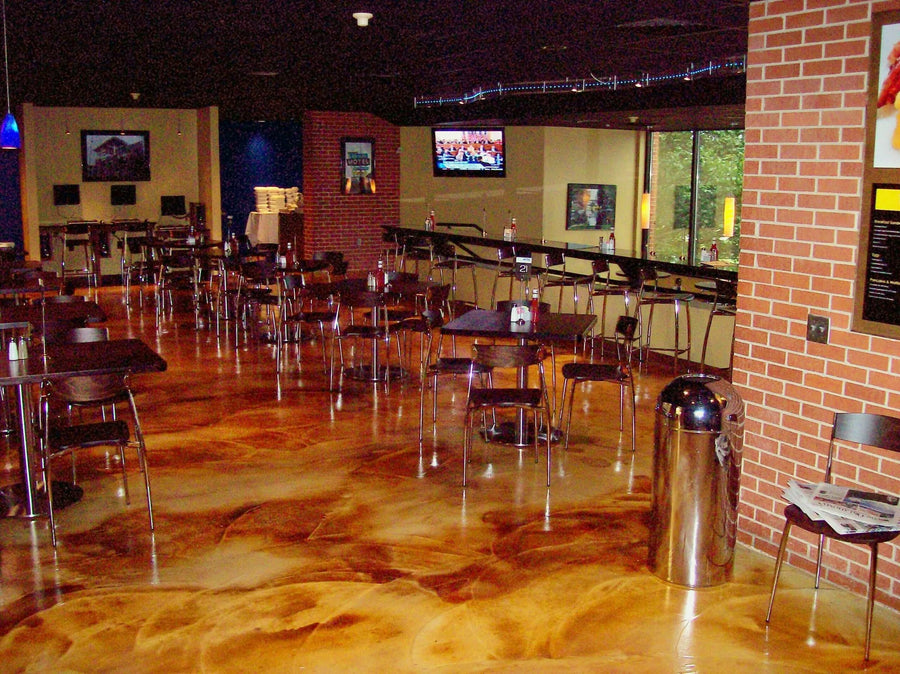
A restaurant floor resurfaced with a swirl finish overlay and acid stained in Malayan Buff.
Shop EasyTint™ Tinted Sealer →
Blotchy to even, with Gray tinted sealer
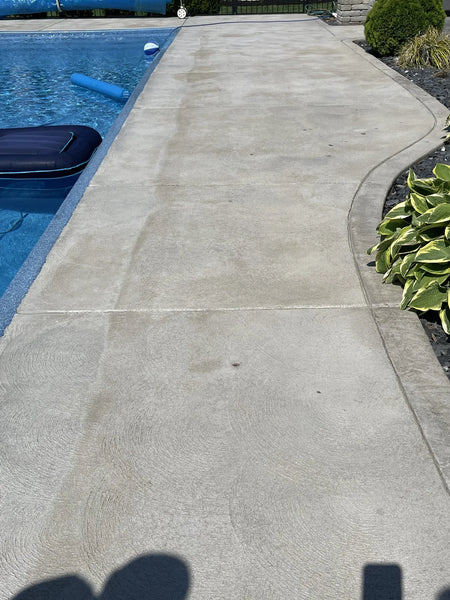
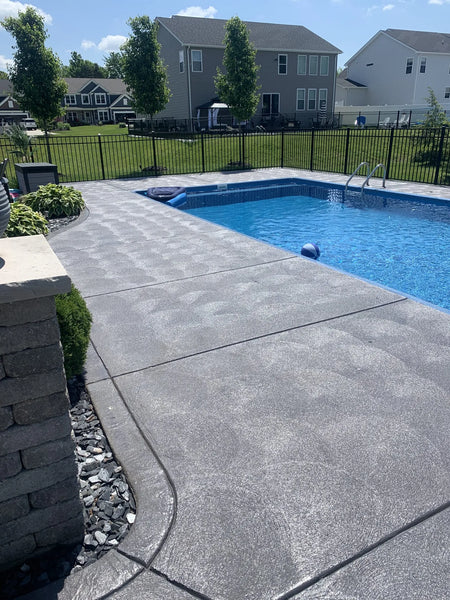
Sometimes the fix is not a color change at all. This swirl finish pool deck was blotchy and stained rather than the wrong color, so Gray EasyTint™ went down to even it out. The result is barely a different color from where it started — and it looks completely different, because now the only pattern on the deck is the swirl. This is the single best argument for a tinted sealer over a stain: opacity is what covers blotching. More in the tinted sealer gallery, and see sealing a concrete pool deck for the wet-area details.
A restaurant floor: carpet out, swirl finish in
This is a full retrofit, and the most useful sequence on the page. Tired carpet came out of a restaurant, and rather than pour a new slab the floor was resurfaced with a cement-based overlay. The overlay was worked with a trowel into a swirl pattern while it was still fresh, then acid stained in Malayan Buff for a mottled finish that hides everything a restaurant floor is about to go through.
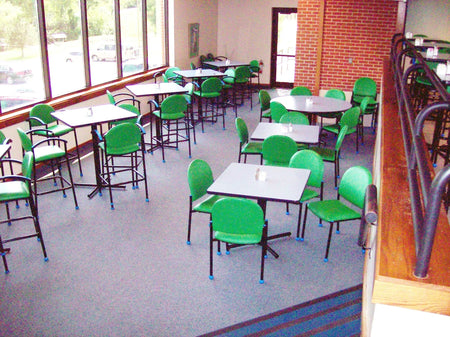
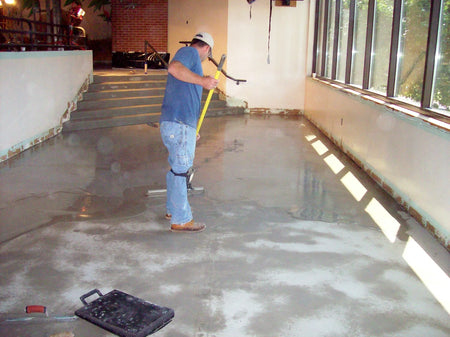
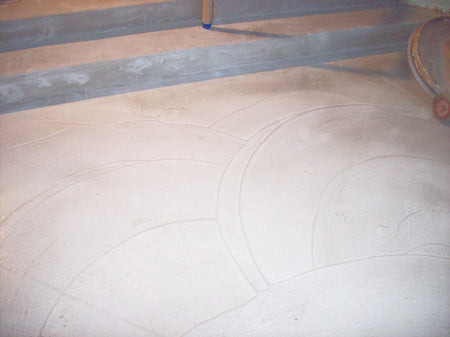
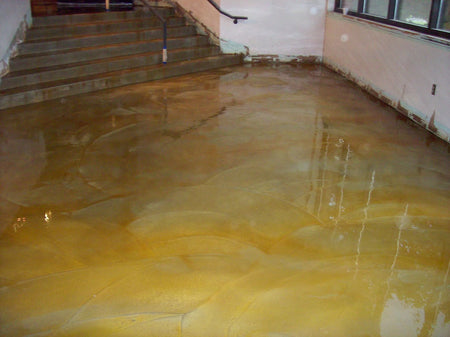
Two things to take from this. First, an overlay means you are staining new cement, not old concrete, so it takes color far more predictably than the slab underneath ever would have. Second, the swirl went in while the overlay was fresh — if you want this finish on an existing floor, the overlay is how you get it. There is no way to swirl hardened concrete.
Six kinds of swirl finish
Swirl is a family of finishes rather than one technique. Each one puts a different pattern into the surface, and the one you want depends on the tool, the size of the pour and where the slab is going.
- Traditional swirl. A swirl roller or a hand trowel worked in a swirling motion across wet concrete. The most common version, and the only one that is practical on a small pour.
- Mag swirl. A heavy-duty power trowel fitted with a mag blade — several small circular metal plates that spin fast and lay the pattern down as the trowel is walked across the surface. This is how large floors get done.
- Broom swirl. A stiff-bristled broom pushed and pulled in a circular motion, leaving both the swirl pattern and broom texture. More grip than a troweled swirl.
- Stamped swirl. A stamping tool presses a swirling pattern into wet concrete, and the stamp can be made to imitate natural stone, brick or other materials.
- Exposed aggregate swirl. The top layer of cement paste is removed to reveal the aggregate beneath in a swirling pattern — texture and pattern from the concrete itself rather than from a tool.
- Combination swirl. Stamping, saw cutting, staining and polishing used together for a complex result. This is where scored lines and swirl finishes meet.
All six take color, and all six are worth staining rather than painting: paint sits on top of the pattern and wears off the high points first, while stain goes into the surface and wears the way the concrete does.
Swirl Finish: FAQs
What is a swirl finish good for?
Disguising unevenness. The circular pattern hides blotchy or patched slabs, and it is slip resistant, which is why it turns up on pool decks and garages.
Can I get a swirl finish on an existing floor?
Yes — you can swirl a cement overlay over what is already there, so you do not need a new pour. The restaurant here took carpet out and swirled an overlay in, worked with a trowel while fresh, then stained it Malayan Buff.
Does the color need to change much?
Not necessarily. A tinted sealer that barely alters the color can still even out a mottled deck — sometimes the problem is blotchiness rather than the color itself.
Does acid stain suit a swirl finish?
It amplifies it. Reactive color follows the swirl, so the pattern reads stronger after staining than before.
What’s Next
- Even out a blotchy slab → Tinted Sealer Colors Gallery
- Applying stain outdoors → How to Apply Outdoor Concrete Stain
- Other finishes → broom finish · scored concrete
- Commercial floors → Commercial Concrete Floor Staining
- Shop → EasyTint™ · EverStain™ · Trial Kits


