
Scoring cuts the slab into a pattern; stain gives the pattern color. Together they are the cheapest way to make poured concrete look deliberate. The ten projects below run from a black backyard porch to a four-color checkerboard driveway, and the section at the end answers the question that decides whether your lines come out crisp: do you cut before you stain, or after?
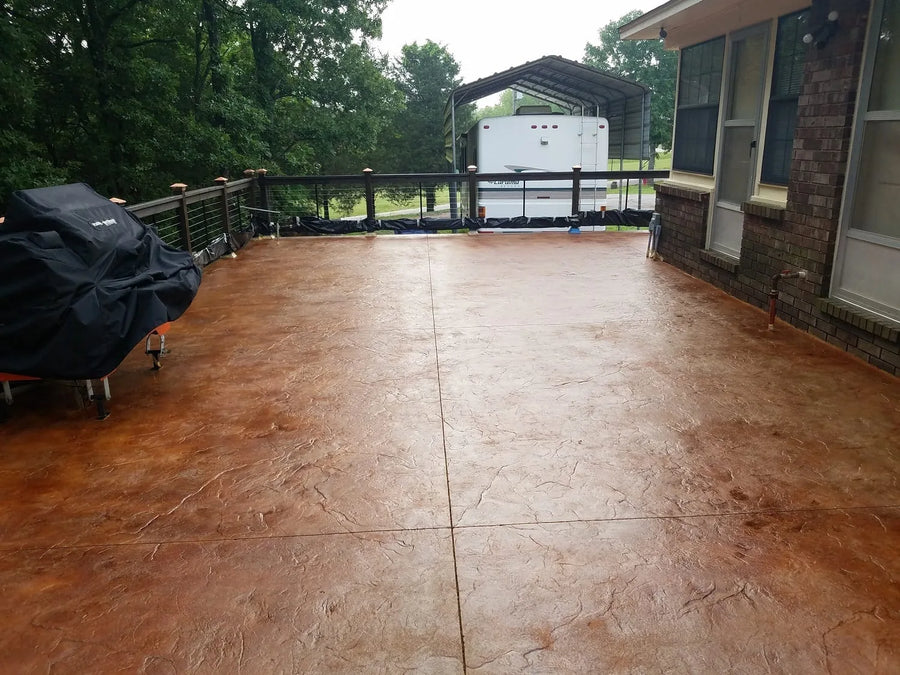
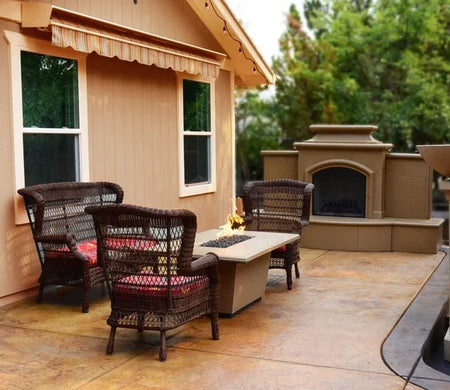
A porch that is scored and stamped, stained in Cola EverStain™.
Scored and stamped, at the same time
Start with the porch at the top of this page, because it is doing two things at once: the slab is scored and stamped, and it is stained in a single color, Cola brown. That is generally the right instinct. When a slab already has two kinds of pattern in it — texture from the stamp, layout from the score lines — one color is what ties them together. Two would fight.
Backyard porch retreat, in black
Black is a hard color to get wrong on a scored slab — the grid reads clearly and the score lines hold a slightly deeper shade, which is what gives it the antique look. This one used black Antiquing™ Stain over an existing scored porch.
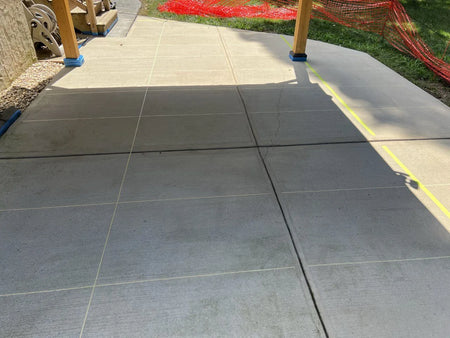
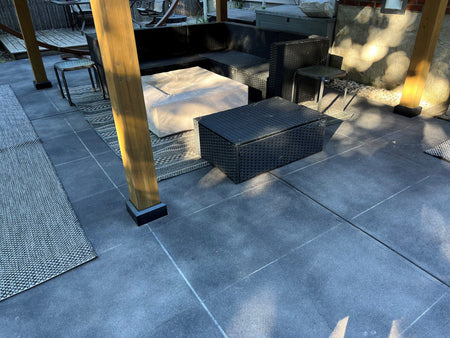
An outdoor kitchen, broom finished and acid stained
400 sq. ft. of California room, scored, broom finished and acid stained into an outdoor kitchen. Texture and pattern at the same time: the broom gives grip underfoot, the score lines give the floor a layout.
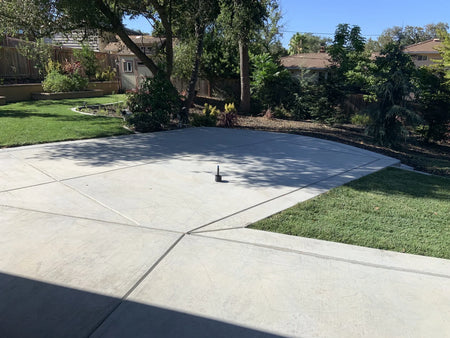
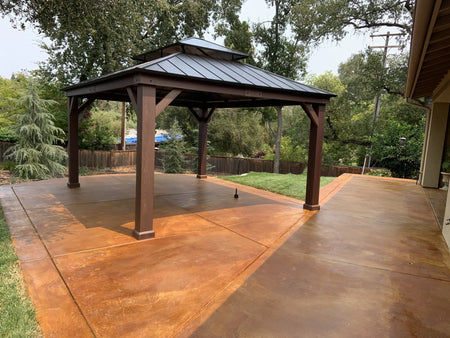
A courtyard in Cola
Cola is the color our DIYers reach for most when they want warmth without going orange. On a scored courtyard it pools very slightly in the grooves, so the grid stays visible instead of disappearing under the color. See more of it in the Cola gallery.
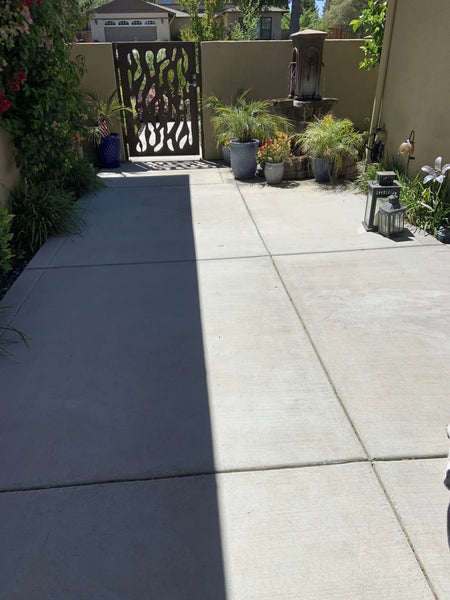
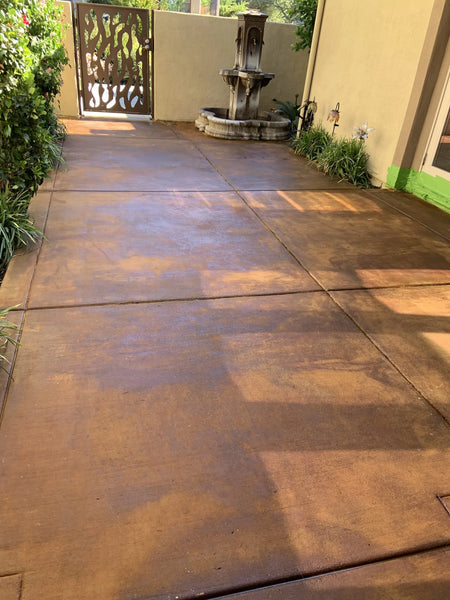
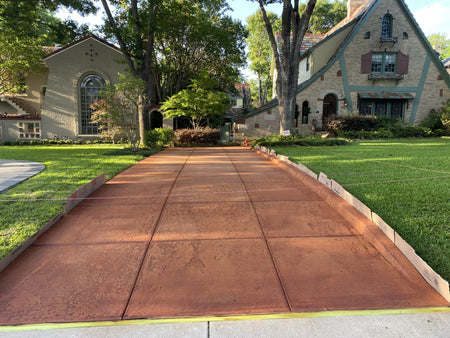
A faded driveway, brought back with ColorWave®
Sometimes a drab driveway does not need a redesign, just a color. This scored driveway was recolored with ColorWave®, a water-based stain that gives more consistent coverage than a reactive stain does on old exterior concrete. The owner used Tangerine, which is no longer in the range — for the same warm orange today, look at Persimmon, Sunset or Amber. More of the line in the ColorWave® gallery.
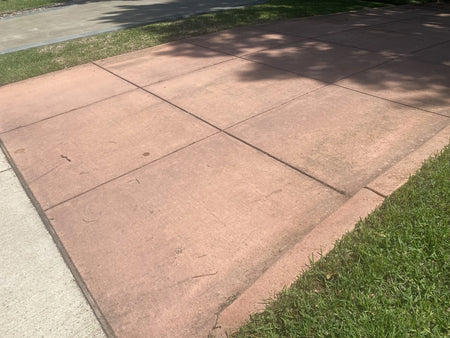
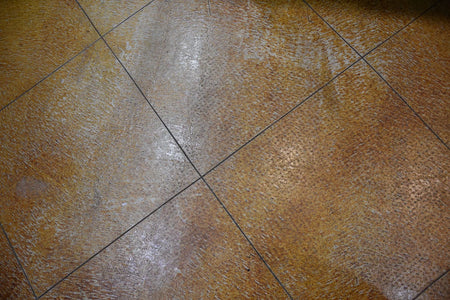
A commercial floor in Cola
Commercial concrete takes the same treatment. Cola acid stain, sealed with a solvent-based acrylic sealer for gloss and traffic resistance. For more on specifying this kind of floor, see our commercial concrete floor guide.
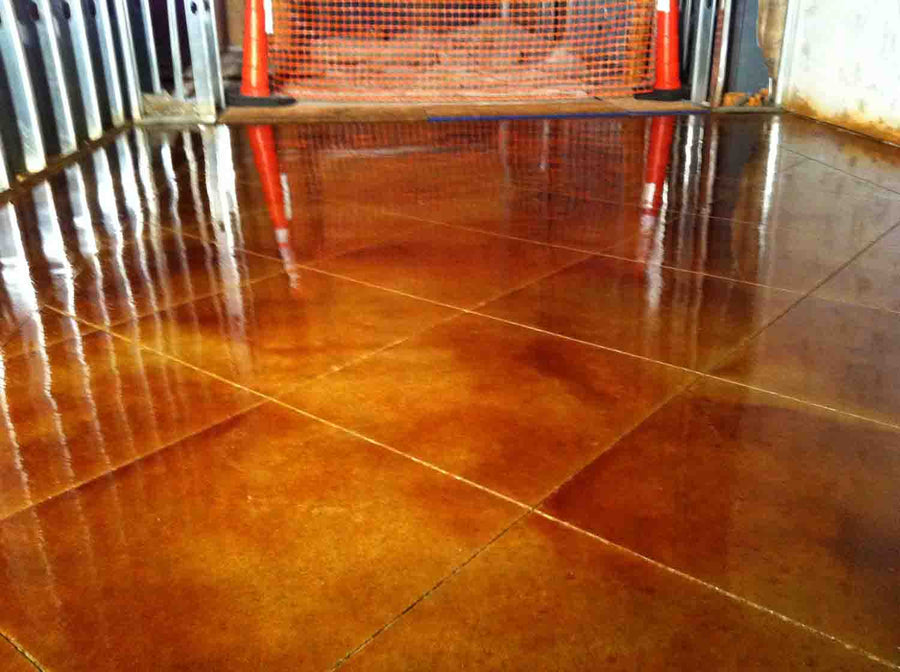
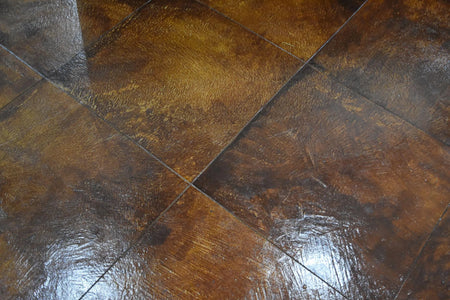
A high-gloss scored commercial floor in Cola.
Terracotta, and the powder that worried a DIYer
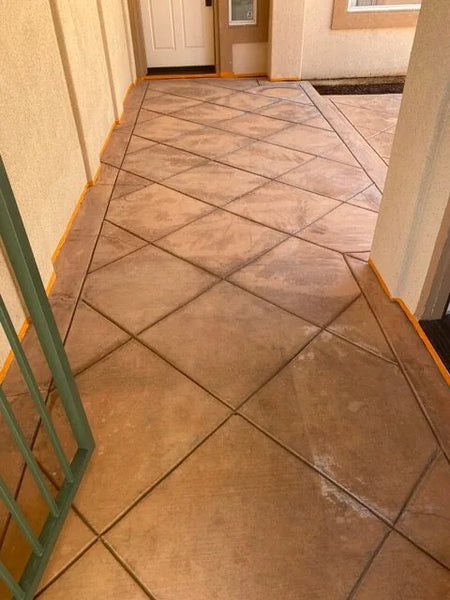
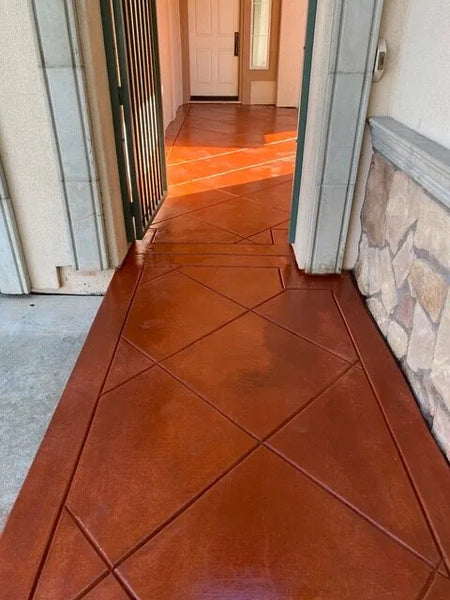
Three coats of Terracotta Antiquing™ on a scored patio, and then a fine powder-like residue on the surface that had the customer calling us before they sealed. That residue is normal on Antiquing™ Stain — it is unbound colorant sitting on top. We told them to go ahead and seal, and the result is below. More of the color in the Terracotta gallery.
A patio extension, five colors, no rush
This DIYer’s entire piece of advice was do not rush it, and a five-color acid stain job on a scored extension is exactly where that pays. Desert Amber, Malayan Buff, Coffee Brown, Cola and English Red, blended across the panels. Layering is its own skill — we cover it in How to Layer Two Acid Stain Colors.
Five acid stain colors blended across a scored patio extension.
A checkerboard driveway in four colors
The only thing fancier than a scored driveway is one with a grid pattern and four colors in it: Malayan Buff, Desert Amber, English Red and Coffee Brown, alternating panel by panel. This is the case where you cut the score lines first — the groove is what keeps one color out of the next.
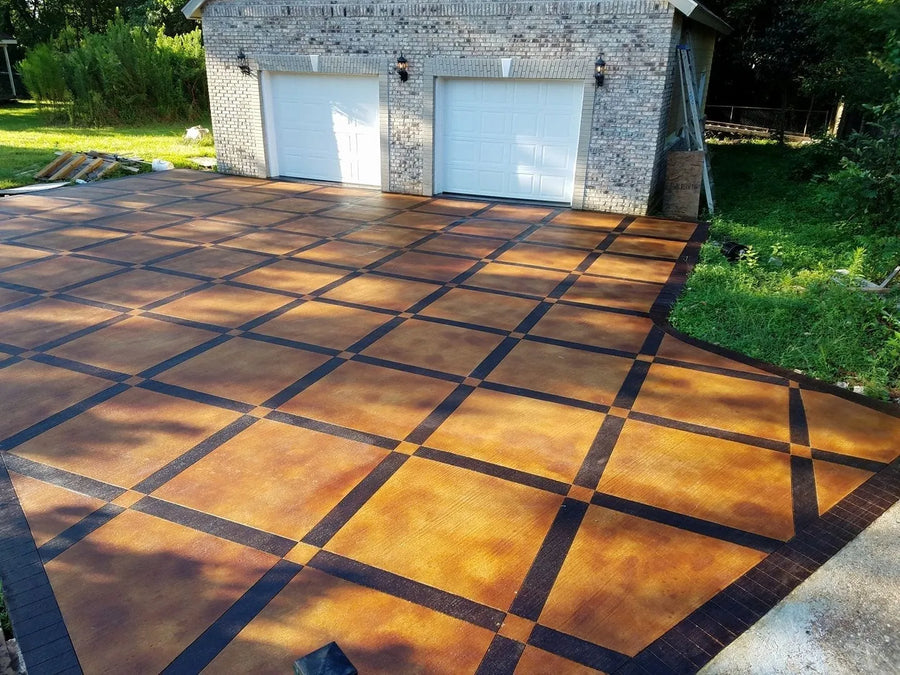
A four-color checkerboard driveway in EverStain™ acid stain.
Flaking interior floors, brushed by hand
A DIY mom with flaking concrete floors did something most people would not: she applied a colored sealer by hand, with a brush, rather than spraying or rolling it. Terracotta AcquaTint™ is opaque enough to cover surface damage that a semi-transparent stain would show straight through. More in the AcquaTint™ gallery.
What scored concrete actually is
Scored concrete is a decorative surface finish made by cutting lines or grooves into the slab. The lines can be any width, depth and pattern, and they are usually cut with a concrete saw or a grooving machine. The result is a textured surface with a pattern in it, and the pattern is doing two jobs at once: it looks deliberate, and it gives the slab somewhere to move, which helps prevent cracking and spalling. Scored concrete takes stain, tinted sealer and paint, so the pattern can be colored as well as cut.
How the lines get cut
Diamond masonry blades and concrete engraving tools are the usual choices, and which one you need depends on the pattern. Grinders, hand-held saws and dedicated engraving tools all have a place. If the slab has not been poured yet, a groover puts the lines into fresh concrete rather than cutting them into hardened concrete later — much less work, if you have that option.
How deep
Score lines do not need the depth of a control joint. About a quarter inch is usually enough to read as a pattern and to act as a barrier between colors.
Cut first or stain first?
This is the decision that determines whether the job looks sharp. If the whole floor will be one color, cut the lines and patterns after staining is finished. If the color changes at a pattern line, cut the line first, so the groove forms a barrier and the edge comes out crisp. Either way, cut before you clean the surface, or after the first coat of sealer — not in the middle.
Beyond saw cuts
Score lines are not the only way to get a pattern. Stain combined with stencils, tape or custom templates produces tile patterns, free-form designs and graphics on an uncut slab — we have nine of those projects here, including a bathroom floor cut into faux planks with nothing but duct tape.
Scored Concrete: FAQs
How deep do score lines need to be?
About 1/4 in. is enough — they do not need the depth of a control joint, just enough to read as a pattern and to act as a barrier between colors.
Should I cut the lines before or after staining?
This is the decision that determines whether the job looks sharp. One color all over: cut after staining. Color changing at the line: cut first, so the groove acts as a barrier and the edge stays crisp. Cut before you clean the surface, or after the first coat of sealer.
What tools cut score lines?
Diamond masonry blades and concrete engraving tools, with hand-held saws, grinders or dedicated engraving tools depending on the pattern.
Do I need to score at all to get a pattern?
No. Stain combined with stencils, tape or custom templates gives tile patterns, free-form designs and graphics on an uncut slab.
There is a fine powdery residue on my scored patio. Is that a problem?
One customer called us about exactly that after three coats of Terracotta Antiquing™, before sealing — the article explains what the residue is and what to do about it.
What’s Next
- Applying stain outdoors → How to Apply Outdoor Concrete Stain
- Pattern without cutting → Stenciled Concrete Stain Designs
- Texture instead of pattern → Stained Broom Finish Concrete
- Driveways specifically → Concrete Driveway Color Ideas
- Shop → Antiquing™ · EverStain™ · ColorWave® · Trial Kits


