
Picking the right concrete sealer is the difference between a floor that still looks great five years from now and one you're scraping off next summer. Most sealer failures are not product failures. They come from picking the wrong sealer for the conditions, or from inadequate surface prep before the sealer goes down.
This guide walks you through the five factors that determine which Direct Colors sealer is right for your project. Same framework whether you're sealing a backyard patio, a basement floor, a garage, or a polished interior.
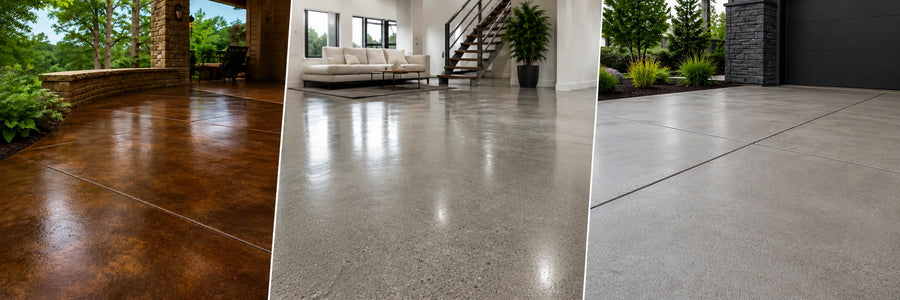
The Direct Colors sealer system across three jobs: stained patio (EasySeal™), polished interior (HydroCryl™), and natural-finish driveway (ProSeal Li™).
If you are a professional contractor go to the Pro's Sealer Playbook →
The 5 factors that pick your sealer
- Where is the slab? Indoor, outdoor, basement, garage, or fresh pour.
- Is there moisture in the slab? Especially important for basements and on-grade floors.
- What finish do you want? Natural, clean shine, wet-look depth, or tinted color.
- Will the surface get wet or slippery? Pool decks, ramps, outdoor stairs.
- Who is applying it? DIY homeowner or contractor (some products are pro-only).
Answer these in order. The rest of this guide walks through each.
Where is your slab?
| Location | Path forward |
|---|---|
| Fresh pour (today) |
Use EasyCureSeal™. The only product designed for wet concrete on pour day. Important: EasyCureSeal™ closes the pores once it cures, so the slab cannot be stained afterward. |
| Existing concrete |
Is there moisture in your slab?
|
Is there moisture in your slab?
This is the question that decides everything else. Applying a film sealer over a damp slab traps moisture underneath, which causes the dried sealer to turn milky white and peel.
Look for these warning signs:
- Darkened patches of concrete that keep returning after the slab dries
- White powdery deposits (efflorescence) on the surface
- Past sealer or coating failures (bubbling, peeling, whitening)
- Damp or musty basement smell
- Condensation under rugs, mats, or stored boxes
The plastic sheet test:
- Tape a clear plastic sheet (2′ × 2′) flat to the slab.
- Seal all four edges tightly with duct tape.
- Leave for 24 to 48 hours.
- Lift it and check underneath for condensation or darker concrete.
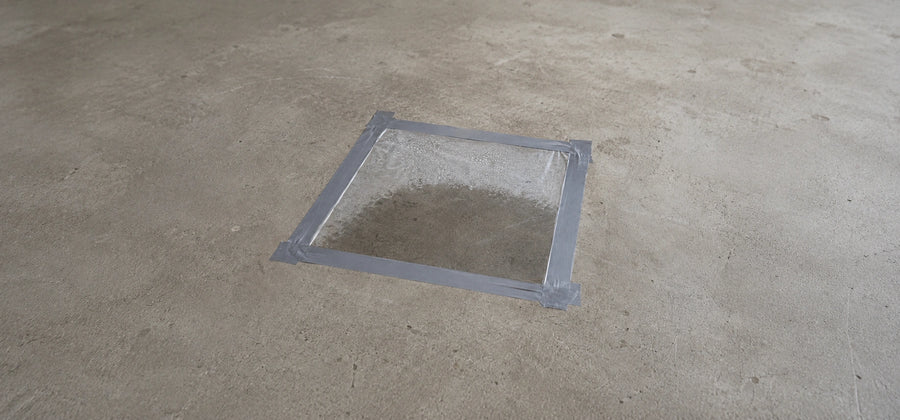
The plastic-sheet moisture test: 2′ × 2′ clear plastic taped flat for 24-48 hours. Condensation underneath confirms slab moisture.
If moisture is present, you must use a penetrating sealer. The next section explains why.
Best concrete sealer for slabs with moisture:
ProSeal Li™
ProSeal Li™ is a penetrating, water-based polymer sealer that soaks into the concrete pores and densifies the slab from within. There is no film on top to peel or turn white.
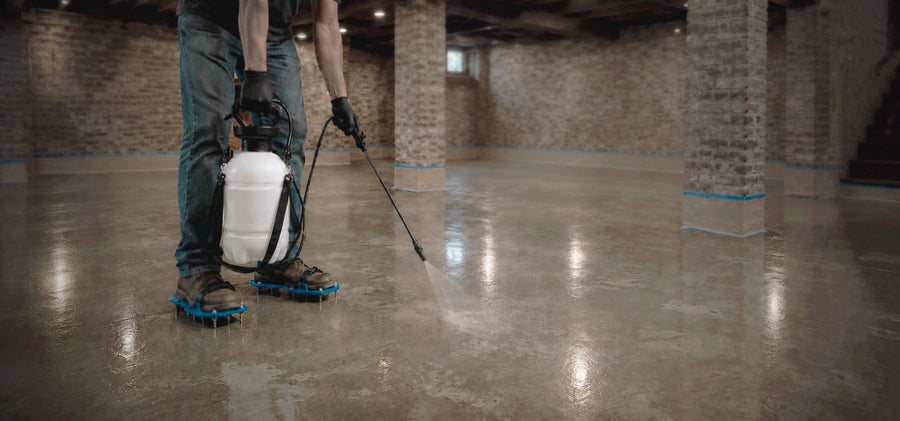
ProSeal Li™ applied with a pump sprayer. No film on top means nothing to peel or whiten — the sealer reacts inside the concrete itself.
If you want a glossy or wet-look finish on a moisture-risk slab, use a two-coat system. Apply ProSeal Li™ as the base coat, let it cure, then topcoat with:
- HydroCryl™ for clean modern shine on interior floors and basements
- EasySeal™ for deep wet-look color enhancement on exterior patios
Critical sequencing rule. ProSeal Li™ closes the concrete pores as it cures. Once it has been applied, topical stains like EverStain™ and ColorWave® can no longer bond to the surface. If you want a stained look with ProSeal Li™ moisture protection, stain first, then apply ProSeal Li™. The same rule applies to EasyCureSeal™ on fresh concrete.
ProSeal Li™ is part of the Direct Colors Pro program. Contact us for spec access.
Best concrete sealer for dry slabs
If the slab is dry and properly prepped, product choice depends on look, location, and traffic.
HydroCryl™ is our water-based premium. 33% solids, ultra-low VOC (25 g/L), non-flammable, safe in occupied homes. Scored 88 out of 90 against nine common chemicals in lab testing, beating the leading commercial solvent sealer (76 out of 90). Right call for garages, workshops, busy interior floors, and commercial spaces. Available in gloss, satin, or matte.
EasySeal™ is our solvent-based best-seller. Penetrates deeper into the concrete pores than water-based, produces the classic "wet look" color enhancement, and is the only acrylic sealer that can be field-repaired with EasyRepair™ if bubbles or haze appear. Best for exterior patios, driveways, stained decorative work, and porous substrates like pavers and flagstone. Not for occupied homes (fumes during cure). New construction and vacant remodels are fair game.
AcquaSeal™ is our lighter water-based option. 20% solids, thinner film build, standard chemical resistance. For low-traffic interior decorative slabs where minimal coating thickness is the goal.
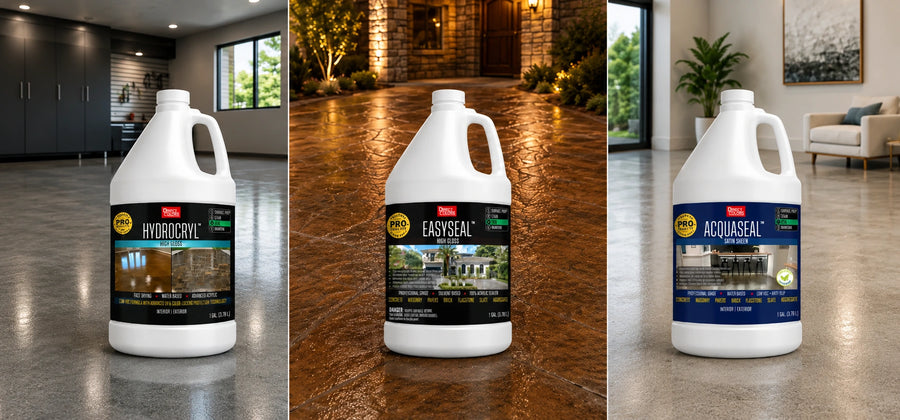
The Direct Colors sealer lineup: water-based, solvent-based, penetrating, tinted, and the ProWax Polish™ final layer.
Clear or Tinted sealer?
Clear is the default. Most decorative jobs already have color from a stain, and the sealer's job is to lock that color in.
Use a tinted sealer (AcquaTint™ for water-based, EasyTint™ for solvent-based) when:
- You want one-step color and seal on a new slab
- An older stain has faded and you want to refresh without restaining
- You need to unify a patchy or discolored slab into a consistent color
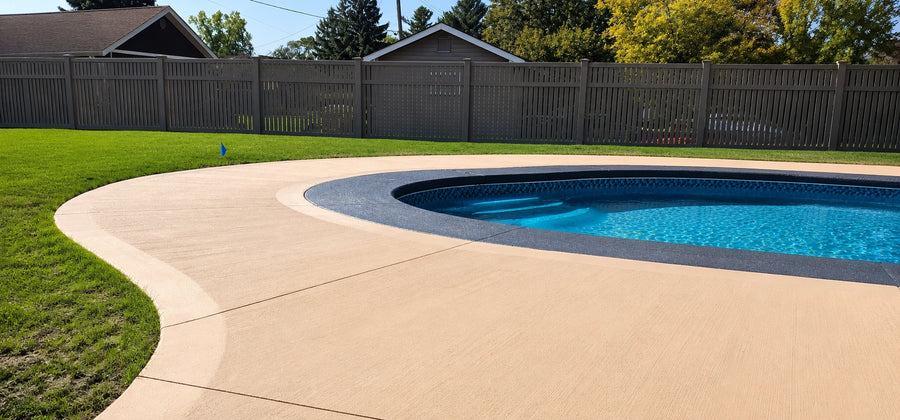
EasyTint™ on a broomed exterior pool deck. One-step color and seal — refreshes faded stains and unifies patchy slabs.
Want extra grip? Add OxiGrip™ anti-slip additive
Mix OxiGrip™ Anti-Slip Additive into your sealer before applying. Required on pool decks, outdoor stairs, ramps, garage entries, shaded patios, and commercial entryways.
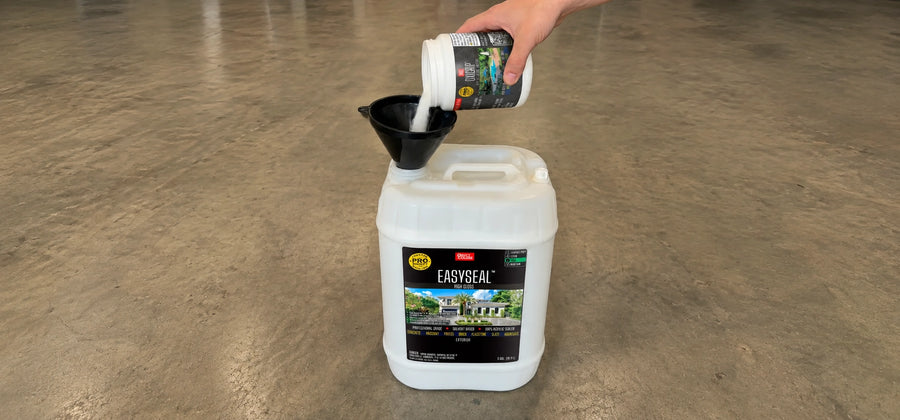
Pour your sealer into a clean mixing container before adding OxiGrip™. Stir thoroughly so the additive stays suspended through the entire application.
Compatibility: OxiGrip™ works with HydroCryl™, AcquaSeal™, and EasySeal™. It is not compatible with AcquaTint™ or EasyTint™.
Interior floors: always finish with ProWax Polish™
For any interior floor, top your cured sealer with ProWax Polish™. ProWax is a sacrificial polymer layer that absorbs daily scratches and scuffs, protecting the sealer underneath. Adds ultra-high-gloss "wet look" shine that makes stain colors pop. Refreshes with a mop, no stripping required.
Do not use ProWax on exterior surfaces. It is not designed for UV exposure or freeze-thaw cycles.
Direct Colors sealer comparison
| Sealer | Type | Best for | Indoor / Outdoor | Finish |
|---|---|---|---|---|
| HydroCryl™ | Water-based acrylic, 33% solids | Garages, interior, high-traffic | Both | Gloss, Satin, Matte |
| EasySeal™ | Solvent-based acrylic | Exterior, stained decorative, vacant interior | Both (not occupied) | Satin, Gloss |
| AcquaSeal™ | Water-based acrylic, 20% solids | Light-duty interior | Both | Gloss, Satin |
| EasyCureSeal™ | Solvent cure & seal | Fresh poured concrete | Outdoor | Satin |
| AcquaTint™ | Tinted water-based | One-step color and seal | Both | Gloss, Satin |
| EasyTint™ | Tinted solvent | One-step color and seal | Both (not occupied) | Satin |
| OxiGrip™ | Anti-slip additive | Mix into clear sealers | Both | Additive |
| ProSeal Li™ | Penetrating polymer, water-based | Moisture-risk slabs | Both | Natural |
| ProWax Polish™ | Polymer wax | Final layer over interior sealer | Indoor only | Ultra-high gloss |
- HydroCryl™. Water-based premium acrylic, 33% solids. Garages, interior, high-traffic. Indoor and outdoor. Gloss, satin, matte.
- EasySeal™. Solvent-based best-seller. Exterior, stained decorative, vacant interior. Not for occupied homes. Satin or gloss.
- AcquaSeal™. Lighter water-based acrylic, 20% solids. Light-duty interior. Indoor and outdoor. Gloss or satin.
- EasyCureSeal™. Solvent cure & seal for fresh poured concrete. Outdoor only. Satin.
- AcquaTint™. Tinted water-based. One-step color and seal. Indoor and outdoor. Gloss or satin.
- EasyTint™. Tinted solvent. One-step color and seal. Not for occupied homes. Satin.
- OxiGrip™. Anti-slip additive. Mix into clear acrylic sealers for slip resistance.
- ProSeal Li™. Penetrating polymer, water-based. Moisture-risk slabs. Indoor and outdoor. Natural finish.
- ProWax Polish™. Polymer wax topcoat. Final layer over interior sealer. Indoor only. Ultra-high gloss.
Frequently asked questions
What's the best concrete sealer for a basement floor?
ProSeal Li™ as a base, with HydroCryl™ on top if you want a finished-floor look. Basements almost always have rising moisture that a film sealer alone cannot survive. If you want a stained or colored basement floor, stain first (before ProSeal Li™), since the penetrating sealer closes the pores and blocks stain bonding afterward.
What's the best concrete sealer for a garage floor?
HydroCryl™. It scored 88 out of 90 against nine common garage chemicals in lab testing, including hot tires, motor oil, brake fluid, gasoline, and rubbing alcohol. The closest commercial solvent comparison scored 76.
Can I use EasyRepair™ on a water-based sealer?
No. EasyRepair™ is solvent-based and will destroy water-based sealers like HydroCryl™ or AcquaSeal™. Use it only on solvent-based sealers such as EasySeal™ or EasyTint™. For failed water-based sealers, the only fix is to strip and reapply.
How long does concrete sealer last?
Film sealers like HydroCryl™ and EasySeal™ typically last 2 to 3 years before a maintenance recoat. AcquaSeal™ lasts 1 to 2 years. ProSeal Li™ lasts 10 years or more because there is no film to wear off.
What's next
- Ready to apply your sealer? → How to Apply Concrete Sealer the Right Way
- Have a failed sealer to fix? → How to Fix a Failed Concrete Sealer
- Browse the full sealer lineup → Acrylic Concrete Sealers
- Add the finishing layer → ProWax Polish™
- Talk to us → Contact Direct Colors
Direct Colors has manufactured decorative concrete products in Shawnee, Oklahoma since 1997. We make every product in the system that touches your slab — Prep, Stain, Seal, and Maintain — under one roof.
Direct Colors. Shawnee, OK. Manufacturing the full decorative concrete system since 1997.


