
Grout is the last thing most people think about and the first thing that dates a tile installation. Pigment powder mixes straight into it, so you can have any grout color you want — and you are not limited to one.
Prefer to listen? Shawna Turner explained how to calculate pigment for grout, stucco, mortar and plaster. The player is at the end of this article.
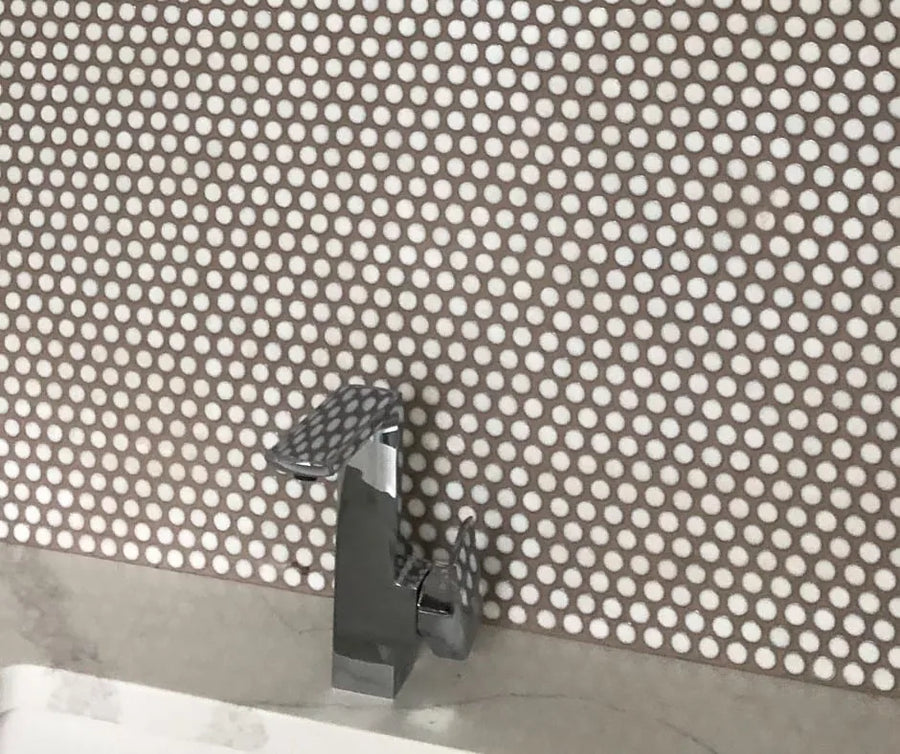
Grout colored with concrete pigment.
Calculating the pigment load
This is harder than it should be, because grout manufacturers rarely state accurate weights or percentages. As a working figure, a bag of grout is typically 23–26% cement and/or lime — and cement and lime are the only ingredients that matter, since they are the only ones that take color. Everything else is filler as far as pigment is concerned.



Sealing colored grout
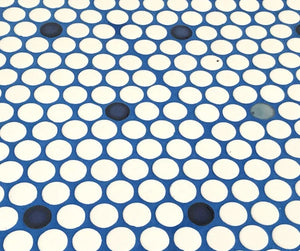
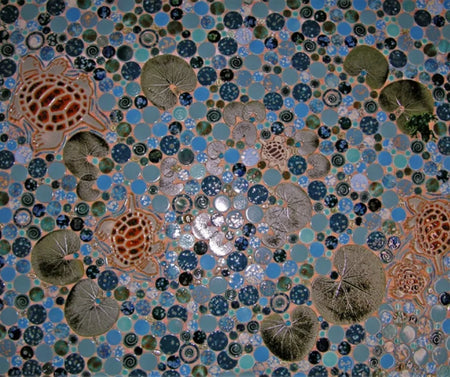
For long-term protection against water, mildew and oil, use a penetrating sealer. It is colorless with a matte finish, so it protects the joint without dulling or shifting the color you just mixed.
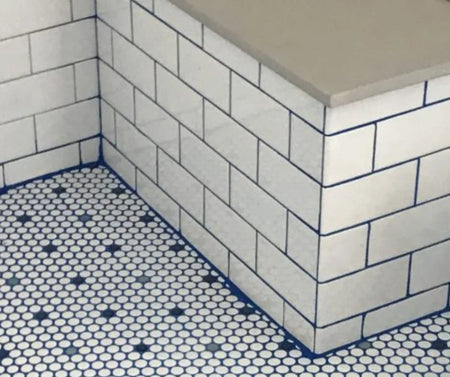
From a tile setter
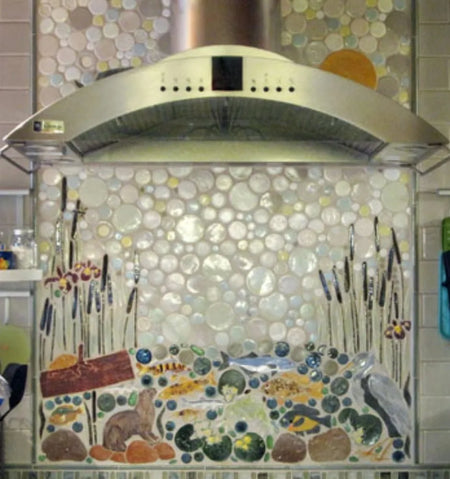
Diane of Tiles with Style uses pigment in both mortar and grout, and makes a point worth repeating: grout color is a design decision, not a finishing detail.
— Diane, Tiles with Style
Common questions
How much pigment do I need for grout, stucco or mortar?
Work from the cement, not the bag. Pigment colors these materials by coating the cement particles, so the dose is calculated against the weight of cement plus lime in the mix — not total mix weight. These mixes typically run about 3:1 sand to cement. The dose itself is pounds of pigment per 94 lb of cement and lime, with a ceiling of 10% of that weight. Then use the Custom Batch Calculator with that cement weight and the pound rating of your chosen color.
How do I find out how much cement is in a bagged mix?
Check the technical data sheet, because the bag usually will not tell you. Very few manufacturers print contents on the side of the bag, so the TDS is the reliable source — and failing that, contact the manufacturer. Direct Colors will make an educated estimate if needed, but it varies from product to product, which is exactly why testing matters.
Why does the color look different in grout or stucco than on the chart?
Because there is no aggregate in it. Grout, stucco, plaster and mortar are cement, sand and sometimes lime — no stone. The color chart is produced on concrete, so these materials can read noticeably differently. Always test on the actual material before committing to a whole project.
The calculator gives me a tiny fraction of a pound. How do I measure that?
Convert it. A figure like 0.1595 lbs is unusable at the bench, so switch units: for a 5 lb sample batch that works out to about 15 teaspoons. Better still, weigh in grams — a gram scale gives far more exact measurement of small amounts, and works for small and medium projects alike.
Listen to this episode
Direct Colors DIY Home Improvement · Episode 19
Calculating Pigment for Grout, Stucco, Mortar and Plaster
Amie Nolen and Shawna Turner · 5 min 25 sec · read the full transcript
What's Next
- Mortar too → Custom Mortar Colors
- Other surfaces → Cement, Stucco, Grout and Overlays
- Test first → Pigment Sampler
- Applying stain outdoors → How to Apply Outdoor Concrete Stain
- Choosing a sealer → The Best Concrete Sealer
- Prefer a reactive, mottled look? → Acid Stain Colors Guide
- Mixing it evenly → How to Mix Concrete Pigment Powder Without Streaks
- Every shade and its dose step → Concrete Pigment Color Chart
- Shop → Concrete Powder Pigment · Pigment Sampler
Direct Colors. Shawnee, OK. Manufacturing the full decorative concrete system since 1997.


