
Stick-on tile leaves its shape behind. Years of footsteps and furniture press the square outline into the concrete underneath, and that impression often cannot be seen until you stain — because acid stain pools in the lower areas and goes darker there. Grinding does not always remove it either. Here is what actually works.
Shop Antiquing™ Concrete Stain →
Why it happens
Acid stain is a chemically reactive colorant, so it follows the surface. Where tile pressure has left the concrete very slightly lower, more stain sits, and that area develops darker. The tile grid reappears through your finish — hence ghosting.
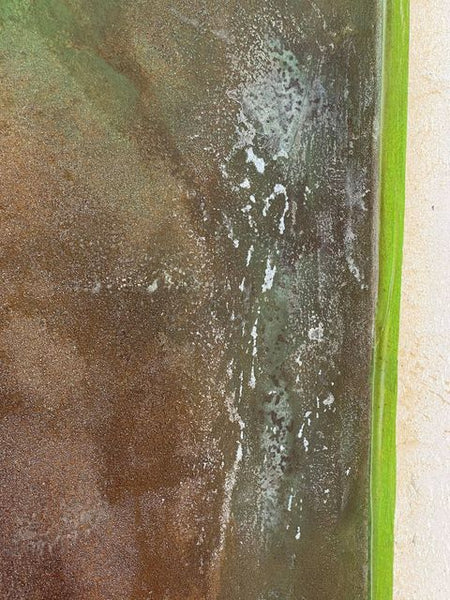
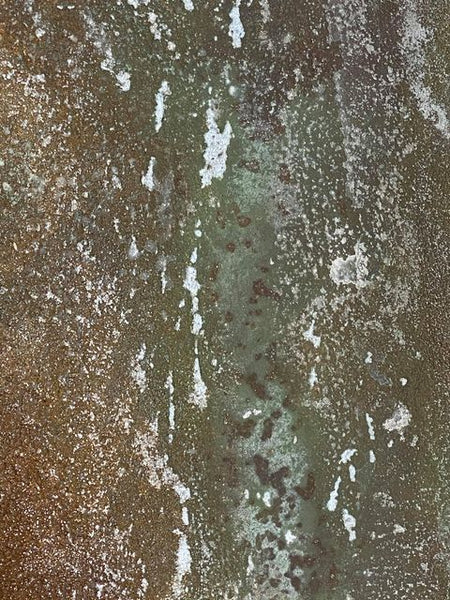
The approach that works
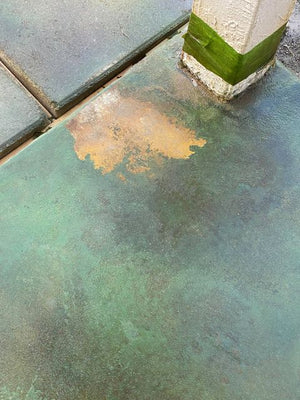
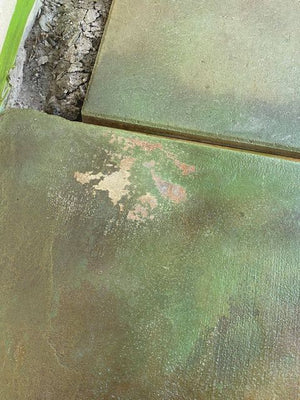
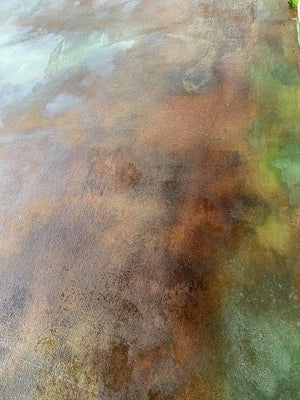
A note on the look: Antiquing™ used alone after grinding gives a more solid, less diffused finish than acid stain. That is a trade — you lose some of the mottled translucency in exchange for evenness and full coverage of the ghosting.
Sealing indoors
Unless you have excellent ventilation to the outside, use a water-based sealer indoors — AcquaSeal™ in gloss or satin. Finish with a concrete floor wax as the finished protective coat.
Shop Antiquing™ Concrete Stain →
Tile Ghosting: FAQs
Why does the old tile pattern show through my acid stain?
Because acid stain follows the surface. Years of footsteps and furniture press the tile outline very slightly lower into the concrete, so more stain sits in those areas and they develop darker. The grid reappears through the finish — that is ghosting.
Will grinding remove tile ghosting?
Not always. Grind and clean the floor properly regardless, but be prepared for the impression to survive it. Check what the grinding exposed as well: if aggregate or sand is now visible, that changes your options, because acid stain will not color stone or sand.
How do I hide ghosting that is still visible?
Most people acid stain first, then correct the areas that did not take. Antiquing™ is very good at evening out a porous floor and disguising a tile matrix, and Vibrance™ Dye covers imperfections and accents where needed. Antiquing™ used alone after grinding gives a more solid, less diffused finish — you trade some of the mottled translucency for evenness and full coverage.
What if the floor cannot be acid stained at all?
If grinding has exposed significant aggregate and sand, a tinted sealer plus dye is the better route than fighting the reaction.
Which sealer should I use indoors?
A water-based one, unless you have excellent ventilation to the outside — AcquaSeal™ in gloss or satin. Finish with a concrete floor wax as the protective top coat.
What's Next
- Other stain problems → Fixing Acid Stain Problems
- Basement floors → How to Stain a Basement Floor
- Long-term care → Caring for Acid-Stained Floors
- Applying stain outdoors → How to Apply Outdoor Concrete Stain
- Choosing a sealer → The Best Concrete Sealer
- Prefer a reactive, mottled look? → Acid Stain Colors Guide
- Shop → Antiquing™ · Vibrance™ Dye · Trial Kits
Direct Colors. Shawnee, OK. Manufacturing the full decorative concrete system since 1997.


