
Pigment is not only for slabs. Anything with Portland cement in it will take color the same way — stucco, grout, mortar, plaster, and cement-based overlays. That opens up a lot of small, cheap projects that look expensive. Here are eight of them.
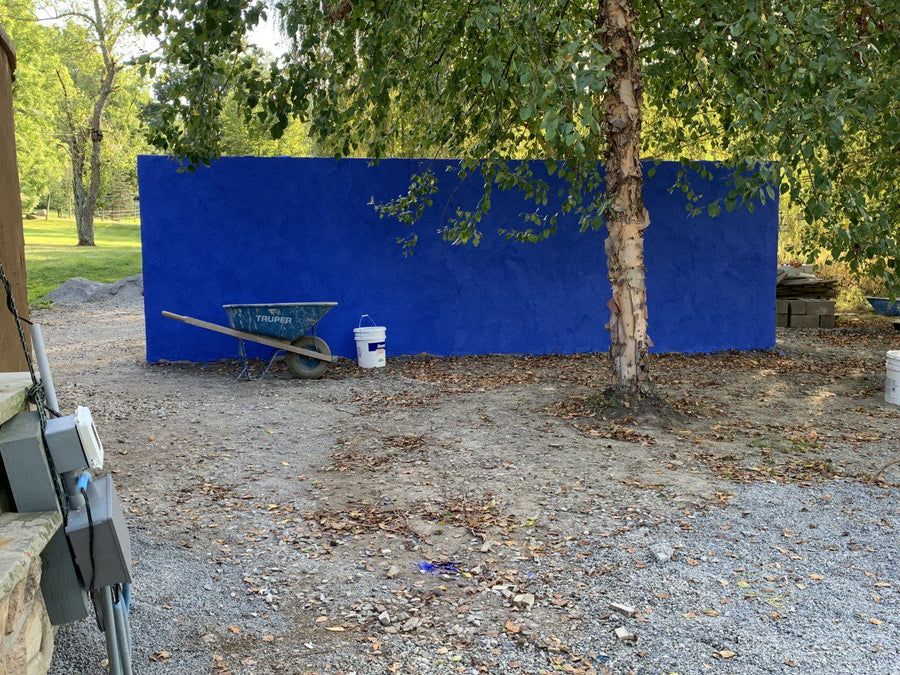
A masonry stucco wall colored with 202 blue pigment.
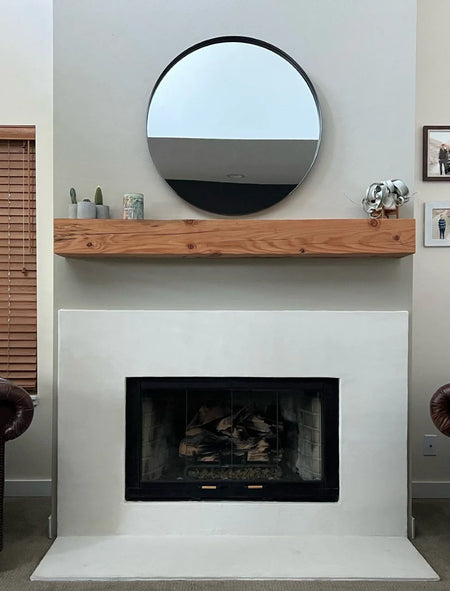
1 · Countertops and fireplaces on a budget
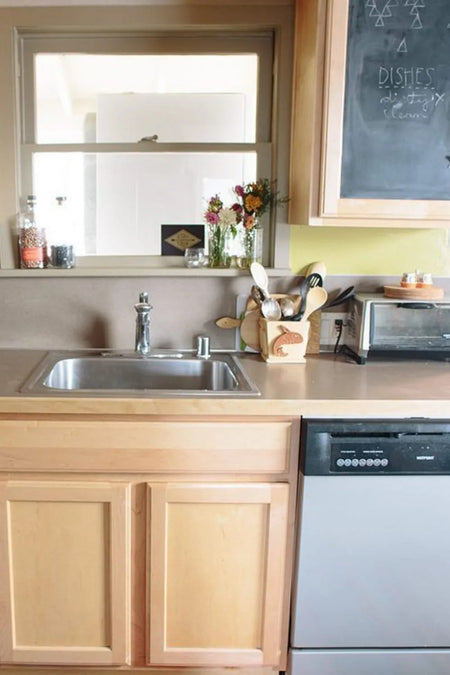
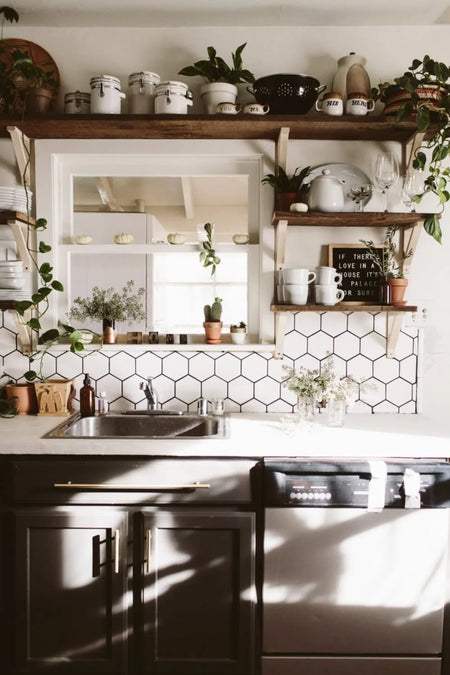
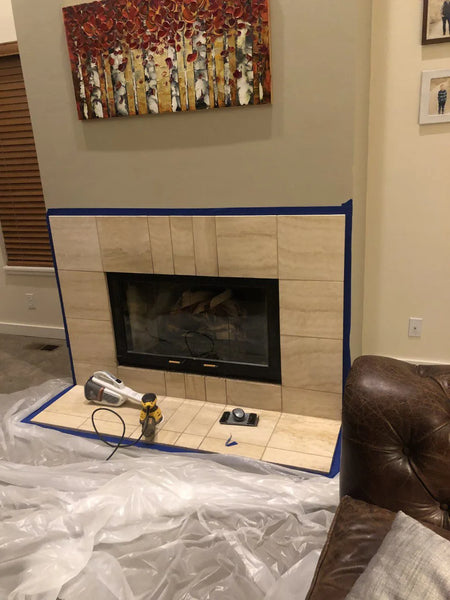
An integrally colored cement overlay goes straight over old laminate, Formica or tile. Color the overlay mix rather than staining afterwards and you get a consistent finish for very little money.
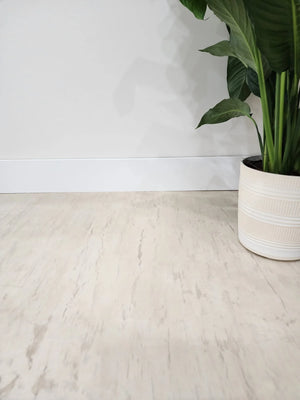
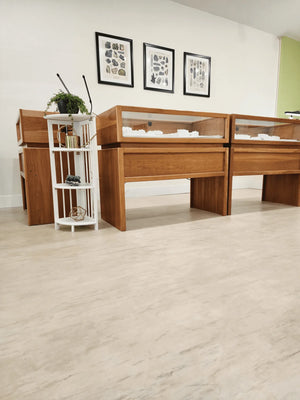
2 · A woodgrain-effect cement floor
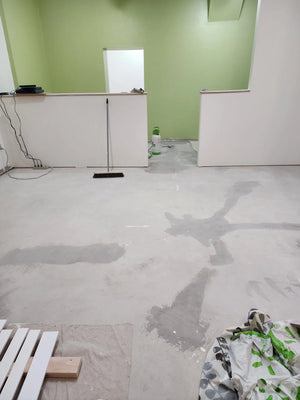
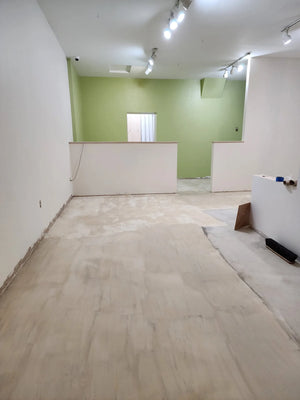
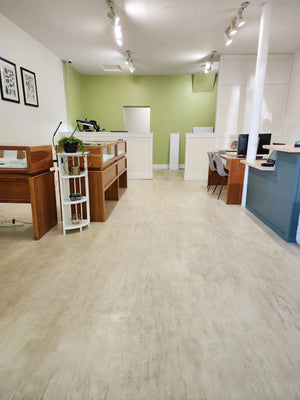
From Nicole Teut, @ethoscustomjewelry. This is the cleverest project here and needs almost nothing: white Portland cement, pigment, a chip brush and a trowel.
- Mix two parts white Portland cement with your pigment to a thick pancake-batter consistency
- Spread it evenly with a chip brush
- Apply a second layer over the first
- Let it dry and harden at least 24 hours
- Press and drag a trowel across the ridges to pull a woodgrain pattern out
Working in sections? Overlap each new section slightly with the last so the joins disappear

3 · Color in the countertop mix itself
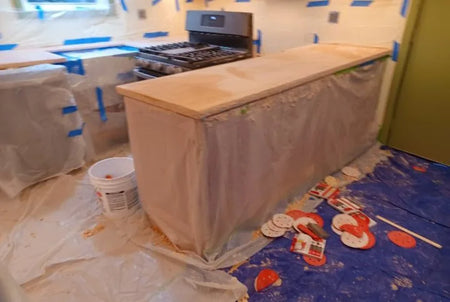
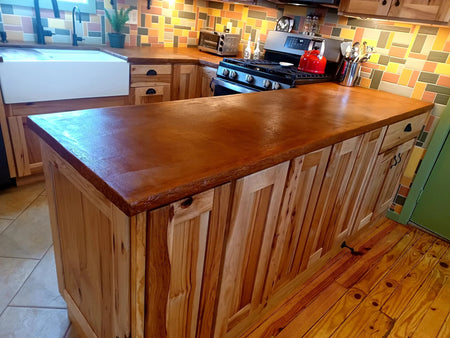
Pigment and acid stain are not alternatives — used together you get an even base color with reactive depth over the top. These counters are a pigmented base with acid stain worked into it.
4 · Grout
Pigment powder mixes straight into grout. Two or more grout colors in one installation is a designer trick that costs almost nothing.
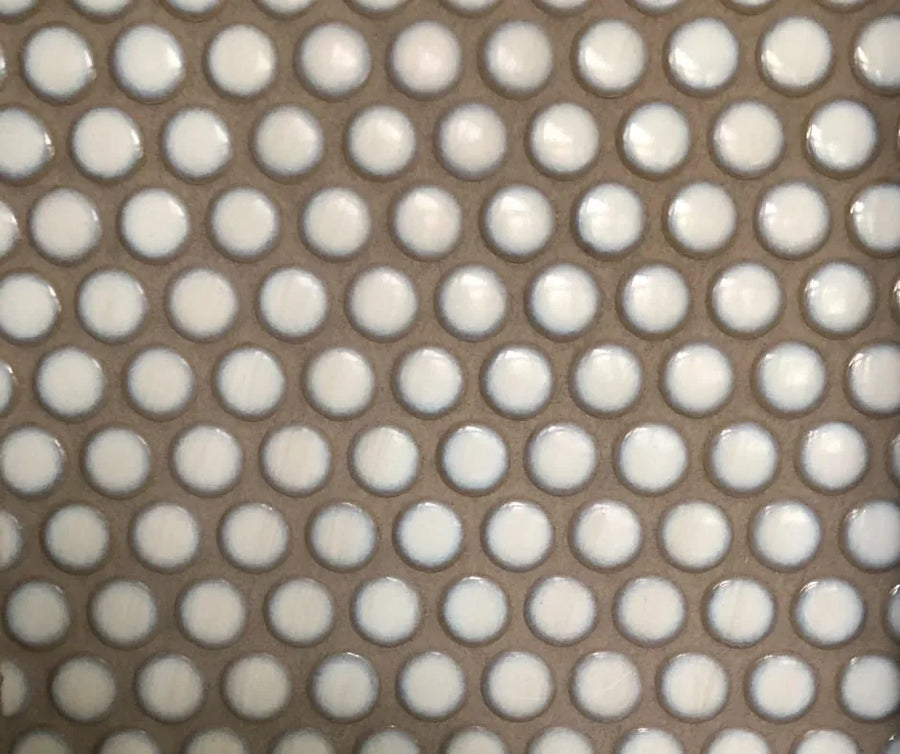
Custom grout colors mixed with concrete pigment.
Full guide → Color your grout with concrete pigment.
5 · Stucco
The biggest money-saver on the list. Coloring stucco integrally means never repainting an exterior — and if the stucco chips, the color runs all the way through.
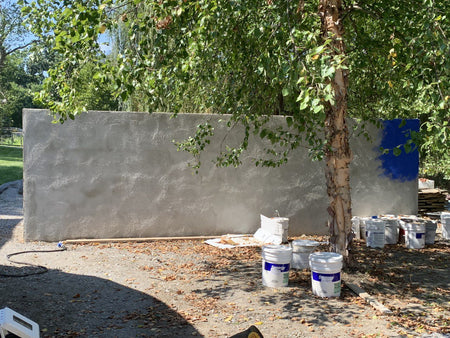
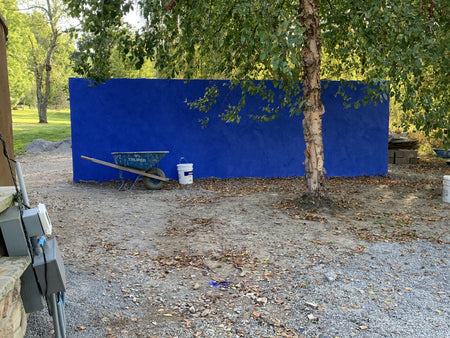
Full guide → Stucco colors with integral pigments.
6 · Plaster
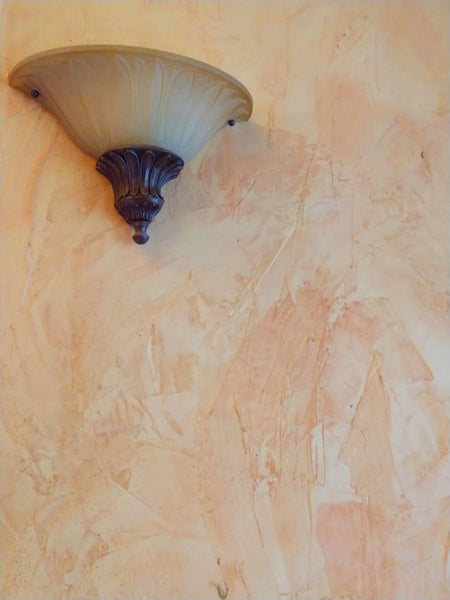
Same principle indoors. Malayan Buff pigment through a white plaster wall gives a soft, even warmth that paint cannot imitate because the color has depth rather than sitting on top.
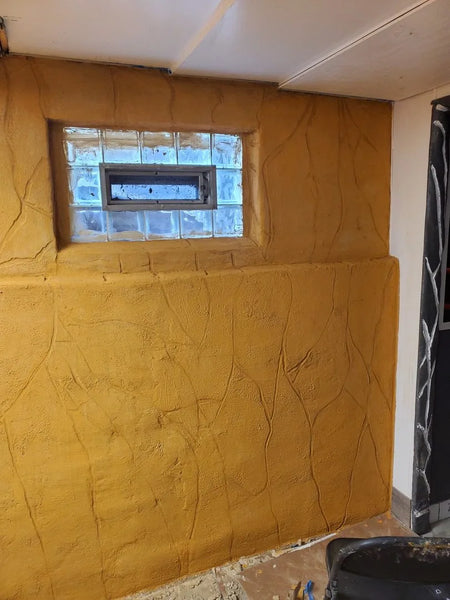
7 · Mortar
Standard mortar is gray, white or buff. Coloring it lets the joints complement the brick instead of fighting it — and it is the difference between brickwork that looks new and brickwork that looks right.
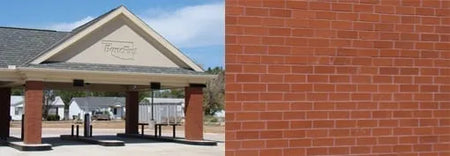
Merlot-colored mortar.
Full guide → Custom mortar colors.
8 · Outdoor art and objects
The pigments are UV-stable, so stepping stones, planters and outdoor sculpture keep their color rather than fading out over a couple of summers.
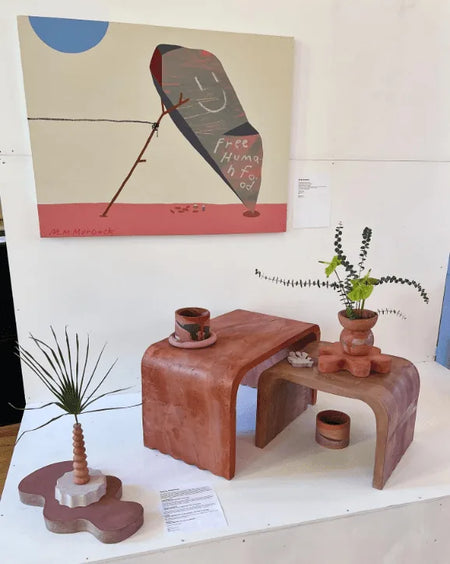

More → Planters, vessels, tables and more.
Pigment Projects: FAQs
Can I use pigment and acid stain together?
Yes — they are not alternatives. Used together you get an even pigmented base with reactive depth over the top, which is exactly what the countertops in this article are.
What is the biggest money-saver on this list?
Stucco. Coloring it integrally means never repainting an exterior, and if the stucco chips the color runs all the way through rather than exposing a different shade underneath.
Will pigmented outdoor pieces fade?
The pigments are UV-stable, so stepping stones, planters and outdoor sculpture keep their color rather than washing out over a couple of summers.
Does pigment work in things other than concrete?
Yes — grout, stucco, plaster and mortar all take it, because they all contain cement or lime. Two or more grout colors in one installation is a designer trick that costs almost nothing.
What's Next
- Quantities → Pigment Calculator · Pigment Sampler
- The fundamentals → Integral Color Concrete
- By surface → Stucco · Grout · Mortar
- Applying stain outdoors → How to Apply Outdoor Concrete Stain
- Choosing a sealer → The Best Concrete Sealer
- Prefer a reactive, mottled look? → Acid Stain Colors Guide
- Shop → EverStain™ Kits · Trial Kits
Direct Colors. Shawnee, OK. Manufacturing the full decorative concrete system since 1997.


