
Acid stain is a low-cost, durable flooring option for concrete — a translucent, penetrating stain that slightly etches and permanently changes the color by reacting with the lime in the slab. It isn’t an overcoat like paint, which is why surface prep matters so much: any drywall mud, paint, adhesive, grease, or old sealer will block the reaction. Here’s how to stain a concrete floor from prep to final wax.
Prefer to listen? Shawna Turner covered whether your slab is a candidate, and how to choose a sealer. The player is at the end of this article.
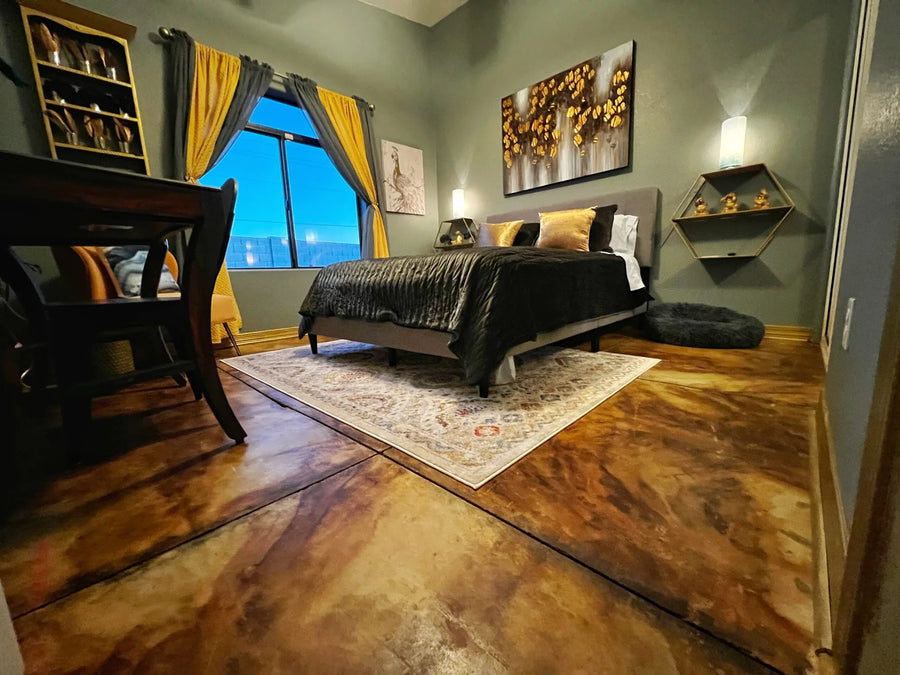
An acid-stained floor in Azure Blue, Desert Amber, and Shifting Sand EverStain™.
Surface prep comes first
Surface preparation is the most important step. The concrete must be free of adhesives, dirt, paint, oils, drywall mud, sealer, and stain — acid stain simply can’t react through a contaminant. Clean with a light concrete cleaner and degreaser, scrub and rinse away all residue, and use a shop vac to pull up the rinse water and speed drying. If the floor is machine-troweled and smooth, etch it with CitrusEtch™ concrete etcher to open the surface for better absorption.
Floors that are NOT ready for staining
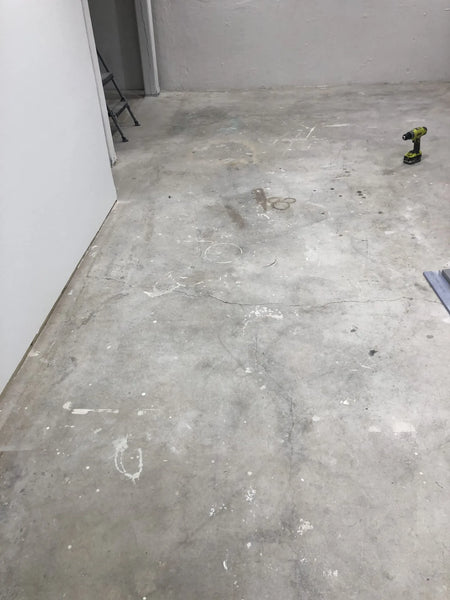
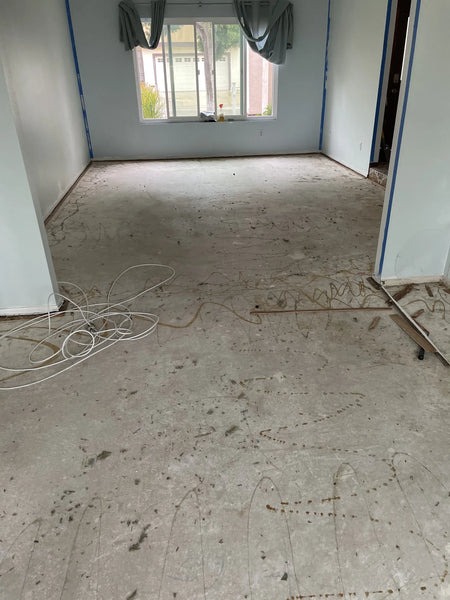
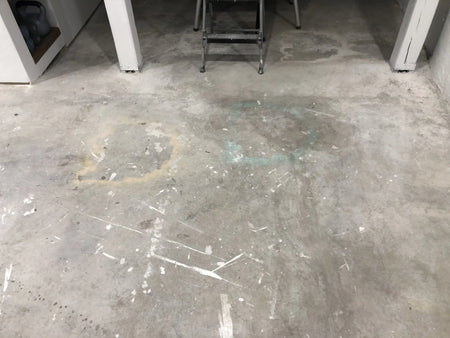
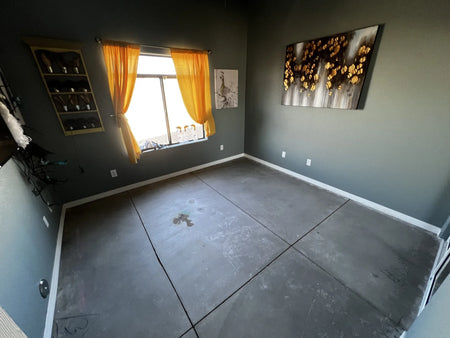
Apply the stain
Apply with a pump-up or industrial plastic sprayer (long sleeves, pants, goggles, and gloves — and acid-resistant spiked shoes so you don’t leave footprints). How you apply it shapes the finish:
- Even tone: spray in a circular motion.
- Dark tone: brush the stain in with consistent circular strokes, then spray a second coat to erase brush marks.
- Diffused look: spray without brushing.
- Marbling: lay one heavy base coat and immediately add scattered accent coats while it’s wet — lighter then darker — until you like it.
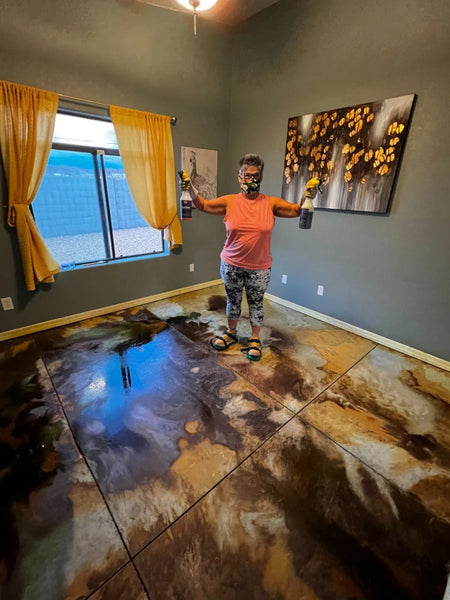
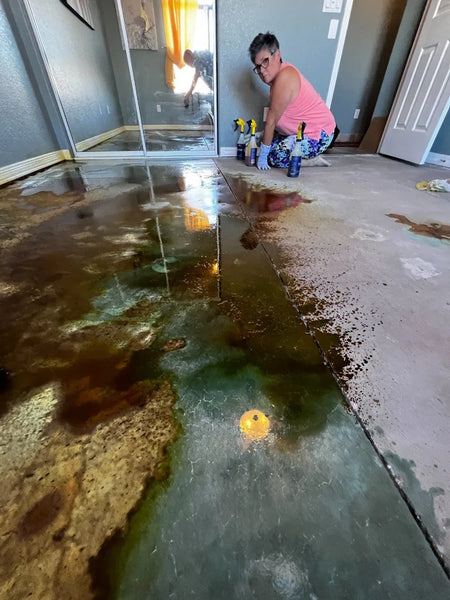
As the stain dries and reacts, a chalky alkali-and-mineral residue forms — that’s normal. Most colors need about 4 to 8 hours to develop (see the activation times); you can leave it longer for deeper color.
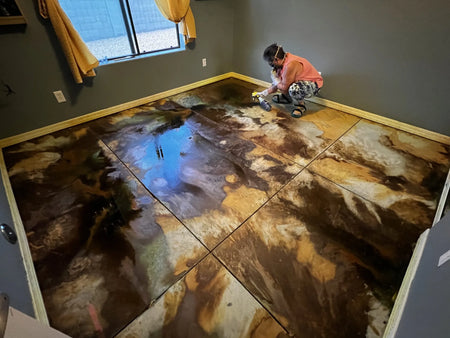
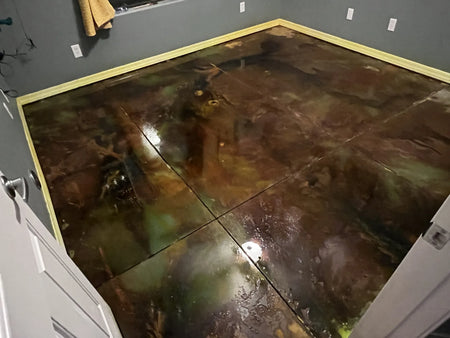
Neutralize and clean
Saturate the surface with ProClean Neutralizer™, scrub it in with a soft nylon brush (spiked shoes on), and let it sit about 20 minutes. Reapply — it doubles as a cleaner — and keep scrubbing and rinsing with clean water until the rinse runs clear, using a shop vac to pull up the water. Swipe a finger across the clean, rinsed surface: if no color or residue comes off, let it dry completely before sealing. Neutralizing is essential — skip it and the sealer won’t bond.
Seal and wax
For indoor floors, seal with AcquaSeal™ water-based acrylic — low-VOC and a safer choice inside. For outdoor floors, use EasySeal™ solvent-based acrylic, which dries fast and makes exterior color really pop. Then, for interior floors, protect the sealer with ProWax Polish™: soak a trim-pad applicator, wring it out, and spread thin, milky coats (they dry clear). Regular waxing matters most in high-traffic spaces.
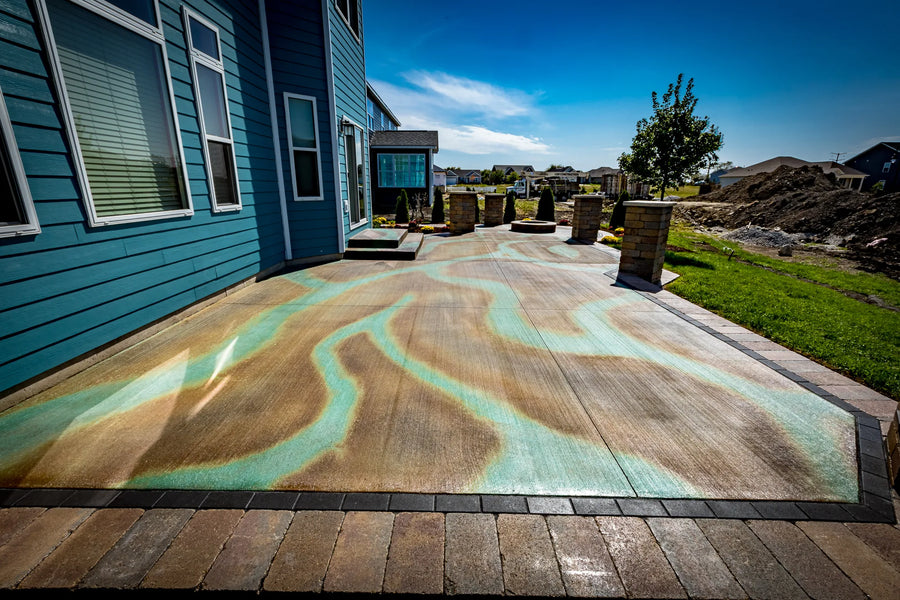
Sealing an exterior acid-stained surface with a solvent-based sealer to bring out the color.
Common questions
How do I know if my concrete can be acid stained?
Test it, and know which way it can fail. Acid stain is a reaction, so it needs something to react with: basement and garage slabs are often too smooth and closed and need profiling first, while weathered patios can be too eroded to react at all. Run the water test, then do a sample on the actual slab with a trial size before ordering for the full area — that is the only way to be certain.
Which sealer should I use indoors versus outdoors?
Water-based indoors, solvent outdoors. AcquaSeal™ is low odor and can be applied in an occupied home or a basement with little ventilation. Outdoors, EasySeal™ Satin is the default. If you want a solvent high gloss indoors it can be done, but only with excellent ventilation to the outside and a respirator.
Is a high-gloss sealer a bad idea outdoors?
It is, on anything smooth. Save the gloss for heavily textured, porous or stamped concrete, where the texture keeps its grip. On smoother outdoor slabs — especially pool surrounds and garage floors — use satin instead, so the surface does not turn into an ice rink when wet. That is a safety call, not an aesthetic one.
What if I want a matte finish with no film at all?
ProSeal Li™. It penetrates instead of forming a film, dries completely matte with no color change, and is notably salt-resistant — which makes it a strong choice on driveways, patios and garage floors in cold climates where de-icing salt is a fact of life. It also avoids the periodic recoating a film sealer needs.
Listen to this episode
Direct Colors DIY Home Improvement · Episode 37
Acid Stain Concrete Indoors and Out
Tyler Thompson and Shawna Turner · 7 min 33 sec · read the full transcript
What’s Next
- The full method → How to Apply Acid Stain to Concrete
- Timing → Acid Stain Activation Times
- Blending colors → Layering Acid Stains
- Shop → EverStain™ · AcquaSeal™ · Trial Kits
Direct Colors. Shawnee, OK. Manufacturing the full decorative concrete system since 1997.


