


EverStain™ 3-Step Trial System
EverStain™ 3-Step Trial System
Your Bundle
Need help?
Talk to one of our concrete color experts.
Request a Callback
Leave your number and our team will call you back.
About: EverStain™ 3-Step Trial System
Thanks — we'll call you back!
Our team will reach out shortly during business hours.
Product Details
Product Details
The EverStain™ Trial System is the smart way to test acid stain colors before committing to a full project. It includes 3 of your choice EverStain™ colors in sample sizes, your choice of sealer, ProClean Neutralizer, and 6 foam brushes — everything you need to test colors on your actual concrete and see exactly how each one will look on your specific surface before ordering the full quantity.
Concrete varies more than most people realize. Concrete age, surface finish, mineral composition, and existing color all affect how an acid stain reacts on your specific surface. EverStain™ works through a chemical reaction with the minerals in your concrete — which means the same color can produce dramatically different results on a smooth-troweled new driveway versus an older, more porous patio, or on a stamped surface versus a broom-finished one. Testing on your actual concrete is the only reliable way to predict your final color.
⚠ Especially Important If Your Concrete Is New
If your concrete was poured in the last several years, testing before you buy full quantities isn't just smart — it's essential.
Modern concrete mixes increasingly rely on additives and supplementary materials such as fly ash, slag, and silica fume to replace a portion of Portland cement, which has become expensive. The problem: acid stain gets its color from a chemical reaction with the minerals naturally present in Portland cement. Less Portland cement means fewer minerals available to react — which means weaker color, patchy results, or in some cases, minimal reaction at all.
There is no way to look at a slab and know how much Portland cement it contains. Your contractor may not know either. The only way to find out how EverStain™ will react with your specific concrete is to test it. A Trial System costs a fraction of full-size product. Discovering a weak reaction after applying stain to your entire patio or driveway is a problem that cannot be easily undone.
Why You Need to Test on Your Actual Concrete
The variables that affect how EverStain™ reacts on your specific surface include:
- Concrete mix composition — Modern mixes often contain fly ash, slag, or other cement substitutes that reduce the mineral content acid stain needs to react with. This is the single most important variable for new concrete.
- Concrete age — Newer concrete generally has more calcium hydroxide available for reaction, but the specific mix design matters as much as age. Do not assume new concrete will react strongly.
- Surface finish — Smooth-troweled, broom-finished, stamped, and textured surfaces all hold and absorb acid stain differently, affecting color depth and mottling
- Porosity — More porous concrete absorbs stain more deeply, intensifying color; denser surfaces produce lighter, more variegated results
- Existing color — Light gray concrete will show a different final tone than darker integrally-colored concrete after the chemical reaction completes
- Prior treatments — Any existing sealer, curing compound, or coating will block the chemical reaction entirely in those areas
Testing 3 EverStain™ colors on your actual concrete shows you exactly what each color will look like after the reaction, neutralization, and sealing process. The Trial System lets you see the final result before you commit to a full project.
Why Testing Saves You Money
A full EverStain™ project involves stain, neutralizer, and sealer — a meaningful investment. If you order full quantities, apply the stain, and discover the color reaction is weaker than expected — or doesn't react at all due to a low-Portland cement mix — you cannot simply recoat or adjust. Acid stain produces a permanent chemical change in the concrete surface, and where little reaction occurs, there is little to build on. The Trial System is the insurance policy against that expensive mistake.
Choosing Your Sealer
The sealer you apply over EverStain™ affects the final color appearance as much as the stain itself. That's why your Trial System includes your choice of sealer — so what you test is exactly what your finished project will look like. We offer three options:
- EasySeal™ (solvent-based) — Penetrates deeply and dramatically enriches the acid stain color, producing the deepest, most saturated result. Important: EasySeal™ has strong solvent fumes and requires excellent ventilation and strict solvent safety precautions during application. Best choice if color depth is your priority.
- AcquaSeal™ (water-based) — A low-odor, water-based option that's easier to apply and more comfortable to work with. Color richness will be somewhat less intense than EasySeal™, but still a beautiful result for many applications.
- HydraCryl™ (water-based hybrid) — Our highest-performance sealer. HydraCryl™ delivers protection comparable to a polyurethane sealer without the complexity of a two-component system, and it's water-based. This is the best of both worlds: the durability of a hard-film sealer with the ease and low odor of a water-based product.
Not sure which to choose? If maximum color depth is your goal, start with EasySeal™. If you want high durability with easier application, HydraCryl™ is the right pick. AcquaSeal™ is a solid choice for lower-traffic areas where ease of application is a priority.
How to Use the Trial System
- Pick your test area carefully. Choose an inconspicuous section of your actual concrete — a driveway edge that will be covered by plantings, a hidden corner of a patio, or a piece of scrap concrete from the same pour. Test on the actual surface you plan to stain, not a different slab.
- Clean and prep the test area the same way you'd prep your finished project — degrease and rinse thoroughly. Remove any existing sealer or coating before testing; EverStain™ cannot penetrate a sealed surface.
- Mark out 3 test sections. Label them so you remember which color is which.
- Apply each EverStain™ sample with a separate foam brush. Never reuse a brush across colors — cross-contamination alters the reaction.
- Allow the stain to react for the recommended dwell time, then neutralize each test section with the included ProClean Neutralizer, rinse thoroughly, and allow to dry completely.
- Apply your included sealer over the dry, neutralized test areas. This step is essential — unsealed acid stain looks noticeably different than sealed, and this is your true final result.
- Allow to cure for 24–48 hours to see the final cured color and sheen.
- Compare the results and pick your color and sealer. Once you've chosen, order your full-size EverStain™ Acid Stain.
⚠ Safety
EverStain™ is a reactive acid-based product. Wear chemical-resistant gloves, safety glasses, and protective clothing during application and neutralization. Apply in a well-ventilated area. Keep bystanders and pets away from the work area until the surface has been fully neutralized and rinsed. If you selected EasySeal™, additional solvent safety precautions apply — keep away from ignition sources and ensure adequate ventilation during sealer application.
Direct Colors: Made in the USA Since 1997
The EverStain™ Trial System contains the exact same EverStain™ formulation as the full-size product — just in sample quantities. The chemical reaction you see in the trial is the reaction you'll get on the full project.
Specifications
Specifications
| Location | Suitable for both interior and exterior surfaces. |
|---|---|
| Reaction Time | Wait at least 5 to 12 hours for the acid stain to react before proceeding with neutralization. |
| Coverage | Each trial-size color can cover approximately 6 sq. ft., varying by surface condition. |
| Recommended Sealers | Compatible with AcquaSeal™ & HydroCryl™ Water-based Acrylic Sealers or EasySeal™ Solvent-based Acrylic Sealer. |
| Application Temperature | For optimal results, apply between 40°F–95°F (4°C–35°C). |
Items Included
Items Included
| Choice of Stain Color | Three EverStain™ acid stain colors (4-ounce each). |
|---|---|
| Choice of Sealer* | EasySeal™ Solvent-base or AcquaSeal™ Water-based Sealer (Satin or Gloss finish) - 4-ounce. |
| For Neutralizing | One ProClean Neutralizer™ (4-ounce), essential for preparing the stained surface for sealing. |
| Application Tools | Six foam applicator brushes. |
Your payment information is processed securely. We do not store credit card details nor have access to your credit card information.

People Frequently Also Purchased

Choose your option

Choose your option


Reusable Cleaning Cloths -10 Pack
Choose your option


CitrusEtch™ 2-Step Etching System
Choose your option

ProClean Daily™ Neutral Cleaner
Choose your option
Frequently Asked Questions
I’ve just applied acid stain to my concrete and after it dried, it barely has any color. What happened?
I’ve just applied acid stain to my concrete and after it dried, it barely has any color. What happened?
This is one of the most common questions we receive, and we totally understand where you’re coming from! Not only have you put in the work to prepare for concrete stain, but you’ve also applied the acid stain, neutralized, and scrubbed the remaining residue. It looked great initially, but then you watched the color fade as the concrete dried. Not to worry; the color is still there, and you’ll see it return when you begin the sealing process. Concrete sealer causes the color to pop more intensely. Be mindful of a decision you’ll need to make between solvent-based or water-based sealers. While both are great options, the difference is that solvent-based sealers will “pop” color much more intensely than water-based sealers. Water-based sealers will tend to soften in color as they cure.
Why didn’t EverStain™ work on my concrete?
Why didn’t EverStain™ work on my concrete?
This can sometimes happen. Please take a look at the FAQ “How does EverStain™ work?”. It’s an important part of understanding why it maybe didn’t go as planned. Most concrete ready-mix plants use varied mix designs while “batching” concrete. Many have adopted the use of fly ash as a replacement for a percentage of Portland cement. Fly ash will not react with acid stain, and since it’s lighter than Portland when the surface is being finished or troweled, a higher percentage of the fly ash floats to the surface, diminishing the effects of EverStain™. This is not representative of the quality of acid stain but rather the proper quality of concrete for acid staining. If the fly ash dosage exceeds 10%, you may be having difficulty getting EverStain™ to work as intended. Consider aggressively sanding the surface to remove a micro-layer made of predominantly fly ash. This will help expose the richer mineral content and may potentially react more robustly with EverStain™.
How much surface preparation is required before applying EverStain™ Acid Stain?
How much surface preparation is required before applying EverStain™ Acid Stain?
Surface preparation is often the most critical factor in any successful decorative concrete project. The concrete surface MUST be free of cure and seal, sealer, paint, dirt, grime, and grease. Once the surface is nice and clean, make sure it has enough porosity for the stain to penetrate the surface. If the concrete is too smooth (slick) and the acid stain isn’t able to penetrate, you’ll get a diminished color return. Trust us - it’s totally worth it to put in the extra time to set yourself up for a successful and long-lasting project!
I purchased the amount of product your concrete stain calculator recommended based on my square footage, and still needed more. What happened?
I purchased the amount of product your concrete stain calculator recommended based on my square footage, and still needed more. What happened?
Depending on your concrete surface and chosen application methods, coverage rates can vary. We follow industry standards of approximately 200 square feet per gallon, which commonly applies to lower viscosity products like colorants and concrete sealers. First, it’s always good to double-check your calculation of square footage. From there, a few variables come into play. How porous, weathered, or worn is your concrete? How heavily are you applying the product? On smoother, less porous concrete, you may find you’re getting a bit more coverage than anticipated. For stamped, textured, or more weathered, porous concrete, you may get a bit less coverage. These variables aren’t calculation errors, but more of a common indefinite. When in doubt, follow the general construction rule of rounding up for your supply needs.
What happens if you stain concrete before it cures?
What happens if you stain concrete before it cures?
Any stain applied to concrete before it has fully cured for at least 28 days is likely to experience unintended color effects. Think about it - acid stain is a water-based liquid containing reactive minerals. When it seeps into the pores of the concrete, a chemical reaction occurs between the acid stain and the available lime on the surface. If the concrete hasn’t fully cured, the concrete will evaporate more water into the stain while it reacts - so the color will either look watered down or not take hold at all!
Do I have to let my concrete surface dry after cleaning, prior to applying acid stain?
Do I have to let my concrete surface dry after cleaning, prior to applying acid stain?
There’s no need to let it dry, as concrete can be damp before applying stain. However, you should not have any puddles of water present before staining, as the water will dilute the acid stain.
I have a new concrete/new pavers. I want to change the gray to match some existing concrete/pavers I have nearby. Can I use EverStain™ Acid Stain for this project?
I have a new concrete/new pavers. I want to change the gray to match some existing concrete/pavers I have nearby. Can I use EverStain™ Acid Stain for this project?
An acid stain trial kit is a great way to see if EverStain™ is right for your particular project.
Can you put acid stain over concrete sealer?
Can you put acid stain over concrete sealer?
No, the acid stain needs to be in direct contact with concrete without any sealers to prevent a reaction.
Can I put tinted sealer over acid stain to darken the color?
Can I put tinted sealer over acid stain to darken the color?
Yes, tinted sealer provides a translucent color of your choice that allows the undertones and variations to show through while subtly influencing the color in your desired direction.
Do I wait for my first coat of acid stain to dry before applying the second coat/color?
Do I wait for my first coat of acid stain to dry before applying the second coat/color?
It is not necessary to wait for the first coat to dry. However, if you are looking for a stark separation in color, particularly when using two colors, you might consider applying the second color after the initial color application has dried. Keep in mind as you plan your stain work, darker colors will override lighter colors.
Can I dilute the acid stain with water?
Can I dilute the acid stain with water?
Yes, EverStain™ may be diluted with water to achieve a lighter shade in color. We don’t recommend diluting our acid stain more than four-parts water to one-part stain without performing an initial dilution test.

How to Apply EverStain™
Explore our full range of EverStain™ Acid Stain concrete colors and find the perfect tone for your project.
- Preparation
- Application
- Drying Times & Protection
- Maintenance & Safety
Product Videos
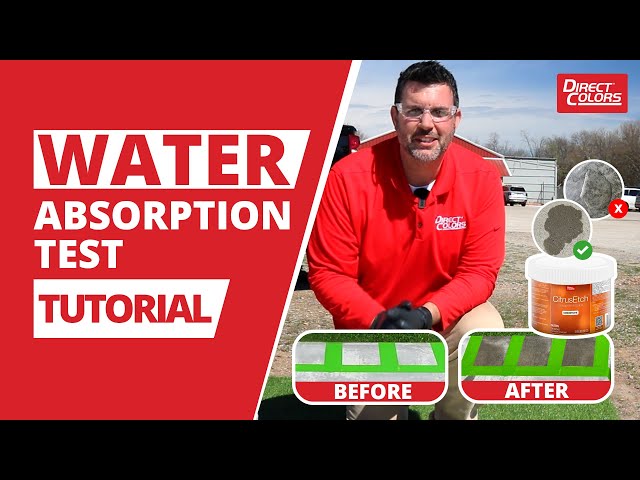
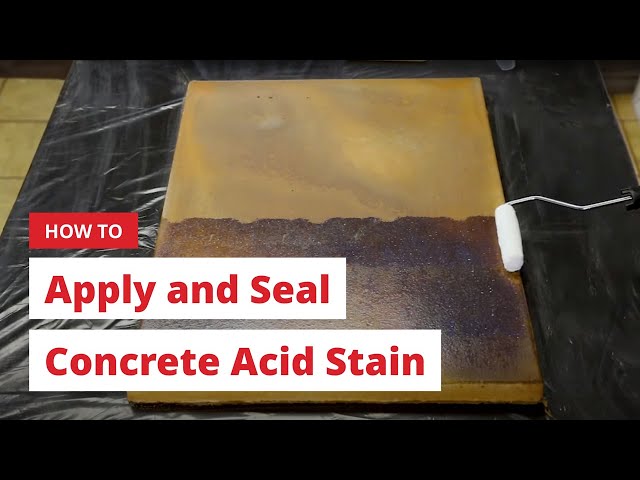
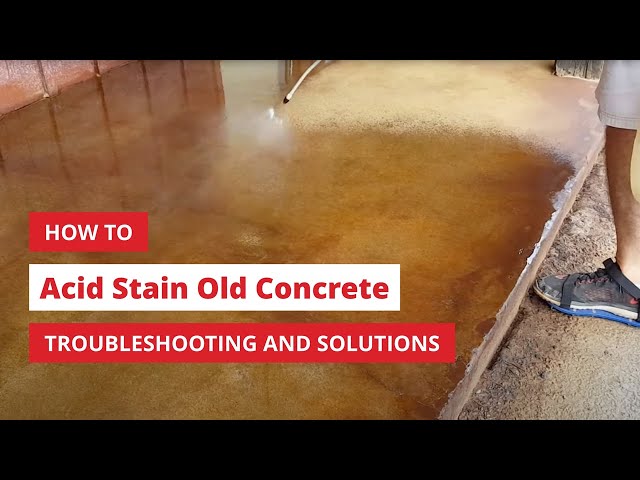
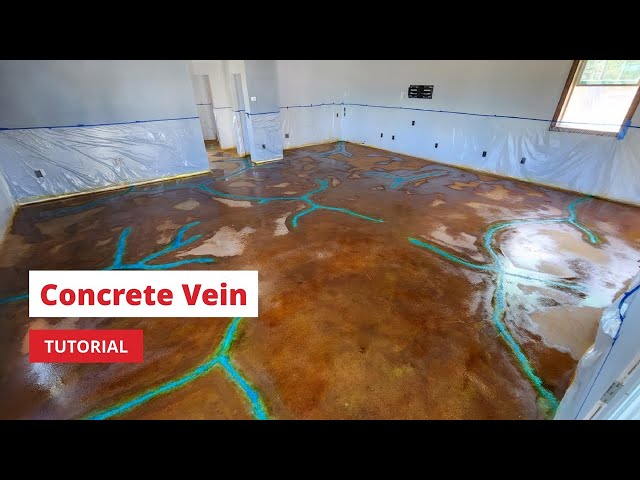
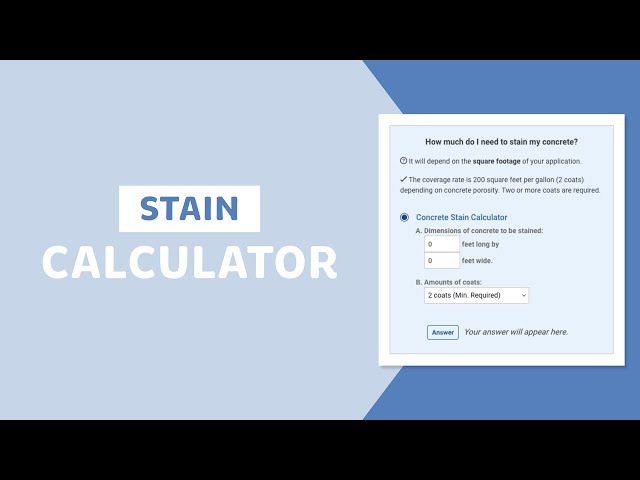

EverStain™ Acid Stain
Explore the complete EverStain™ Acid Stain palette and discover the perfect shade for your concrete project.
- 10 reactive acid stain colors for natural concrete variation
- Translucent marbled finish creates rich dimensional results
- Suitable for interior & exterior concrete surfaces
- Designed for decorative and architectural concrete applications

Related Links


