
Stepping stones are the project we recommend first, because everything that can go wrong on a countertop or a fire table goes wrong cheaply on a stepping stone. You need a form, a bag of mix and a way to color it, and at the end you have a path. Store-bought pavers cost several times as much and come in whatever colors the store decided on.
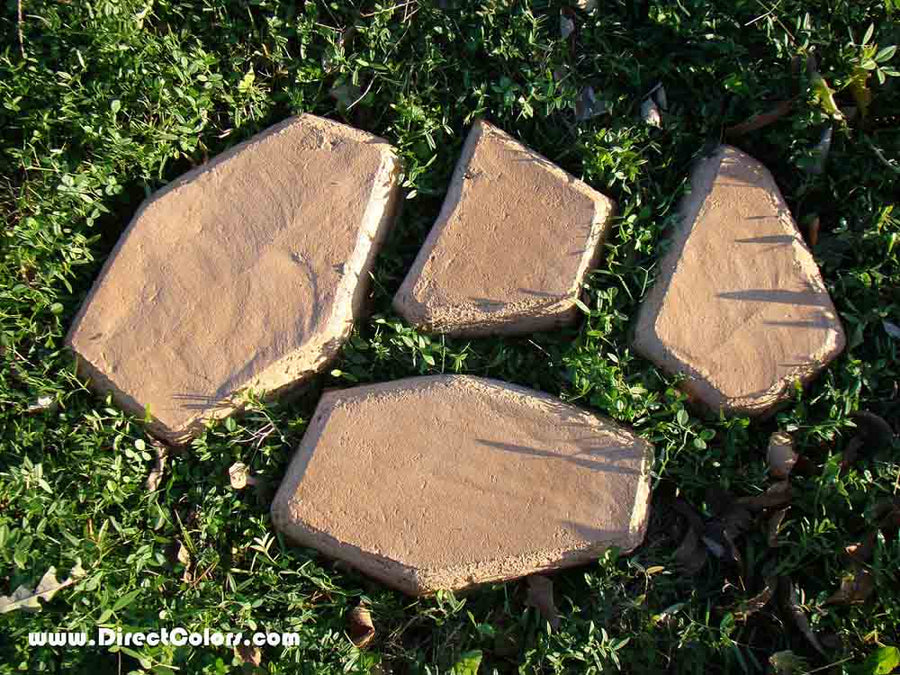
Cast stepping stones colored with concrete pigment in the mix.
Forms first
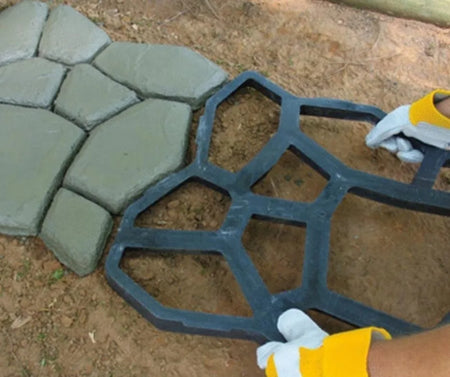
Forms and molds are sold at any hardware supplier, and they are also easy enough to make at home out of timber, plastic sheet or even cardboard for a one-off. We do not sell them. Whichever route you take, pick a size that suits the path you have in mind before you start mixing — the awkward moment is discovering halfway down the garden that the stones are too small for the stride.

Release agent
Spray the forms before you pour so the stones come out cleanly once cured. This matters as much for regular gray or white-based concrete as it does for pigmented mixes. We sell NoStick™ Liquid Release Agent, a colorless release that evaporates without leaving residue — it is sold for stamp tools, and it does the same job on a form.
Color in the mix: concrete pigment
The most common way to color stepping stones is integrally, with concrete pigment mixed into the mortar. The color runs all the way through, so a chipped edge is still the right color, and the stones pop out of the mold finished. Solid color is the right choice when the stones are part of something larger — a patio, a walkway, a planting scheme you are matching.
The two mixing rules
Mix the pigment into the dry concrete before adding water. Pigment added to a wet mix streaks, and no amount of extra stirring fully fixes it. If you are batching, keep every batch identical — same weight of pigment, same mix, same water. Stones from two different batches sitting side by side in a path will show any variation, and there is no way to correct it afterwards.
A pigment sampler is the sane way to choose a color before committing to a full bag, and the full range of colors is in the pigment collection. There is more on integral color in how to integrally color concrete.
Color on the surface: four options
Pigment gives you one even color. Everything interesting happens when you color the surface instead — and all four of these work on plain gray stones and on stones you have already pigmented, which is how you get depth.
Acid stain, for variation and movement
EverStain™ reacts with the cement, so it never lands as a flat color — you get the mottled, natural variation that makes cast concrete read as stone. On something this small you can spray it, brush it or dip the stone straight into the stain. Follow the neutralizing step properly, the same as on a floor: see how to neutralize acid stain.
Gel stain, for controlled design
DecoGel™ has the consistency of oil paint, which means you can put it exactly where you want it with an artist’s brush and it will stay there. That makes monograms, dates, house numbers, images and hand-lettering possible on a stepping stone — a time-capsule stone with a date on it is a genuinely good afternoon with children involved.
Antiquing™ Stain, for solid color with texture
Antiquing™ Stain sits between pigment and acid stain: more opaque than acid stain, more varied than paint, and it settles into surface texture, which is exactly what a cast stone has. Good choice if you want a specific color rather than whatever the reaction gives you.
Tinted sealer, for speed
EasyTint™ is color and sealer in one pass, in two dozen colors, and it is the quickest way to get a batch of stones done. Because it is a coating rather than a reaction it also covers unevenness, so it is the right pick if the stones came out patchy. Layer it light to dark for pattern. For durability, put a clear coat of sealer over the tinted coat.
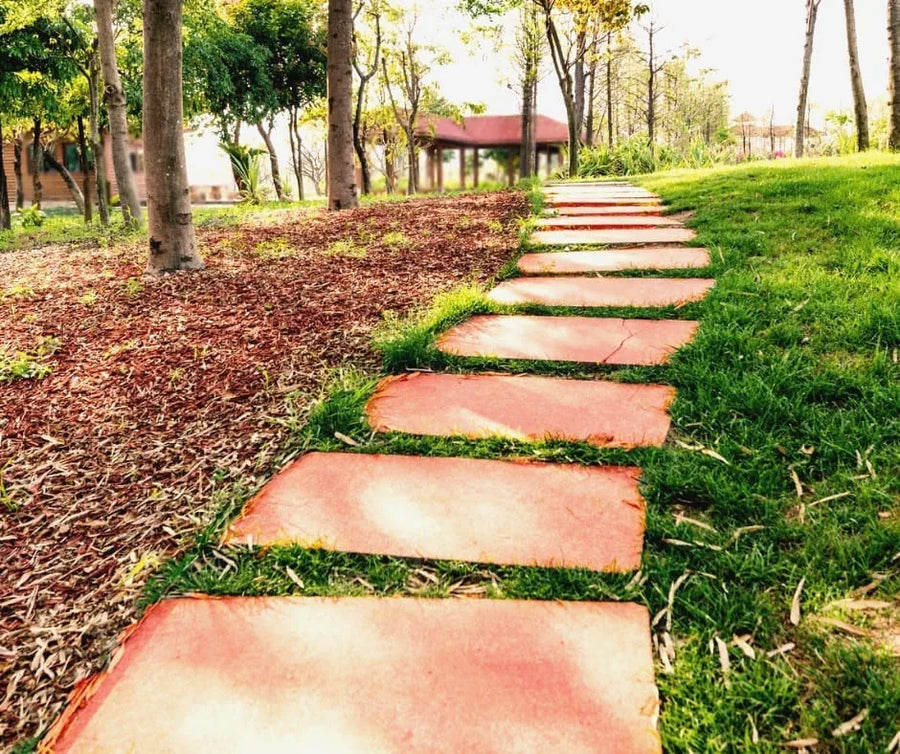
Colored stepping stones set into a garden path.
Where this goes next
Stepping stones are the same skill as everything else we make — mold, mix, color, seal. Once the process is familiar, the pieces get bigger and the molds get more interesting.
Stepping Stones: FAQs
Should I color the mix or the surface?
Both work and they give different results. Pigment in the mix gives one even color that runs all the way through, so a chipped edge does not show gray. Coloring the surface — acid stain, Antiquing™ or tinted sealer — is where the interesting results are, and it works on plain or already-pigmented stones.
What are the two rules for mixing pigment?
Mix it into the dry concrete before adding water — pigment added to a wet mix streaks, and stirring does not fully fix it. And batch identically: same pigment, same mix, same water every time, or the stones will not match each other.
Which surface colorant should I choose?
EverStain™ for mottled natural variation, DecoGel™ for controlled design work with an artist’s brush, Antiquing™ for solid color that still settles into texture, or EasyTint™ for speed — color and sealer in one pass.
Do I need a release agent?
Yes, and it matters just as much for plain gray or white mixes as for pigmented ones. Spray the forms before you pour so the stones come out cleanly once cured.
What’s Next
- The whole craft pillar → DIY Concrete Craft Projects
- Color in the mix → How to Integrally Color Concrete · Concrete Pigment Projects
- Take it up a size → Concrete Fire Table
- Stones into a path → Concrete Walkway Ideas
- Shop → Pigment · EverStain™ · Antiquing™ · EasyTint™


