
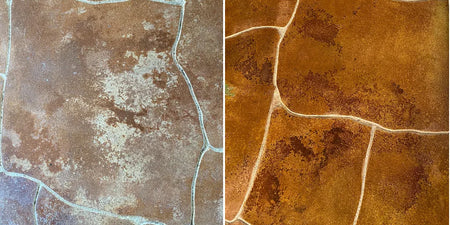
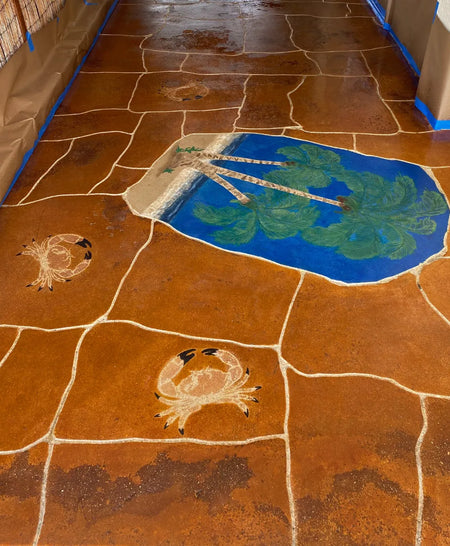
A Florida cement breezeway, 30 years old, previously stained and sealed, then hit by Hurricane Irma in 2017. The finish had worn off the traffic lanes, some of the cement was eroded or broken outright, there were stucco paint splatters, rust and mold stains — and etched artwork in the slab that had to survive the whole process. Jonathan Wiens took it on and won our April 2021 contest with it. It is the best worked example we have of prep on a floor that is genuinely in bad shape.
Prefer to listen? Justin Richardson covered profiling old slabs, exposed aggregate, and layering colors. The player is at the end of this article.
Everything wrong with it, in the owner’s own list
- Faded and worn existing stain and sealer
- Splattered stucco paint droppings
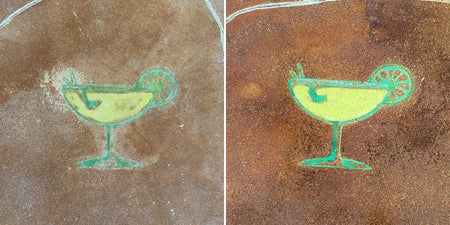
- Faded, worn engraved artwork that had to be preserved and restored
- Broken and chipped cement
- Moldy cement
- Rust-stained cement
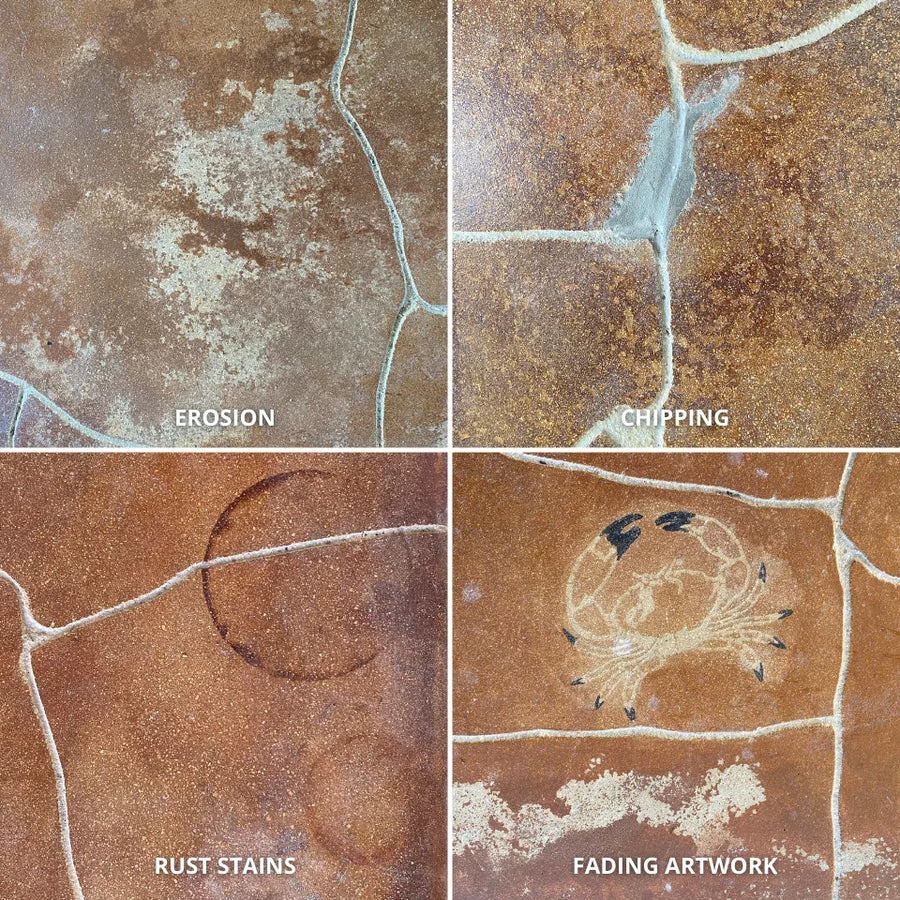
The breezeway before work started — worn finish, damage and staining across the whole floor.
Two tests before you buy anything
You cannot order materials for a floor like this until you know two things about it, and neither test costs anything.
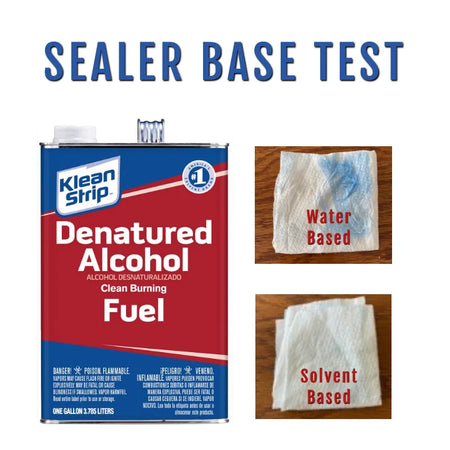
Is the existing coating water based or solvent based?
Dip a cotton ball in denatured alcohol and wipe it gently across a painted area. If it picks up color, the paint is water based. If it does not, it is oil or solvent based. That answers what will remove it.
Will the slab absorb at all?
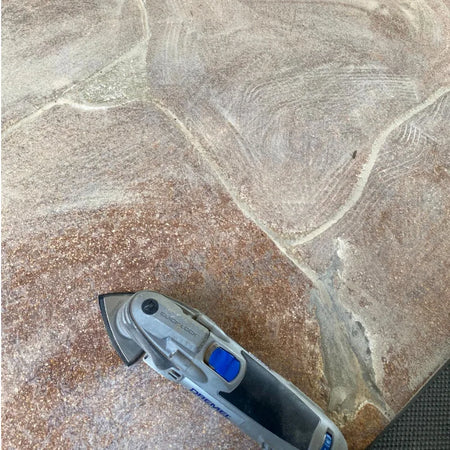
Pour a cup of water in several different places across the floor. If it has not absorbed within 5 minutes, there is still sealer in the way and it has to come off — he used a diamond oscillating sander, and removed the old stain and paint with the same tool. Our surface preparation guide covers the chemical alternatives if sanding a whole floor is not practical for you.
Test the colors, then repair the slab
Pre-test with an EverStain™ trial kit on a small patch to check the color match and see what the stain actually does on this particular concrete. On a 30-year-old previously stained floor that step is not optional — the old color underneath will influence the new one.
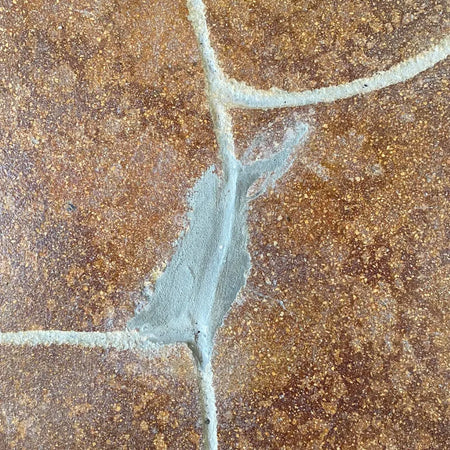
Then deal with the structure: repair broken concrete, and chip out anything that is mold-stained or rust-stained rather than trying to clean it. Contaminated cement stays contaminated; removing it is the reliable fix, and the patch will take stain more predictably than the stain will hide a rust bloom.
Mask, then cut in with foam brushes
Mask off walls, doors and adjacent flooring — acid stain gets everywhere. Then use foam brushes to cut in around walls and around the art objects in the floor, the same way you would cut in paint. Apply the stain evenly and avoid flooding the grout lines.
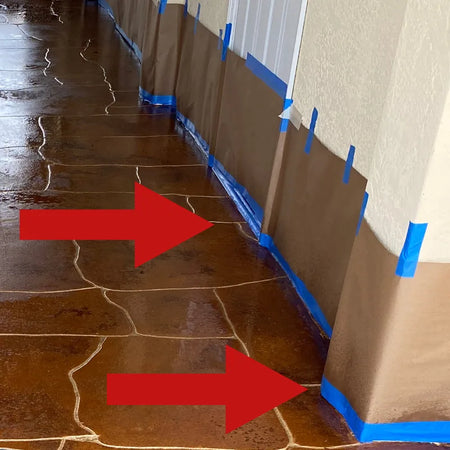
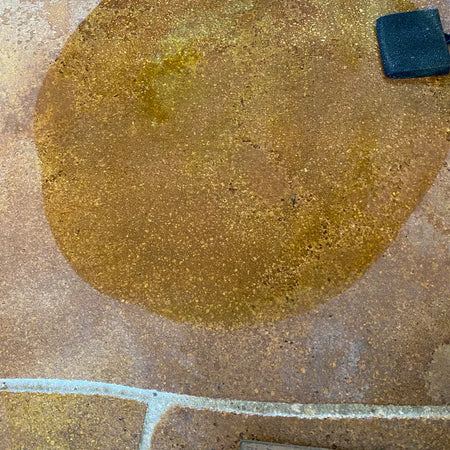
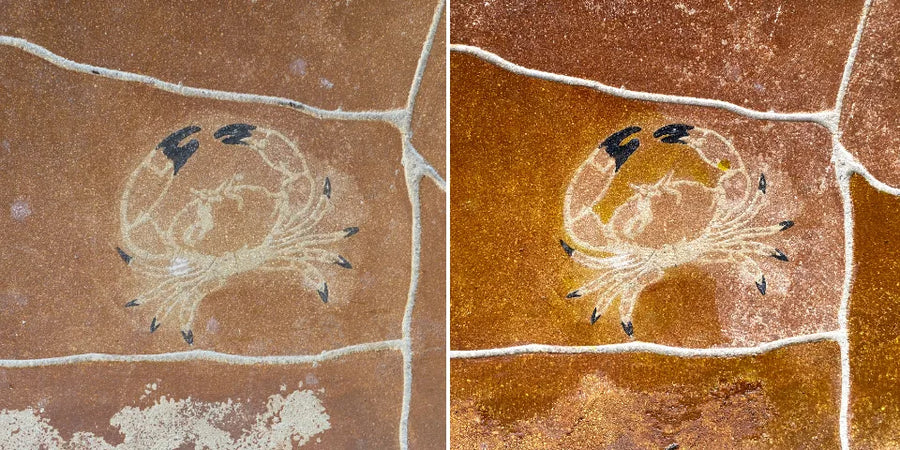
Cutting in around walls and artwork with foam brushes.
— Jonathan Wiens
Two colors, wet into wet
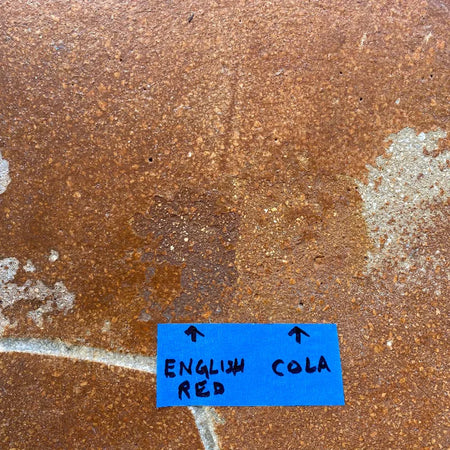
With more than one color, start with the lighter color and apply the secondary colors while the first is still wet. That is what lets them blend into each other instead of sitting in visible zones — here, Cola over English Red across a floor with 30 years of variation already in it.
Then leave it alone. Cure at least 8 hours, rinse thoroughly until the water runs clear, and let it dry completely before anything else touches it. If there is artwork to touch up, acrylic paint goes on at this point and dries per its own instructions. More on multi-color work in how to layer two acid stain colors, and on rinsing in how to neutralize acid stain.
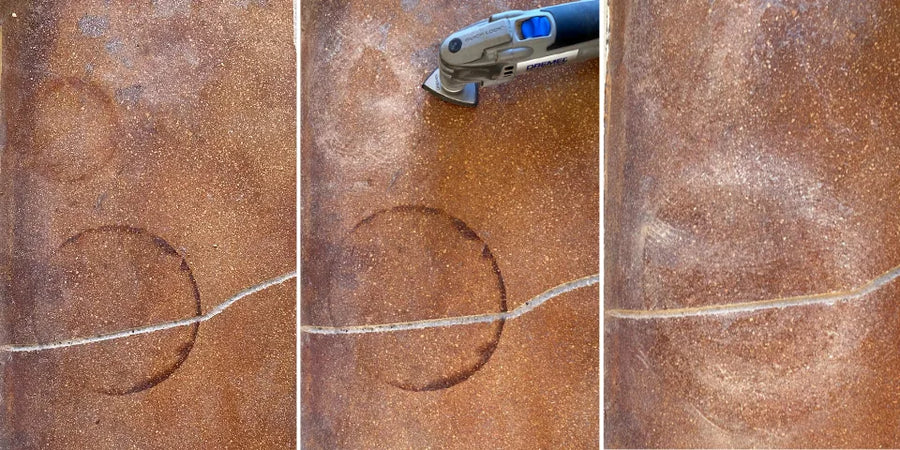
Mid-project, with rust staining coming out of the cement and the new color going down.
Sealing — and the bubble trick
A solvent-based sealer went on with a pump-up sprayer. Bubbles in a fresh solvent sealer coat are common, and there is a fix worth knowing.
— Jonathan Wiens
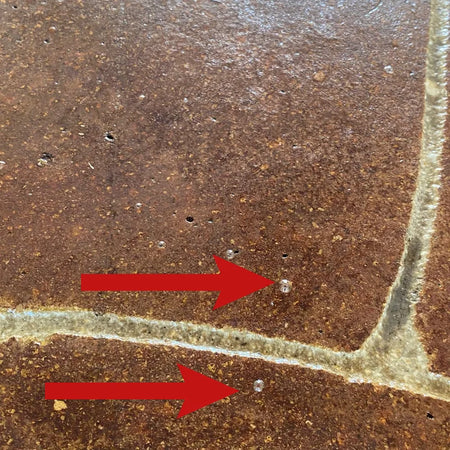
A light xylene mist to pop bubbles in the solvent-based sealer.
Both halves of that are right. A light xylene mist re-flows the sealer surface and lets the bubbles release — and if you are walking out onto a wet sealed floor to do it, you need spiked shoes on. Waiting for it to dry and assessing then is also a legitimate choice. We cover the whole failure mode in restoring shine to a stained patio.
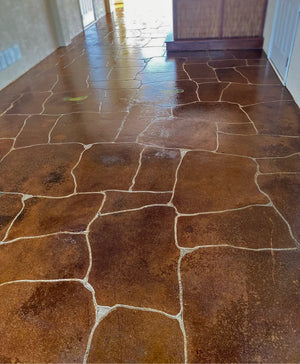
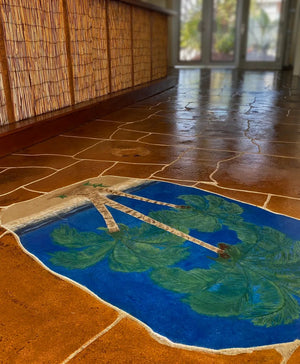
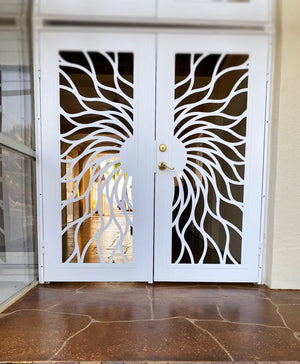
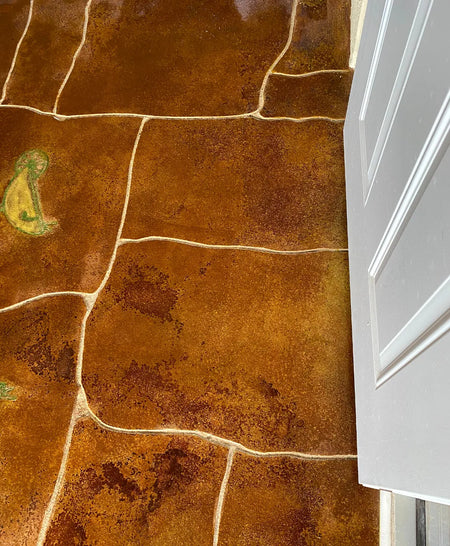
The finished breezeway
Thirty years old, hurricane damaged, and now the best-looking surface on the property — with the original engraved artwork intact.
Common questions
Why is old concrete harder to stain?
It depends which kind of old. Interior slabs get harder and denser with age, so the pores close and stain cannot penetrate — that needs profiling, chemically with CitrusEtch™ or mechanically with a grinder. Exterior slabs have the opposite problem: weather erodes the surface “cream”, the fine cement-rich layer acid stain actually reacts with. Same symptom, opposite causes, different fixes.
What do I do if sand or aggregate is showing?
You can still acid stain, but do not expect it to carry the whole result. Once the stain is applied, neutralized, cleaned and dry, layer a topical stain such as Antiquing™ over the top in a contrasting color — it deepens the color and picks out features like cracks. Shake it well and spray it on. Exposed aggregate is the clearest signal that the reactive stain alone will underperform.
How do I get more variation on a weathered slab?
Use two colors, and vary the strength. A marbled look is genuinely harder on rough, textured or weathered exterior concrete, so build contrast deliberately: dilute the first coat with water, then apply full strength on later passes for more color and texture variation. Coffee Brown takes that treatment particularly well. Existing imperfections will not be hidden — often they work in your favor.
Which sealer should I use on an older slab?
Solvent-based outdoors, water-based indoors. Solvent acrylics like EasySeal™ are easier to apply and make the color pop, but the odor makes them a poor choice indoors without serious ventilation. Water-based sealers are the indoor answer for low odor. Both are acrylics, which is why they dominate DIY work — and always sample test on the actual slab first.
Listen to this episode
Direct Colors DIY Home Improvement · Episode 26
Successfully Staining Older Concrete
Shawna Turner and Justin Richardson · 14 min 19 sec · read the full transcript
What’s Next
- The full prep method → Concrete Surface Preparation
- Staining over an existing stain → Staining Over Stained Concrete
- These two colors → Cola gallery · English Red gallery
- Curb appeal out front → Concrete Front Porch Makeovers
- Shop → EverStain™ · Trial Kits · Foam Brushes · Spiked Shoes


