
Heat is the most common reason a summer acid stain project disappoints, and it does its damage in two separate places: when the stain goes on, and when the sealer goes on. Both problems come down to the same thing — the surface temperature of the concrete, which in direct sun is far higher than the air temperature you checked on your phone.
Prefer to listen? Shawna Turner covered slab temperature, the 80°F ceiling and bubbling sealer in summer heat. The player is at the end of this article.
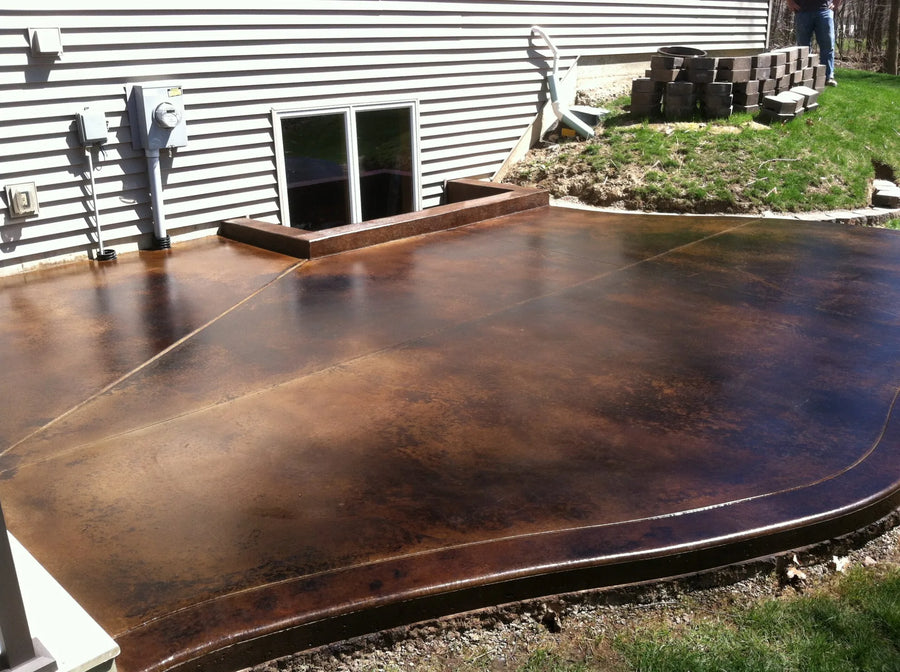
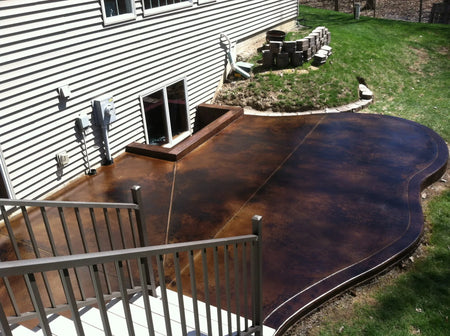
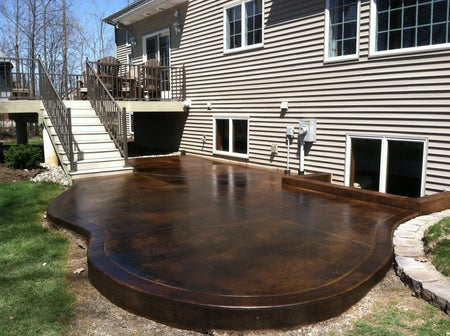
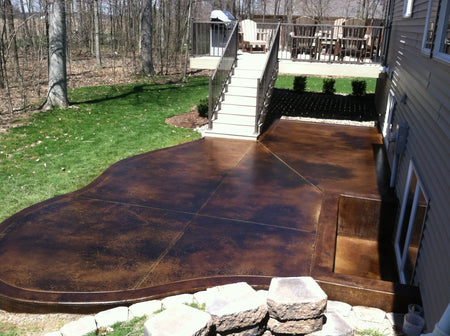
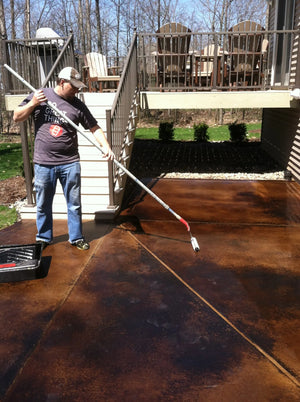
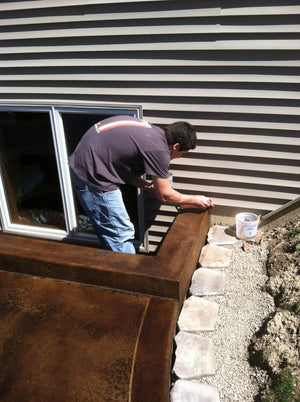
A Blackish and Coffee Brown acid-stained patio, sealed correctly.
Why heat ruins an acid stain
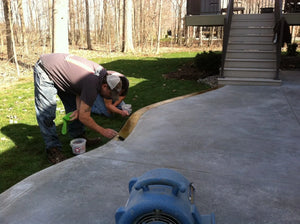
Acid stain needs to stay wet long enough to react with the lime in the concrete. Hot, dry conditions dry it before that reaction finishes, and what you get instead is weak color and a lot of powdery residue — which is product you paid for, sitting on the surface instead of bonded into it.
Concrete temperature and wind conditions determine success or failure more than anything else you control on a summer project. One customer in Texas solved it by hanging tarps to shade the slab after applying the stain, so the reaction had time to happen — his full account is in the cookhouse floor project.

Why heat ruins a sealer, which is a different problem
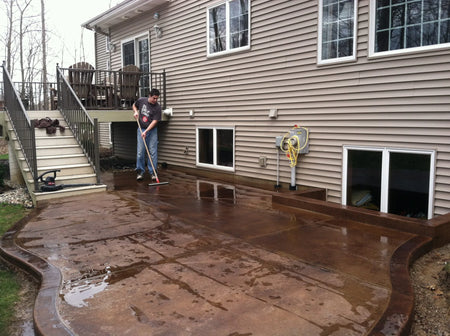
Sealer failure in summer is mechanical rather than chemical. When the slab is hot, air passes through the concrete at a faster rate, which causes more air bubbles — and the sealer resin often dries before the solvent or the water can fully evaporate. You end up with bubbles, cloudiness, or a film that never properly cures.
So the answer is timing, not product. Apply sealer when the concrete is at its lowest temperature: early morning or late evening.
A cheap infrared thermometer settles the argument in five seconds, and it is the single most useful tool you can add to a summer project. Guessing from the air temperature is how people find out about bubbles the next morning.
What you need for a summer project
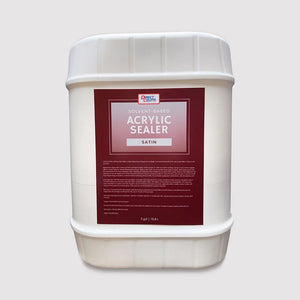
For a dense, machine-troweled exterior slab you will need CitrusEtch™ first — and spiked shoes while you etch, because footprints in etch need a grinder to remove. Prep sequence in the surface preparation guide, and outdoor application in applying outdoor concrete stain.
Common questions
How hot is too hot to acid stain concrete?
Measure the slab, not the air. Lay a thermometer on the concrete, cover it with a towel, and read it after 4–5 minutes — above 80°F, do not stain. Concrete below about 75–80°F gives the best results. A dark slab in direct sun can run far hotter than the day does, which is why ambient temperature is the wrong number to work from.
Why does my sealer bubble and leave little pits?
You sealed a slab that was too hot. As concrete warms, air passes up through it and gets trapped in the wet sealer as small bubbles. They collapse later and leave concave spots behind — permanent, and very obvious on an outdoor countertop. Seal while the slab is cooling, not heating: early morning or late evening.
What time of day should I stain or seal in summer?
Whenever that particular slab is coldest, which depends on which way it faces. East-facing concrete takes the morning sun, so seal it later in the day; west-facing concrete should be done early in the morning. The general rule is to work while the concrete is contracting rather than expanding.
How do I stop acid stain drying before it reacts?
Dampen the slab lightly first — damp, not flooded. Hot, dry, windy conditions wick moisture out of the concrete and the stain dries before it has finished reacting, which retards color development and leaves a blotchy result, especially where light and dark colors meet. The extra moisture buys the reaction time.
Listen to this episode
Direct Colors DIY Home Improvement · Episode 17
Applying Acid Stain and Concrete Sealer During Summer
Amie Nolen and Shawna Turner · 4 min 10 sec · read the full transcript
What’s Next
- Outdoor application → Applying Outdoor Concrete Stain
- The opposite problem → Winterizing Outdoor Concrete
- When it goes wrong anyway → Fixing Acid Stain Problems · Restoring Shine
- Outdoor projects → Patio Ideas · Driveway Ideas
- Shop → EverStain™ · EasySeal™ · CitrusEtch™ · Spiked Shoes


