
Acid stain is reactive, which means it is not fully under your control — uneven color, weak patches and areas that simply refuse to take are normal outcomes, not signs you did it wrong. The fix is almost always the same: seal what you have, then correct the color on top with dye, which is not reactive and does not care what the slab is made of.
Prefer to listen? Shawna Turner answered the four acid-staining questions customers ask most. The player is at the end of this article.
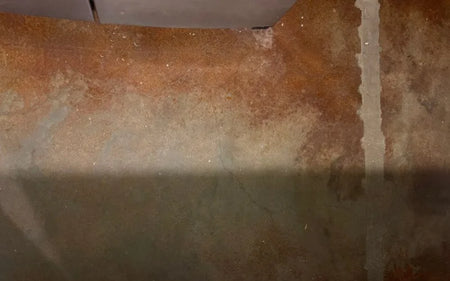
A concrete floor with acid staining issues.
Six steps to correct it
Ventilation is not optional
Solvent-based sealers indoors need a mask and real airflow. In a poorly ventilated space — a basement especially — use a water-based sealer instead. This is the single most common way people make an unpleasant job genuinely unsafe.
What the correction looks like
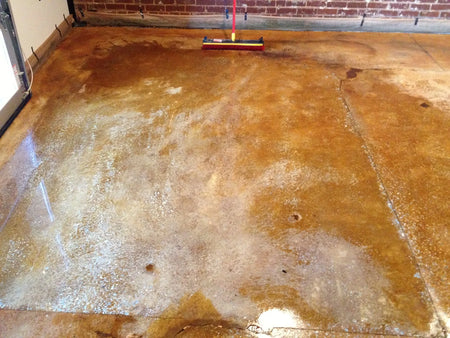
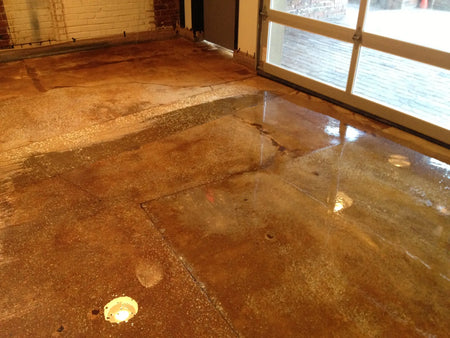
This restaurant floor is the same technique at commercial scale — the areas that would not react were brought into line with dye rather than fought with more acid stain.


Working over old acid-stained concrete? You may need to strip the existing sealer before staining again — nothing new will bond through it.
Common questions
Does acid stain look different on white concrete than gray?
Yes, and brighter than most people expect. White concrete gives a truer version of the color: Azure Blue and Seagrass read closer to robin's egg blue and sea foam green, Malayan Buff and Desert Amber come out richer and more orange, and English Red and Cola go noticeably red-orange. Our color chart is shot on gray concrete, so treat it as the baseline and test on white before committing.
Why doesn't my new slab take acid stain well?
Most likely fly ash. Ready-mix suppliers and bagged-mix manufacturers use it as a cement substitute to cut costs, and slabs poured in recent decades often contain it. It does not weaken the concrete, but above about 10% of the cement volume it changes how the slab reacts with acid stain. There is less for the stain to react with, so the color comes out weaker and less predictable.
How do I judge the final color before sealing?
Look at it wet and clean — both conditions matter. Residue left from the staining process misleads you about the color, and fully dry acid-stained concrete looks dull and flat, nothing like the finished floor. Wet concrete approximates the gloss of a solvent-based sealer, so expect slightly less shine if you are finishing with a water-based satin or matte.
What is tile ghosting, and can I stain over it?
It is an impression worn into the slab itself where tile sat for years, not a residue — which is why sanding often will not remove it. Acid stain then pools along those lines and stains darker, outlining tile that is no longer there. Some people love that; if you do not, remove all tile and glue, grind or strip, then test. If you hit black mastic, stop — older black mastic frequently contains asbestos; have it tested and use a licensed contractor rather than a machine. If a test still disappoints, a tinted sealer or dye is the fast alternative, or an overlay gives you a fresh surface to stain. Direct Colors no longer sells an overlay, but any compatible cement-based overlay from a concrete supplier does the same job.
Listen to this episode
Direct Colors DIY Home Improvement · Episode 34
Q&A: Customers Ask Top Acid Staining Questions
Shawna Turner and Reagan Smith · 7 min 32 sec · read the full transcript
What's Next
- Ghosting and tile marks → How to Fix Concrete Ghosting
- The method → How to Apply Acid Stain · Neutralizing
- Change color completely → How to Change Concrete Color
- Applying stain outdoors → How to Apply Outdoor Concrete Stain
- Choosing a sealer → The Best Concrete Sealer
- Prefer a reactive, mottled look? → Acid Stain Colors Guide
- Shop → Vibrance™ Dye · EverStain™ Kits · Trial Kits
Direct Colors. Shawnee, OK. Manufacturing the full decorative concrete system since 1997.


