
Charcoal is the most widely stocked color we make. It is the only color carried in every single line — 406 Antiquing™, 706 Portico™, 506 EasyTint™, 506 AcquaTint™, Vibrance™ Dye, and 904 Charcoal in our PaveWave™ paver system — with 417 Light Charcoal alongside it as the softer version. That is not an accident: a dark neutral gray flatters almost any house, hides dirt, and reads as deliberate on any surface from a stamped patio to a polished basement floor.
There is too much Charcoal work to put on one page, so it is split in two. This gallery covers outdoor surfaces — patios, walkways, driveways, and courtyards in Antiquing™, Portico™, and EasyTint™. For basements, shops, and interior floors in AcquaTint™ and Vibrance™ Dye, see Charcoal Concrete Floors: Interior Project Gallery.
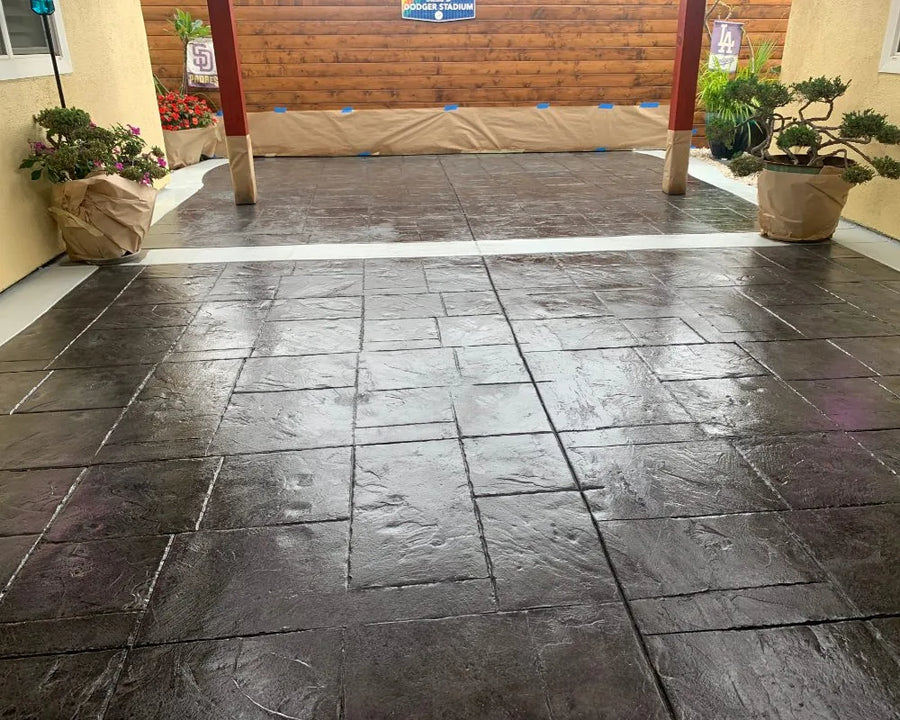
A worn stamped concrete courtyard revived with Charcoal Antiquing™ and EasySeal™ Gloss.
Charcoal outdoors: Antiquing™ Stain
Antiquing™ is the solvent-based stain for stamped, broomed, and troweled slabs. It is semi-transparent, so on stamped concrete Charcoal settles into the low points and leaves the high points lighter — which is exactly what makes the pattern read as stone rather than as a stamp.
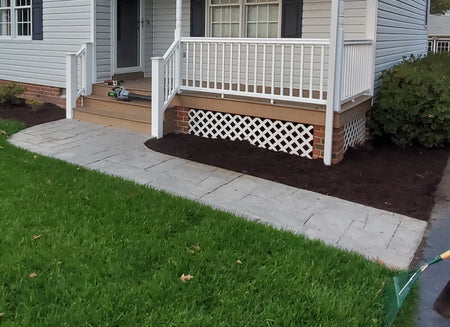
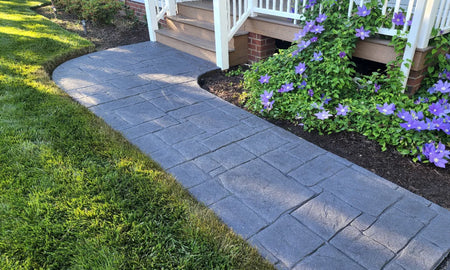
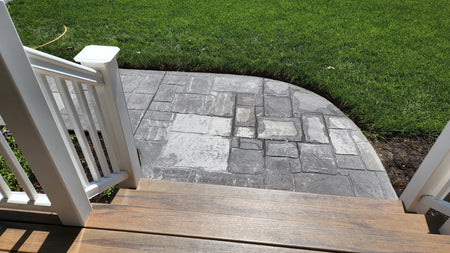
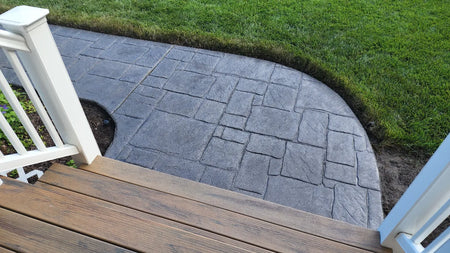
A 20-year-old stamped sidewalk
Two decades of fade, plus an old sealer that had to come off first. Stripped, re-stained in Charcoal Antiquing™, then sealed satin — and it shed the next day's rain like a freshly waxed car.
A hand-troweled party garage floor
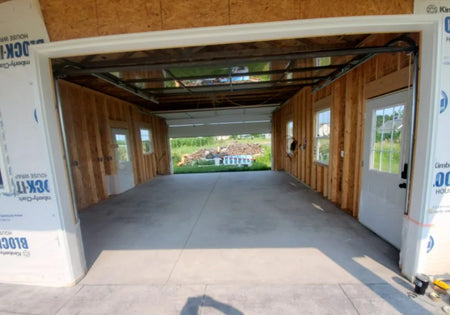
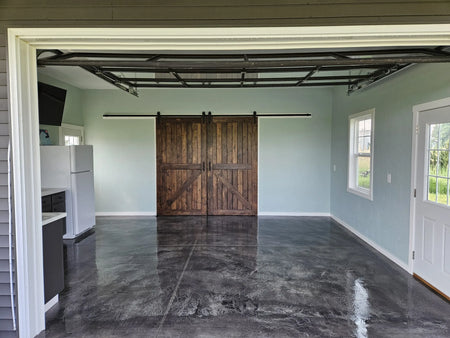
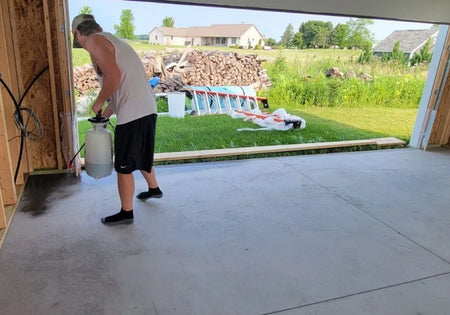
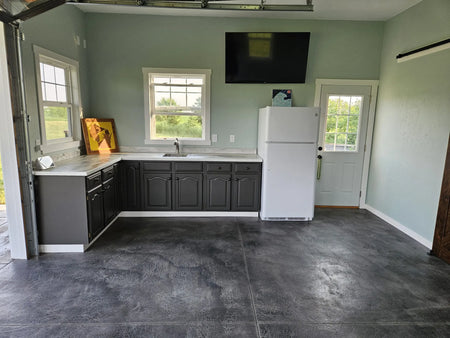
Built from scratch: a non-slip hand-troweled floor for a new party garage by a pond, stained with Antiquing™ and finished with countertops to match. The two lessons the owner passed on were about footwear during application, and using a fresh sprayer for the second sealer coat rather than the one already loaded with product.
Brown to Charcoal on a 13-year-old slab
A faded brown stamped area taken to a multi-toned charcoal. Look closely at the after shot — the brown undertone is still there under the gray, and it is what keeps the floor from looking flat. Going darker over an existing warm color is one of the safest color changes you can make.
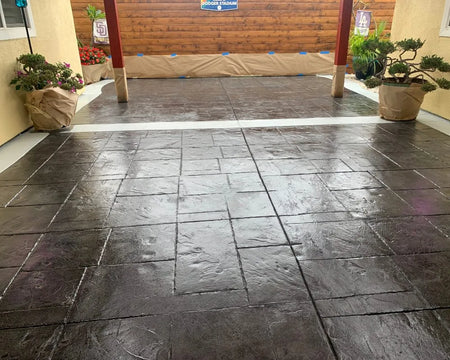
A stamped courtyard
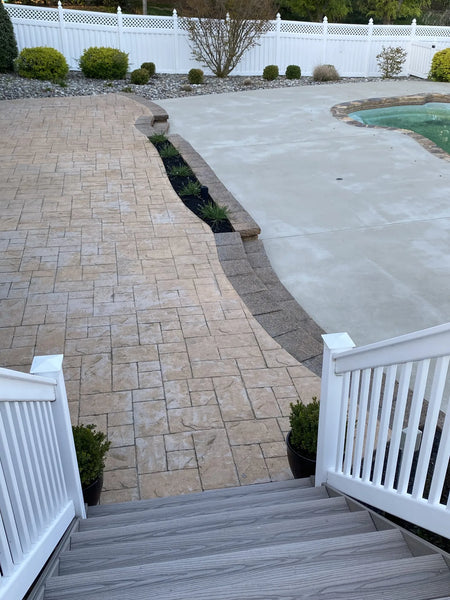
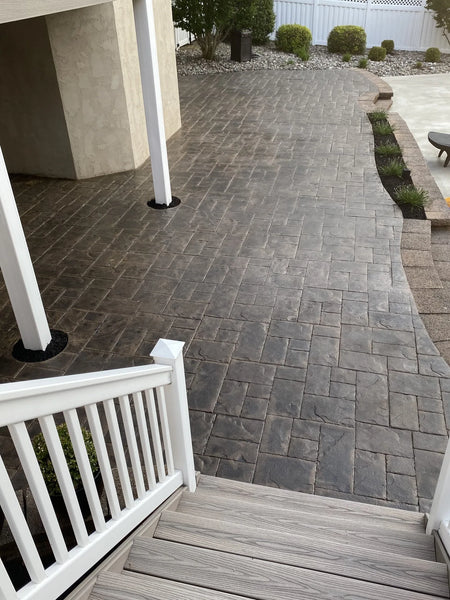
Hand scrubbing, power washing, thorough drying, then masking and a final dust-off before any stain went down. Charcoal Antiquing™ and EasySeal™ Gloss. The customer's advice: keep traffic off the fresh stain, and spray the sealer rather than rolling it.
A self-taught patio, when nobody would take the job
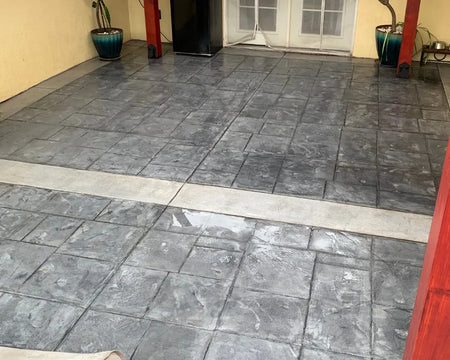
This owner could not find a professional willing to do the work, so they did it themselves with a DIY Antiquing™ kit: soy gel stripping, degreasing, staining, sealing. The detail we like most is the new concrete block step they stained separately to match the patio. Their tips: watch the weather, and shake the stain well both before and during spraying.
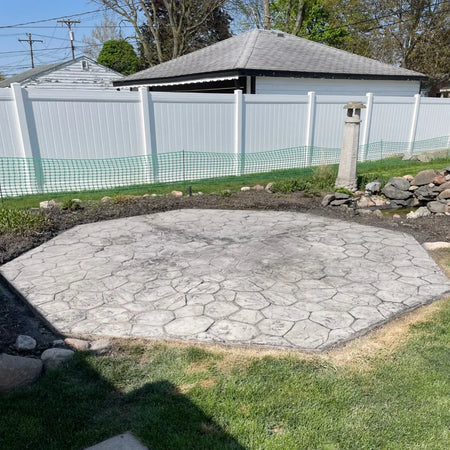
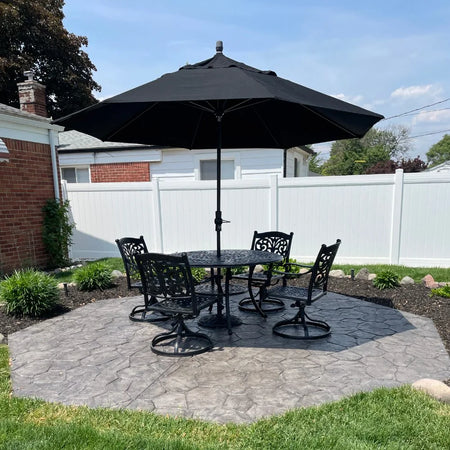
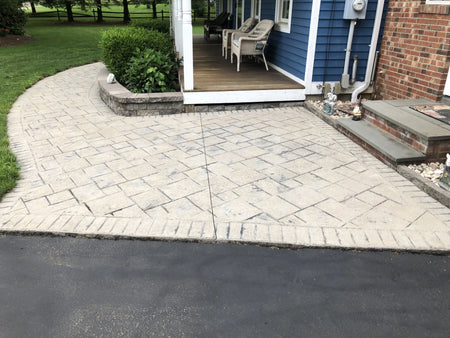
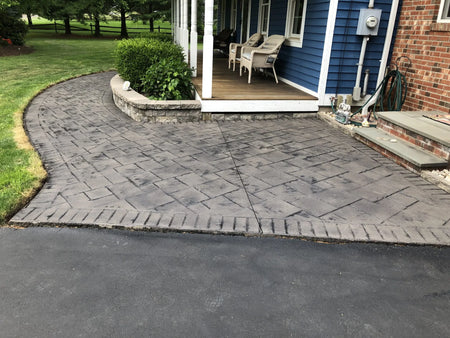
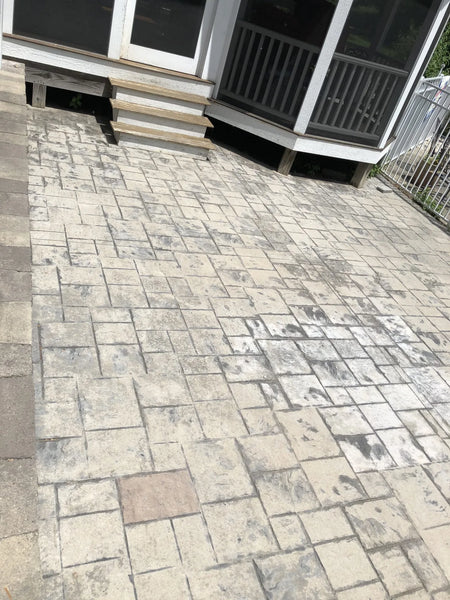
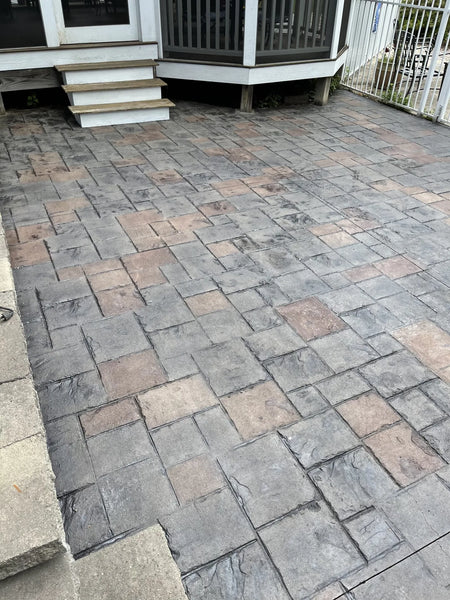
Two-tone walkways: Charcoal with Light Charcoal, and with Auburn
A 12-year-old walkway and patio done in two tones — the dark and light Charcoal together on the walkway, and Light Charcoal warmed with Auburn on the patio. Two tones of the same color is the lowest-risk way to get depth; a warm accent over a cool base is the higher-reward version.
A broom-finished front patio
Plain broomed concrete, which is the easiest surface in this whole gallery to stain well. The pro tip from this one is worth memorizing: spray in 100 sq. ft. increments, so the stain stays properly mixed in the sprayer and you do not waste product.
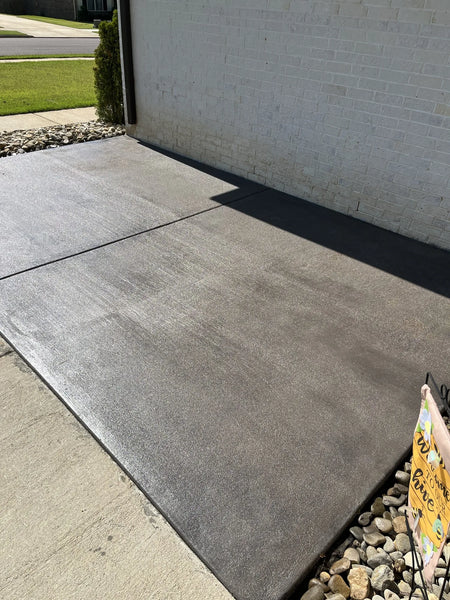
Covering a very bright existing color
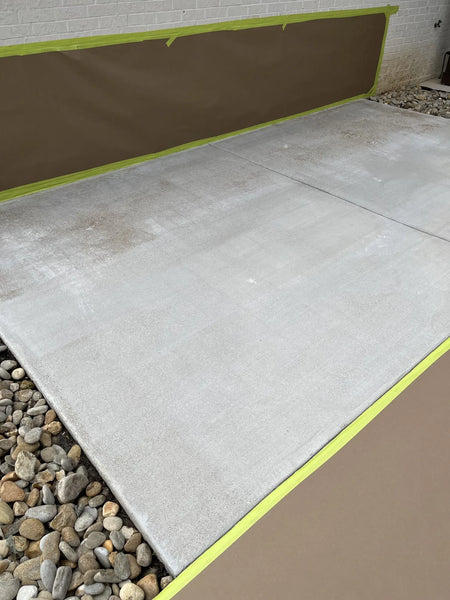
One more from the outdoor set, and the most useful warning in it. This patio had been a bright orange. Charcoal covered it, but not in one pass.
— DIY Customer
If you are going darker over a strong existing color, budget for one or two extra coats beyond what the coverage rate suggests. Running out mid-surface is the one mistake you cannot easily recover from.
And one step darker: Black
For comparison, the same job in Black Antiquing™ rather than Charcoal — a red brick-colored patio taken to near-black. If Charcoal is not dark enough for you, this is where you end up.
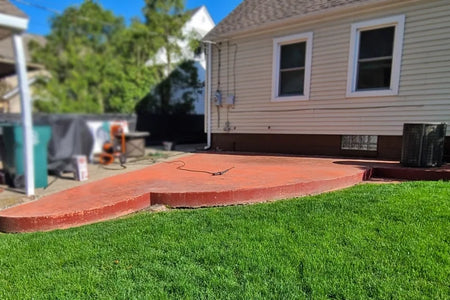
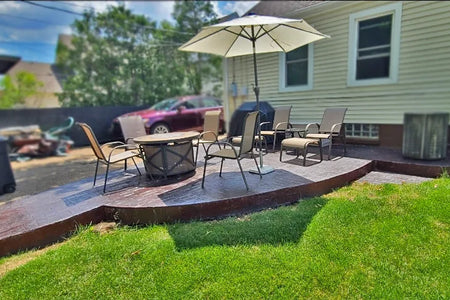
More of those → Black Concrete Stain Gallery.
Light Charcoal: the softer version
417 Light Charcoal is the same family a few steps lighter — a mid gray rather than a near-black. It is the better choice on a large surface, in strong sun, and anywhere a dark stain would make the space feel smaller. It is stocked in Antiquing™, Portico™, EasyTint™, and AcquaTint™.
A harlequin diamond patio with mossy stepping stones
Reclaimed brick laid in a harlequin diamond pattern, with the concrete diamonds stained Light Charcoal — and, by accident, a set of squirrel footprints preserved in the surface. The mossy-looking garden stepping stones alongside are the same color read at a different scale.
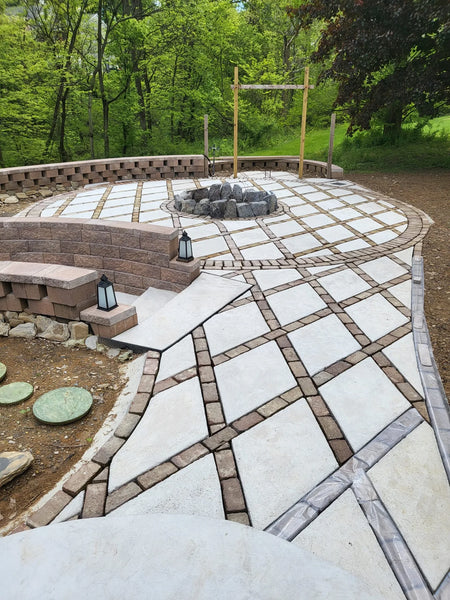
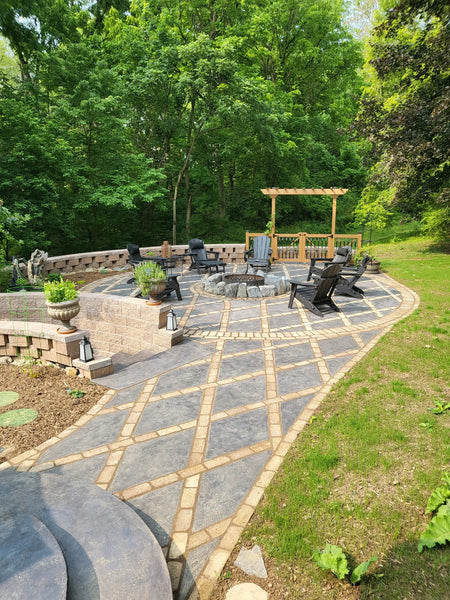
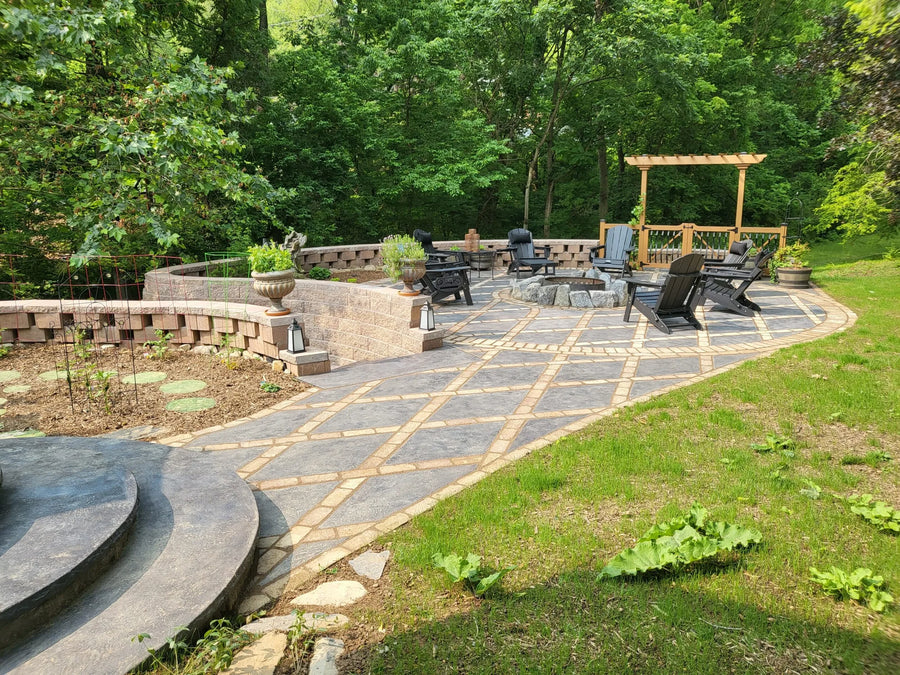
The finished patio with its moss-inspired garden stepping stones.
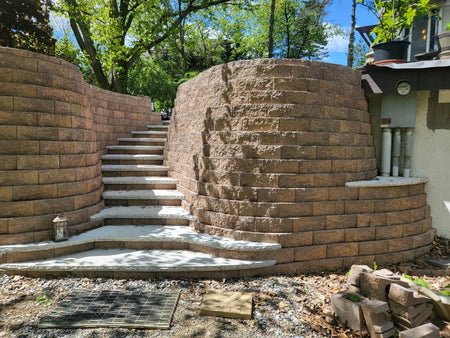
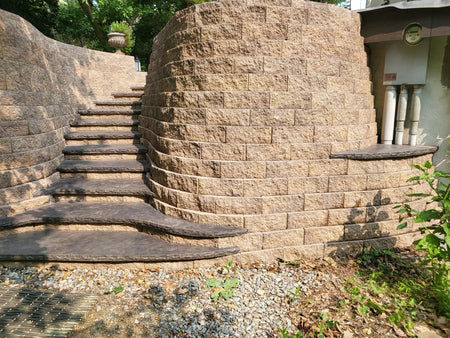
A retaining wall and steps
Carrying the same color up onto the vertical surfaces is what makes a patio extension look built rather than added.
Fixing a splotchy clearcoat on ashlar slate
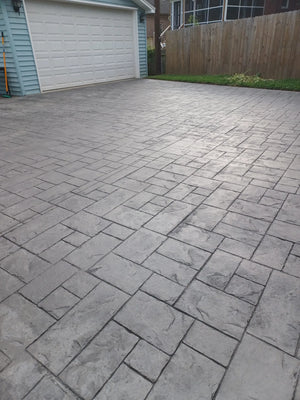
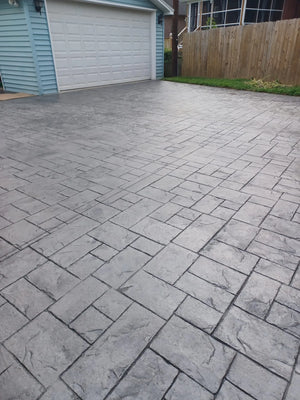
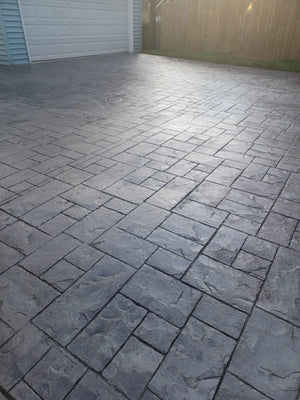
A year-old ashlar slate stamped driveway with poor color contrast and an inconsistent clearcoat — a common failure when the original release color was too subtle and the sealer went on unevenly. Light Charcoal Antiquing™ plus an EasySeal™ Satin kit evened it out. Watch how much the second sealer coat changes it.
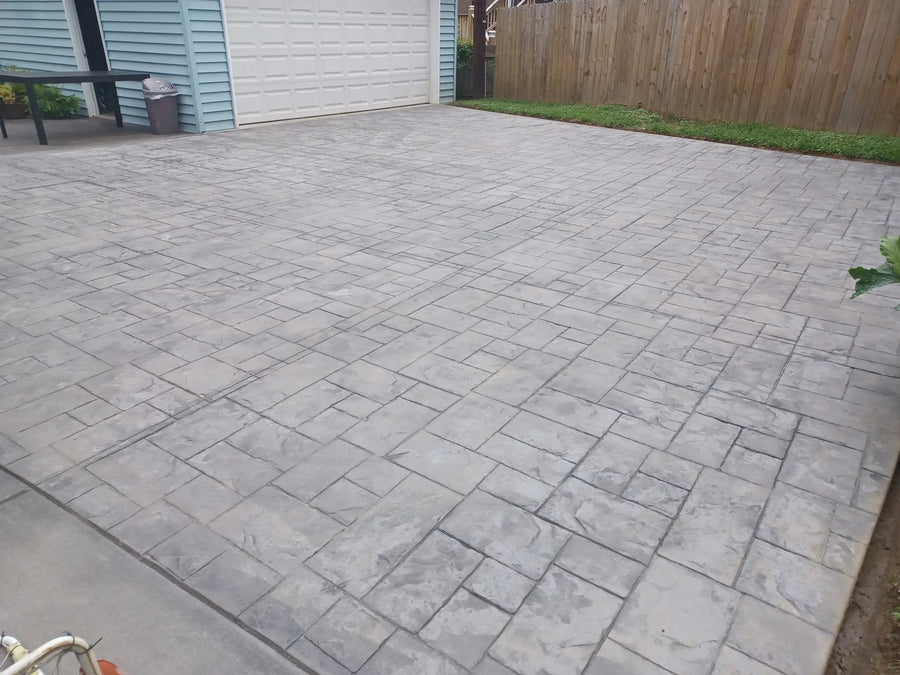
The cleaned driveway, with the splotchy old clearcoat still visible.
A couple in their mid-50s versus a professional quote
Steep quotes, no prior experience, and a patio that needed doing. They read the guides and did it themselves — a story that repeats across every gallery on this site.
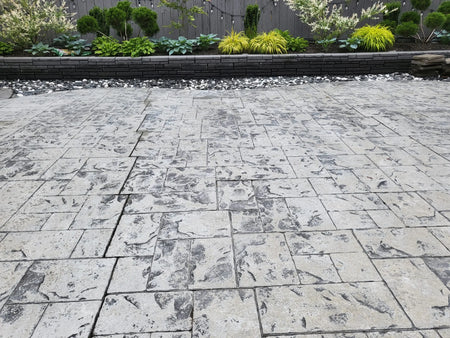
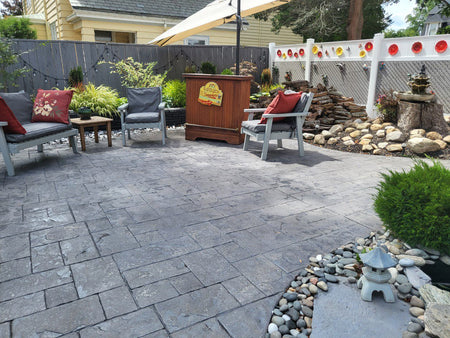
A contractor's patio deck in Light Charcoal EasyTint™
This one is DCPro contractor work — Toledo Construction Corporation in Oakley, California. A worn stamped patio deck brought back with Light Charcoal EasyTint™ and EasySeal™ Gloss. The takeaway from a pro doing it: the finish is only as good as the clean underneath it.
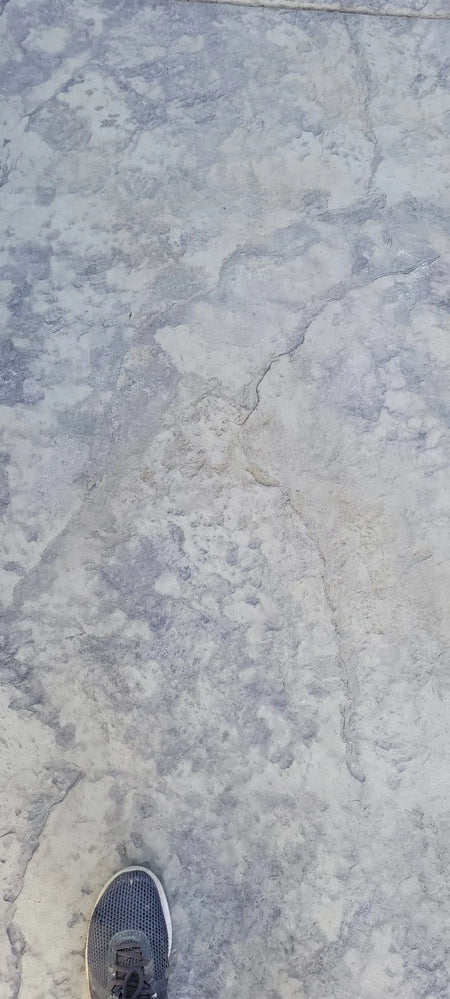
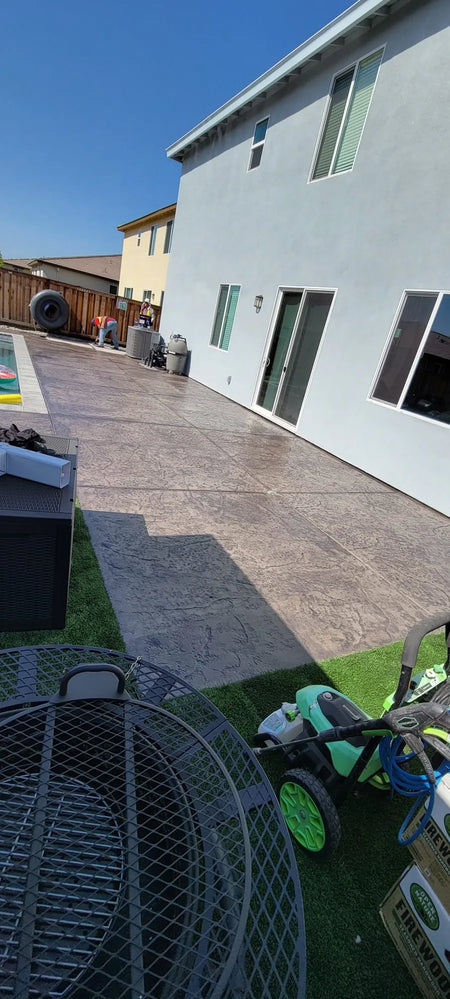
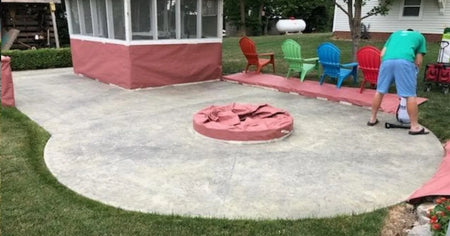
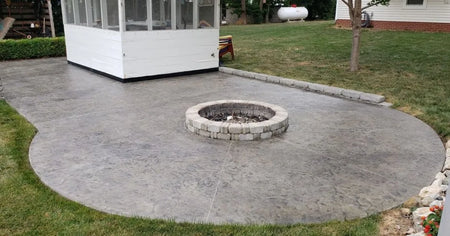
A circular stamped patio
A straightforward one — Antiquing™ Light Charcoal and EasySeal™ satin over a simple circular stamp.
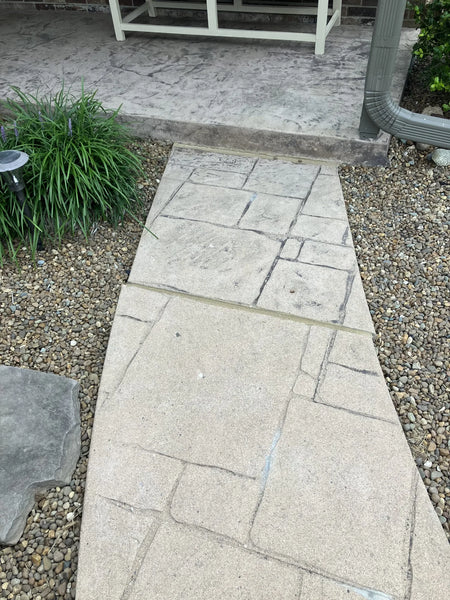
Light Charcoal blended with Russet
A stamped sidewalk and the porch slab it leads to, both worked in a blend of Light Charcoal and Russet Antiquing™. The customer used a trial kit and our technique videos to settle the ratio before committing — which is the right order to do it in.
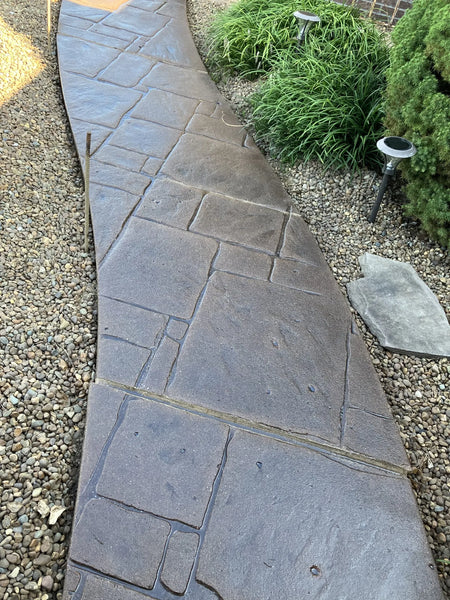
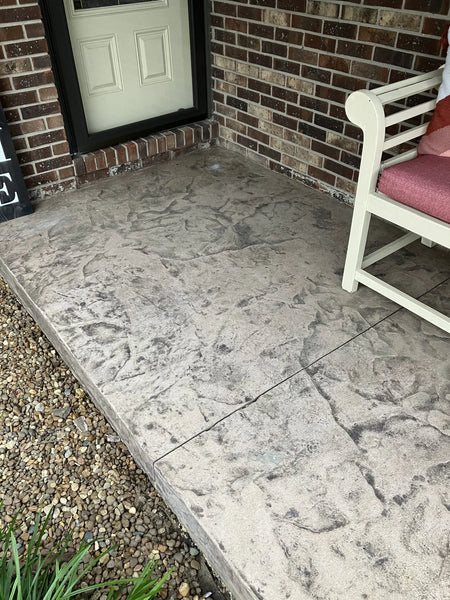
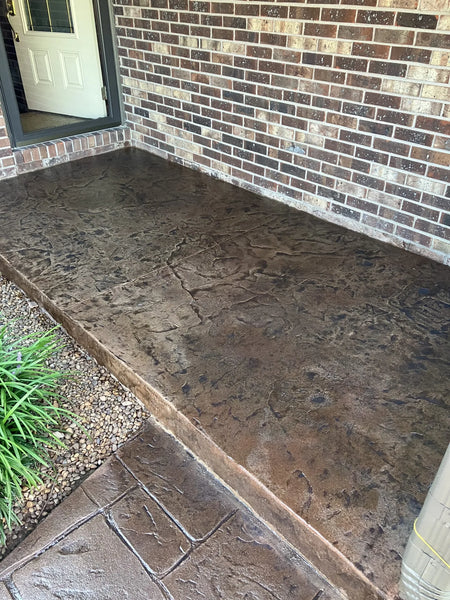
Getting rid of a pinkish-orange walkway
An unwanted pinkish-orange stamped walkway turned into an iron-stone gray with Light Charcoal Satin EasyTint™ and EasySeal™. If your concrete has gone that particular salmon color, this is the fix.
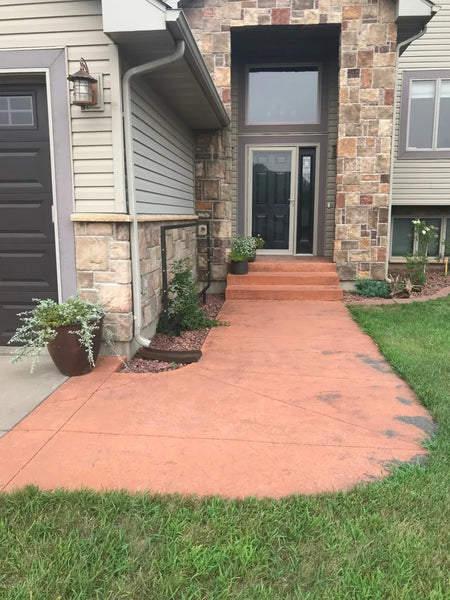
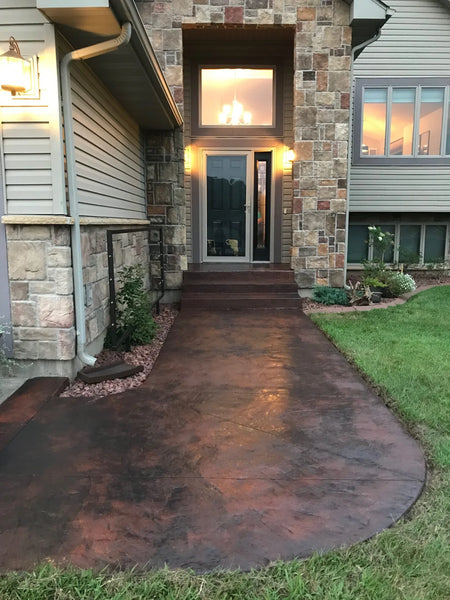
Taking Charcoal indoors
Everything above is solvent-based stain on an exterior slab. Indoors the product changes to a water-based colored sealer or a dye, and the projects look completely different — basements, barbershops, salons, and polished living floors. All of that is in the companion gallery: Charcoal Concrete Floors: Interior Project Gallery.
Charcoal: FAQs
Which Charcoal product suits my project?
Outdoors on a stamped or broomed slab use Antiquing™; on pavers use Portico™; indoors use AcquaTint™ or Vibrance™ Dye. Charcoal is also stocked as PaveWave™ 904 for water-based paver work.
What if Charcoal is too dark for my slab?
Use Light Charcoal instead — it is the softer version of the same idea, and this gallery has a whole section on it. On a large surface the near-black can dominate in a way the mid gray does not.
Will Charcoal look like these photos on my concrete?
Our stains are semi-transparent, so the starting color and condition of your concrete shape the result. Test on your own slab before committing.
What's Next
- Interior Charcoal floors → Charcoal Concrete Floors
- Grays → Gray Gallery · White Gallery
- Darker still → Black Gallery
- Warm neutral alternatives → Tweed Gallery · Khaki Gallery
- Applying stain outdoors → How to Apply Outdoor Concrete Stain
- Choosing a sealer → The Best Concrete Sealer
- Prefer a reactive, mottled look? → Acid Stain Colors Guide
- Shop → Antiquing™ · Portico™ · EasyTint™ · Trial Kits
Direct Colors. Shawnee, OK. Manufacturing the full decorative concrete system since 1997.


