
Sunrooms get more light than any other room in the house, which means the floor is the first thing anyone looks at and every flaw in it is lit from the side. Six customer projects below, in four different product families — a water-based stain, two acetone dyes, and acid stain three ways — plus an honest list of what stained concrete is and is not good at in a room made of windows.
Prefer to listen? Shawna Turner covered what happens to an outdoor slab once you put a roof over it. The player is at the end of this article.
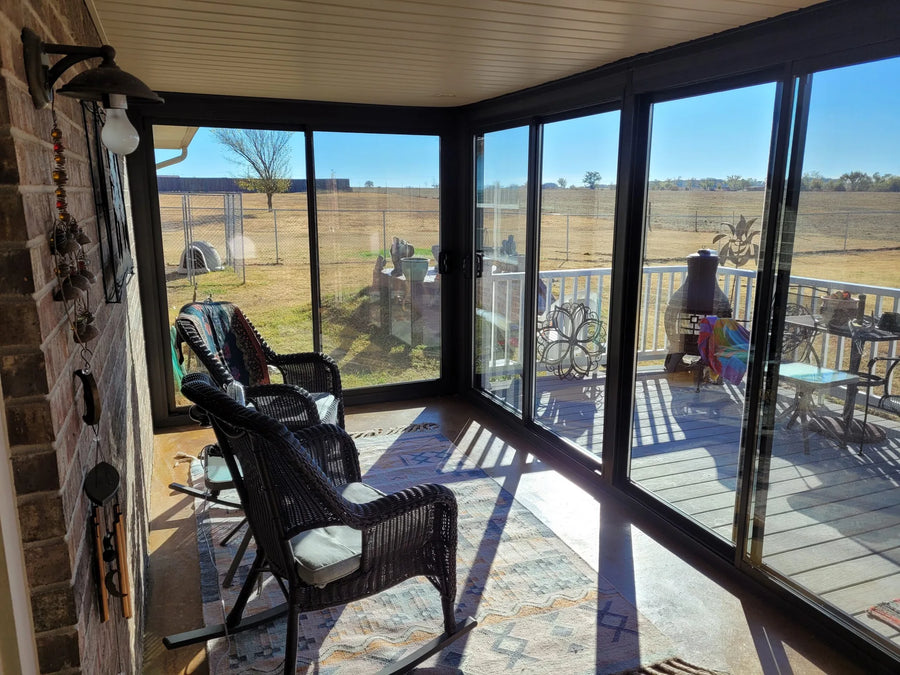
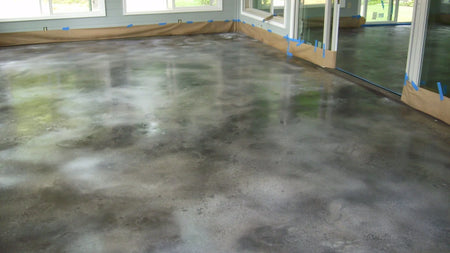
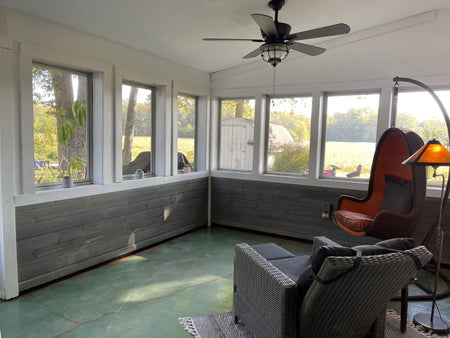
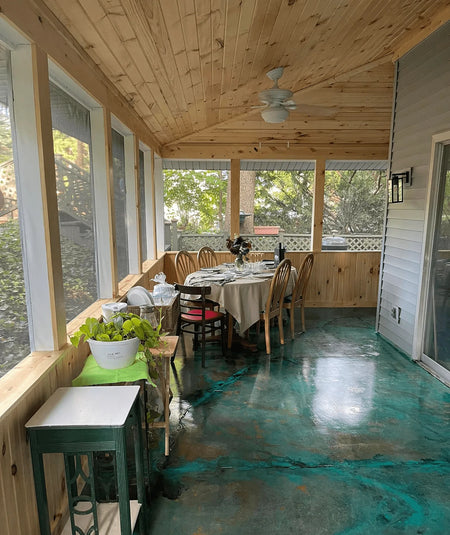
A golden 8 x 20, in water-based stain
An 8 x 20 ft. covered patio and sunroom taken to a warm gold with ColorWave® water-based stain, applied with a 1-gallon hand pump sprayer. Water-based stain is the easy entry point: no acetone, no reaction to time, no neutralizing step, and it goes down with ordinary equipment. The finished floor is the photo at the top of this page.
The bare covered patio and sunroom slab before ColorWave® Gold.
Stormy Gray dye, in a sunroom
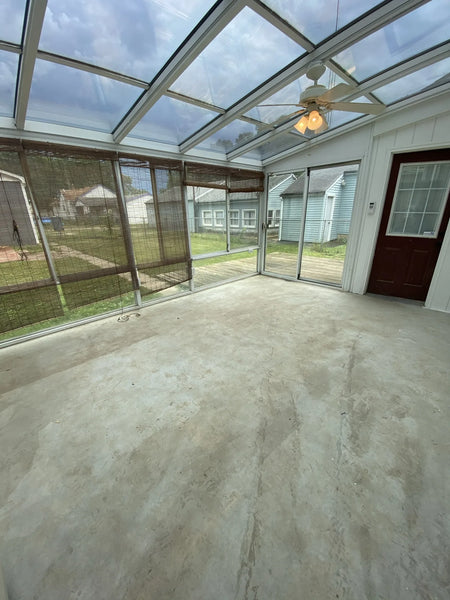
A dull concrete floor taken to a modern gray with Vibrance™ dye in Stormy Gray. This is the same color and product as the full step-by-step in Sunroom Flooring with Concrete Dye, on a different floor.
Black and white dye, in the same room
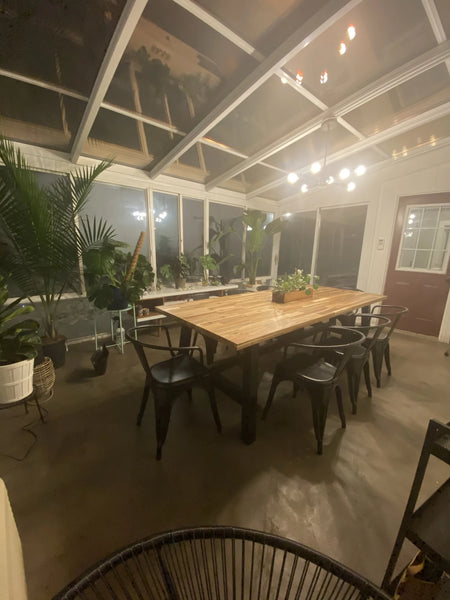
A dull, faded sunroom turned bright and modern with white and black acetone dye. Two dye colors on one floor is where dye pulls clear of the alternatives — the colors stay distinct instead of blending into each other the way two acid stains would, so you can get genuine contrast.
A 1980s sunroom in Azure Blue acid stain
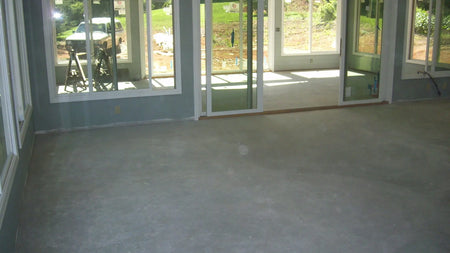
A 1980s sunroom turned into somewhere to drink coffee morning, afternoon and evening, in Azure Blue EverStain™. Acid stain is the right choice when you want the color to look like it belongs to the concrete rather than sitting on it, and the veining in the second photo is the reaction doing something no dye can imitate. More of the color in the Azure Blue gallery.
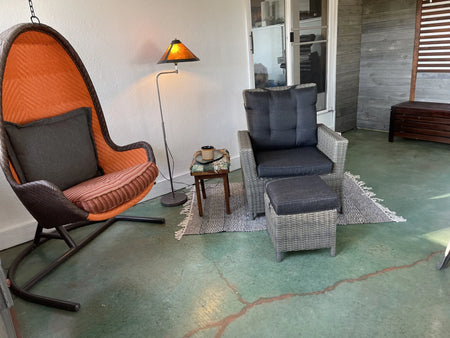
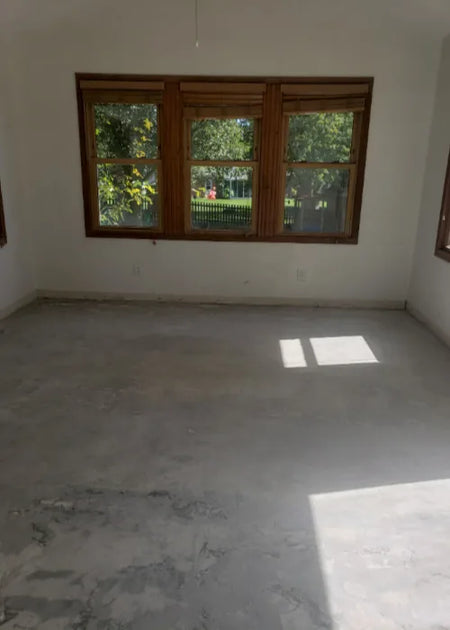
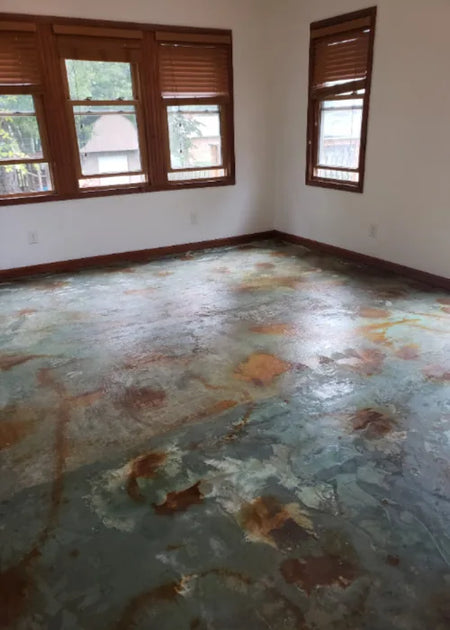
Bold and colorful, over 25-year-old carpet
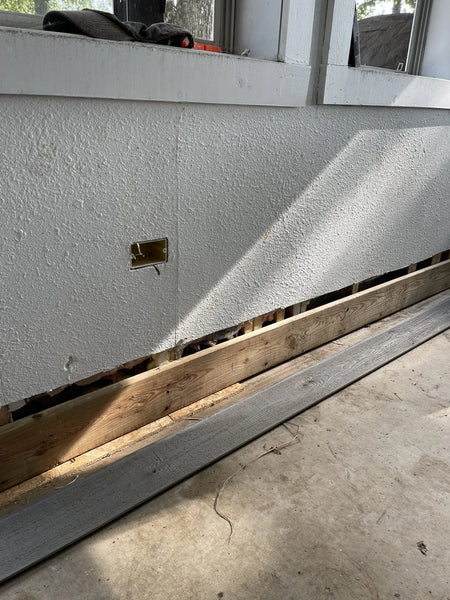
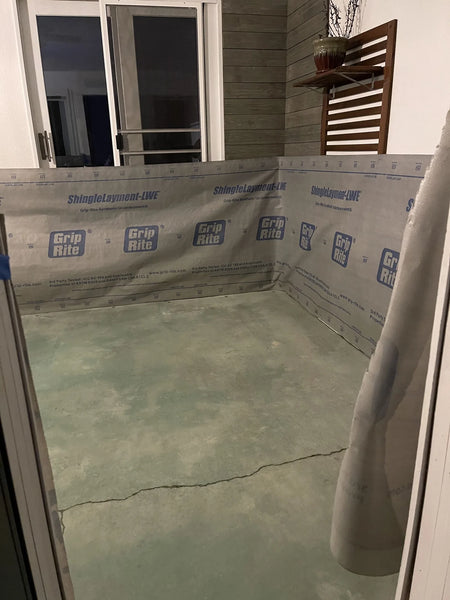
A 25-year-old carpeted porch turned into a stained concrete floor with Azure Blue acid stain, acrylic paint and epoxy. Plenty of prep work and plenty of imagination — this is the most adventurous floor on the page, and the one that shows acid stain does not have to mean earth tones.
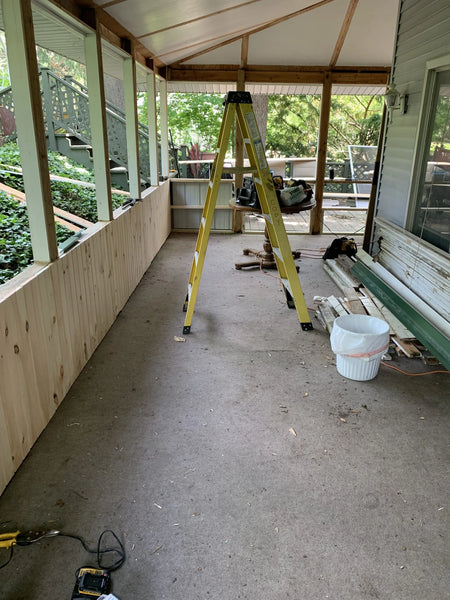
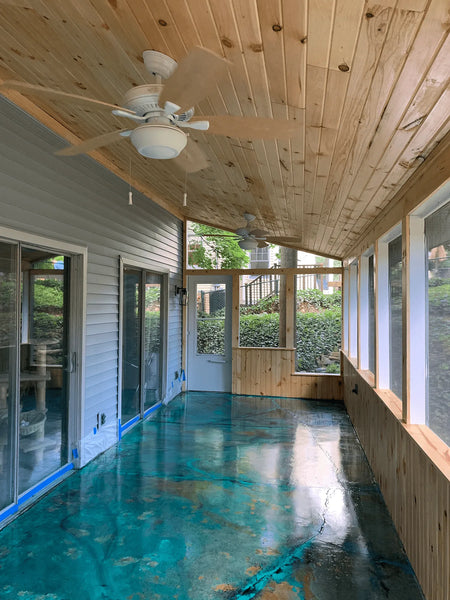
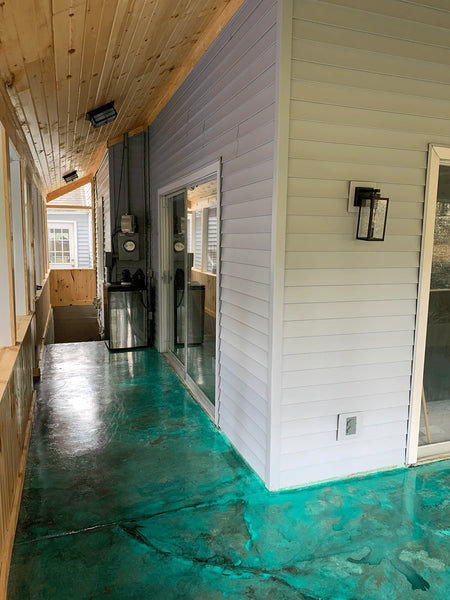
Four days, 104 sq. ft., and one hard-won tip
The most useful project on the page because the owner logged the whole timeline. Carpet and glue removed, floor sanded and cleaned with a degreaser, acid applied with sprayers and left overnight, neutralized the following day, 24 hours to dry, first coat of sealer, another 24 hours, second coat. Then the walls painted, baseboards replaced and the furniture moved back in.
Stained concrete in a sunroom: the honest tradeoffs
Worth knowing before you commit a whole room to it.
What it is good at
- Durability. Concrete takes heavy foot traffic and furniture without showing wear.
- Low maintenance. Sealed and waxed, it cleans easily — which matters in a room that collects sun, plants and outdoor traffic.
- Customizable. Any color, and patterns as well, so it can match any style of sunroom.
- Cost. Generally cheaper than the flooring options it replaces, especially when the slab is already there.
What it is not good at
- Cold underfoot. Concrete is cold to the touch, which in a sunroom in winter is a real consideration rather than a theoretical one.
- Slippery when wet. A concern if children or elderly family use the room. An anti-slip additive in the sealer coat is the straightforward answer.
- Porous if unsealed. Concrete absorbs liquids, so spills left standing can stain. This is what the sealer is for, and why the wax on top is worth it.
So which product?
It comes down to the look you want and how much control you want over getting it. Acid stain for depth and variegation that reads as stone, if you are willing to work with a reaction. Dye for bright, vivid, repeatable color and a fast turnaround. Water-based stain for the easiest application and cleanup. All three last, provided you seal them properly and keep a wax on top.
Common questions
Why does my patio slab look wrong once it's enclosed?
Because it was finished for a different job. Outdoor concrete is deliberately given more texture than an indoor floor so it is not slippery in the rain, and it may carry a stamped or decorative pattern that reads as outdoor. Add a few years of weathering and you have a surface that was never intended to be lived on. None of that is a defect — it is just the wrong finish for the room it has become.
What is a salt finish, and why is it a problem indoors?
Rock salt is scattered on the fresh surface and washed out after curing, leaving a field of small impressions. Outdoors that is a pleasant texture. Indoors it is a dirt trap: the crevices are nearly impossible to clean and go progressively grubbier over time. It is one of the clearest cases for overlaying rather than trying to refinish what is there.
Can I just stain the existing patio slab instead of overlaying it?
Sometimes, and it is always worth checking first. If the slab is sound and the texture is acceptable indoors, staining it directly is far less work. Overlay when the texture is too rough, when there is a stamped pattern you do not want to keep, or when the concrete is flaking or damaged — a troweled overlay gives you a flat blank canvas you can then acid stain or integrally color. Direct Colors no longer sells an overlay, but any compatible cement-based overlay from a concrete supplier does the same job.
Is concrete a good floor for a sunroom compared with carpet?
It handles the thing sunrooms are prone to: water. Flooding or driven rain that would ruin carpet squares does nothing much to a sealed concrete floor, and it stays easy to clean with very little maintenance. In a room that is a little more exposed than the rest of the house, that is mostly peace of mind.
Listen to this episode
Direct Colors DIY Home Improvement · Episode 8
Converting Patios into Indoor Living Space
Amie Nolen and Shawna Turner · 3 min 33 sec · read the full transcript
What’s Next
- The step-by-step for the gray floor above → Sunroom Flooring with Concrete Dye
- How to apply each product → Concrete Dye · Acid Stain · Outdoor Stain
- Prep an old floor first → Concrete Surface Preparation · Repair Tack Strip Holes
- Keeping it looking new → Care & Maintenance
- Shop → Dye · EverStain™ · ColorWave® · Trial Kits


