
A sunroom is the best room in the house to dye, and the worst one to guess at. Best, because the floor is usually smooth interior concrete with light pouring across it all day, which is exactly what dye is good at. Worst, because it is enclosed — so you cannot hose the rinse water anywhere, ventilation for solvents is limited, and the glass makes the floor temperature swing further than the rest of the house. Jessica Pacheco worked through all of it in Stormy Gray.
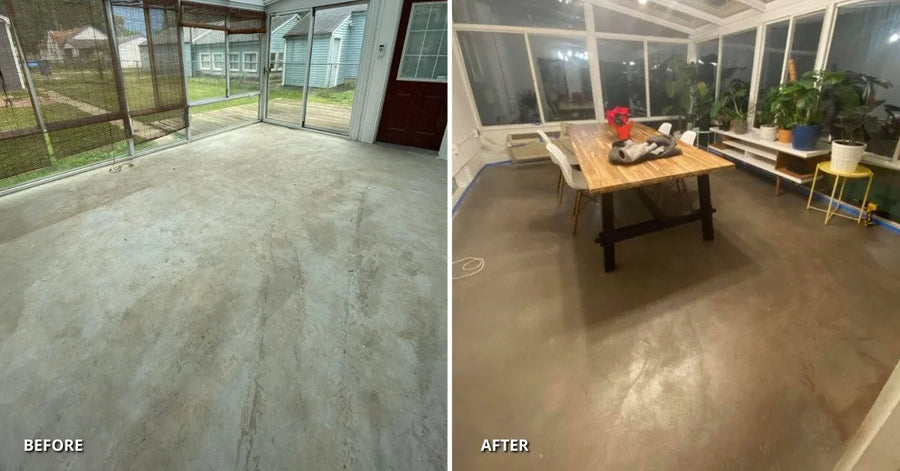
The same sunroom floor before and after Stormy Gray Vibrance™ Dye.
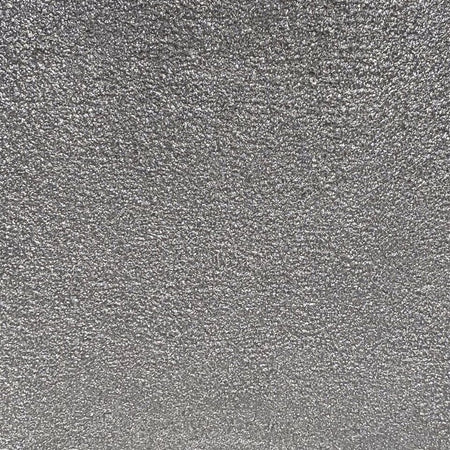
Curing, and the three-answer water test
Newly poured concrete needs at least 30 days, and weather changes that. Cold weather slows the cure and gives you weaker concrete; hot, dry weather leaves it un-hydrated and chalky. Neither takes color the way a properly cured slab does.
Old or new, the slab has to be free of anything that stops the dye bonding. An indoor floor can look perfectly clean and still be covered in debris, oils, sealers and adhesives. Pour clean water on it and read the answer:
- Absorbed within a few minutes — ready to dye.
- Little rainbows seeping up — oil. Degrease it.
- Water just sits there — there is still sealer on it. Strip it with Destiny™ Stripper.
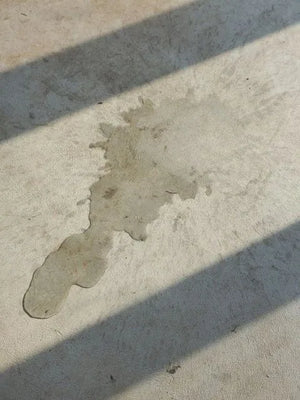
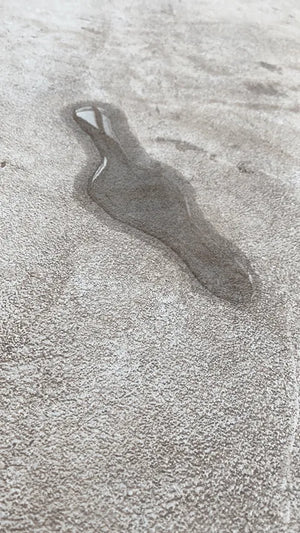
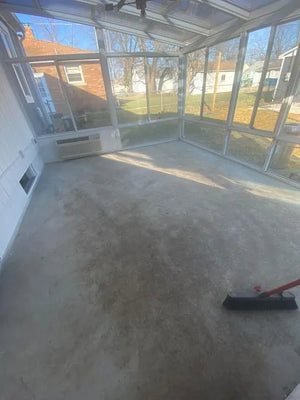
To clean, either mix a degreasing dish soap with water and white vinegar, or use an orange or citrus degreaser at medium concentration — ProClean Degreaser™ is ours. Scrub with a nylon brush and rinse with clean water. In an enclosed room where the water has nowhere to run, use a mop, squeegee or shop vacuum to contain it and speed up drying.
Dye covers minor imperfections, but not cracks. Fill and sand them smooth first.
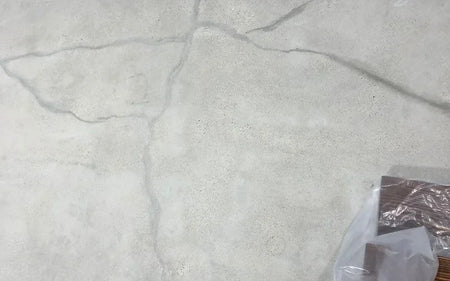
Hairline cracks filled and sanded before the dye goes on.
Then mask. Plastic sheeting and painter’s tape over walls, baseboards, and any adjacent countertops or hardware — secured properly, because a sprayer finds everything.
The primer coat, which is the trick in this article
Before any dye, apply a thin layer of the same sealer you plan to finish with, and let it dry. Two to four hours, and it must not be tacky or sticky to the touch when you test it. A rough floor may need a second coat for full coverage.
This is not in most dye instructions and it is worth understanding. Priming with the finish sealer evens out how absorbent the slab is across its whole area, so the dye lands at the same strength everywhere instead of going dark wherever the concrete happens to be thirstier. On an old sunroom slab with patches of different history, that is the difference between an even floor and a mottled one.
Mixing and spraying
Use a pre-measured Vibrance™ Dye packet and match it to the project: one packet to 1 quart of acetone for a small job, 1 gallon for a medium one, 5 gallons for a large one. Pour the dye into the acetone, seal the lid tightly, shake vigorously for 20 seconds, and let the mixture stand for one hour before use.
Then spray it: an acetone-grade sprayer, slightly circular motions with irregular overlaps, and shake the tank side to side often so the color does not settle. Thin coats, no puddling. For a deeper color, up to four thin coats, waiting at least eight hours between each one.
A standard deck or fence sprayer cannot spray acetone. With a 3-gallon or similar large sprayer, do not carry it by the pump handle while spraying — carry it by the strap at a 30 to 45 degree angle.
Let the dye dry at least eight hours before sealing, then go over it very lightly with a dust mop or microfiber mop to lift any dye that has not bonded.
Sealing: two methods, and one temperature rule
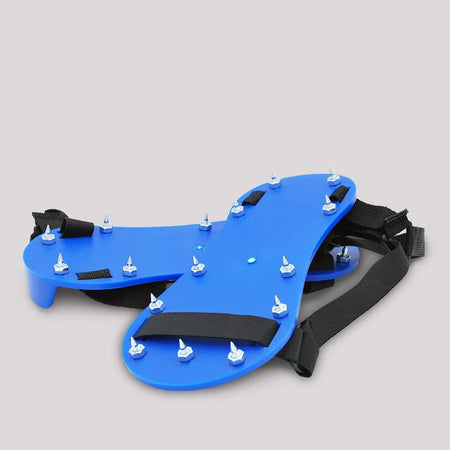
Seal with the same product you used as the primer. Take your shoes off and work in stocking feet, or wear spiked shoes made for concrete.
Method 1: spraying (preferred)
- Remove all filters from the pump-up sprayer.
- Shake the AcquaSeal™ well before pouring it in.
- Apply in circular motions with irregular overlaps, in thin coats, avoiding puddles.
- Allow 12 hours before the second coat. Maximum of two thin coats.
- Check with a thumbnail — if the coat dents or scratches, give it more time to cure.
- Apply the second coat the same way.
Method 2: rolling
- Shake well, pour into a paint tray.
- Use a 3/8 in. nap roller for the first thin coat, rolling in one direction only.
- Do not press on the roller. Let the weight of the roller do the work — pressure causes streaking.
- 12 hours, thumbnail test, then the second coat in the opposite direction.
Cold temperatures — the one that cannot be repaired
If the floor is below 65°F, do not apply a water-based sealer. It will dry to a cloudy finish, and the only remedy is removing it and reapplying. Bring the floor to 60–65°F with central or in-floor heating, and check it in several places with a flat or infrared thermometer — a sunroom slab is rarely the same temperature by the glass as it is by the interior wall. Once it is up to temperature, turn all heating and fans off before you apply, then turn them back on afterwards to speed drying.
The finished sunroom
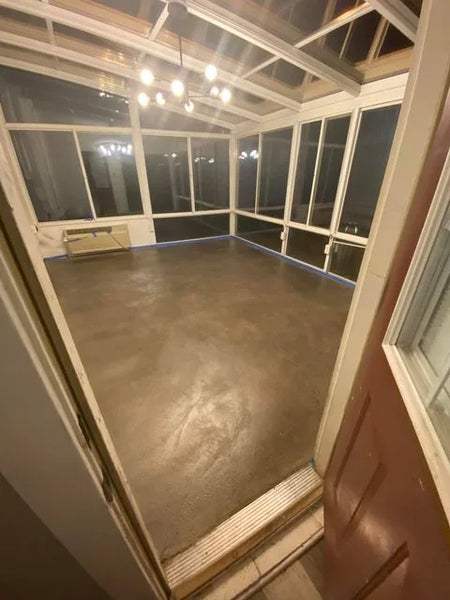
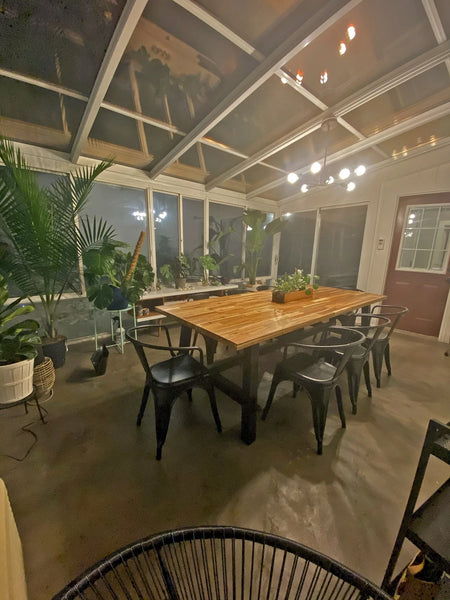
A dull slab is now the feature of the room, and it was done with a bag of powder, a can of acetone and a weekend.
Sunroom Dye: FAQs
What does the water test tell me?
Three different things. Absorbs in a few minutes and it is ready. Shows rainbows and you need to degrease. Sits on top and there is a seal to strip.
What is the step most people skip?
The primer coat. Before any dye, apply a thin layer of the same sealer you plan to finish with and let it dry — two to four hours, and it must not be tacky.
How do I mix and apply the dye?
One dye packet to 1 qt. of acetone for a small area, 1 gal. for medium, 5 gal. for large. Never mix dye and acetone with an electric mixer, and never inside the sprayer — acetone is highly flammable and a motor is an ignition source in the vapor. Practice on cardboard first, test one small corner, and use the thinnest layers you can: the more you lay down the darker it gets, and you cannot take it back.
How long between coats?
At least 8 hours between dye coats, up to four coats. Then 12 hours between sealer coats, maximum two thin coats.
What is the one mistake that cannot be fixed?
Sealing a cold floor. Below 65°F, do not apply a water-based sealer — it dries to a cloudy finish and the only remedy is removing it and reapplying.
What’s Next
- More sunroom color ideas → Sunroom Floor Ideas: Before & After
- The full dye method → How to Apply Concrete Dye
- Prep in depth → Concrete Surface Preparation
- This color across other projects → Gray Concrete Floor Gallery
- Shop → Concrete Dye · AcquaSeal™ · Spiked Shoes · Trial System


