
This is the strangest tip we give out, and it works. Miracle-Gro plant food contains a lot of copper, and copper is what drives the blue and green in acid stain. Sprinkle it into an Azure Blue or Seagrass application and the blues come up dramatically brighter than the stain alone will produce — which is how our customers get turquoise veins out of a product that normally lands closer to slate.
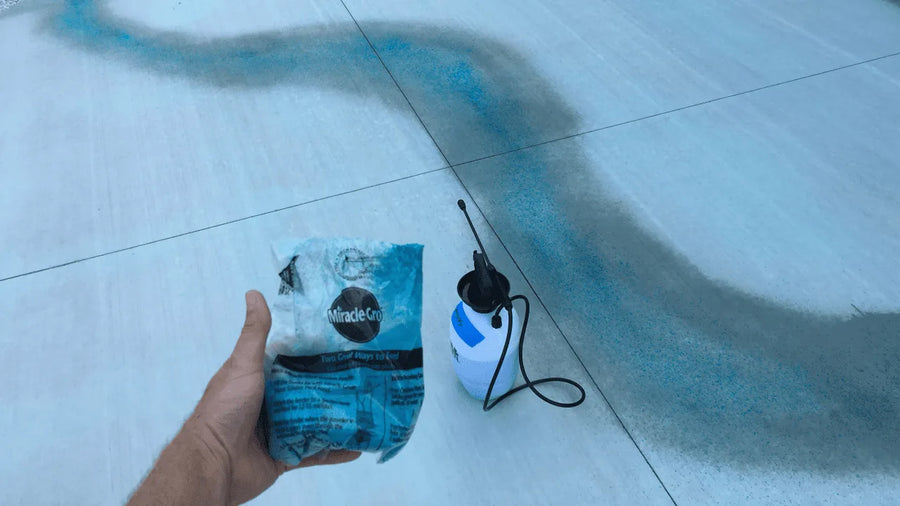
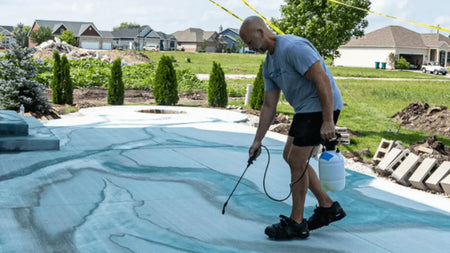
Azure Blue acid stain sprayed over Miracle-Gro granules — the copper drives the blue.
Shop Azure Blue & Seagrass EverStain™ →
The three methods
1. Granules on the surface, stain over the top
Spread the granules onto bare concrete in the pattern you want, then spray Azure Blue or Seagrass over them so the stain dissolves the granules as it reacts. Let it react for at least 4 to 6 hours before neutralizing and rinsing. This is the method that produces the most defined veining, because the granules stay where you put them.
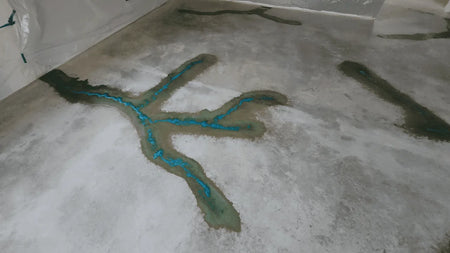
2. Granules after the stain, while it is still wet
Apply the Azure Blue or Seagrass generously, and while the stain is still wet, sprinkle the granules over it in your pattern. React for 4 to 6 hours, then neutralize and rinse thoroughly. This gives a softer edge than method one — the granules land into wet stain and bloom outwards rather than sitting on dry concrete.
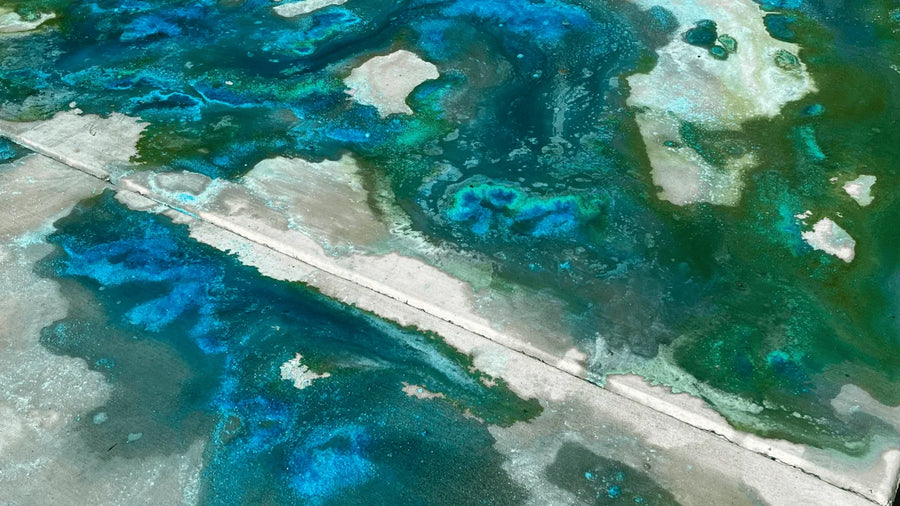
Blue acid stain applied first, with Miracle-Gro granules sprinkled into the wet stain.
3. Dissolved into the stain
Mix the granules into the acid stain in a spray bottle — not a pump-up sprayer, because undissolved granules will clog it. Apply the mixture to the concrete and let it react at least 4 to 6 hours before neutralizing and rinsing. This is the option for an overall lift in blue intensity rather than a pattern.
Whichever method you use, the outcome varies with the composition of your concrete — which is part of the appeal and the reason to test a small area first. And prep still decides everything: clean and neutralize thoroughly and remove all residue, or the sealer will not adhere over your work. See surface preparation and neutralizing.
Outdoors, blue turns bronze — and that is chemistry, not a defect
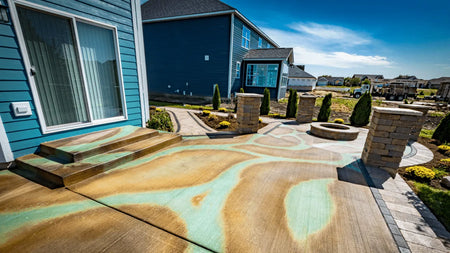
This needs saying plainly before anyone puts Azure Blue on a patio. Blue acid stain used outdoors will change color over time and go a bronze or brown shade. The effect is called patina, and the cause is the same copper that makes the blue in the first place: copper patinates naturally when it is left exposed to the elements. It is the same process that turns copper roofing green and a cut avocado brown.
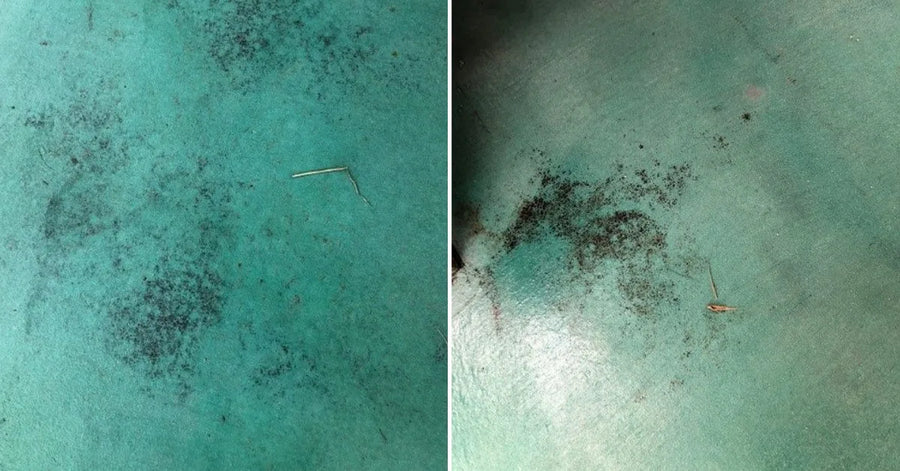
The patina effect developing on blue acid-stained concrete outdoors.
So use blue outdoors knowingly. If you want the blue to stay blue, keep it indoors, or accept that an exterior floor will move toward bronze and plan the rest of the palette around where it is going rather than where it starts.
Seven projects that used it
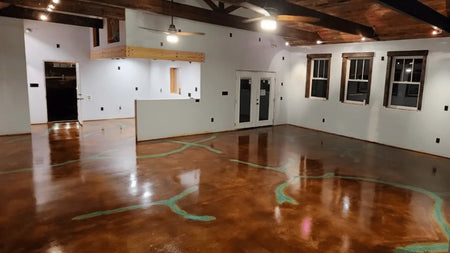
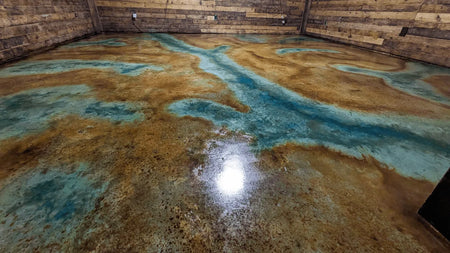
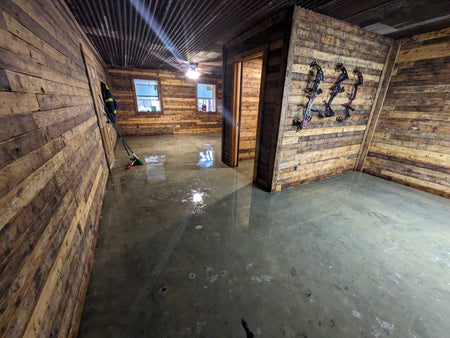
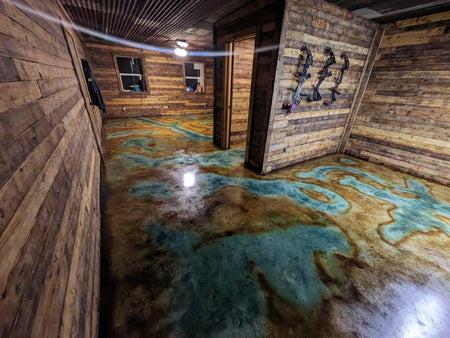
A rustic room in Seagrass
A plain concrete floor turned into a textured surface with Seagrass enhanced by Miracle-Gro, plus Malayan Buff and Coffee Brown highlights — chosen to sit with the wooden walls rather than compete with them.
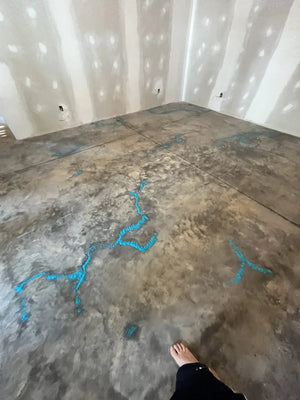
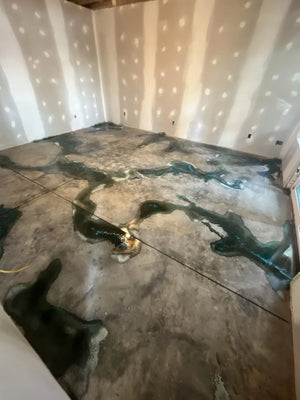
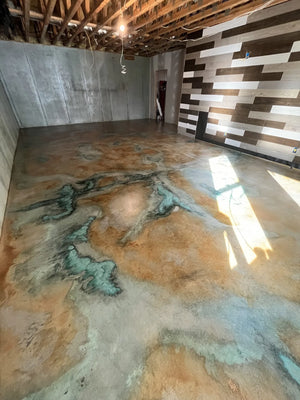
A walk-out basement man cave, by a first-time stainer
Inspired by the Malayan Buff and Seagrass projects, this customer mixed in Miracle-Gro for a textured effect. It was their first time staining anything. The bold blue veining in the finished floor is the granule method doing its work.
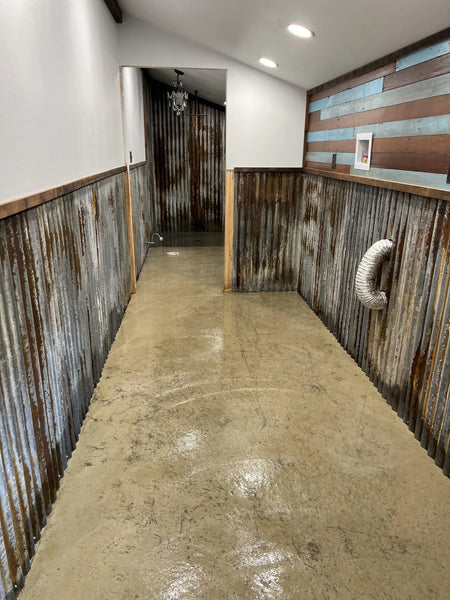
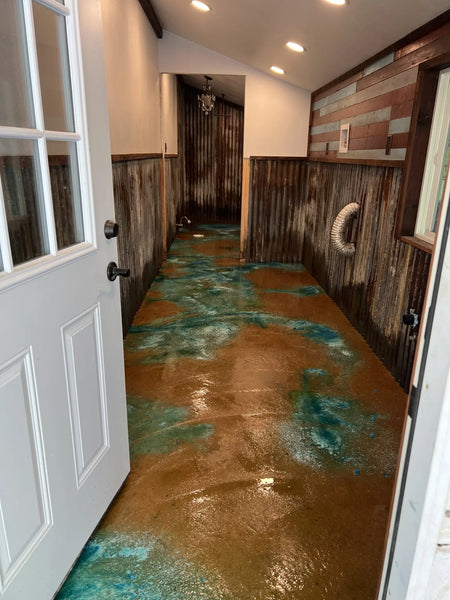
A laundry room and bathroom in Azure Blue and English Red
A multipurpose laundry and bathroom floor in azure blue and english red — the owner reported the project was easier than expected and the results exceeded what they had hoped for. Blue and red is a braver pairing than most people attempt, and the Miracle-Gro is what keeps the blue from being overwhelmed by the red.
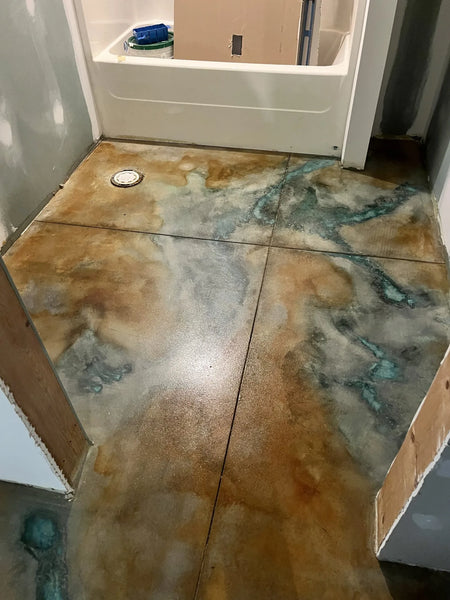
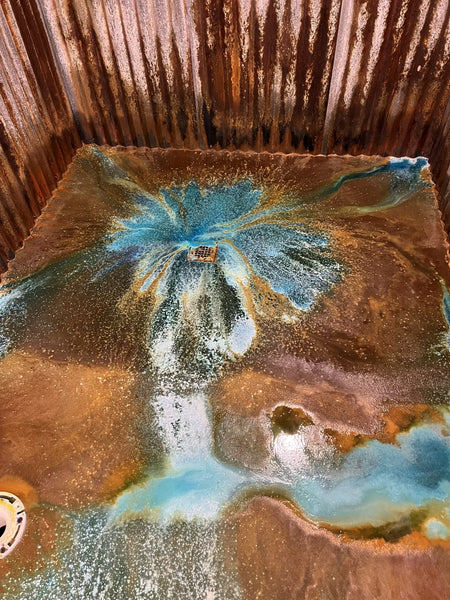
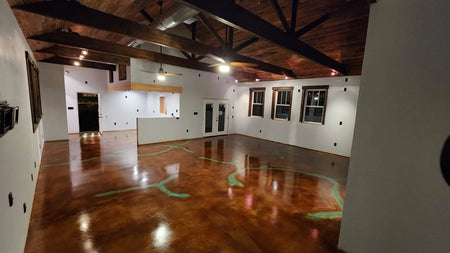
Coffee Brown, English Red and Azure Blue, with vein patterns
Three colors blended, with Miracle-Gro granules used to create the vein-like patterns running through it. The owner credited meticulous etching and thorough scrubbing for the finish, which is the same conclusion every good project on this site reaches.
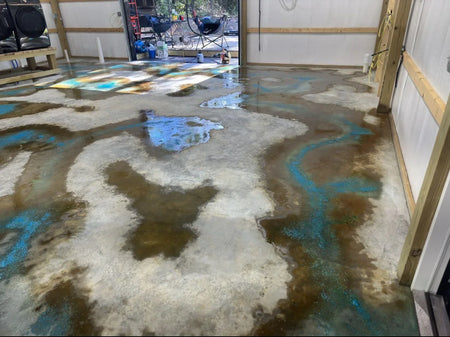
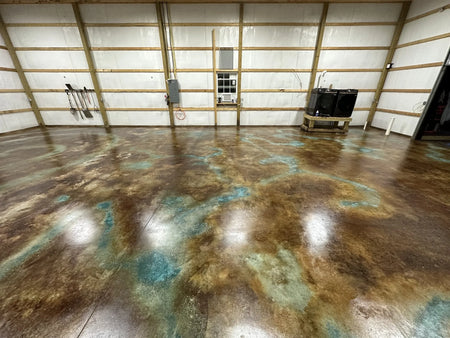
A porch in Azure Blue and Seagrass
Azure blue and seagrass mixed with Miracle-Gro, plus a touch of acrylic paint for extra drama. More blue projects in the Azure Blue gallery.
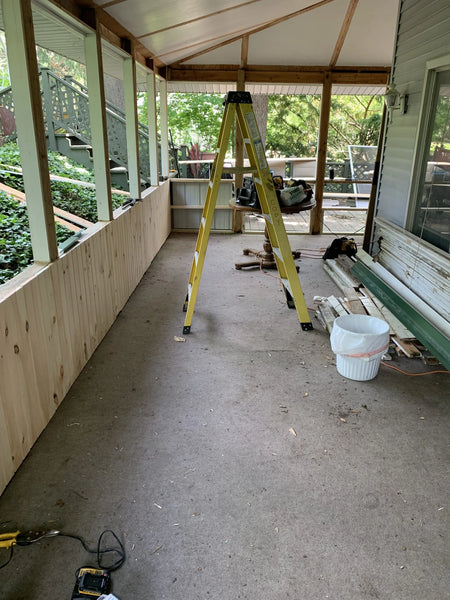
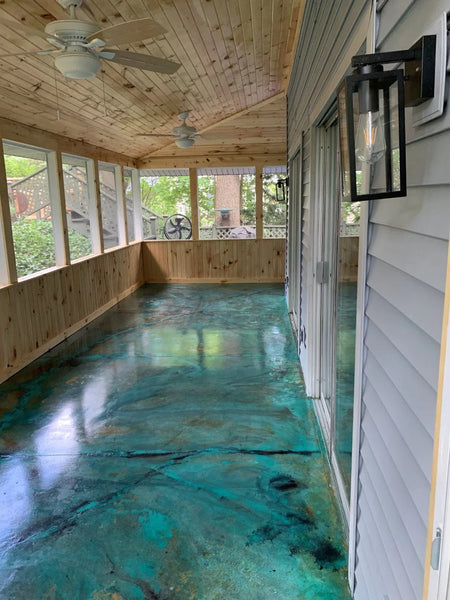
A game room and guesthouse, veined with toilet paper
They wanted something different with a pop of color, researched it, and settled on the veining technique using toilet paper as the mask, with Miracle-Gro added to Azure Blue for a brighter blue. The full range of veining methods is in concrete veining with acid stain.
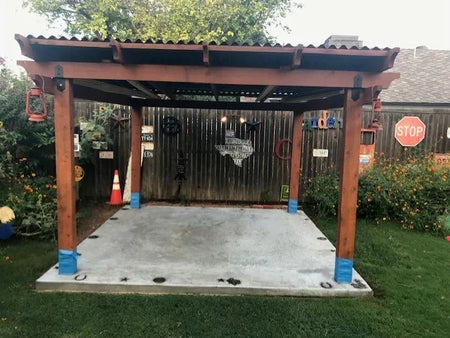
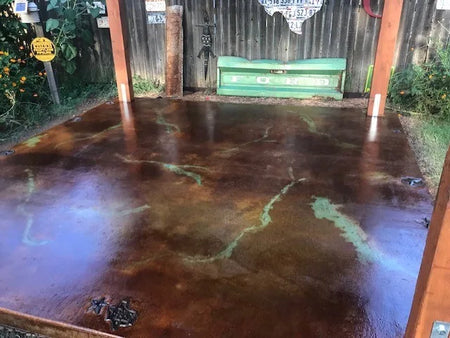
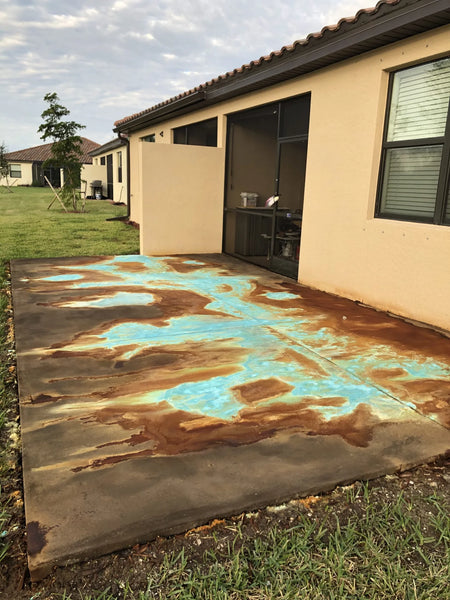
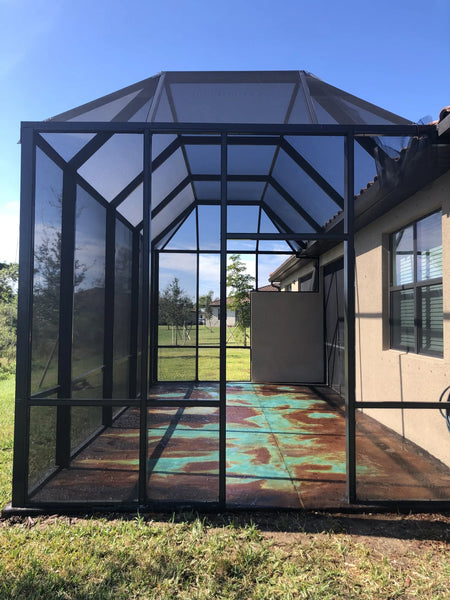
An enclosed patio, designed in strands of toilet paper
This customer got the Miracle-Gro tip from our sales reps, and learned to lay the whole design out in strands of toilet paper before committing any stain to the floor. That is a genuinely good idea — the paper shows you the composition, moves freely, and costs nothing to redo. They also watched every video on the site first. More sunroom and patio floors in sunroom floor ideas.
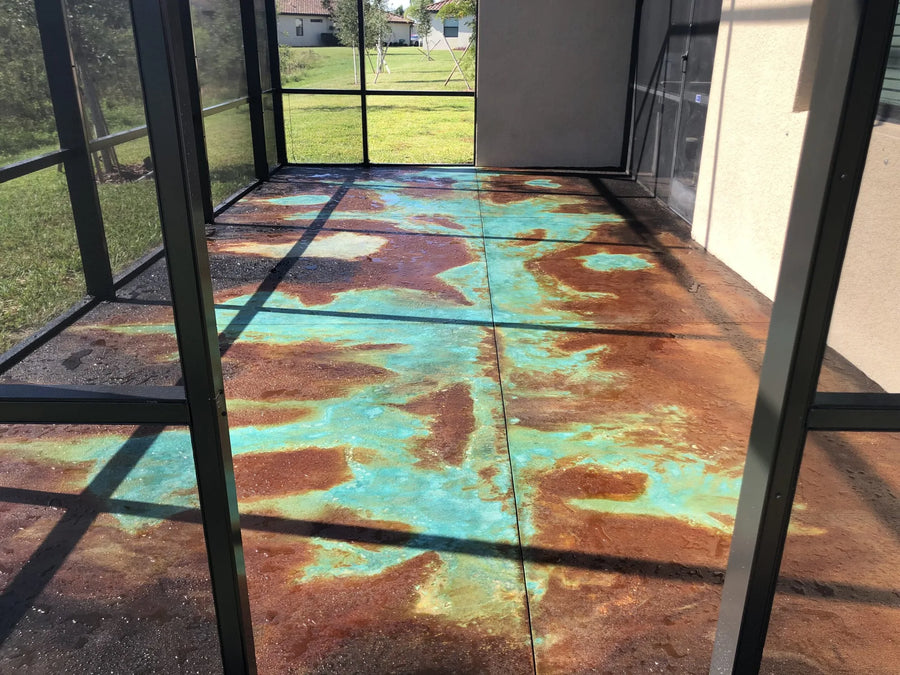
The enclosed patio in Azure Blue, Miracle-Gro, Black and English Red.
Miracle-Gro & Blue Stain: FAQs
Why does Miracle-Gro intensify blue acid stain?
High copper content — and copper is what produces blue and green in acid stain. It works with Azure Blue and Seagrass and does nothing useful for browns. Miracle-Gro is a third-party product customers discovered, not a Direct Colors product.
What are the three ways to use it?
Granules spread on bare concrete with stain sprayed over them; granules sprinkled onto stain while it is still wet; or dissolved into the stain in a spray bottle — not a pump-up sprayer, because undissolved granules will clog it.
How long does it need to react?
At least 4–6 hours before neutralizing and rinsing, whichever method you use. Test a small spot first: the result varies with the composition of your concrete.
Will blue stay blue outdoors?
No, and this needs saying plainly before anyone puts Azure Blue on a patio. Blue acid stain used outdoors changes over time and goes bronze. It is a patina, not a defect — but decide whether you want it before you commit.
What’s Next
- All the veining methods → Concrete Veining with Acid Stain
- The base method → How to Apply Acid Stain · Neutralizing
- Layering colors → Two or More Acid Stain Colors · Worn-Leather Look
- Blue and green galleries → Azure Blue · Seagrass
- Shop → EverStain™ · Trial Kits · CitrusEtch™ · ProWax Polish™


