
Replacing a paver patio costs thousands. Recoloring one costs a few hundred, and the projects below are the evidence — fifteen of them, on pavers that had faded, gone blotchy, grown moss, thrown efflorescence or simply gone the wrong color fifteen years ago. One homeowner brought a whole front walkway back for about $125.
Pavers are a good candidate for staining for a specific reason: they were pigmented when they were made, and pigment fades from the top down under UV. The stone underneath is fine. You are replacing a lost surface color, not covering a defect.
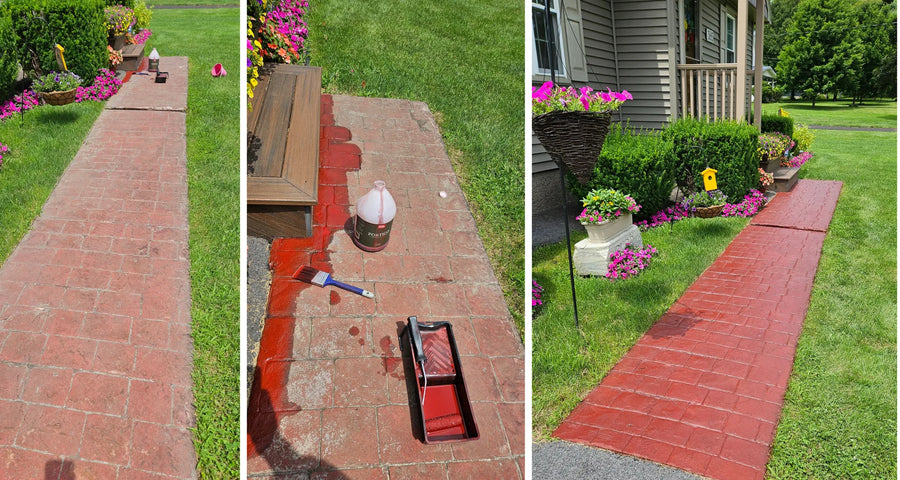
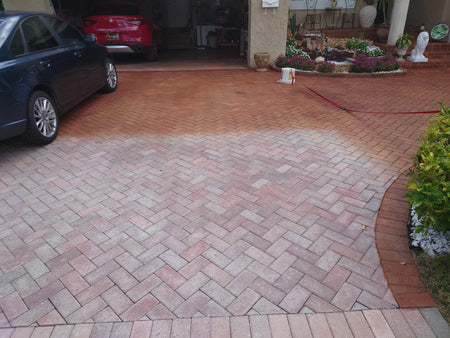
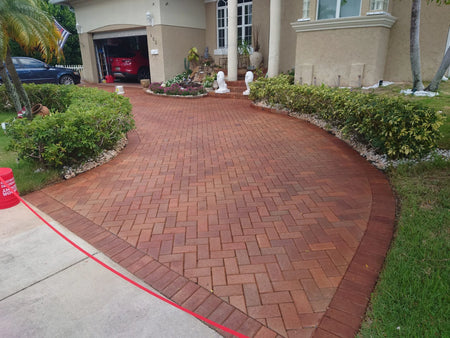
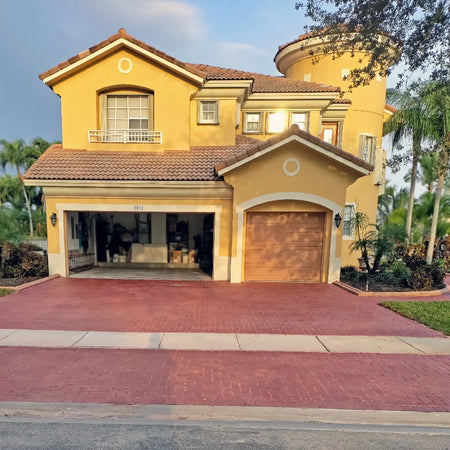
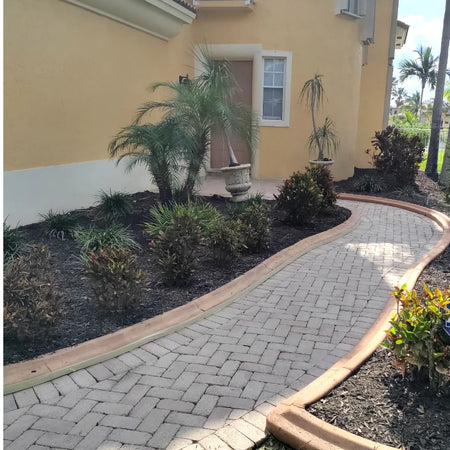
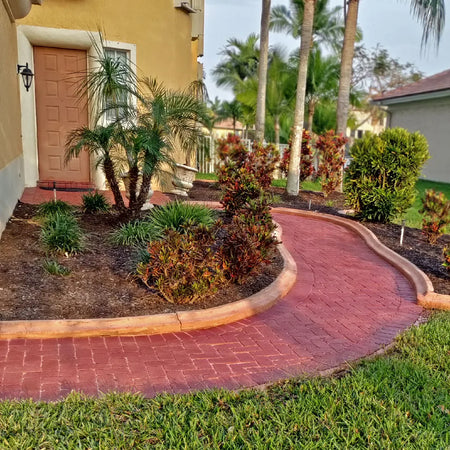
A faded front walkway restored with Portico™ Terracotta — brush and roller, about $125 in materials.
A 15-year-old patio, a new border, and 315 sq. ft. in five days
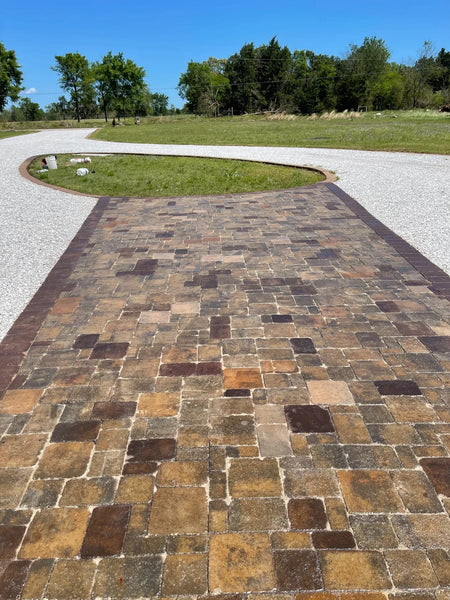
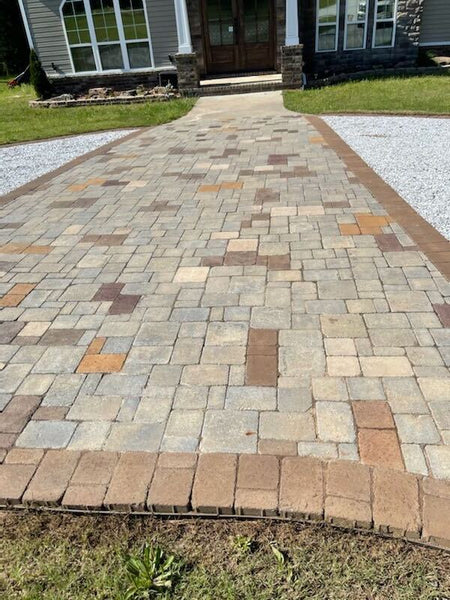
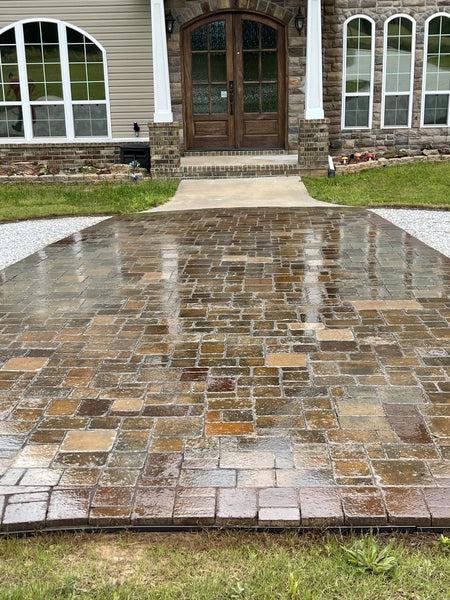
The most complete write-up in the gallery. A mixed-color paver patio over 15 years old, never sealed, badly faded, and losing ground to moss and weeds. The owner wanted it to complement last summer’s landscaping — gray edging stones and red lava rock — and wanted it done before the patio deteriorated far enough to need pulling up and re-laying.
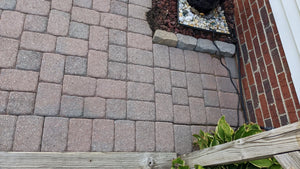
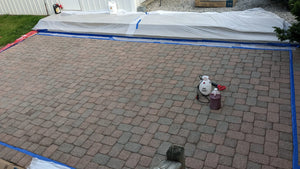
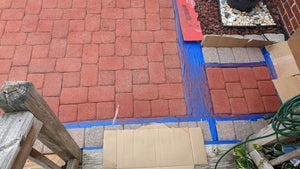
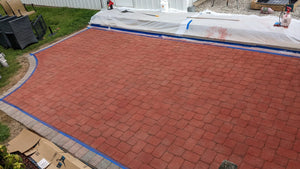
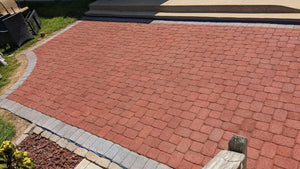
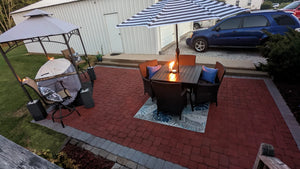
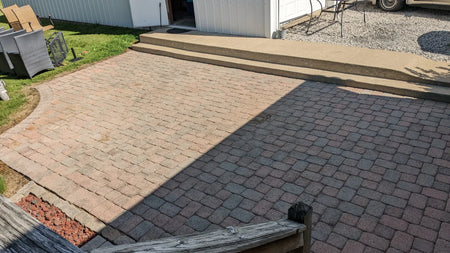
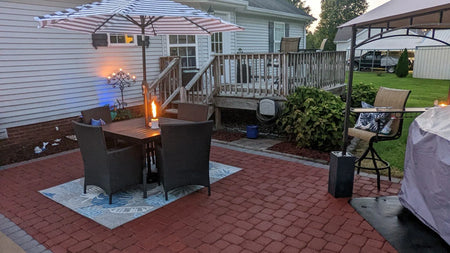
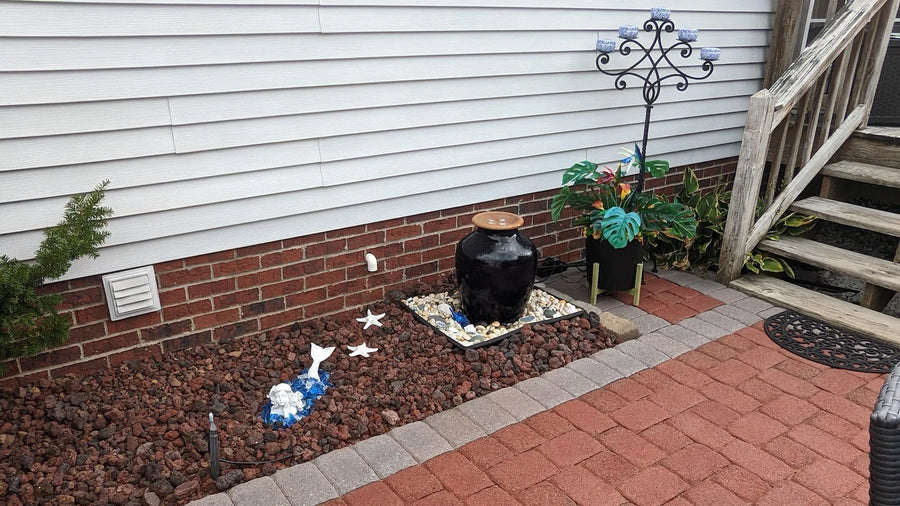
Two coats of EasySeal™ Satin over Crimson and Eagle Gray Portico™.
— DIY Customer
— DIY Customer
That border problem comes up on every two-color paver job. You cannot spray a border next to a finished field without hitting the field, so the border gets cut in by hand with a foam brush and rolled on the second coat. Budget the time for it — it is slow, and it is what makes the job look deliberate rather than sprayed.
A circle kit, stained ring by ring
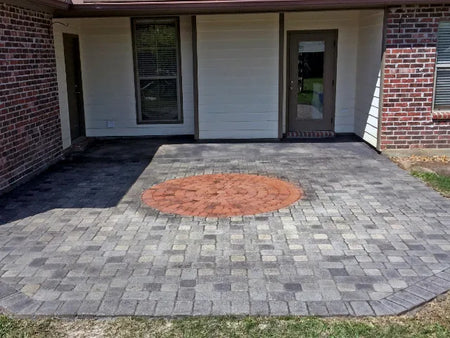
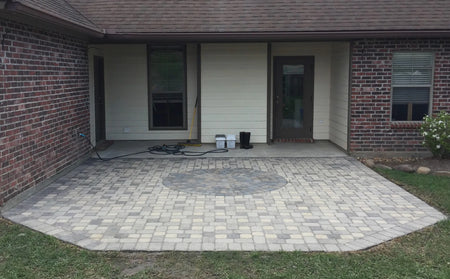
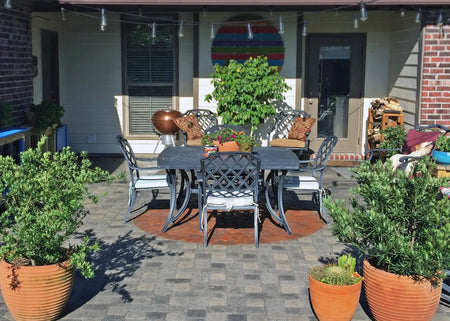
A central circle paver design restored by coloring each paver individually with foam brushes. The interior rings were hand-stained in terracotta and russet with touches of silver-gray; a charcoal edge frames it; and the rest of the patio went to a single cohesive terracotta so the circle reads as the feature.
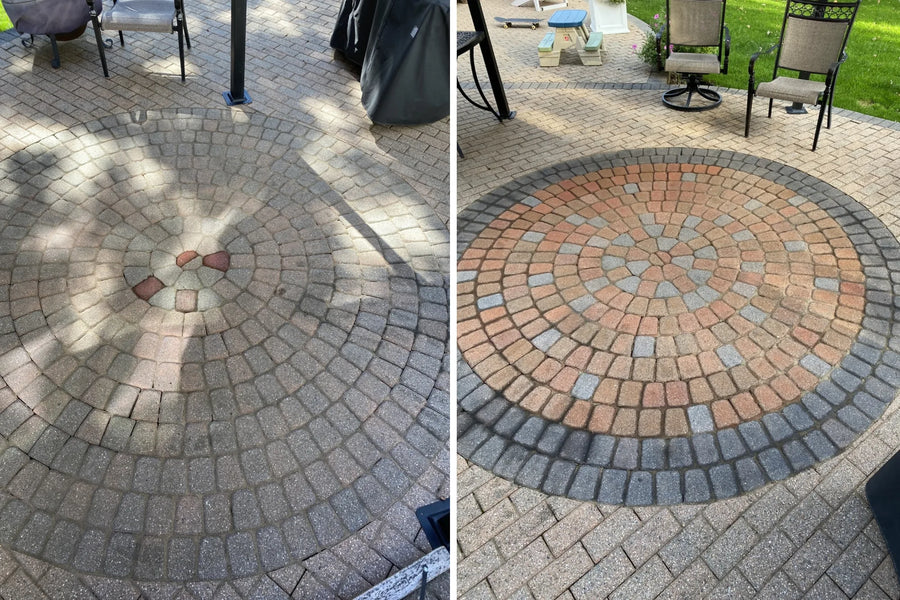
A dull paver circle kit design, restored ring by ring.
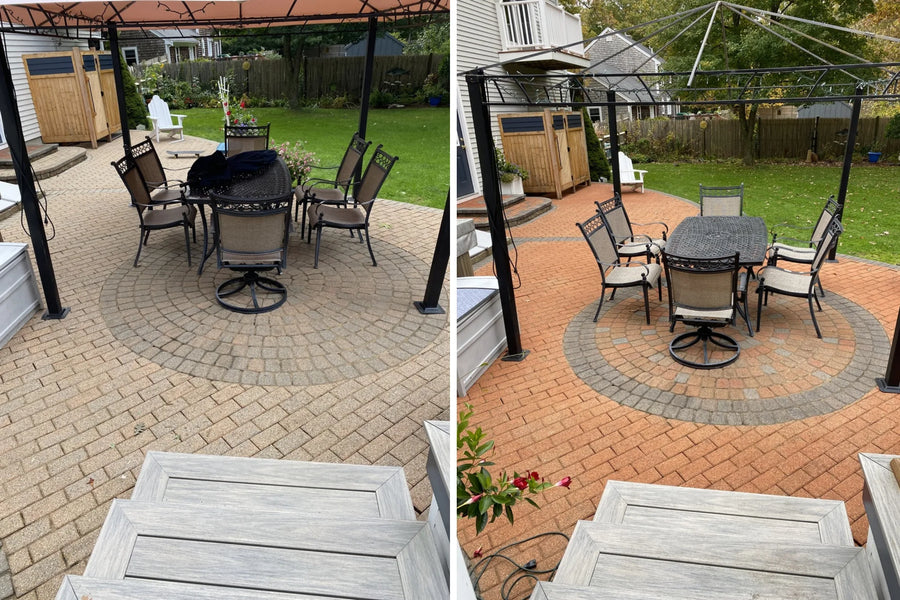
Faded pavers brought back with Portico™ stain.
A 16-year-old driveway, on a budget, by a first-timer
A retired homeowner with no prior experience repaired and recolored a 16-year-old concrete paver driveway using ColorWave® water-based stain — and impressed the neighbors. Water-based stain is the gentler learning curve of the two: no reaction to time, no neutralizing, and it goes on with ordinary equipment.
A paver circle accent in two products
Contrasting colorants on one driveway: Aztec Brown Portico™ on the inner circle of pavers and on the outer border, then Goldenrod EasyTint™ across the remaining field. Using a stain for the accents and a tinted sealer for the field is a smart split — the stain gives you saturated color where you want the eye, and the tinted sealer covers a large area evenly and seals it in the same pass.
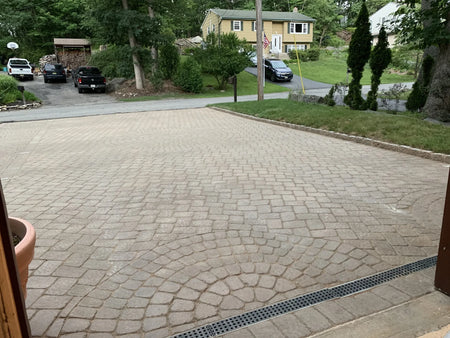
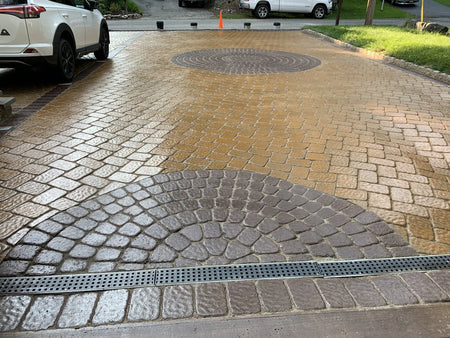
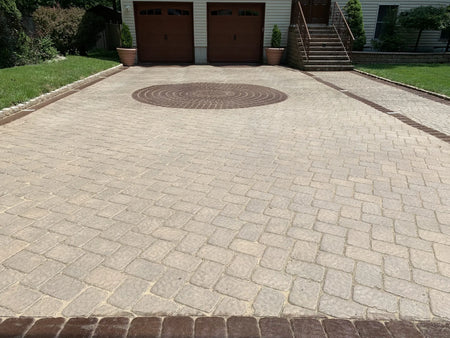
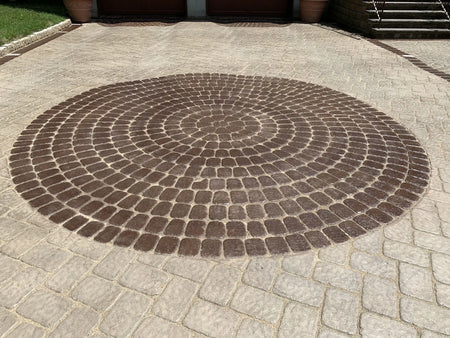
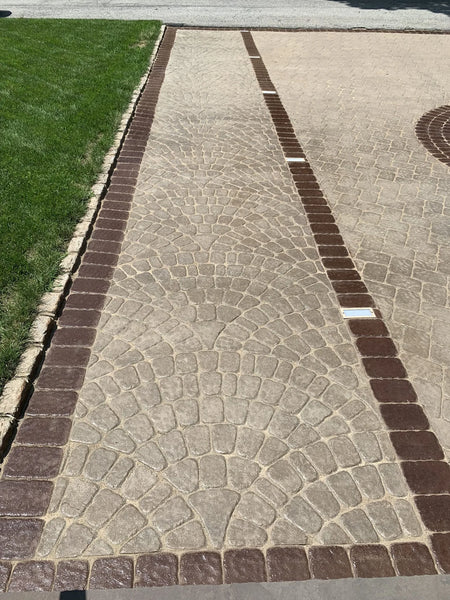
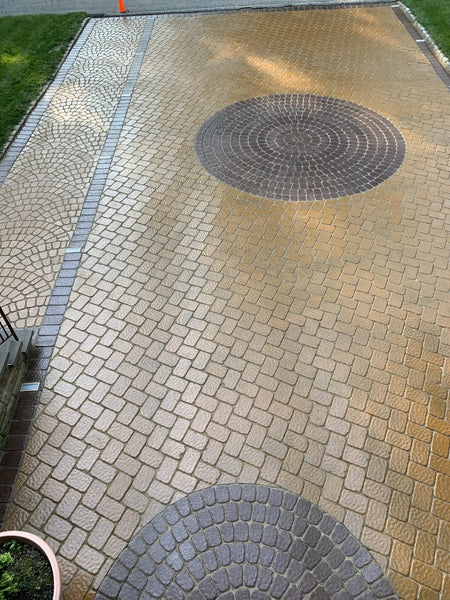
Aztec Brown Portico stain, close up on a paver and across the finished driveway.
Efflorescence, and the pavers underneath it
Efflorescence is the white, chalky bloom that appears on pavers when moisture carries salts to the surface and evaporates. It is not dirt and it will not stain over — it has to come off first, and high-pressure spraying is what does it. This project cleared the efflorescence and then went back over the patio with Portico™ Milano Red and Terracotta, applied with sponge brushes.
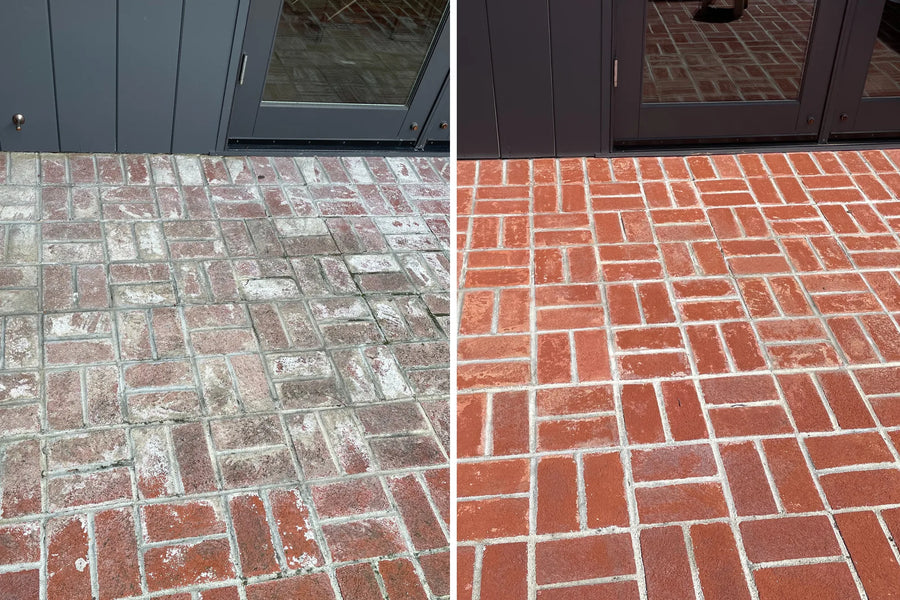
Efflorescence removed from patio pavers before any stain went on.
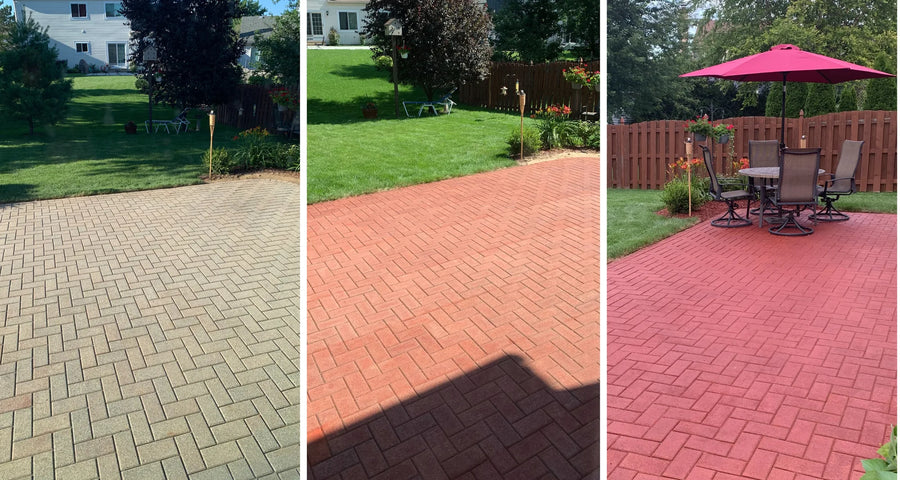
Discolored patio pavers refreshed with Portico™ Crimson.
A pool deck in Chocolate and Milano Red
Two colors alternated across a paver pool deck, and the intensity varied between them, so the deck reads as a pattern rather than a field. Worth noting how well this works on pavers specifically: the joints already divide the surface into a grid, so alternating color needs no masking at all. More on wet-area work in concrete pool deck color ideas.
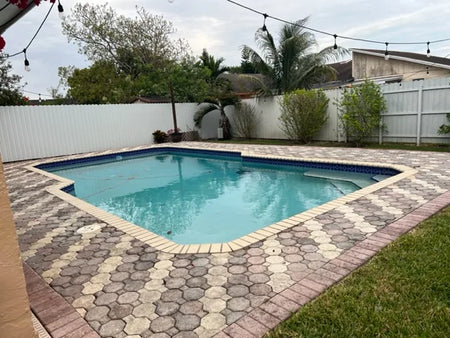
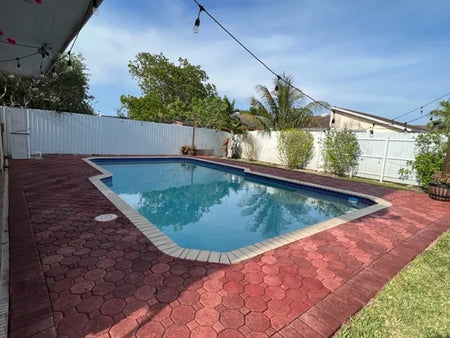
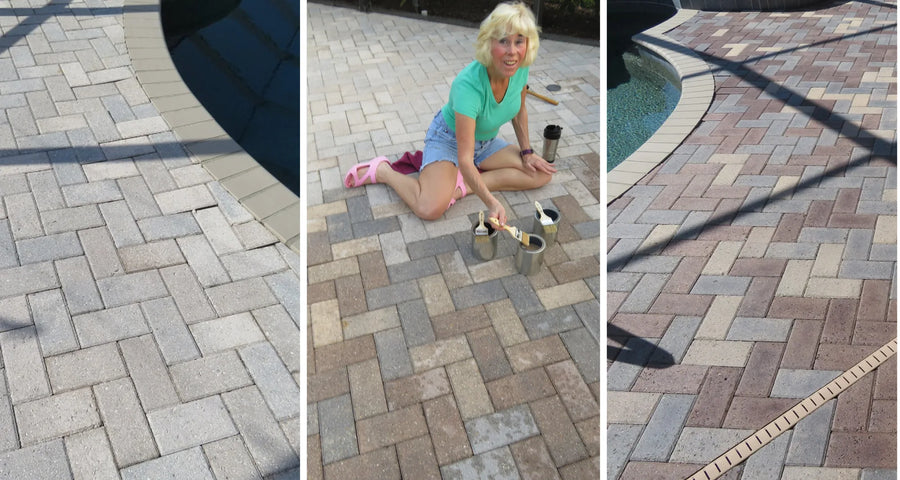
Faded pool deck paver colors restored with Portico™.
20 days, 200 sq. ft., and the quotes that started it
This homeowner got several exorbitant quotes to replace a sinking, dirty, weed-infested brick paver patio, decided against all of them, and did it themselves. They repaired the patio, power washed it, stained, sealed and added polymeric sand to the joints.
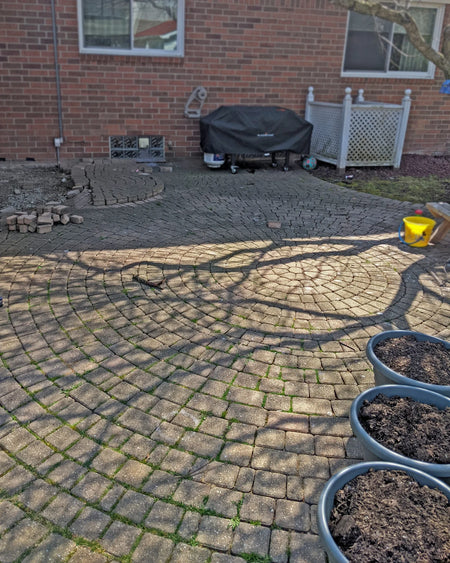
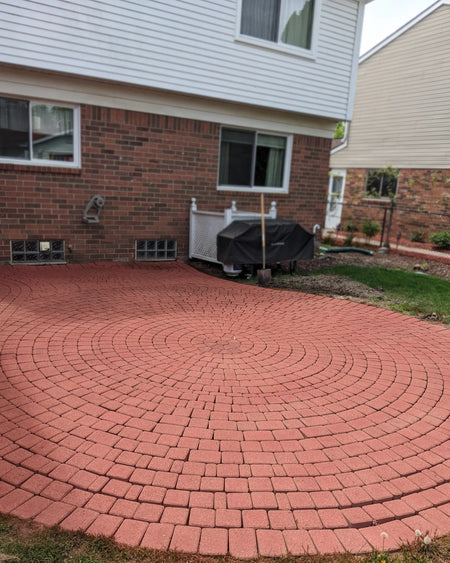
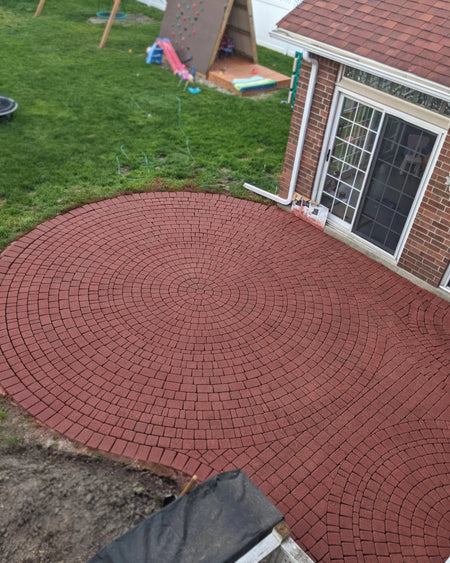
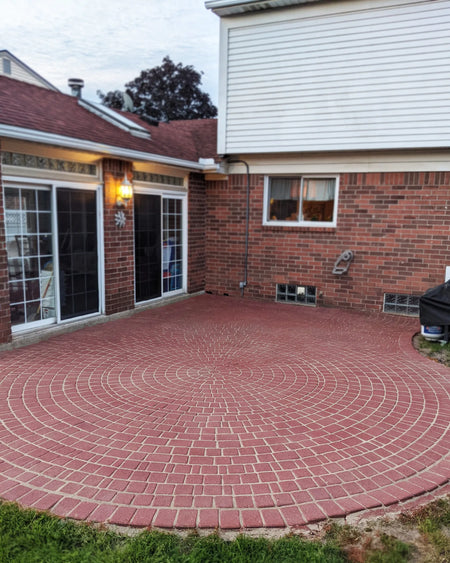
The finished patio — repaired, stained, sealed and re-sanded.
— DIY Customer
That first sentence is the single most useful line in this gallery. Power washing does not just clean pavers, it opens them — and a freshly washed paver drinks far more sealer than the coverage figure on the label suggests. Order extra.
A discolored driveway, fixed with tinted sealer
Years of sun, stains and spills on a paver driveway, corrected with a tinted sealer and then an acrylic sealer over the top. Where the problem is uneven discoloration rather than uniform fading, EasyTint™ is the better tool: it is opaque enough to even out patchiness that a semi-transparent stain would show straight through.
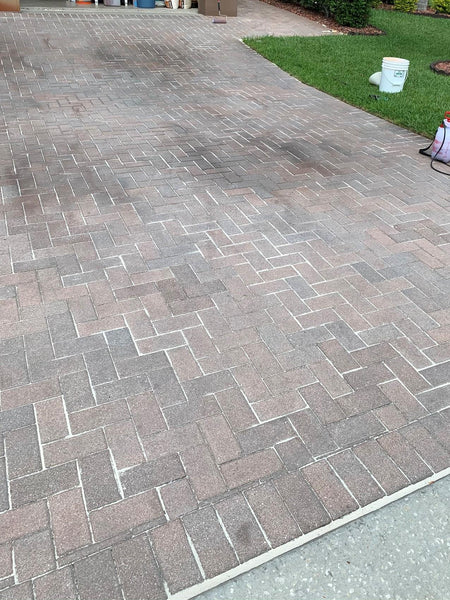
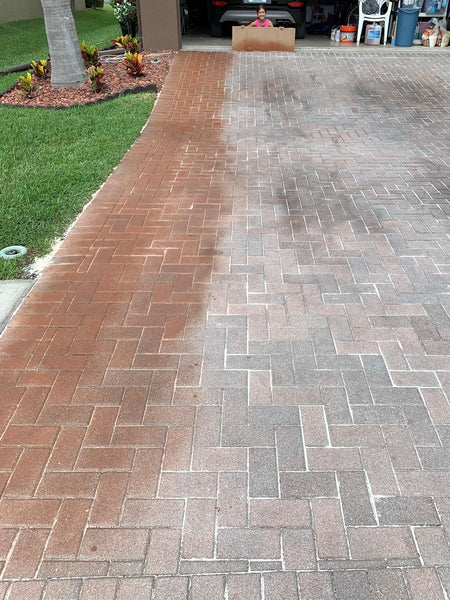
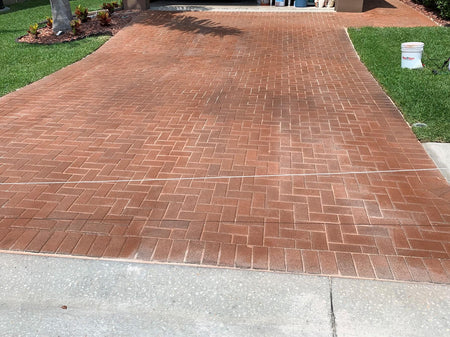
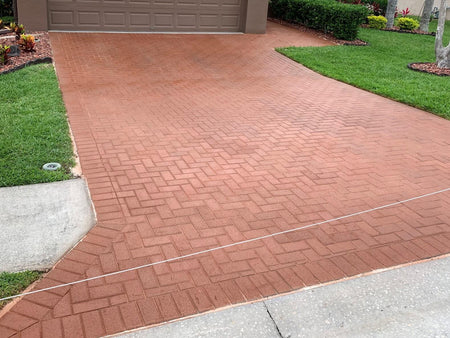
Mid-application, and the finished driveway.
Badly faded pool pavers, hand-stained one at a time
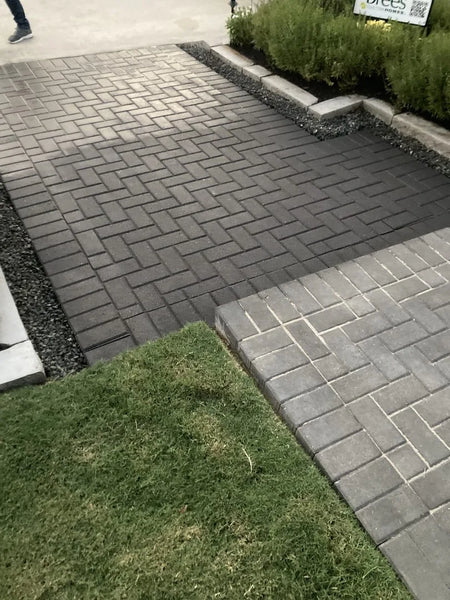
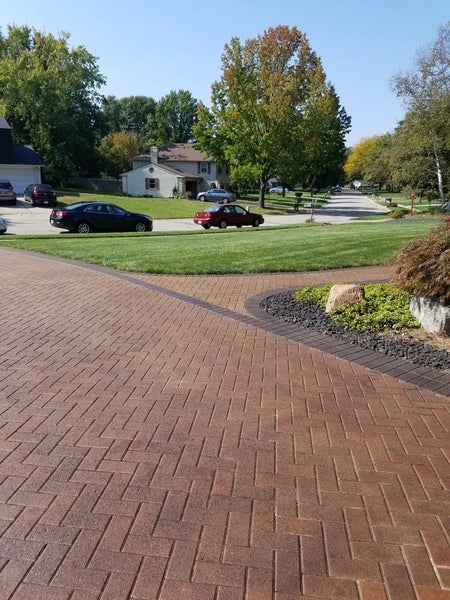
Severely faded pool pavers recolored by hand-staining each paver individually with a foam brush, using a range of colors rather than one. It is slow, and it produces something you cannot get any other way — a deck where no two adjacent pavers are quite the same, which is exactly how natural stone behaves.
DIY pavers, acid stained
Pavers you cast yourself take acid stain, and that opens a different look entirely — EverStain™ reacts with the cement, so the color is variegated and mottled rather than even. Desert Amber and Coffee Brown here, on pavers laid by the owner. Mold-made or bought, the method is the same, and there is more on casting in DIY concrete craft projects.
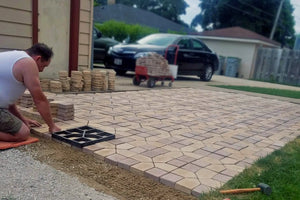
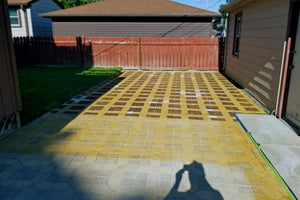
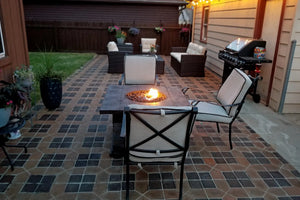
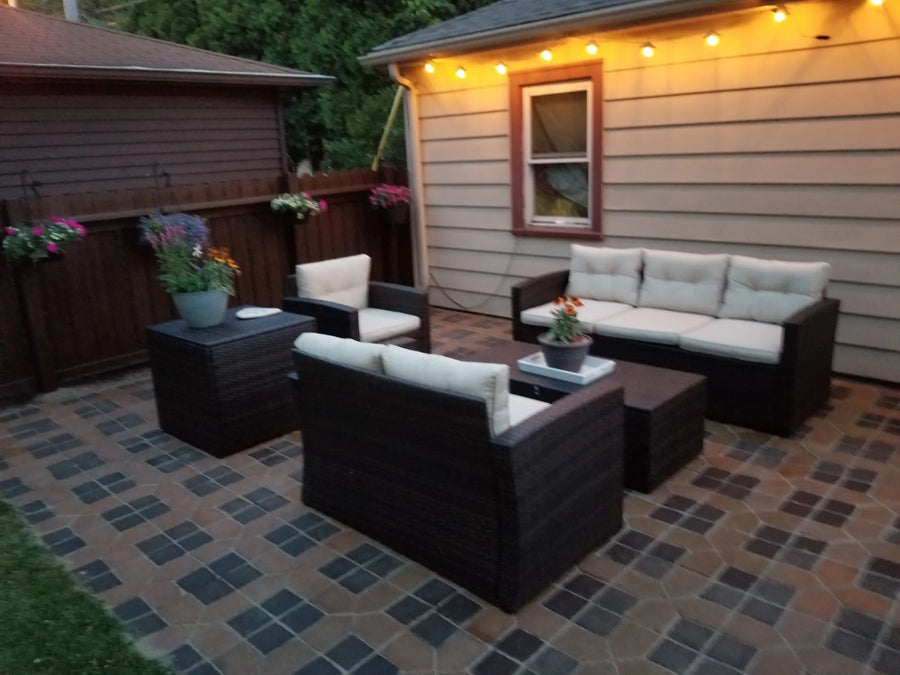
The completed paver patio in EverStain™ Desert Amber and Coffee Brown.
Terracotta and Charcoal, with a cobblestone effect
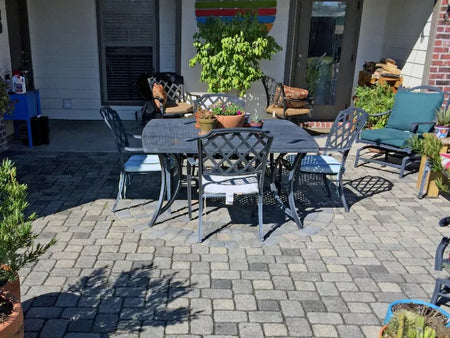
A dull gray paver patio pressure washed and then stained in Terracotta and Charcoal, using a circular kit in the middle and a cobblestone effect across the field. Two colors and a change of scale is all it takes to turn a plain grid into something that looks laid rather than poured.
Crimson on a driveway and a walkway
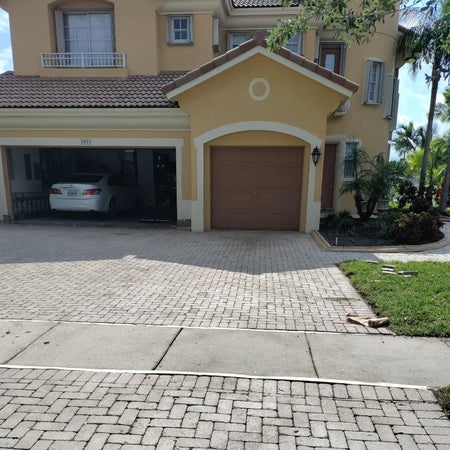
The same color, the same house, two surfaces — a driveway and a walkway both taken to Crimson Portico™. Doing both in one pass is what makes it read as a deliberate scheme instead of a repair to one area.
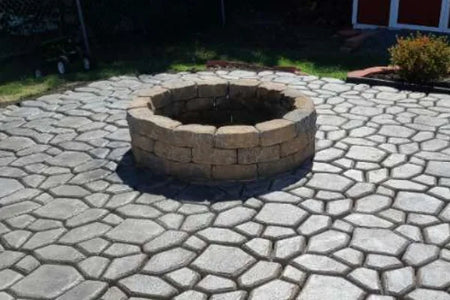
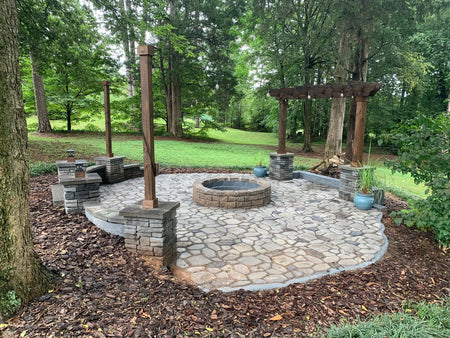
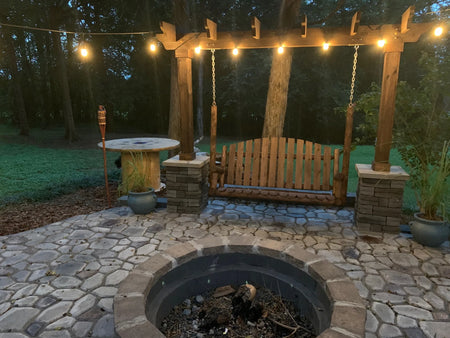
WalkMaker pavers and a fire pit
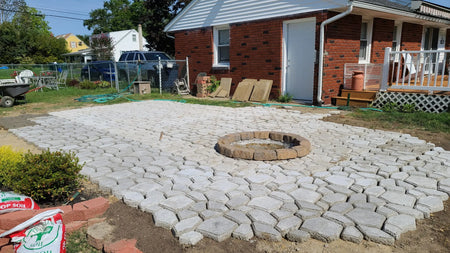
Pavers cast in a mold on site, then stained Light Charcoal with Portico™ and built around a wood-burning fire pit. Cast pavers take stain very predictably because they are new cement with no history — and the full build is written up in staining Quikrete WalkMaker pavers.
A five-color driveway
Aztec Brown, Driftwood, Khaki, Terracotta and Yukon Gold across one paver driveway and patio. Five colors sounds excessive until you look at natural stone, which is never one color — the point is that each paver gets its own value and the whole surface stops reading as manufactured.
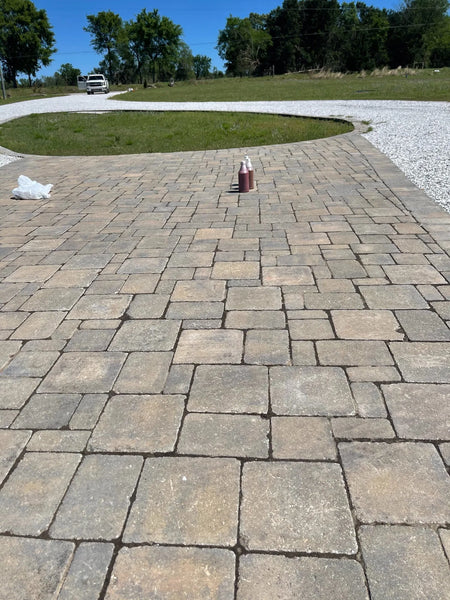
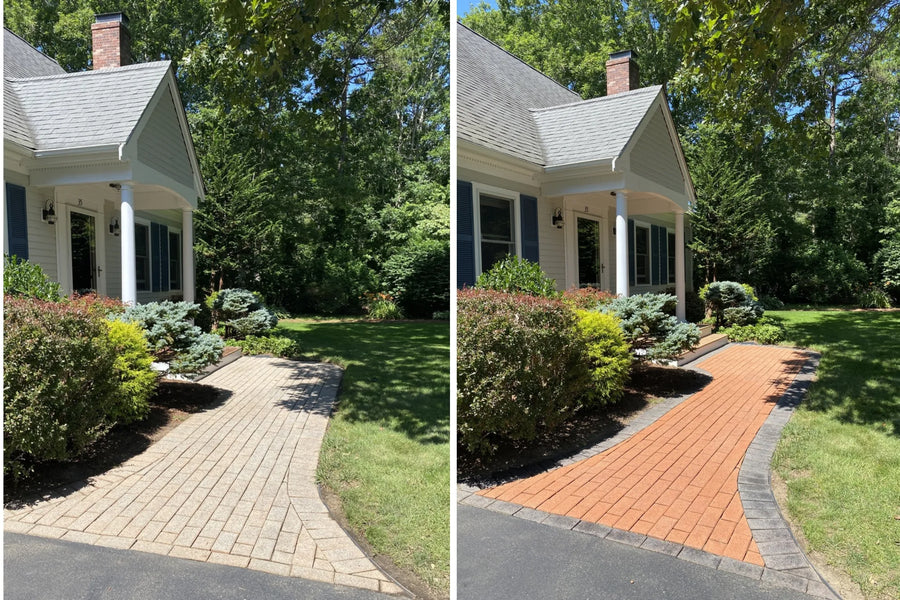
A discolored front porch and walkway, restored.
Concrete patio or paver patio?
Worth settling before you spend money either way, because both take stain and both have real drawbacks.
Poured concrete
- For: durable, low maintenance, can be poured in any shape or size, takes color and stamping to imitate stone, and it is inexpensive compared with the alternatives.
- Against: it cracks over time, particularly if the ground beneath it shifts; it is difficult to repair invisibly; it gets slippery when wet; and the design options are more limited than they look.
Pavers
- For: durable, low maintenance, available in many colors, sizes and shapes, and they can be laid in a huge range of patterns. Crucially, they are flexible — individual pavers shift with the ground instead of cracking.
- Against: generally more expensive than a slab, they settle or shift if they were not installed properly, and laying them well is harder than pouring concrete.
Both are good choices, and the honest answer is that it depends on your ground, your budget and how much pattern you want. What is not in doubt is that either one can be recolored later for a fraction of what replacing it costs — which is the entire subject of this page.
Staining Pavers: FAQs
How much does staining pavers cost against replacing them?
A fraction. One walkway in this gallery came to about $125, and several of these homeowners were quoted thousands to replace instead.
How many coats of Portico™ can I apply?
Three maximum. Beyond that the stain starts having adherence problems. Coverage is roughly 200 sq. ft. per gallon, varying with texture and porosity, and Portico™ is thin — tape and cover anything that must not catch overspray.
What is the white chalky bloom on my pavers?
Efflorescence — moisture carrying salts to the surface, where they evaporate and are left behind. It is not dirt, and this gallery has a section on dealing with it.
Can I stain individual pavers rather than the whole surface?
Yes, and several projects here do. A circle kit was colored ring by ring with foam brushes, and badly faded pool pavers were hand-stained one at a time across a range of colors. It is slow, and it is what gives a natural-stone result.
Poured concrete or pavers?
Both take stain and both have real drawbacks. Poured concrete is inexpensive, can be any shape, and takes color and stamping. Pavers come in many colors, sizes and patterns and are flexible — they move rather than crack. Worth settling before you spend money either way.
What’s Next
- The step-by-step method → Staining Concrete Pavers
- Cast your own pavers → Staining Quikrete WalkMaker Pavers
- Walkways and driveways → Concrete Walkway Ideas · Driveway Color Ideas
- Brick, not pavers → Brick Staining
- Shop → Portico™ · Portico™ Trial System · PaveWave™ · EasySeal™


