
Cool and jewel-toned color is the harder choice on concrete and the more rewarding one. Where warm palettes make a floor welcoming, these make a room feel considered — and every palette below is available in water-based products, which matters because they are the ones you can use in an enclosed space without ventilating the house.
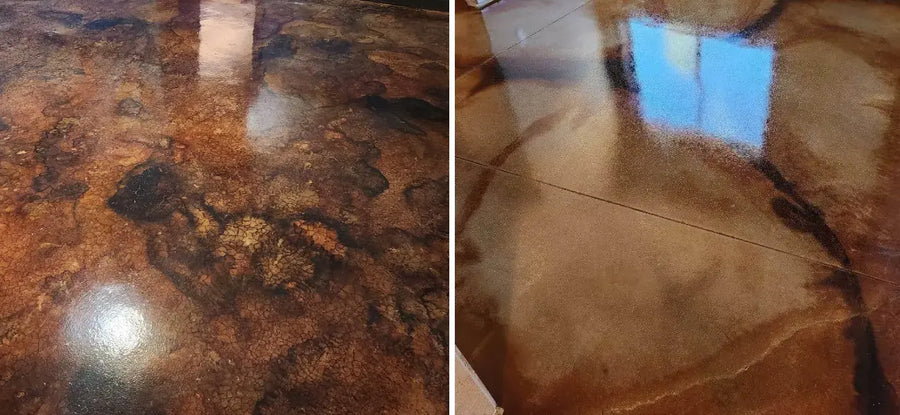
Cool and jewel-toned concrete palettes.
Why water-based products win indoors
Cool-weather and indoor projects are the same problem: closed windows, shared air, confined space. Water-based stains and sealers are built for it.
- Safe indoors. Water is the delivery method, not a harsh solvent — so basements, garage slabs and dull entryways are all fair game. Evaporation leaves the pigment bonded to the surface behind it.
- Low odor. Less smell during application and while curing, which is what actually matters when you are living in the room.
- Easy cleanup. Tools rinse, surfaces reset, nothing needs solvent.
- Gentler chemistry. No harmful emissions or residue left behind, and color that still bonds deep into the concrete.
If you are somewhere warm, exterior work stays possible far later in the year than most people assume — concrete holds heat, and southern climates stay workable well past the point northern ones stop.
Red Hot
Deep-set reds: oxblood, mahogany, chili. These command attention, so they work best as splashes and accents rather than whole floors — velvety and indulgent against cold light.
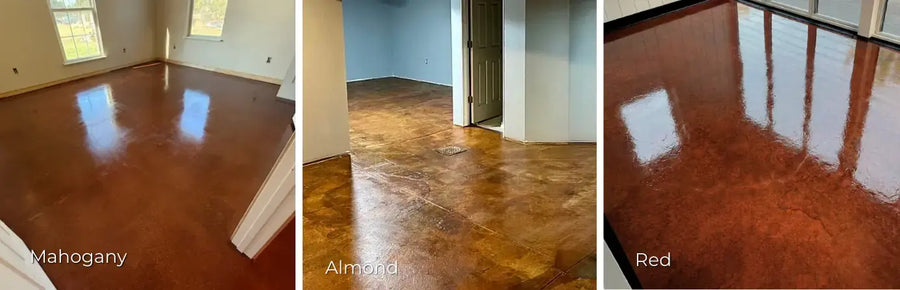
Mahogany, Almond and Red.
Iron and Ash
Chocolate brown layered with black, camel and taupe — and white thrown in if you want a textural pop. Saturated, dusky earth tones that balance and refine rather than shout. Cool, but grounding.

Rust, Molasses and Black.
Classy Earth
Gold, driftwood and amber. Earth tones stay in fashion because they were never really in it — and they look their best against cool gray light. Golds read radiant, driftwoods understated, amber effortlessly rich. If you want a floor that will never feel dated, let earth lead.
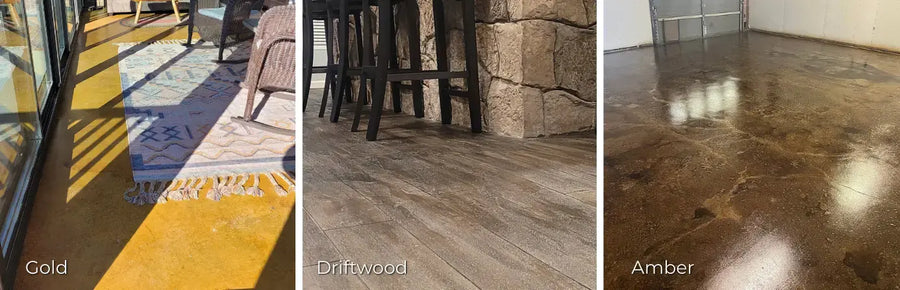
Gold, Driftwood and Amber.
Frosted Over
Soft, subtle neutrals — cloudy grays, cooling creams, almost-almond. Shades as light and gentle as falling snow, and the palette to choose when you want the floor to calm a room rather than define it.
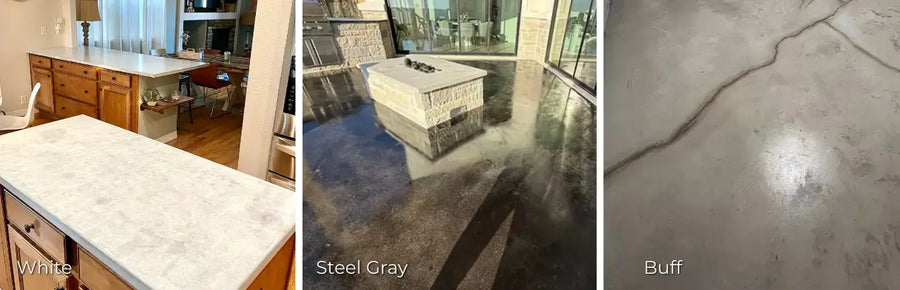
White, Steel and Buff.
Glacial Depths
The bold one: inky blue-green teal, more peacock than emerald. A brilliant gas-blue tinged toward teal that is sentimental and modern at once, and genuinely optimistic in the darkest months. This is the palette that will get commented on.
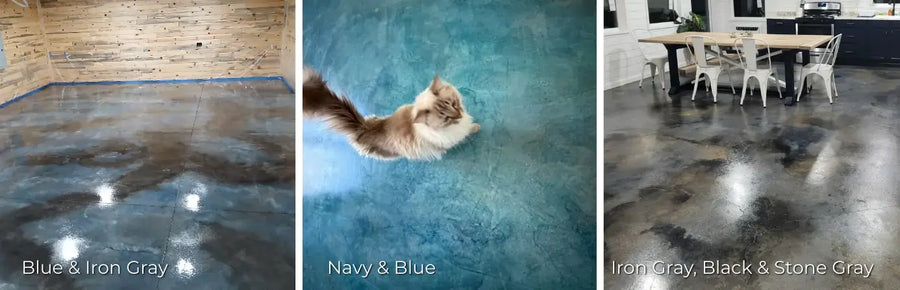
Blue, Navy and Iron Gray.
If you want blue with reactive depth instead, Azure Blue acid stain is the alternative — but read the patina warning first if it is going outdoors.
Camel and Coffee
Smooth khakis and textural tans that keep a palette approachable without drifting too dark or too cool. Camel matches everything, tempers a bolder shade next to it, and layers into honeyed butterscotch if you want to warm up classics you already have.
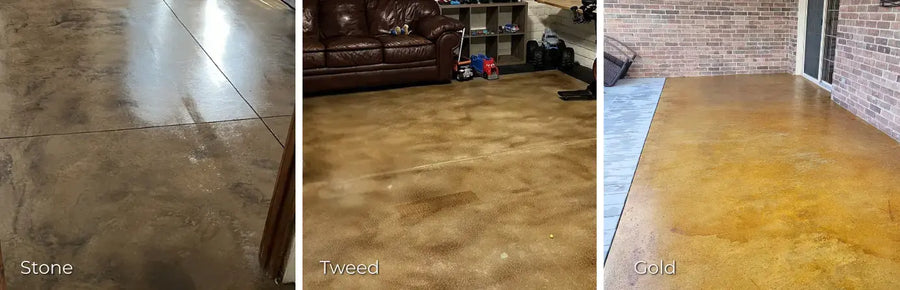
Stone, Tweed and Gold.
The two products behind all six palettes
- AcquaTint™ — color and protective sealer in a single water-based coat. Low odor, fast application, easy cleanup.
- ColorWave® — 20 vivid shades in an indoor-safe water-based formula. Pair it with AcquaSeal™ for lasting protection on interior projects.
The simplest way to test any of these is a ColorWave® Trial System — three colors you pick plus a water-based sealer, on your own concrete, before you commit a room to it.
Cool Palettes: FAQs
Why are water-based products better for indoor and cold-weather work?
Because they are the same problem: closed windows, shared air, confined space. Water-based stains and sealers are safe indoors, low odor and easy to clean up — water is the delivery vehicle rather than a solvent.
Which two products cover all six palettes?
AcquaTint™ — color and protective sealer in a single water-based coat — and ColorWave®, 20 vivid shades in an indoor-safe water-based formula.
Which of these colors work as a whole floor, and which as accents?
The deep reds — oxblood, mahogany, chili — command attention, so they work best as splashes and accents rather than a whole floor. Camel and Coffee, and Frosted Over, are the whole-floor palettes: they keep things approachable and let the floor recede.
What is the boldest option here?
Glacial Depths — inky blue-green teal, more peacock than emerald.
What’s Next
- The warm palettes → Warm & Earthy Palettes
- How to apply water-based stain → Water-Based Concrete Stains · AcquaTint™
- See them in place → ColorWave® Gallery · AcquaTint™ Gallery
- Indoor projects → Basement Floors · Faux Polished
- Shop → ColorWave® · AcquaTint™ · Trial System


