
Water-based stain is the one colorant in our range that asks almost nothing of you. There is no acid reaction to time, no neutralizing step, no acetone, no respirator, and no waiting to find out what color you got. It works by evaporation: the pigment travels into the concrete’s pores with the water, the water leaves, and the color stays. That is why the results are predictable and uniform in a way reactive stains never are.
If you have never colored concrete before, this is where to start.
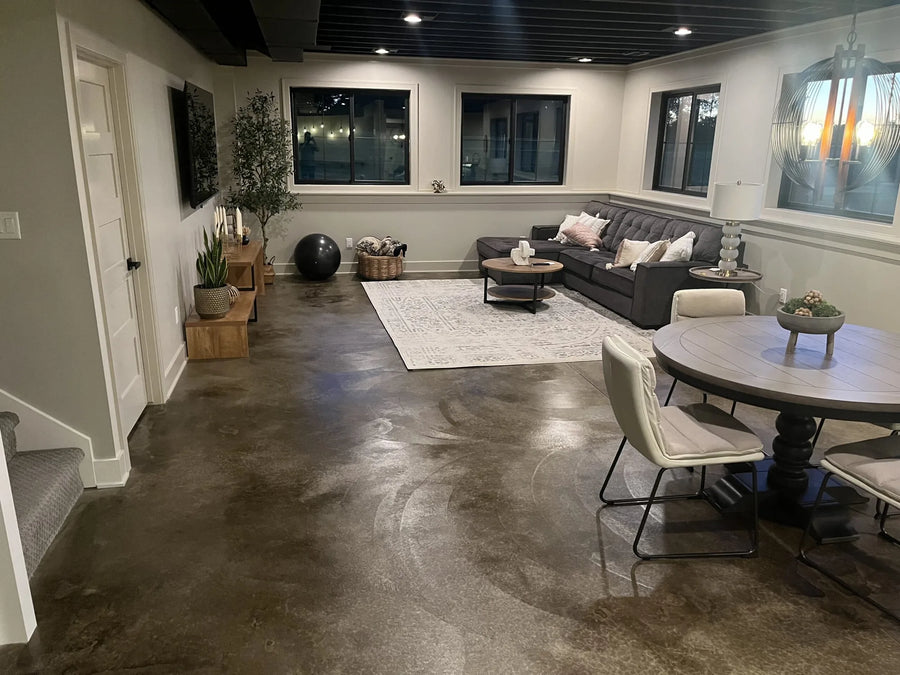
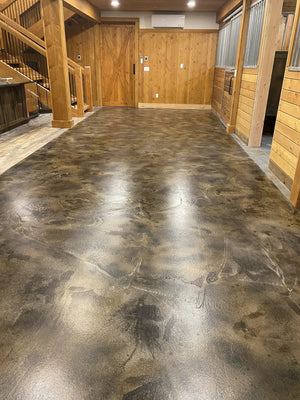
A basement floor in ColorWave® Molasses, sealed with AcquaSeal™.
Why it behaves the way it does
Concrete is cement, water, sand and gravel, and that grainy mix leaves tiny pores throughout the poured surface. Those pores are exactly the right size for a water-based stain and its pigments to lodge in.
The stain does not coat the top of the floor — it goes into it. The pores pull the water down below the surface, and the pigment travels with it. When the water dries out, the color is left behind, inside the concrete. ColorWave® uses nano-scale pigment for precisely this reason: particles small enough to get deep into the pore structure hold their color against UV, traffic and weather.
Because there is no chemical reaction involved, the color is far more predictable and uniform than an acid stain. That is the trade — you give up the mottled unpredictability that makes acid stain beautiful, and you get to know in advance what you are going to get.
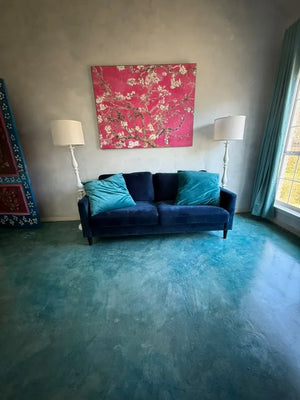
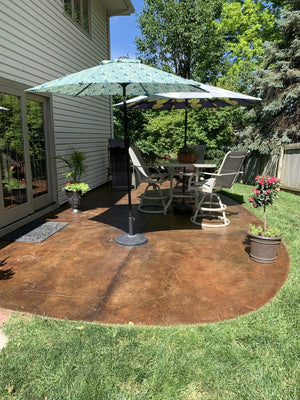
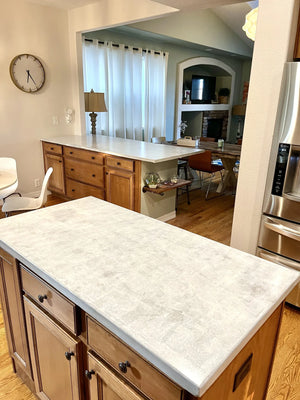
A bedroom in Navy, Blue and Blue Spruce; a restored patio in Molasses and Mahogany; and a whitewashed countertop in White.
Where it goes
Almost anywhere there is concrete, indoors or out, because every color in the range is UV stable.
- Living: kitchens, bathrooms, basements, garages, patios and pool surrounds — cost-effective and low maintenance.
- Retail and industrial: restaurants, shops, warehouses and factories, where floors take high traffic and need easy cleaning.
- Showrooms and museums: load-bearing capacity plus a sleek finished look.
- Hotels, schools and universities: durability and longevity, and concrete floors help regulate indoor temperature.
- Clinical settings: sealed concrete is a hygienic choice for hospitals and medical offices, reducing dust and allergens.

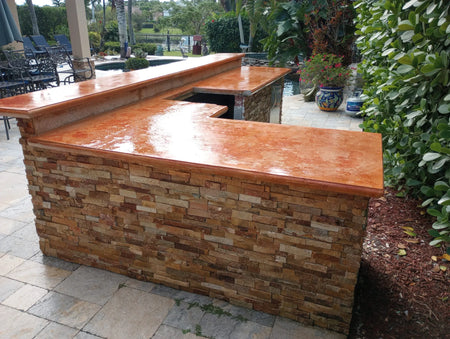
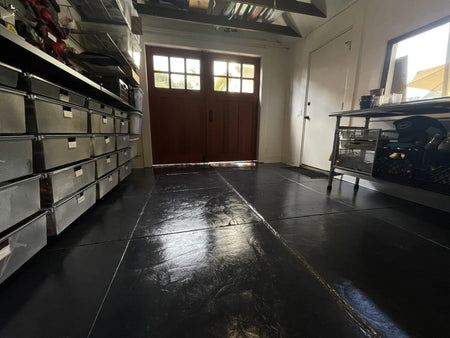
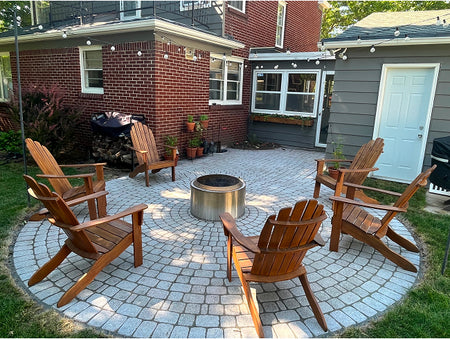
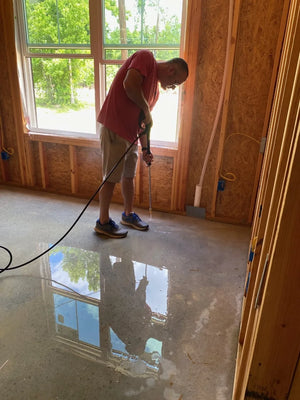
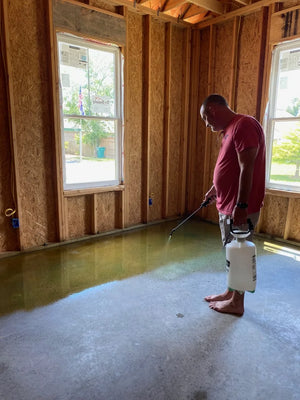
A barndominium in Persimmon, Molasses and Steel; a whole-house floor; and spraying stain with a pump sprayer.
The three advantages that matter
Versatility
Water-based stains are semi-transparent, which lets the undertone of your concrete show through — and that is what makes layering possible. Two colors over one another produce marbled, mottled designs rather than a flat field. Twenty colors, all UV stable, all usable on any type of concrete.
Durability
Because the stain penetrates rather than sitting on the surface, it stands up to heavy foot traffic, weather and daily wear. It has to be sealed properly first — that is not optional — but after that, a sweep or a quick mop is the whole maintenance routine.
Easier and gentler application
This is the real headline. Working with water rather than acid or acetone means no harsh solvents, far less protective gear, minimal cleanup and very little odor. Less intimidation, fewer things that can go badly wrong, and a project you can finish faster. It makes water-based stain a genuinely good first DIY.
Start with a trial kit
Concrete floors are a blank canvas, and a whole floor is still a commitment even with an easy product. A ColorWave® Trial System lets you test colors and finishes and get familiar with the application on a small stage first. You pick three colors, and it comes with foam brushes and a satin or gloss sealer — everything needed to experiment at home before you commit a room.
How to apply it, in three steps
1. Prep
Give the existing floor a thorough clean. The right tools are a soft bristle deck brush and a gentle cleaner such as ProClean Degreaser™ concentrate, with a pump sprayer. Scrub and rinse as you go.
Avoid harsh industrial solvents — they can react badly with a water-based stain and its sealer. Once the concrete is washed and dry, you have a clean slate. The full diagnostic sequence is in our surface preparation guide.
2. Stain
- Shake the bottle.
- Take all the filters out of your pump sprayer.
- Pour in the color and spray it down.
- Two thin coats, wet on wet — you do not need to wait for it to dry between coats.
- Circular, overlapping passes, and jostle the sprayer back and forth often so the pigment stays evenly dispersed.
After the second coat the color may look less vibrant than you expected. That is normal. The sealer in step three is what makes it pop.
3. Never skip the sealer
The sealer locks out moisture, weather, UV, dust and dirt, and locks in and builds the color you chose. Outdoors it also protects against freeze-thaw damage.
Whichever you choose, it hardens as it cures into a layer that takes the scuffs and scratches instead of your floor. Compare the options in the best concrete sealer, and add ProWax Polish™ indoors so the wax wears instead of the sealer.
Water-Based Stain: FAQs
How is a water-based stain different from acid stain?
There is no chemical reaction. The pigment is carried into the pores by water, the water evaporates and the pigment stays — so the color you test is the color you get. Acid stain reacts with the slab, which is what makes it less predictable.
What is the one real mistake to avoid?
Using too much. Too much stain floods the pores and then the sealer has nowhere to bond. Two thin coats, applied wet on wet with no waiting between them, is the method.
Can I layer water-based colors?
Yes — it is semi-transparent, so the concrete’s undertone shows through and two colors over one another give a marbled, mottled result rather than a flat field. All 20 colors in the range are UV stable, indoors or out.
Which sealer should I use over it?
For a matte, flatter finish, a water-based sealer like AcquaSeal™. For slightly richer color, a solvent-based one like EasySeal™. Two thin coats, but one at a time unlike the stain, with at least 8–12 hours between them and longer if you can. Sealing is not optional.
Should I use a mop to clean the floor first?
No. A mop spreads grime around rather than removing it. Use a soft bristle deck brush with a gentle cleaner such as ProClean Degreaser™ concentrate, scrubbing and rinsing as you go.
What’s Next
- See the range in use → ColorWave® Project Gallery
- Compare the colorants → Stain vs. Paint · Concrete Dye · Acid Stain
- Prep first → Concrete Surface Preparation
- Outdoors → Applying Outdoor Concrete Stain
- Shop → ColorWave® · Trial System · Stain & Sealer System · Foam Brushes


