
Acid stain on a vertical surface has one obvious problem: gravity. DecoGel™ solves it by being a gel rather than a liquid — it stays where you put it, so there are no drips or runs, and you can place color precisely enough to stain individual blocks different colors. For retaining walls it is the right tool and the liquid stains are not.
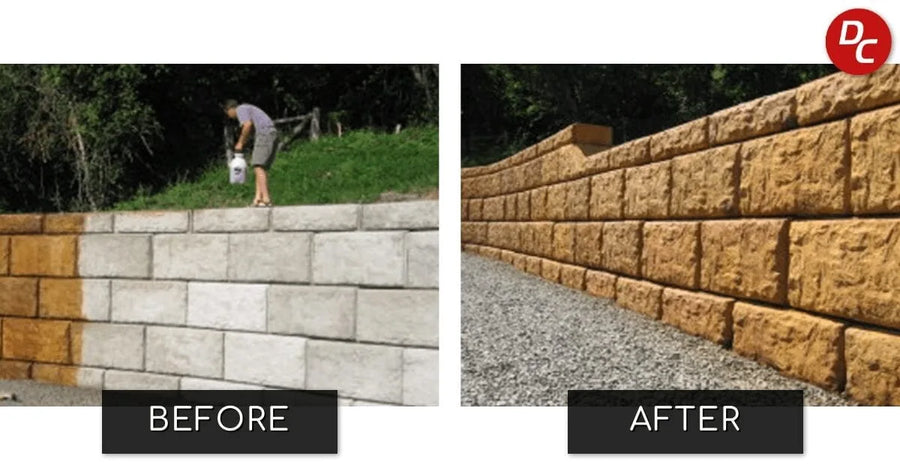
An acid-stained concrete retaining wall.
What you need
DecoGel™ Acid Stain · a cheap sprayer · a long-handled foam roller · a scrub brush · ProClean Degreaser™ · ProClean Neutralizer™ · EasySeal™ solvent-based acrylic sealer.
Preparation
Application
- Apply a generous coat with a foam brush or paint brush — about 1/16 in. thick
- Let it react and develop for 4–6 hours. Richer colors take longer
- When the color is where you want it, neutralize
- Scrub the dried excess gel off
- Spray neutralizer on, leave 15 minutes, rinse until the water runs clear
- Let it dry at least eight hours before sealer
- Two thin coats of EasySeal™
Cleanup Neutralize tools, then wash with degreaser and warm water
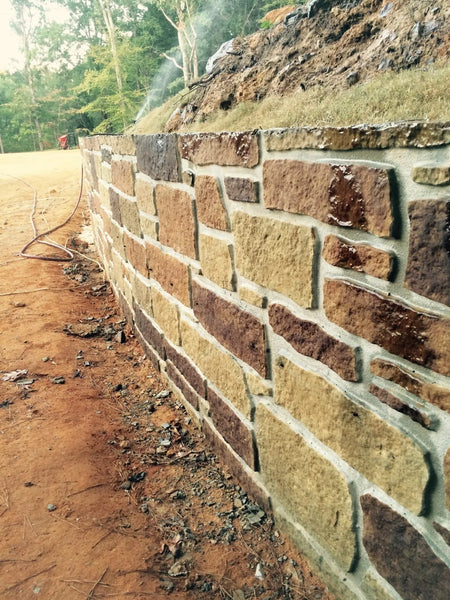
The Great Wall of Glenoma
Larry and Tina bought a few acres on a south-facing slope and had to cut into a bank. They built the wall from about 160 ecology blocks — 300 lb each, 4 ft × 2.5 ft × 2 ft — and then decided it looked too commercial to leave gray.
— Larry and Tina
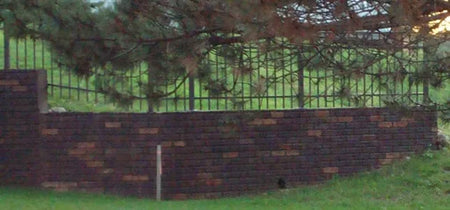
The Great Wall of Glenoma, stained in Cola DecoGel™.
A note on their method: they neutralized with baking soda and water rather than a dedicated neutralizer. It works, and it is what they did — but ProClean Neutralizer™ is formulated for the job and takes the guesswork out of the ratio.
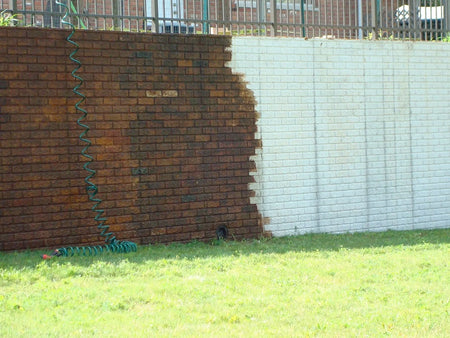
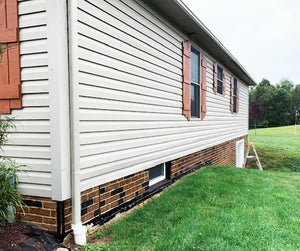
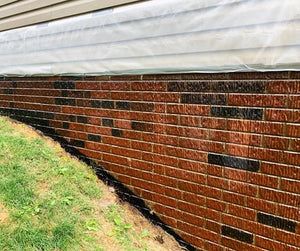
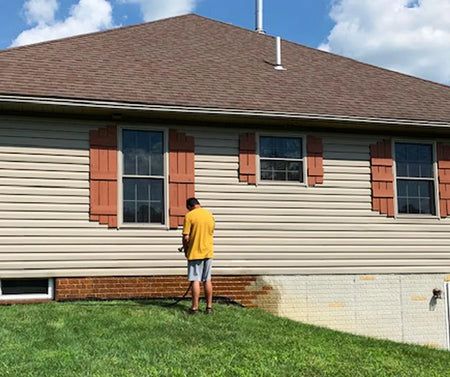
A 120-foot white wall, stained brick by brick
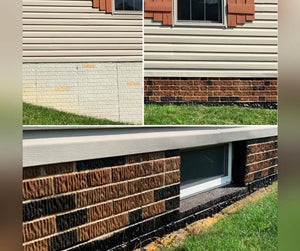
Julie's retaining wall was poured in a brick-pattern form and was, in her words, a bright white eyesore. Because DecoGel does not run, she could stain individual bricks in different colors — which is what makes it read as real brickwork rather than a colored wall.
— Julie J.
Retaining Walls: FAQs
Why use DecoGel™ on a wall rather than liquid acid stain?
Because it does not run. That is what let Julie stain a 120-foot brick-pattern wall brick by brick in different colors with a paint brush — impossible with a liquid stain on a vertical face.
How do I know if the wall needs etching?
Spray water in several places. If it is not absorbed in five minutes, etch with CitrusEtch™. New concrete needs at least 30 days to cure before anything goes on, and existing concrete needs paint, adhesives, oils and debris stripped off first.
How thick, and how long does it react?
A generous coat about 1/16 in. thick with a foam or paint brush, left to react and develop for 4–6 hours. Richer colors take longer.
How long does a big wall actually take?
Less than you would think once prep is done. The Great Wall of Glenoma — about 160 ecology blocks at 300 lb each — took two hours for two people to apply, though the wall itself had cured three months first.
What's Next
- More wall projects → Walls & Facades Gallery
- Acid stain fundamentals → How to Apply Acid Stain · Neutralizing
- Colors → Acid Stain Colors Guide · Cola · Coffee Brown
- Applying stain outdoors → How to Apply Outdoor Concrete Stain
- Choosing a sealer → The Best Concrete Sealer
- Prefer a reactive, mottled look? → Acid Stain Colors Guide
- Shop → EverStain™ Kits · Trial Kits
Direct Colors. Shawnee, OK. Manufacturing the full decorative concrete system since 1997.


