
Acid-stained floors are built to last, and the maintenance is genuinely light — but the wrong cleaner will dull a finish faster than years of foot traffic. The short version: warm water and a mop, pH-neutral cleaner when it needs more, wax every three to four months indoors, and never anything acidic or abrasive.

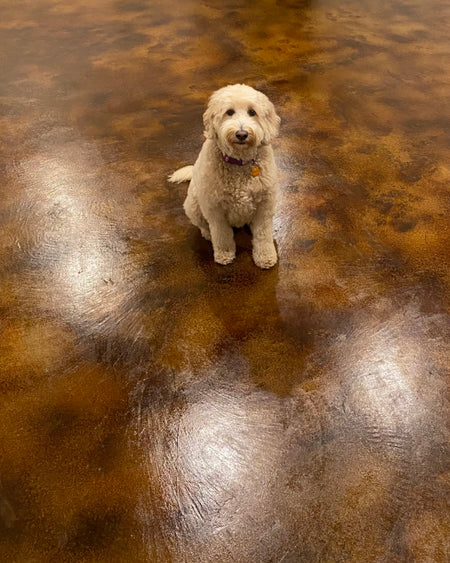
A well-maintained acid-stained floor in daily commercial use.
Shop Concrete Floor Wax & Polish →
1 · Clean it the right way
2 · Wax, and why it matters more than resealing
Wax is the part most people skip, and it is the part that decides whether you ever have to reseal. It sits between daily wear and your sealer, so the wear happens to the wax instead.
3 · Resealing — often never needed
With regular waxing, an interior floor may never need resealing at all. That wax layer can extend the finish for years, sometimes decades. Resealing mainly applies to older or neglected floors that look dull or patchy, or stain even after cleaning.
Do not sand stained concrete. Sanding damages the stained surface and produces uneven color. Remove the old sealer instead, using the method that matches what is on there:
4 · Deal with spills quickly
Shop Concrete Floor Wax & Polish →
Floor Care: FAQs
How should I clean an acid-stained floor?
A mop and warm water is genuinely enough for light dirt. For more, add a mild pH-neutral cleaner — non-ammonia dish soap or an organic concrete cleaner. Never steam mops, vinegar, bleach, ammonia or harsh household cleaners: all of them attack the finish.
How often should I wax?
Every 3–4 months in most homes, more with heavy traffic or pets. Clean and dry the floor first, and use a quality acrylic or polymer wax made for stained or sealed concrete — not a linoleum wax or a general floor wax. Interior only; never wax an outdoor surface.
Do I need to reseal?
With regular waxing, an interior floor may never need it. The wax sits between daily wear and your sealer, so the wear happens to the wax instead, and that can extend the finish for years. Resealing mainly applies to older or neglected floors that look dull or patchy, or that stain even after cleaning. Do not sand stained concrete.
What are the white or milky patches on my floor?
Usually wax build-up, or moisture trapped under the sealer. A wax stripper removes the build-up.
How quickly do I need to deal with spills?
Within 30 minutes — especially oil, wine, soda and pet accidents.
What's Next
- Sealer choice → The Best Concrete Sealer
- Outdoors, before winter → Winterizing Outdoor Concrete
- Lost its shine? → Restoring Shine
- Real floors → Acid-Stained Concrete Floors
- Applying stain outdoors → How to Apply Outdoor Concrete Stain
- Choosing a sealer → The Best Concrete Sealer
- Prefer a reactive, mottled look? → Acid Stain Colors Guide
- Shop → EverStain™ Kits · Trial Kits
Direct Colors. Shawnee, OK. Manufacturing the full decorative concrete system since 1997.


