
Metallic pigment suspended in epoxy is how you get a countertop that reads as marble — shifting, layered depth that a flat color cannot fake. It goes over concrete, Formica, tile or even an existing wooden sub-surface, which makes it one of the cheaper ways to transform a countertop completely.
Prefer to listen? Justin Richardson on the mechanics and timing of a metallic epoxy pour. The player is at the end of this article.
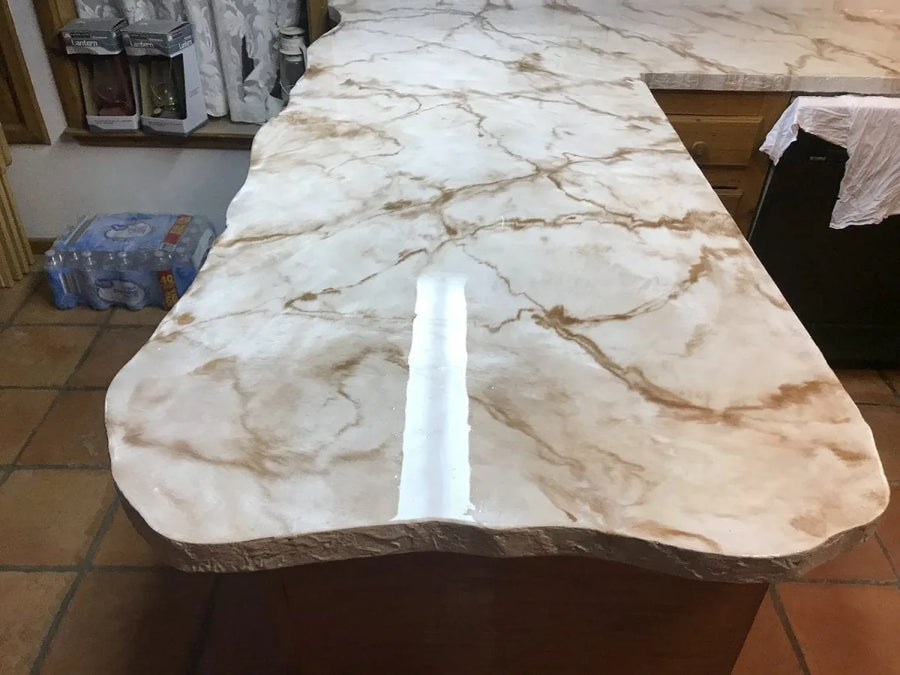
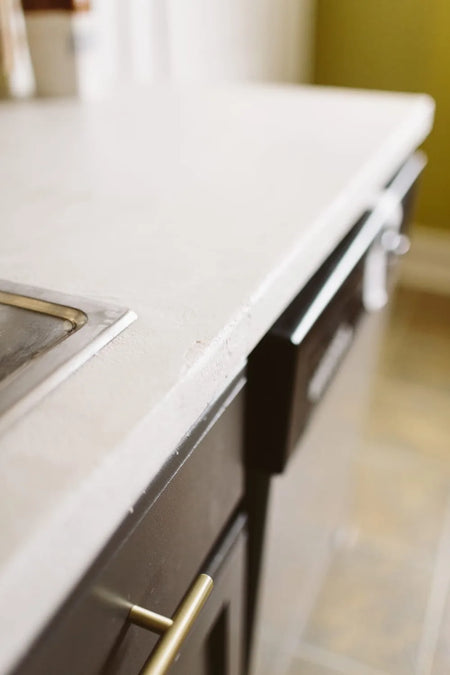
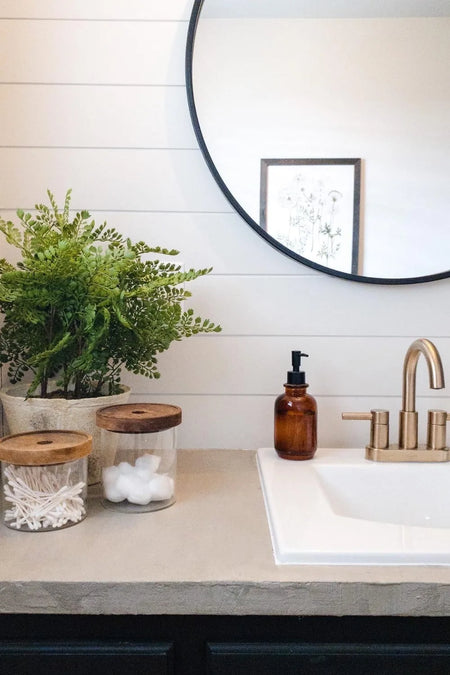
A kitchen countertop refinished to a marble-like metallic finish.
Shop Countertop Stains & Trial Kits →
How the look works
The effect comes from combining several metallic colors in a single pour and letting them move into each other before the epoxy sets. More colors give more depth; restraint gives something closer to real stone. Either way, the result is glass-hard and shows brilliantly under kitchen lighting.
What it goes over
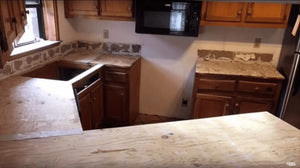
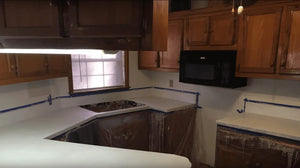
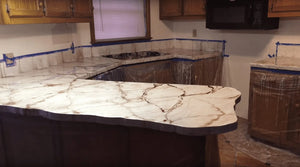
Resurface Formica or tile, or apply directly onto an existing wooden sub-surface. Because it is a coating rather than a slab, there is no weight problem and no cabinet reinforcement to worry about — a significant advantage over casting a top in place.
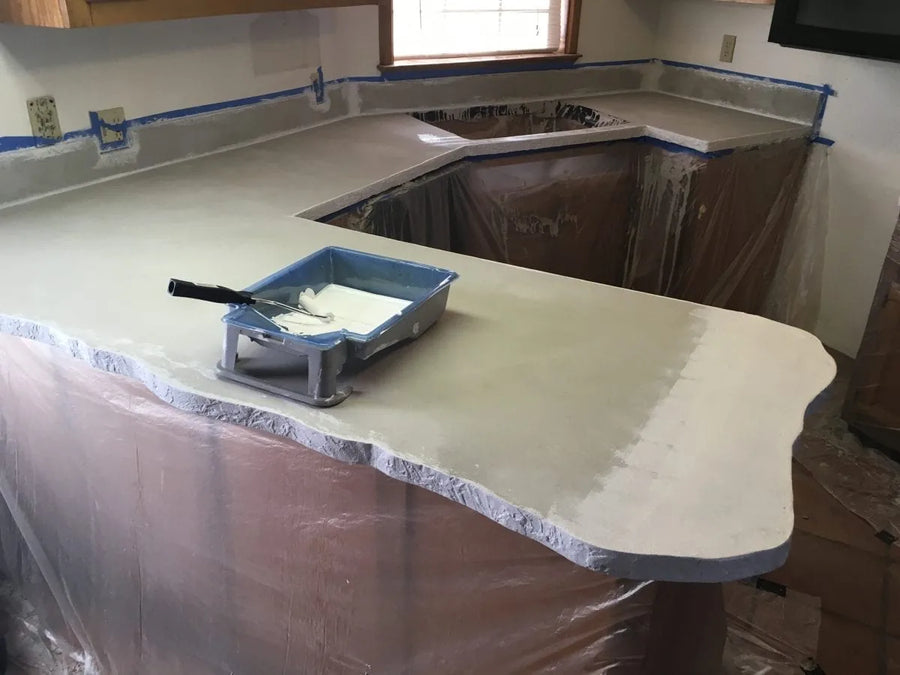
A white tinted sealer being applied to a countertop surface.
The one real limitation: sunlight
Most epoxies are not UV-stable and will discolor over time in direct sun. Keep metallic epoxy indoors. For an outdoor countertop, use acid stain with a UV-stable sealer instead — see the outdoor kitchen build.
Shop Countertop Stains & Trial Kits →
Common questions
How do you mix metallic pigment into a two-part epoxy?
Into the resin first, never after the hardener. Add the metallic to part A, stir it through with a stir stick, let it stand about 5 minutes, then stir again — and only then add the part B hardener. Dose is a judgment call rather than a formula: less for a calmer effect, more (or a second pack) for a heavy metallic. It is an artistic application, not an exact science. Direct Colors no longer sells an epoxy or the metallic pigment packs; the technique transfers to any two-part epoxy system.
What tools do I actually need for a metallic pour?
Three. A 10 mil notched squeegee to spread an even coat, a mini roller for the finish roll afterwards, and a 4 inch spiked roller to pop bubbles during and just after application. Surface prep is to 200 grit, with your color base coat down first.
Why can't I keep working the epoxy until it looks right?
Because it is already setting. Any two-part sealer has a limited working window — roughly 15 minutes here, though you should check the specific product — and touching it up past that point damages the finish rather than improving it. Get it down, work it quickly, then leave it alone. Make test pieces first if you want to try effects.
Can metallic epoxy go outdoors?
No. Most epoxies are not UV stable and discolor with regular direct sunlight, so this is an indoor finish only. Two other conditions matter as much: the surface must be level, or the epoxy drifts to the low side and cures uneven; and if you mist denatured alcohol to move the metallic, treat it as the flammable solvent it is — ventilation, no ignition sources, and never near a heat gun.
Listen to this episode
Direct Colors DIY Home Improvement · Episode 7
Applying Metallic Epoxy Countertop Sealer
Shawna Turner and Justin Richardson · 5 min 35 sec · read the full transcript
What's Next
- All countertop projects → DIY Concrete Countertop Ideas
- White finishes → Everything White Countertops
- Resurfacing → Refinish a Formica Countertop
- Marbling with stain → ColorWave® Gallery
- Applying stain outdoors → How to Apply Outdoor Concrete Stain
- Choosing a sealer → The Best Concrete Sealer
- Prefer a reactive, mottled look? → Acid Stain Colors Guide
- Shop → ColorWave® · AcquaTint™ · Trial Kits
Direct Colors. Shawnee, OK. Manufacturing the full decorative concrete system since 1997.


