
A countertop is the best first concrete project there is. It is small enough to finish in a weekend, it is at eye level so the result actually gets noticed, and replacing one costs thousands. The projects below cover both routes: coloring a concrete countertop you cast yourself, and skim-coating over the laminate, Formica or tile you already have.
Prefer to listen? Shawna Turner covered what destroys a countertop sealer and how to avoid it. The player is at the end of this article.
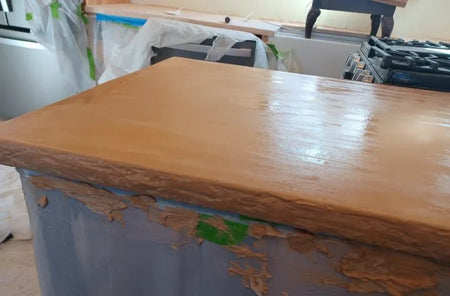
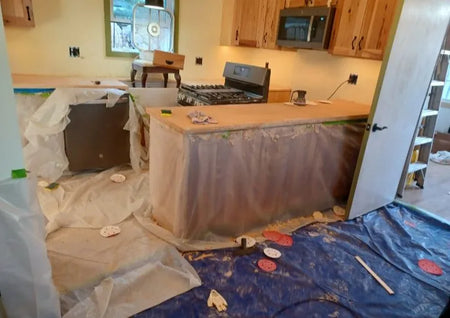
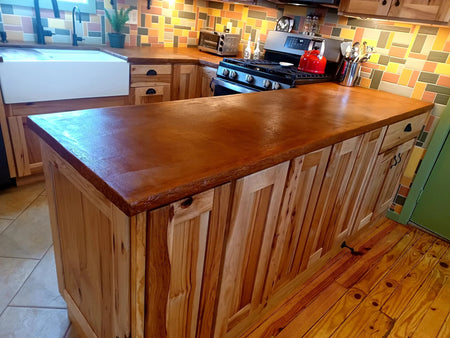
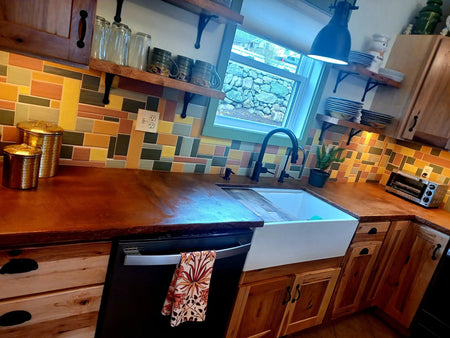
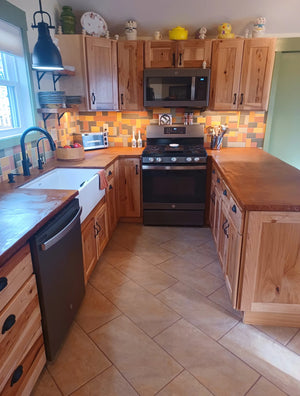
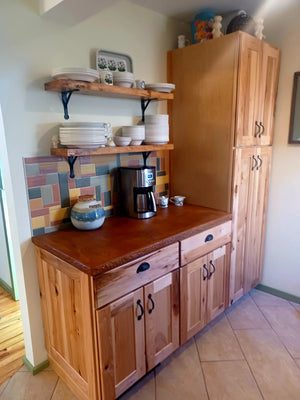
A rustic cabin kitchen — white overlay tinted with Beachfront Buff pigment, then Cola and Malayan Buff EverStain™.
Shop Countertop Stains & Trial Kits →
A rustic cabin kitchen
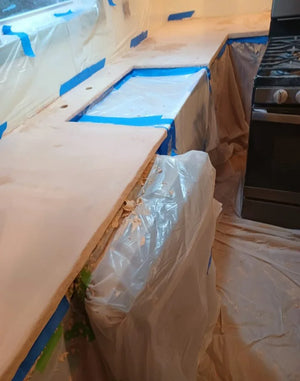
This customer moved into a small cabin, moved the kitchen to a different wall, and built the countertops from scratch — plywood base, cement backer board screwed and glued over it, then a skim coat of concrete overlay tinted with Beachfront Buff pigment. The color came from Cola and Malayan Buff EverStain™ over the top, then EasySeal™ Satin.
— DIY Customer
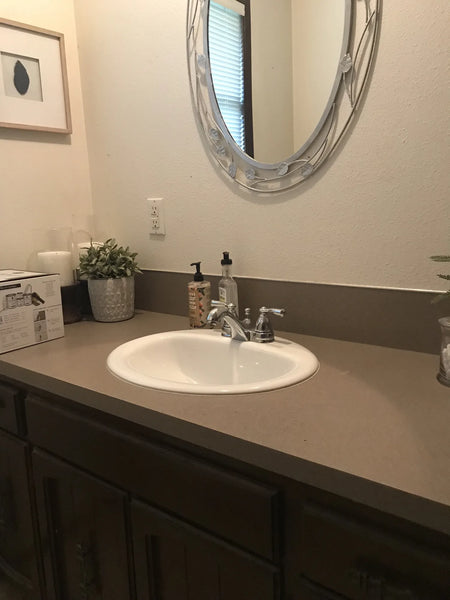
A Formica bathroom vanity, in a day
The fastest project in this gallery. An existing Formica vanity, scuffed and skim-coated in a gray-toned overlay, then sealed satin. The owner had painted these before and the concrete finish beat it outright.
“I had tried painting them in the past but it never looked as great as the concrete does.”
— Allison C.
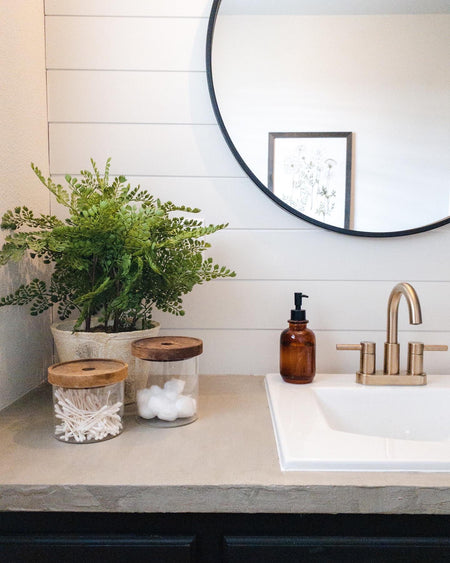
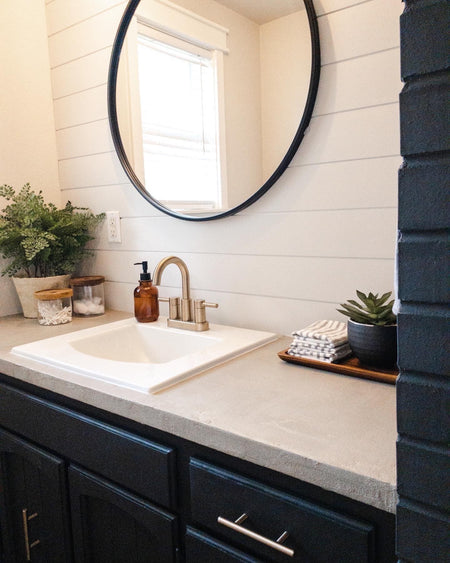
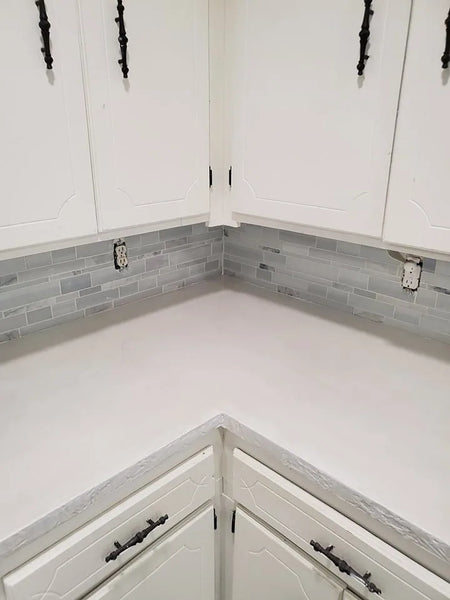
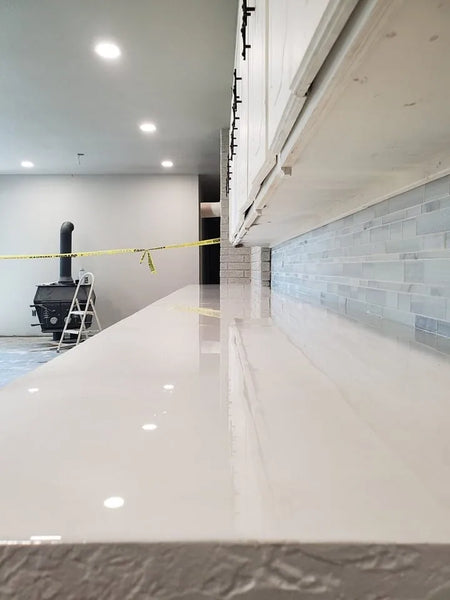
A white skim-coat kitchen
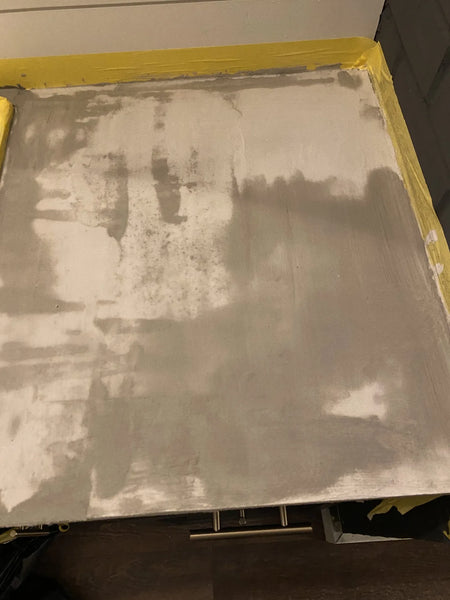
Liz Morrow Studios of Tacoma took a dated kitchen back to white with a skim coat over the existing counters. White is the hardest concrete color to achieve — see the white countertops guide below for why gray mix will never get you there.
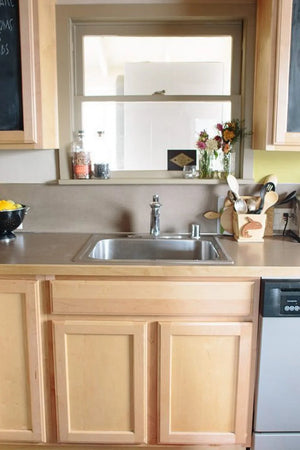
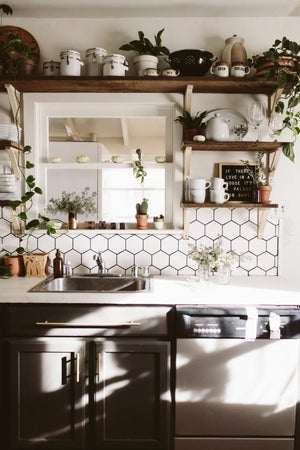
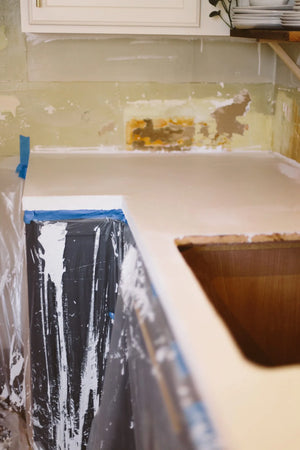
Skim-coating the existing kitchen counters white.
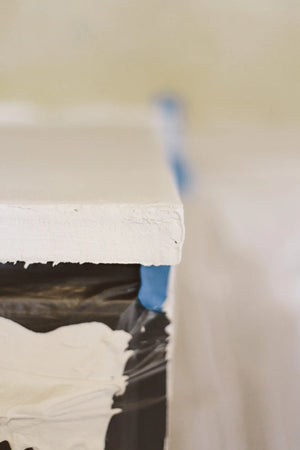
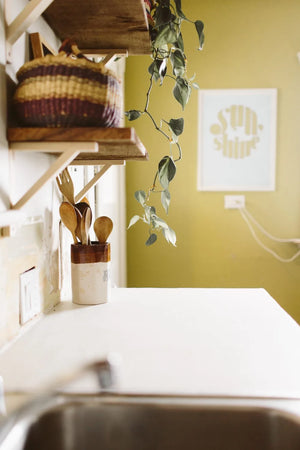
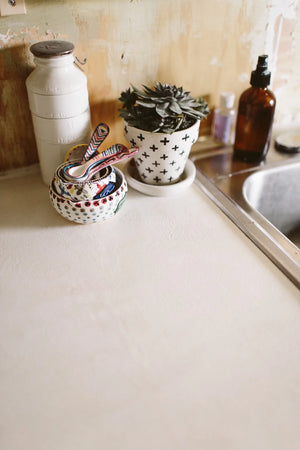
The finished white kitchen.
Tiles to titanium
Two surfaces in one project: a vertical overlay tinted with titanium pigment over the tiled backsplash, and a pearl white skim coat over the Formica counters. The lesson the owner drew was about batching — mix and weigh several dry batches at once so the color cannot drift between them.
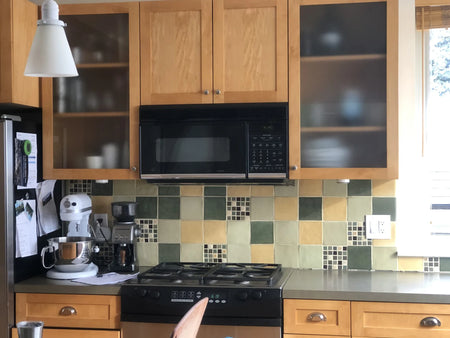
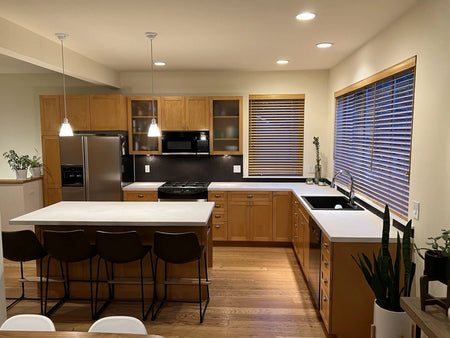
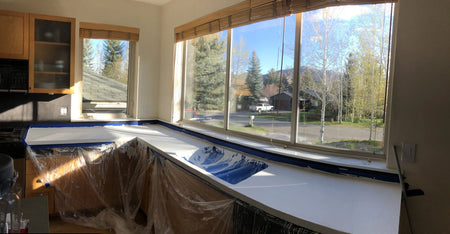
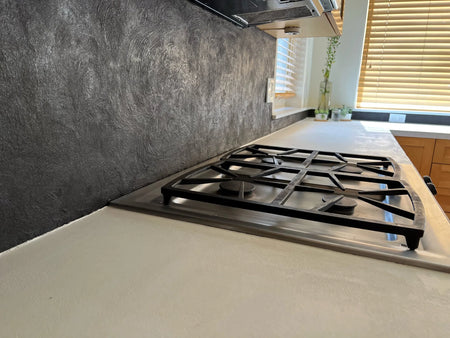
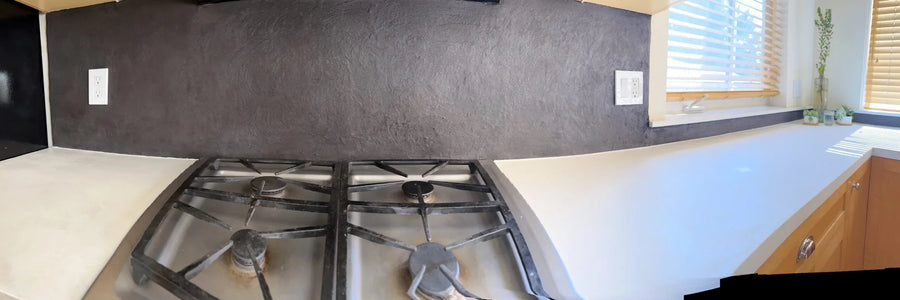
The skim coat going on, the titanium backsplash, and the finished kitchen.
— DIY Customer
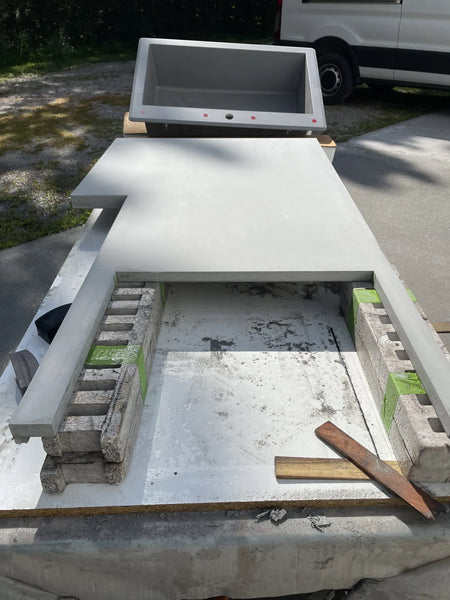
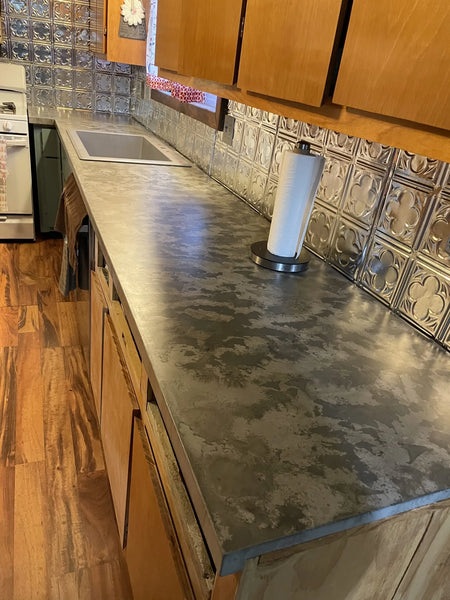
A poured-in-place countertop in ColorWave®
Twenty-three square feet, four days, and three ColorWave® colors — White, Steel and Iron Gray — worked in layers with water used to blend them while still open.
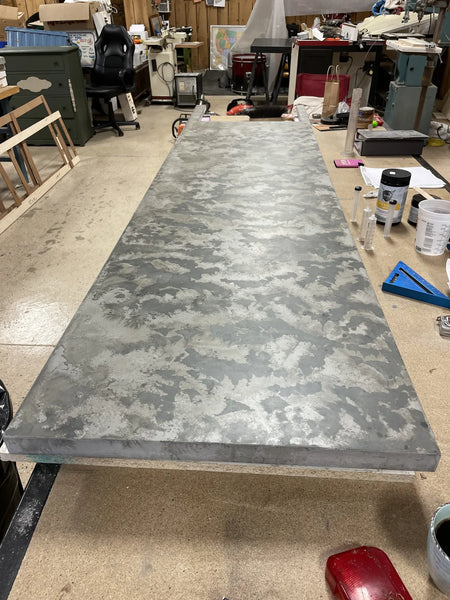
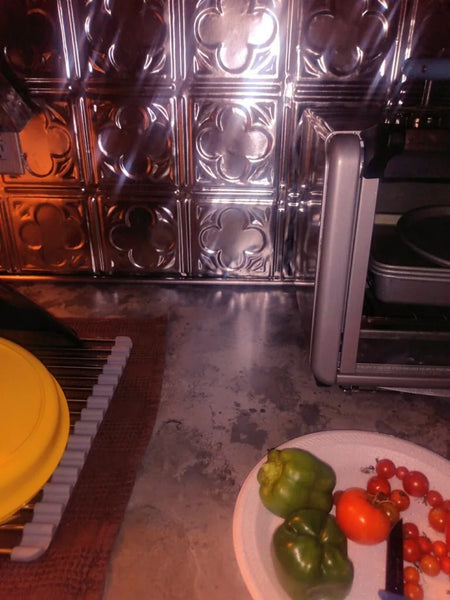
— DIY Customer
A seasonal home in three acid stains
Poured-in-place countertops for a hunting camp kitchen, colored with Coffee Brown, Desert Amber and Seagrass EverStain™. This one took real trial and error — different mixes, different color combinations — before it landed.
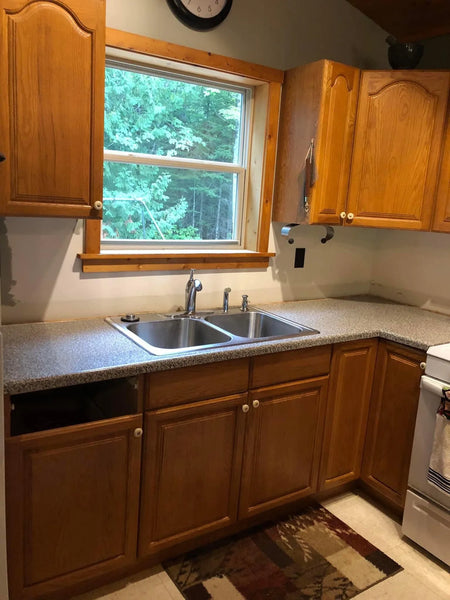
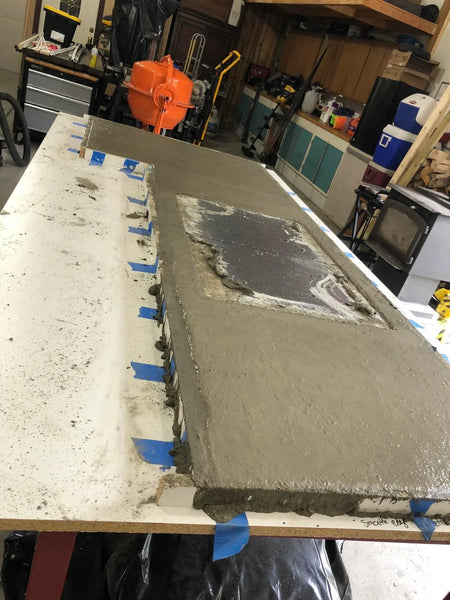
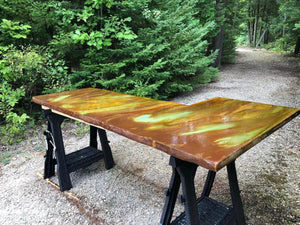
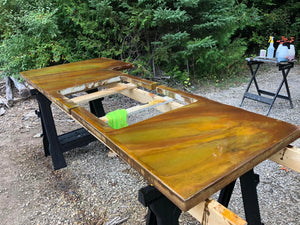
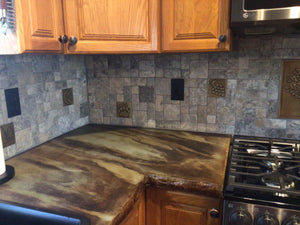
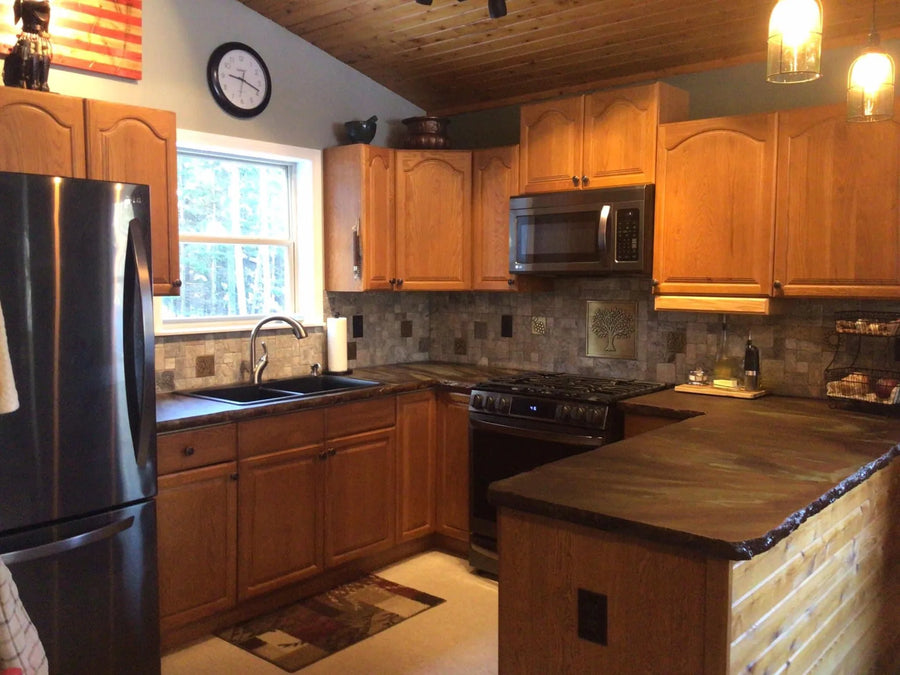
The finished kitchen.
Full method → How to Acid Stain Concrete Countertops.
Outdoor kitchens
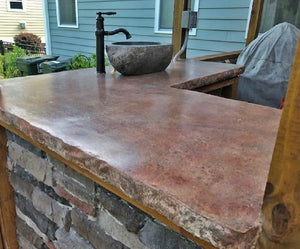
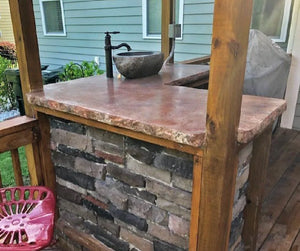
Concrete belongs outdoors, and an outdoor countertop is more forgiving than an indoor one — no food-prep sealing requirements to design around. The first here is a mottled Azure Blue over a gray overlay on plywood, with Miracle-Gro used in places to push the blue harder. The second pairs Coffee Brown and Malayan Buff.
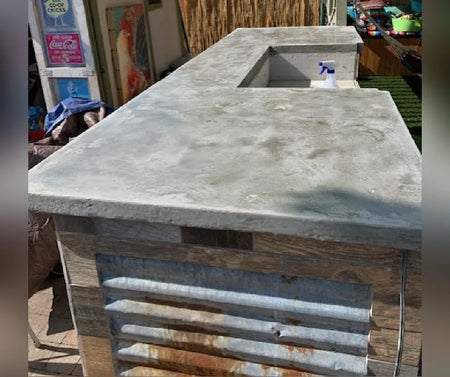
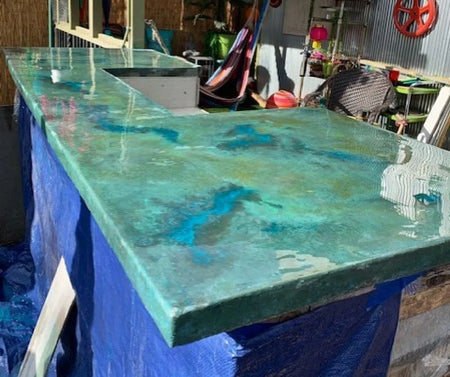
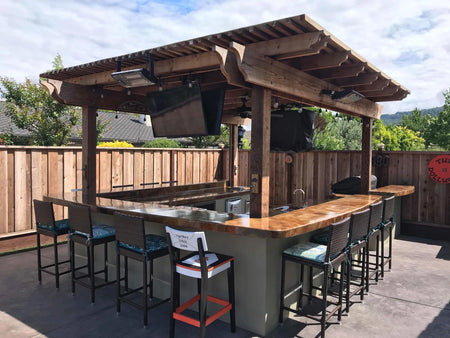
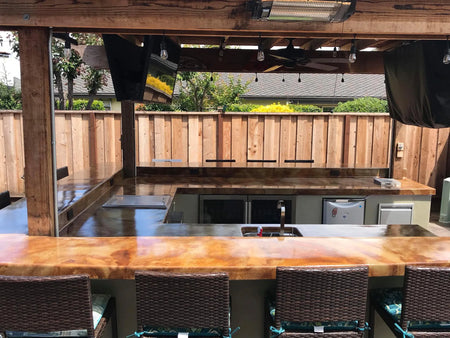
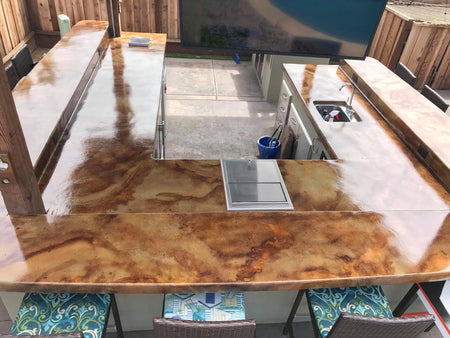
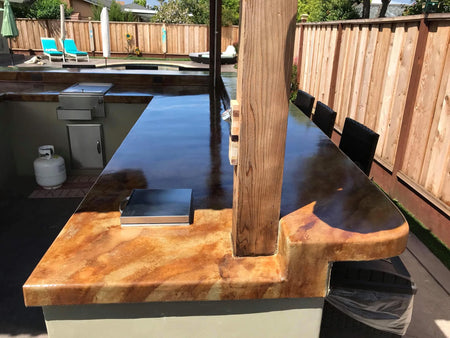
Two more views of the same outdoor kitchen.
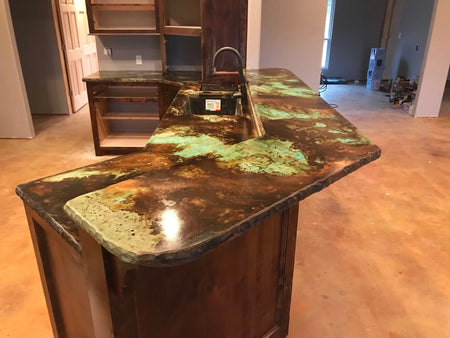
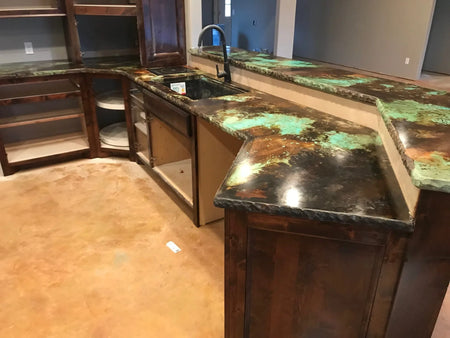
A barndominium in Coffee Brown
Kitchen, island and bathroom counters all in Coffee Brown acid stain, matching the floors. On a barndominium the continuity is the point — same color underfoot and at hand height.
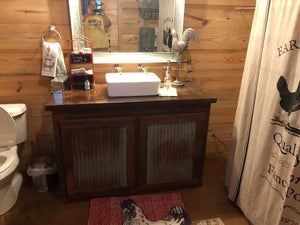
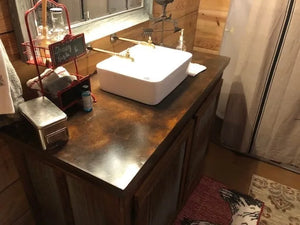
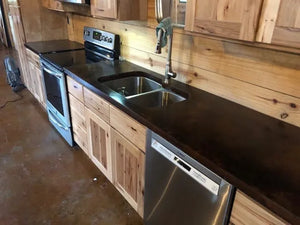
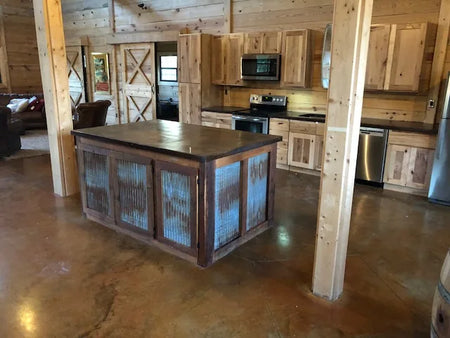
The matching floor in Malayan Buff, Desert Amber and Coffee Brown.
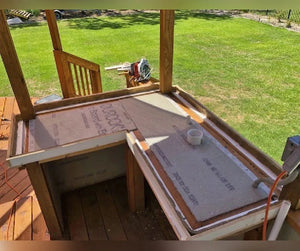
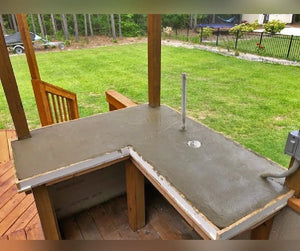
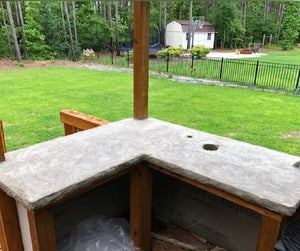
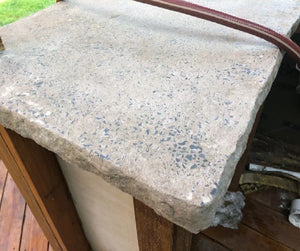
An outdoor countertop, step by step
The clearest sequence we have of an outdoor countertop being built and stained from nothing.
Shop Countertop Stains & Trial Kits →
Common questions
What is the fastest way to ruin a concrete countertop sealer?
Put a hot pan on it. This is by far the most common damage Direct Colors sees — and it is not a marginal effect. One outdoor kitchen next to a pizza oven had its coating melt because hot pans were slid across the surface; the only fix was to strip the whole thing and re-seal. Use potholders or trivets, always, regardless of which sealer is on the top.
What should I never do to a sealed countertop?
Four things. No hot pans straight from oven or stove. Do not drop heavy or sharp objects on it — that chips and cracks the finish. No harsh cleaning chemicals; strong cleaners and antibacterial products discolor and flake sealers, and mild dishwashing soap cleans a countertop perfectly well. And use a cutting board — cut nothing on the surface itself.
Can I use an epoxy sealer on an outdoor countertop?
No. Epoxy yellows with extended sun exposure and generally handles extreme cold badly, so it does not belong outdoors at all. Indoors it gives a deep glossy finish that nothing else quite matches, provided the top is not in a full-sun spot. Note that Direct Colors no longer sells an epoxy or a countertop-specific polyurethane. A polyurethane is available to professionals again - ThaneForce High Gloss, by phone on (877) 255-2656, not sold online.
How long should a countertop sealer last?
Nothing lasts forever — wear is normal and expected. The historical figure for a carefully used polyurethane-sealed top was 5 to 7 years before it wanted a scuff, clean and re-coat, but that referred to a product we no longer supply. Treat the number as indicative and judge by the surface: dulling, thinning at high-use spots, or any flaking means it is time.
Listen to this episode
Direct Colors DIY Home Improvement · Episode 14
Care and Maintenance for Concrete Countertop Sealers
Amie Nolen and Shawna Turner · 4 min 54 sec · read the full transcript
What's Next
- How to acid stain one → Acid Stain Concrete Countertops
- Resurface what you have → Refinish a Formica Countertop
- Cast your own → Poured-in-Place Countertops
- White, marble and wood looks → White Countertops · Marble Look · Faux Wood
- Outdoors → Outdoor Kitchen Countertop
- Applying stain outdoors → How to Apply Outdoor Concrete Stain
- Choosing a sealer → The Best Concrete Sealer
- Prefer a reactive, mottled look? → Acid Stain Colors Guide
- Shop → EverStain™ Kits · ColorWave® · Vibrance™ Dye · Trial Kits
Direct Colors. Shawnee, OK. Manufacturing the full decorative concrete system since 1997.


