
Coloring concrete comes down to two choices, and they are not variations on the same idea. Paint sits on the slab as a film. Stain goes into it. Almost every practical difference between them — how long it lasts, whether it chips, how much prep it needs, how you repair it — follows from that one distinction.
Here are the seven comparisons that actually decide the job, with an honest verdict on each.
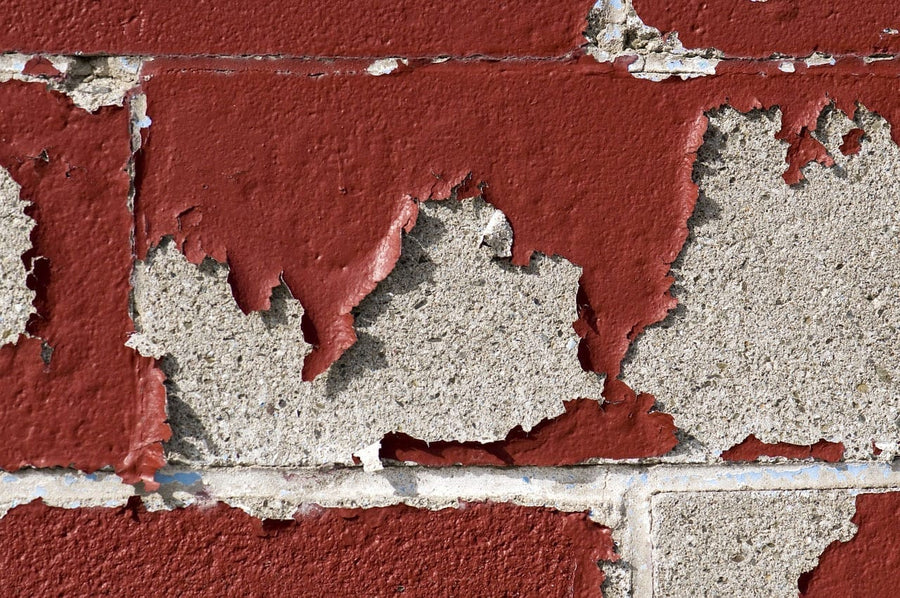
Paint chipping off a concrete wall — the failure mode that does not exist with stain.
1. Coating or penetrating
Paint, even paint formulated to bond with concrete flooring, only clings to the surface. It forms a thin protective layer — and if it chips or peels, the raw gray concrete underneath is immediately visible. Paint handles light to medium traffic, but it is not as durable as stain, precisely because it never bonds the same way.
Concrete stain is penetrating. It soaks into the surface, and acid stain goes further than most because it chemically reacts with the lime in the cement. The trade-off is control: a reaction produces a unique result that varies with the slab, while paint gives you the same thing every time.
Verdict: stain, on longevity, durability and resistance to foot traffic.
2. Translucent or opaque
This is the round paint should win, and it does not quite. Stain is translucent — it will show the texture of the concrete and any marks on it. So what do you do about a badly discolored patch you actually need to cover?
The answer most people miss is concrete dye. Dye is pigment dispersed in a carrier rather than a reaction, which makes it considerably more opaque than stain and still not a coating like paint. It will cover stubborn stains and discoloration that a semi-transparent stain would show straight through, while still soaking into the surface rather than sitting on it as a film that can chip. What it will not do is hide surface defects — pits and grinding marks still need filling.
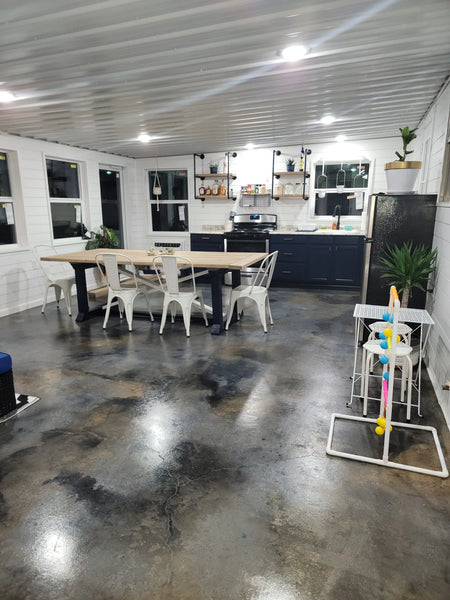
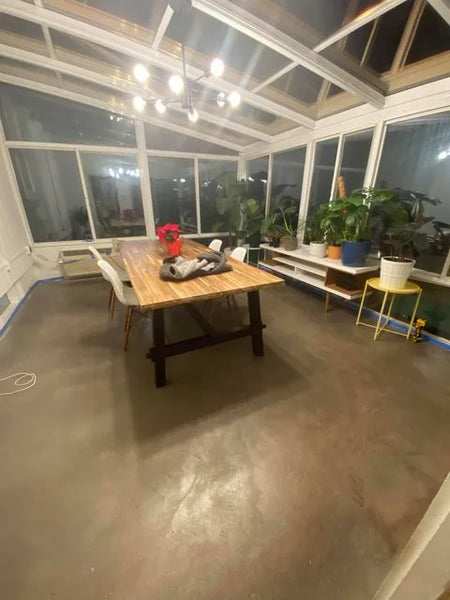
The other route is design. Use dark stain colors deliberately to hide the marks you cannot remove — one customer turned an entire tattoo parlor into an Alice in Wonderland homage using nothing but concrete colorants, and the pattern does the concealing. If you need to color before the pour instead, that is integral pigment, covered in how to integrally color concrete.
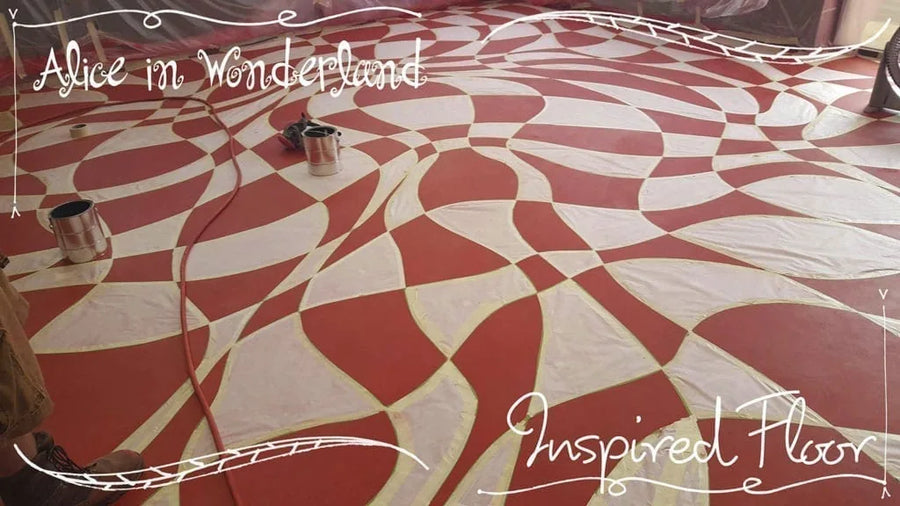
A concrete floor dyed in an Alice in Wonderland design — pattern doing the work of concealment.
Verdict: paint for flat opacity, but dye covers most of what people reach for paint to hide, and it does it without the chipping.
3. Longevity
Concrete paints used to have a short life and became worn or damaged quickly. Modern formulations last longer and resist wear far better than they did. Even so, stain consistently outlasts them and does not wear out as easily — because it is chemically bonded to the surface, it will not wear down or “ghost” even after years of daily traffic.
Verdict: stain, clearly, and even in rooms with low use.
4. Chip and wear resistance
Paint is particularly prone to chipping and wearing off concrete. Even premium concrete floor paints have a relatively weak bond to the surface. Stain penetrates into the concrete, so it cannot visibly chip unless a meaningful amount of concrete comes loose — and if that happens you have a repair to make regardless of what color is on top.
The practical difference shows up in your weekends. Most stained floors need occasional cleaning to look their best. Painted floors need constant touch-ups as chips appear, especially with pets, children, or furniture that moves. In a room that is rarely used, paint can wear away before anyone even notices.
Verdict: stain.
5. Preparation requirements
Both need a properly prepared slab — skimping on cleaning, degreasing, sanding and smoothing produces a floor that never looks as good as it could either way. But paint requires more preparation than stain. Paint needs a perfectly degreased surface, which in practice often means muriatic acid.
Paint can hide stains and reduce the prep needed for that specific problem, but thorough degreasing removes most stains anyway. And applying an acid stain colors the concrete in the same step that etches it, which is genuinely less total work. Everything you need is in the DIY Stain and Seal System.
Verdict: stain, on total effort.
6. Application difficulty
Paint is a little more forgiving, because anyone can apply multiple coats until it looks right. That is a real advantage and worth acknowledging.
Stain is easier than most people expect, though. Practice on another slab or an offcut and a homeowner picks up everything needed to take on a whole floor. Paint is tricky to get even and smooth — it shows brush marks and collects dust while drying. Stain is more forgiving in a different way: the liquid is translucent, and it cleans off easily after application. Trial kits exist precisely so you can find that out on a small area first.
Verdict: paint, narrowly.
7. Touch-ups
Stain soaks in, so it is not alterable after the fact. If a chip or spall exposes raw concrete, leftover stain or a matching color will cover the gray and blend it into the floor. Beyond that, stained floors can be restained, recolored and resealed to fix anything that comes up — and any colored concrete surface should be resealed periodically anyway, more often with heavy traffic. See how to fix acid stain problems and staining over stained concrete.
Paint is genuinely easier to touch up. It just needs it far more often, because of the chipping and flaking that put it in this position.
Verdict: paint is easier, stain needs it less. Which of those matters more depends on whether you would rather do a small job often or almost never.
So which one?
On the two things most people actually care about — how long it looks good, and how much attention it demands — stain wins on both. Paint’s advantages are real but narrow: flat opaque color, and a slightly gentler learning curve. If you need opacity, dye gets you most of the way there without the chipping, which makes paint the right answer in fewer cases than its popularity suggests.
Shop Stains, Dyes & Trial Kits →
Stain vs. Paint: FAQs
Is stain or paint better for a concrete floor?
On the two things most people actually care about — how long it looks good and how much attention it demands — stain wins both. Paint clings to the surface, so when it chips the raw gray shows through immediately. Stain penetrates and bonds chemically, so it cannot visibly chip unless a meaningful amount of concrete comes loose.
What if I need to cover a badly discolored patch?
That is paint’s one real advantage — opacity — and the answer most people miss is concrete dye, which gets you most of the way there without the coating.
Which needs more preparation?
Paint does. Both need a properly prepared slab, but paint needs a perfectly degreased surface, which in practice often means muriatic acid.
Can stained concrete be touched up later?
Stain soaks in, so it is not alterable after the fact — but if a chip or spall exposes raw concrete, leftover stain or a matching color will cover the gray and blend it in. Beyond that, stained floors can be restained, recolored and resealed.
Is paint easier to apply?
A little, because anyone can add coats until it looks right — that is a real advantage and worth acknowledging. But stain is easier than most people expect: practice on an offcut or another slab and a homeowner picks up everything needed for a whole floor.
What’s Next
- The other comparison → Concrete vs. Carpet
- Start with the stain → How to Apply Acid Stain · Acid Stain Colors Guide
- Or the dye → How to Apply Concrete Dye
- Prep it first → Concrete Surface Preparation
- Shop → EverStain™ · Vibrance™ Dye · EasyTint™ · Trial Kits


