
Art D. built this outdoor kitchen countertop himself, evenings and weekends, over about two months — and had never cast a concrete countertop or used acid stain before either one. It is the most complete start-to-finish sequence in the countertop cluster.
Prefer to listen? Shawna Turner covered controlling temperature and sun before sealing an outdoor countertop. The player is at the end of this article.
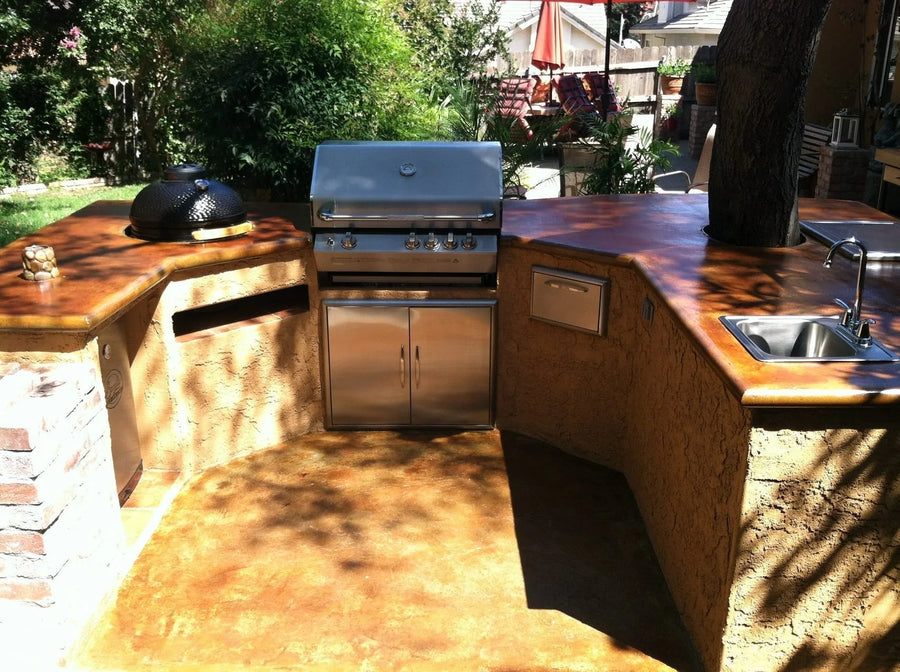
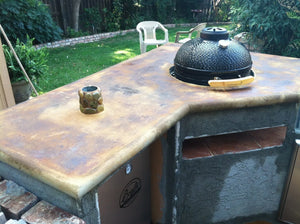
The finished outdoor kitchen countertop — Malayan Buff, English Red and Cola EverStain™.
Shop EverStain™ Acid Stain Kits →
Framing and forming
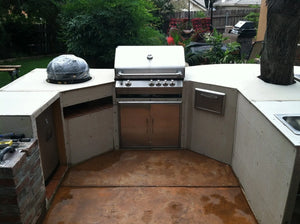
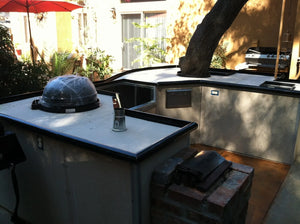
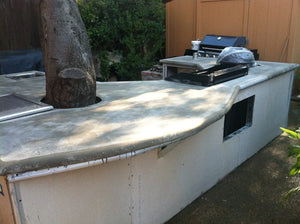
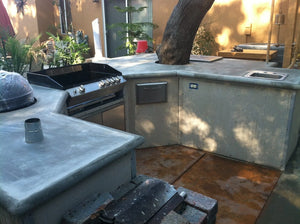
The cabinetry came first — metal studs skinned with backer board — then the forms, with bull-nose templates for the edges. Everything from here was hand-mixed and hand-trowelled.
Pouring and trowelling
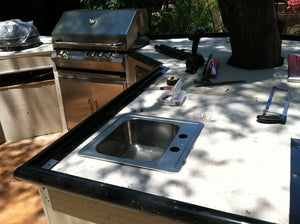
Twelve eighty-pound sacks, mixed in a wheelbarrow, poured and trowelled by hand.
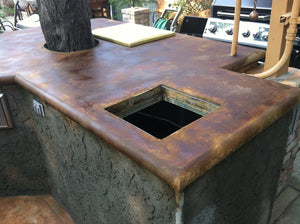
Staining and sealing
Malayan Buff as the base coat, English Red over it, Cola last — then a polyurethane countertop sealer. Art ordered an acid stain trial kit first, which is what turned a first-timer into someone who now wants to acid stain everything.
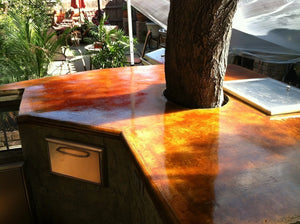
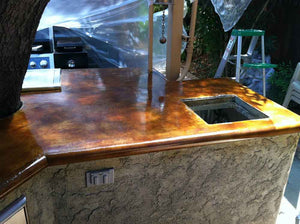
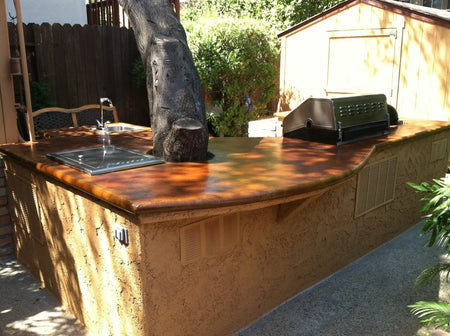
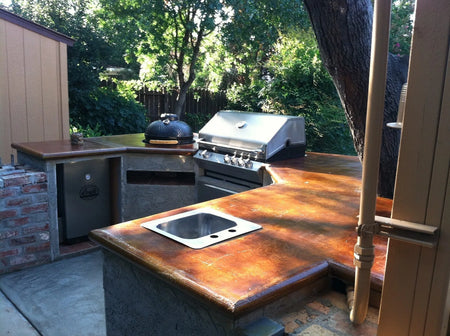
— Art D.
Shop Countertop Stains & Trial Kits →
Common questions
How do I prepare an outdoor countertop for sealing?
Shade it a full day ahead. Put a tarp up around the countertop 24 hours before you intend to seal, so the concrete is out of direct sun and has come down in temperature. Concrete in direct sunlight can run as much as 30 degrees hotter than shaded concrete, and a dark top hotter still — no sealer applies successfully to a surface that hot.
How do I measure whether the surface is cool enough?
Measure the concrete, not the air. Lay a flat thermometer on the countertop, cover it with a towel, and read after 5 minutes — then repeat at other spots, because one reading is not enough. Every reading must be 75°F or less before you start, and ideally the ambient temperature should be no higher than 85°F.
Why does sealer bubble on a hot countertop?
Air rising through warm concrete gets trapped in the wet sealer. Those small bubbles collapse later and leave concave pits behind, and the only remedy is to sand it back and apply again. Seal while the slab is cooling and contracting rather than heating and expanding — which in practice means very early morning or late evening, depending on where the top sits.
How do I make an outdoor countertop sealer last longer?
Control sun and weather. In cold climates, tarp the countertop over winter to keep precipitation off — it makes a real difference to sealer life. In very hot or desert climates, expect direct sun to degrade the finish faster unless you can shade the top. Beyond that, the day-to-day care matters just as much: no hot pans, no harsh chemicals, use a cutting board.
Listen to this episode
Direct Colors DIY Home Improvement · Episode 16
Tips for Successfully Sealing Outdoor Countertops
Amie Nolen and Shawna Turner · 4 min 59 sec · read the full transcript
What's Next
- The method → Acid Stain Concrete Countertops
- More countertops → DIY Concrete Countertop Ideas
- The colors used → Malayan Buff · English Red · Cola
- Applying stain outdoors → How to Apply Outdoor Concrete Stain
- Choosing a sealer → The Best Concrete Sealer
- Prefer a reactive, mottled look? → Acid Stain Colors Guide
- Shop → EverStain™ Kits · Trial Kits
Direct Colors. Shawnee, OK. Manufacturing the full decorative concrete system since 1997.


