
Bathrooms are the best argument for stained concrete that nobody makes. The room is small, so material cost barely registers; it is wet, so a sealed monolithic floor with no grout lines is genuinely better than tile; and it is the one room where a bold color is a decision rather than a commitment. Five customer bathrooms below, in five different products.
Prefer to listen? Shawna Turner on why a bathroom is the right first decorative concrete project. The player is at the end of this article.
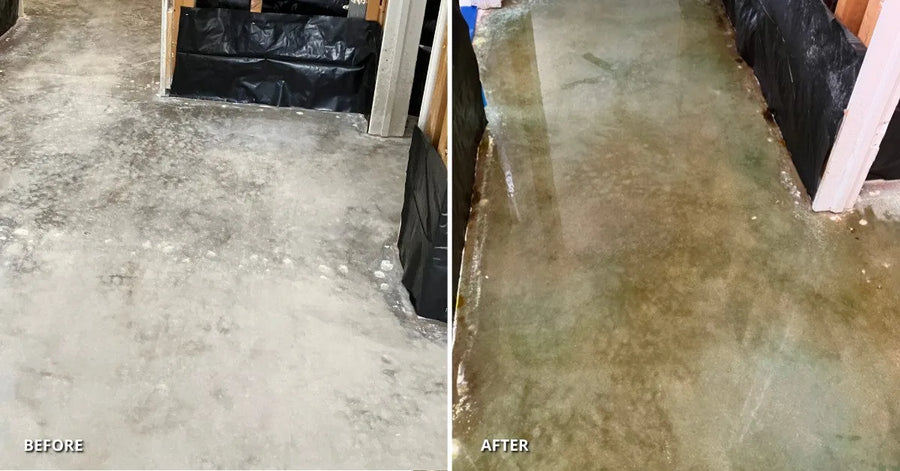
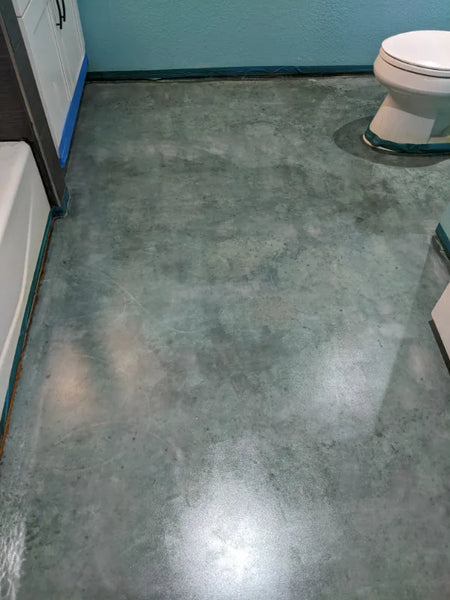
A bathroom floor before and after EverStain™ in Black and Seagrass.
Rebuilding after a flood, in Seagrass and Black
After Hurricane Ian flooded their home, these owners needed flooring that was cost-effective, durable and worth looking at. They considered wall-to-wall tile and chose stained concrete instead. The colors were deliberate — Seagrass and Black, as a tribute to the ocean water that had come through the property.
Their conclusion after learning the skill from scratch was that thorough prep work and patience are what decide the result. They sealed with AcquaSeal™. More of these colors in the Seagrass and Black galleries.
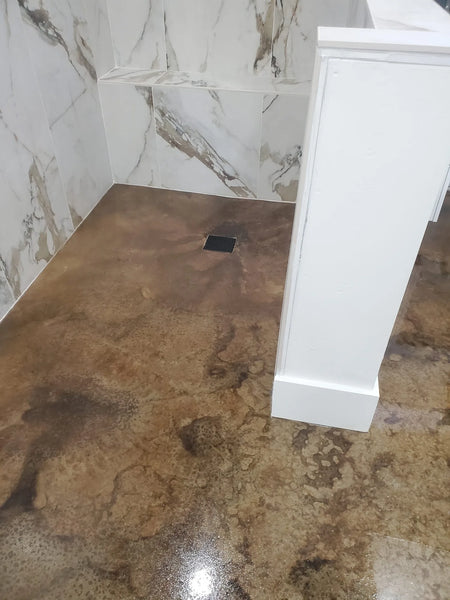
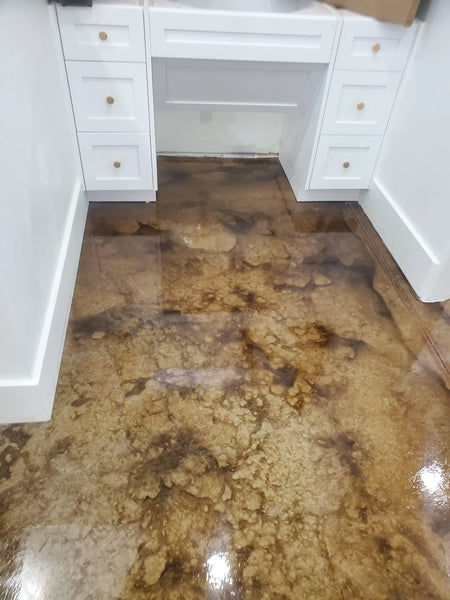
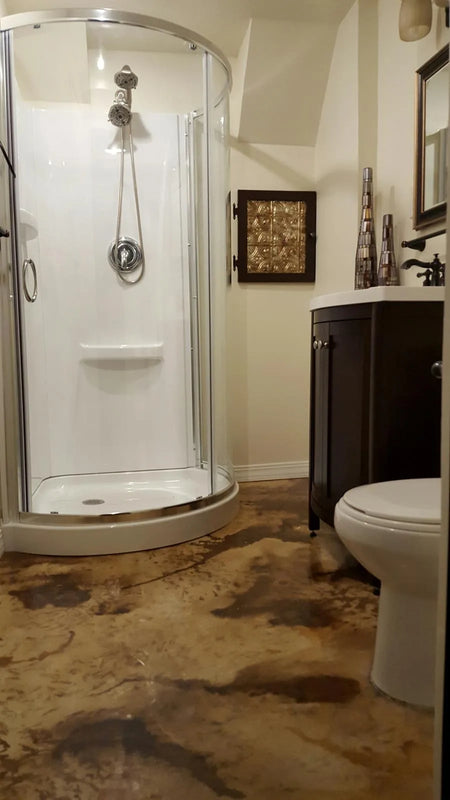
An overlay first, then Coffee Brown at four dilutions
This is the most technically interesting bathroom on the page. The slab was rough, so a concrete overlay went down first to smooth it — and then the color was built in layers using the same stain at four different strengths: Coffee Brown at 2:1, 5:1, 8:1 and 10:1, with Malayan Buff at 10:1 as a final overspray across the whole floor. Every coat went on while the floor was still wet.
Diluting one color rather than buying four is a technique worth understanding. It gives you a tonal range that reads as depth instead of as separate colors, and it costs one bottle. The owner reported the result was far better than they had imagined.
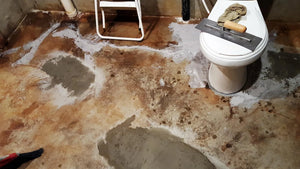
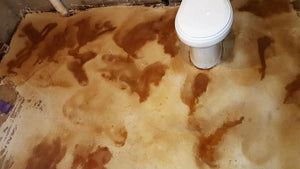
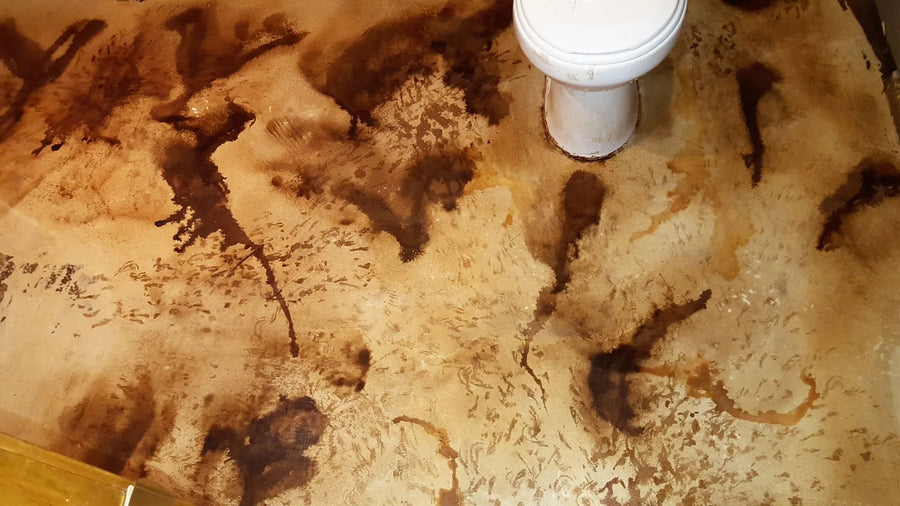
The finished floor — one color at four dilutions, plus a final buff overspray.
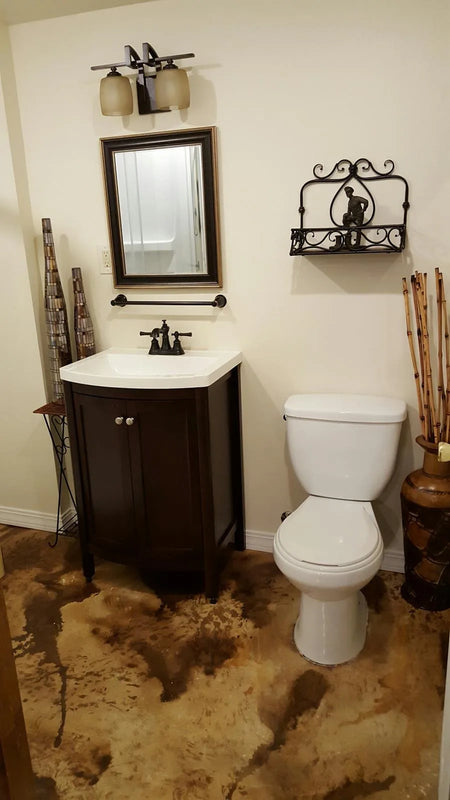
Azure Blue, in a bathroom
A bathroom floor acid stained in Azure Blue — the boldest colorant we make, in the room where you can get away with it. Acid stain reacts with the slab, so the blue is mottled rather than flat. More in the Azure Blue gallery.
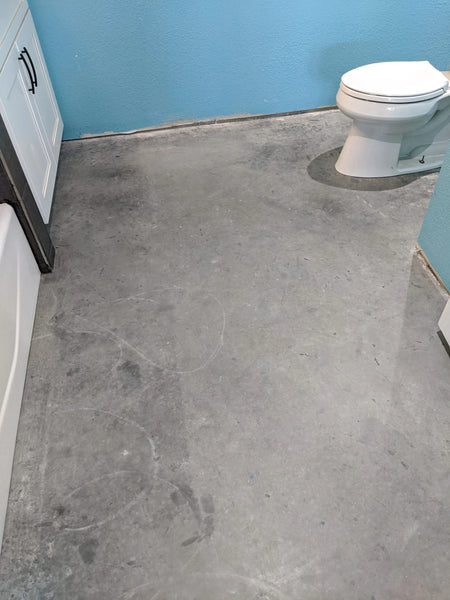
Dye, on a damaged floor
Where a floor is damaged rather than merely plain, Vibrance™ Dye is the better tool — Light Slate, Stormy Gray and White layered over one another. Dye is more opaque than acid stain, so it evens out a floor with history in it. The full method is in how to apply concrete dye.
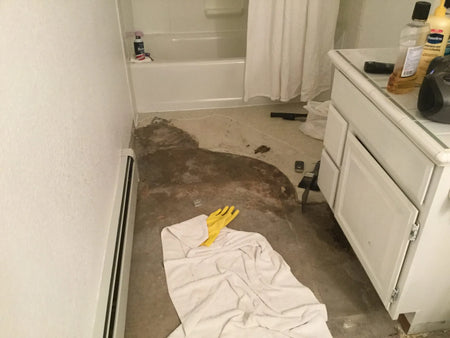
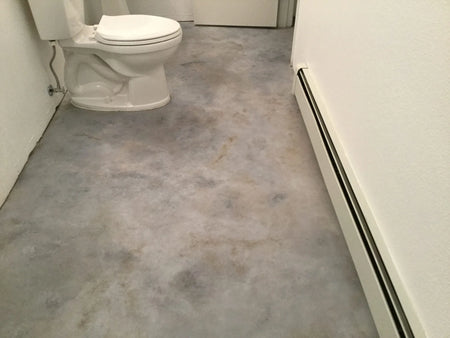
Charcoal colored sealer, for a sophisticated finish
The simplest route of the five: AcquaTint™ in Charcoal, which colors and seals in one step. Two coats plus wax. Step-by-step in how to apply colored concrete sealer.
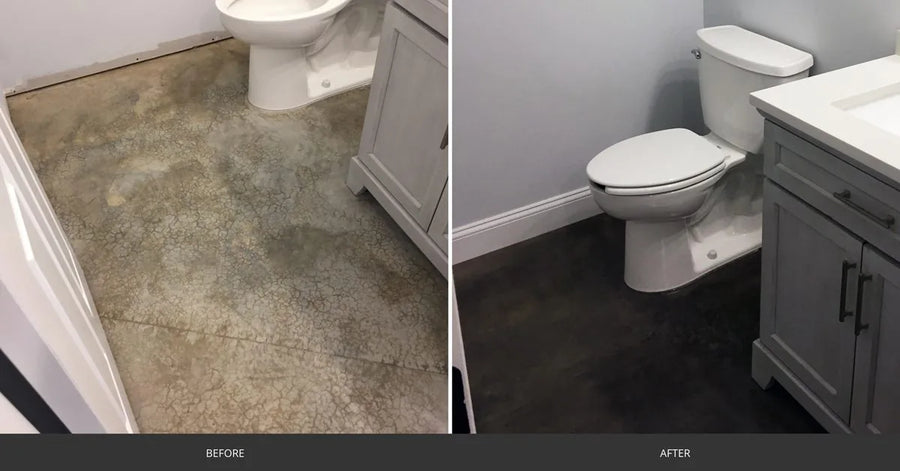
A basement bathroom floor before and after Charcoal AcquaTint™, polished and waxed.
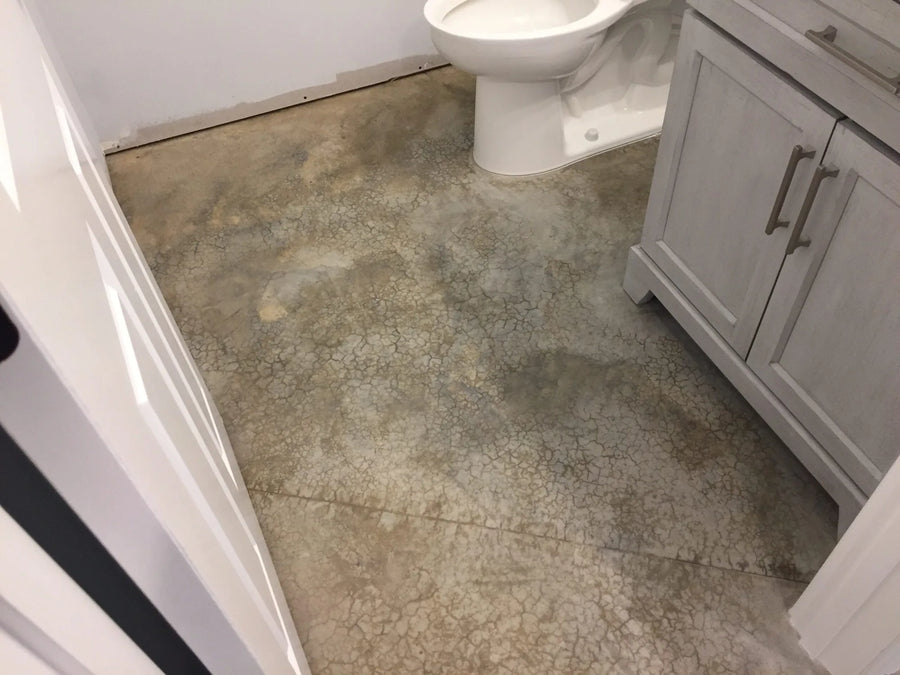
The same bathroom after the hard-troweled floor pre-treatment.
Common questions
Is a bathroom a good first decorative concrete project?
It is the best one, mostly because of size. A bathroom is often the smallest room in the house, so refinishing the floor or the vanity is a manageable amount of work and material — the floor in the example here was under 50 square feet. Small enough to learn on, and small enough that a mistake is not expensive.
My first attempt at staining the floor went badly. Is it recoverable?
Usually, yes — and you do not have to give up and lay vinyl. The route that worked for one customer here was to stop fighting the existing surface and put a fresh one over it: a cement-based overlay to create a new floor, then acid stain over that. Direct Colors no longer sells an overlay, but any compatible cement-based overlay from a concrete supplier does the same job.
Can I get more than one shade from a single acid stain color?
Yes, and it is a genuine design technique rather than a compromise. Diluting one color — Coffee Brown in this case — at several different ratios across the same floor gives you tonal range and contrast from a single bottle. Test your ratios on a sample before committing, since the dilution changes the result significantly.
Why are bathroom vanities such a popular refinishing project?
Because they are small, so they are quick and cheap. A vanity is typically much smaller than a kitchen countertop, which means less time, less material and less money for a complete change of look. Note that the metallic epoxy and countertop refinishing kit named in this episode are both discontinued — talk to a technician about current options before planning a vanity refinish.
Listen to this episode
Direct Colors DIY Home Improvement · Episode 33
Bathroom Remodeling with Decorative Concrete
Tommy Carter and Shawna Turner · 6 min 12 sec · read the full transcript
What’s Next
- Prep a bathroom slab → Surface Preparation · Overlay to Smooth It
- Pick a method → Acid Stain · Dye · Colored Sealer
- Other interior rooms → Basements · Sunrooms
- Shop → Trial Kits · AcquaSeal™ · ProWax Polish™


