
A stained concrete garage floor turns a dull gray slab into a workshop, showroom, party space, or extra living area, for a fraction of the cost of epoxy flake or tile, and without the peeling. Below are real Direct Colors customer garage projects grouped by approach: bold concrete dye, reactive acid stain, and one-step tinted or water-based color, plus the one rule for garages: test first.
Prefer to listen? Shawna Turner covered testing for oil, pulling it back out, and when a visible mark no longer matters. The player is at the end of this article.
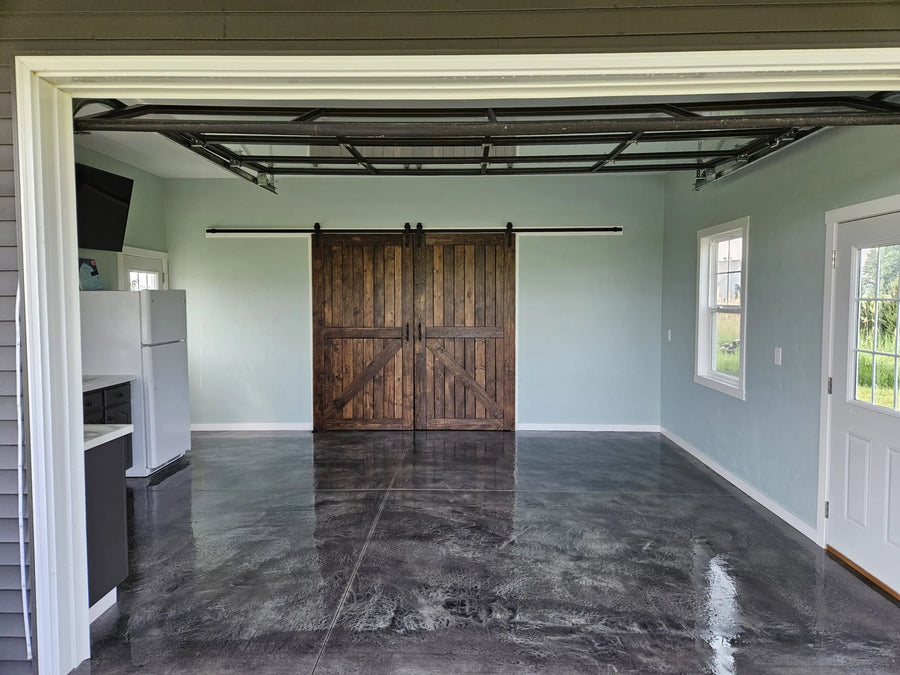
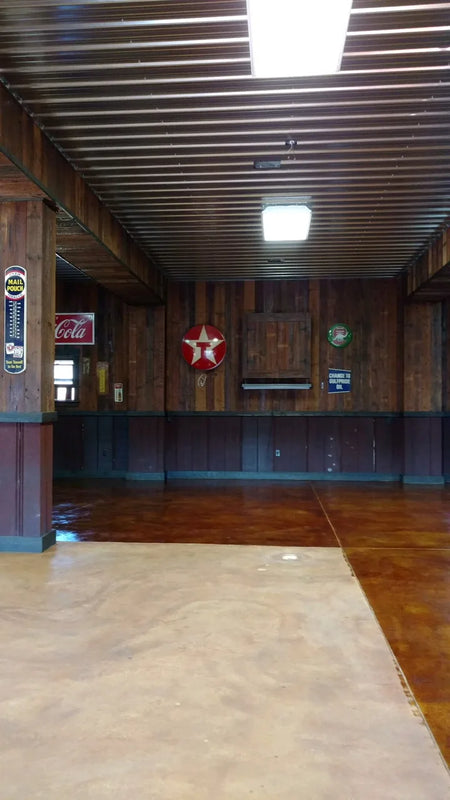
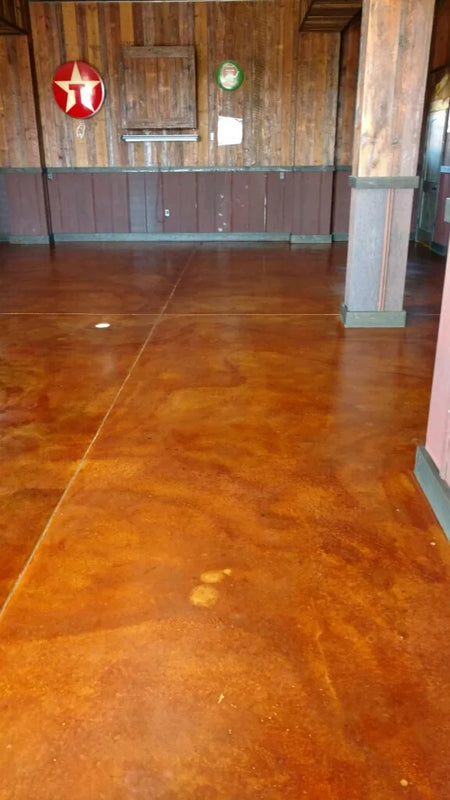
A hand-troweled garage floor stained in Charcoal Antiquing™, textured for traction and sealed for a party-ready space.
Shop Garage Floor Stains & Sealers →
Bold, solid color with concrete dye
When you want an even, high-impact color rather than a mottled one, Vibrance™ dye is the tool: acetone-based, fast, and finished with a tough clear coat for garage duty.
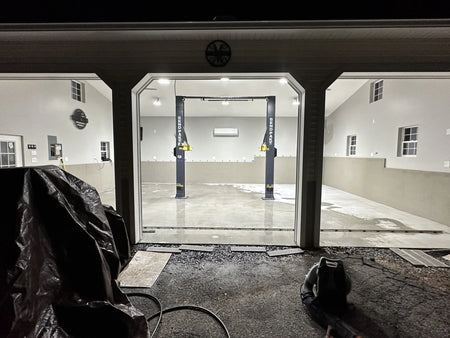
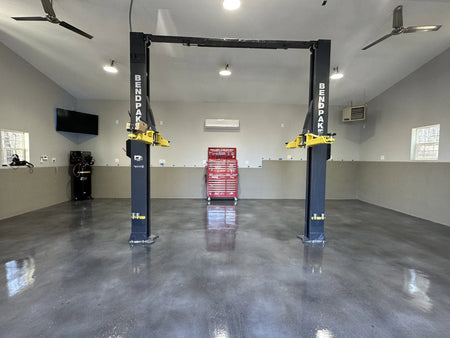
(DIY Customer)
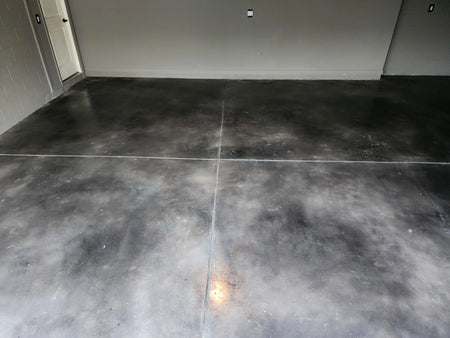
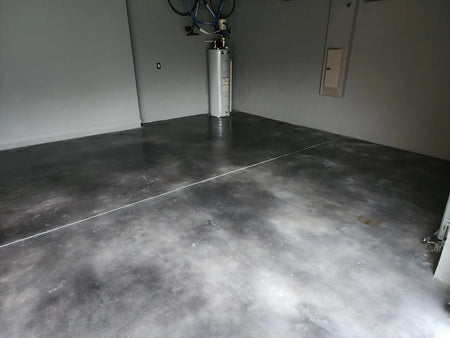
Another Charcoal, Stormy Gray, and White dye floor: ‘the perfect storm of grays,’ etched with CitrusEtch™ first.
Acid-stained garage floors
Acid stain reacts into the slab for a permanent, marbled, natural-stone finish: the most popular garage look, and endlessly variable by color and technique.
Boat storage turned ocean oasis
Azure Blue and Shifting Sand EverStain™ (with a Miracle-Gro assist to pull out the blue) turned a boat-storage garage into an ocean-inspired floor.
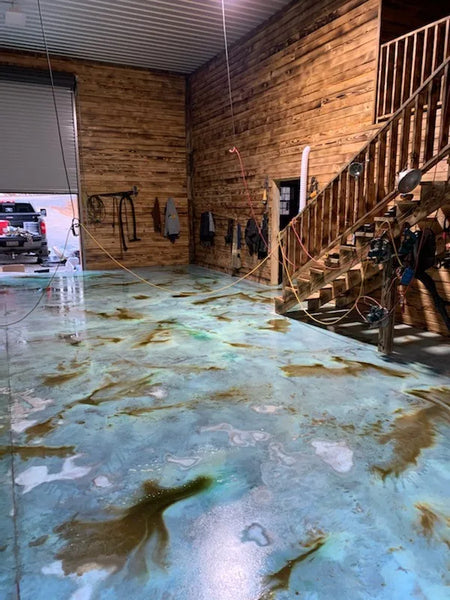
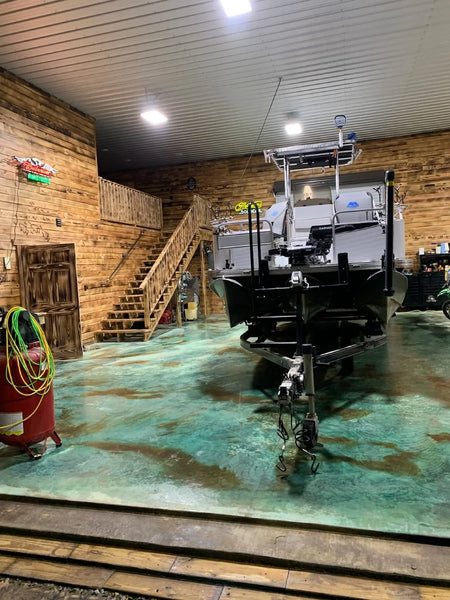
Boat storage bliss: Malayan Buff & Shifting Sand

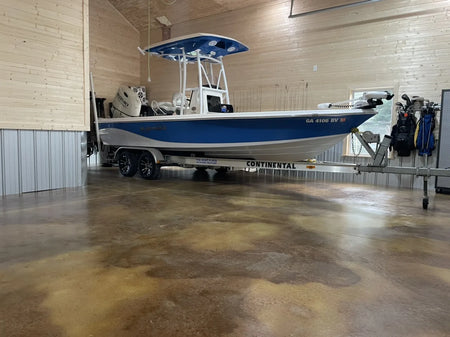
Architect’s studio conversion
An architect replaced a failing slab and acid-stained the new one as the feature of a detached-garage studio.
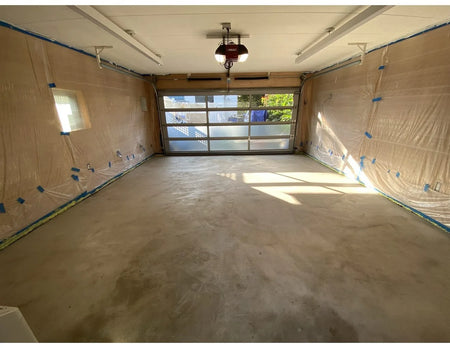
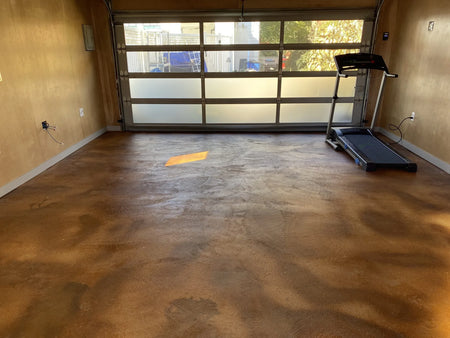
(DIY Customer, Architect)
Coffee Brown garage floor
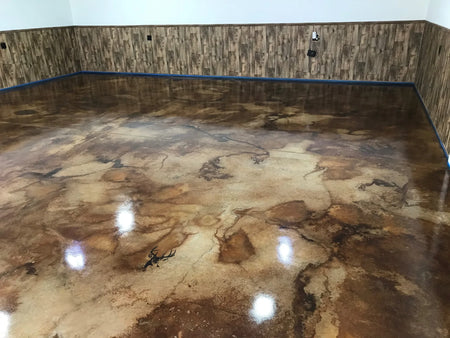
Coffee Brown EverStain™ gives a warm, retro vibe; a glossy sealer is the finishing touch.
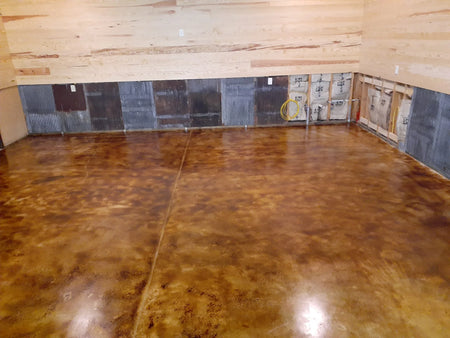
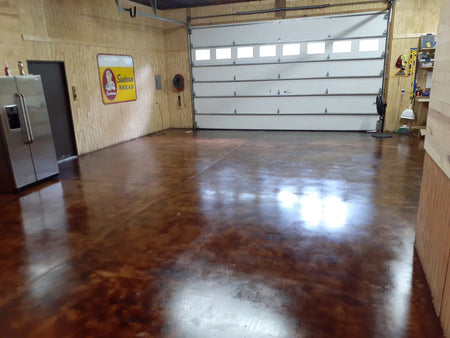
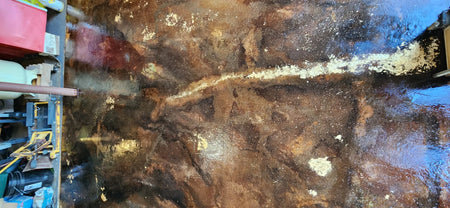
Gnarly garage bar: black & red veining
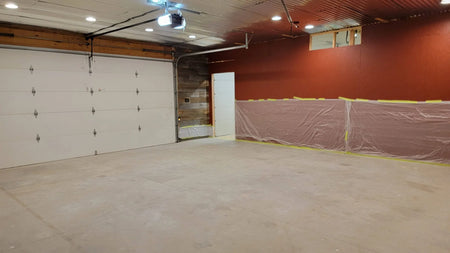
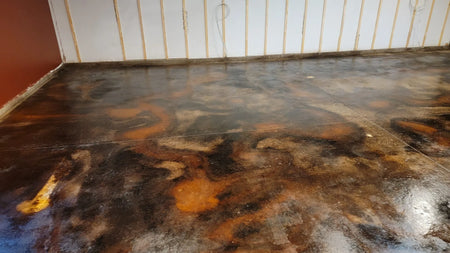
(DIY Customer)
Classic-car haven: reviving 3,000 sq. ft.
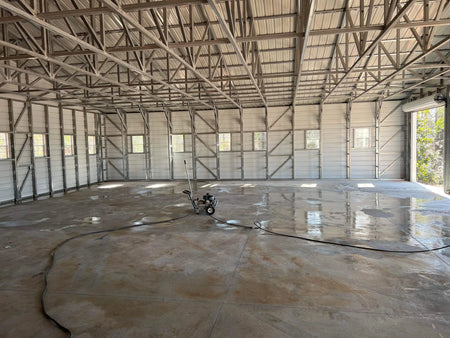
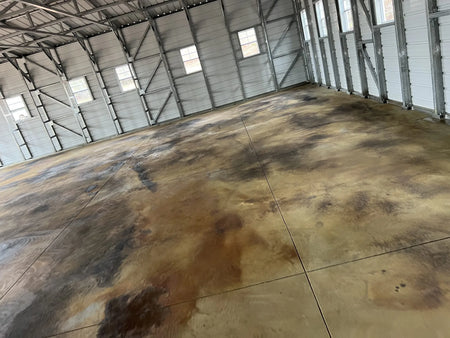
Family-fun garage: veining with Desert Amber, Blackish & Azure
A monthly-contest winner used the veining technique (toilet paper and all) for a marbled Desert Amber, Blackish, and Azure Blue floor.
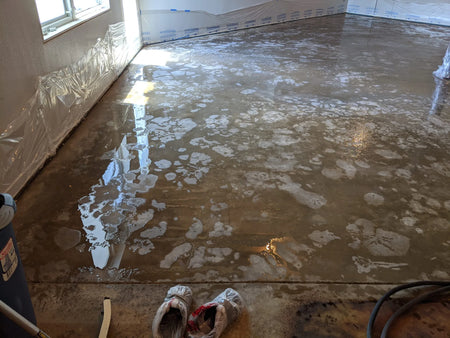
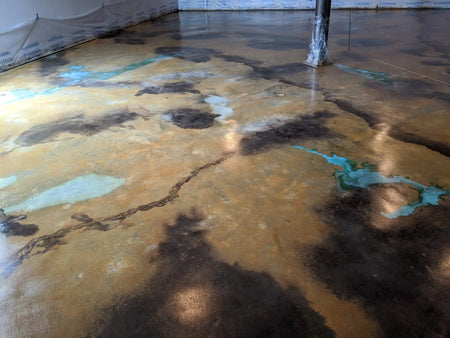
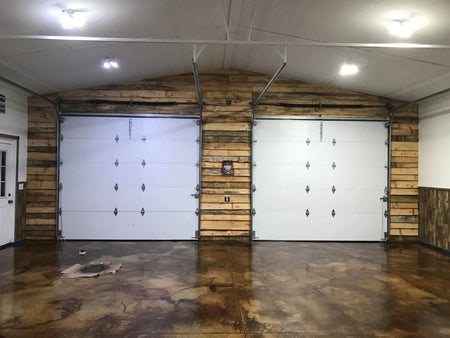
Two more acid-stain garages
One-step & topical color
Safe & stylish party garage
A hand-troweled, textured slab stained with Charcoal Antiquing™: the texture keeps bare, wet feet safe and makes the color look amazing.

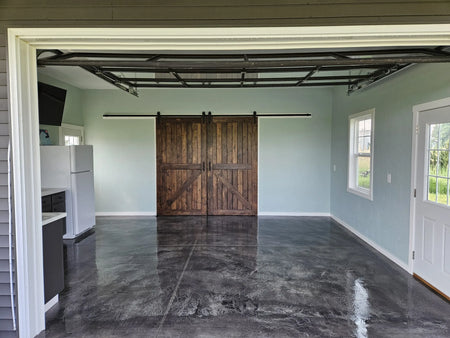
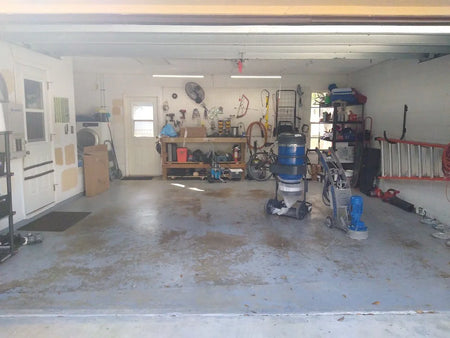
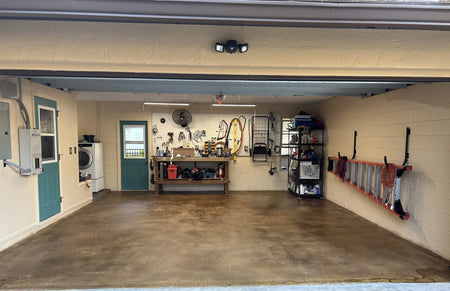
Garage floor glow-up: ColorWave® Amber
After grinding off a failed old coating, this floor was recolored with water-based ColorWave® and sealed to survive hot tires.
Shed to multi-functional space
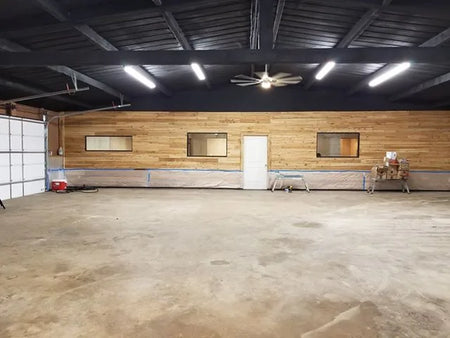
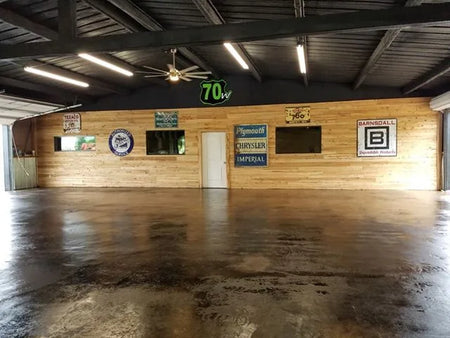
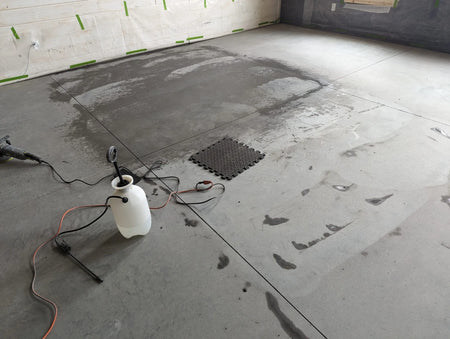
A 1,200 sq. ft. shed became a garage, kitchenette, half-bath, and entertaining space with a Blackish-and-Malayan-Buff EverStain™ floor.
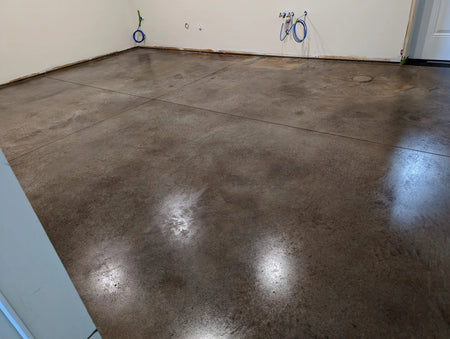
Test first: garages especially
Garage floors are more likely than most to hide chemical spills, oil, or old coatings that block acid stain, and a floor once cleaned with muriatic acid can’t be acid-stained at all. When you don’t know a slab’s history, testing is essential. Smooth or hard-troweled garages also need to be sanded or profiled with CitrusEtch™ before staining so the reaction takes evenly.
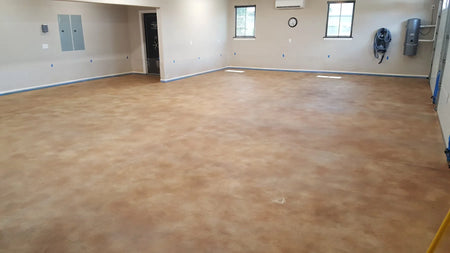
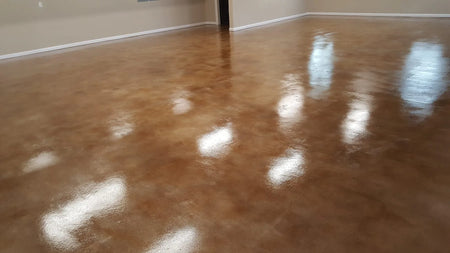
One more real-world lesson: on a four-color floor, Coffee Brown can quickly overpower the others: this DIYer went darker than planned and added gold leaf to bring brightness back. Go light first; you can always add depth.
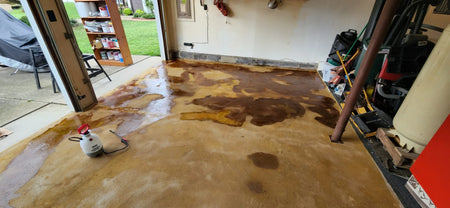
Common questions
How do I tell whether oil is still in the concrete?
Wet it and watch. Water beading up over the area, or showing a rainbow sheen, means oil is still in the pores. That is the test that matters, not whether you can still see a mark. An old stain can be plainly visible while the concrete underneath is perfectly ready to take stain.
Why does oil ruin staining and sealing?
Because it gets there first. Oil penetrates deep into the pores, and once it is in them nothing else can penetrate or adhere over the top. Acid stain will not react, and sealer applied over it tends to bubble up or flake off later. This is why the spill matters more than the mark, and why cleaning a fresh spill quickly is worth the trouble.
How do I get oil back out of a slab?
Draw it out with an absorbent and a solvent. Clean first with ProClean Degreaser™ and water and re-test for beading. If it still beads, mound an oil absorbent over the area, pour odorless mineral spirits or xylene over the mound, and leave it until completely dry, then sweep it up, dispose of it responsibly, degrease again and re-test. A large or old stain can take up to four rounds. These solvents are flammable and give off harmful vapor: work outdoors or with strong ventilation, never in a closed garage, and wear gloves and eye protection.
What if the oil will not come out at all?
Two options, in order. Vegetable oil is oddly the hardest to dissolve and sometimes only yields to mechanical abrasion: a floor sander with a 50 to 100 grit pad. Failing that, work with it: choose stain colors that camouflage the area rather than highlight it, and remember most floors end up partly covered by furniture or storage anyway.
Listen to this episode
Direct Colors DIY Home Improvement · Episode 11
How to Remove Oil Stains from Concrete
Amie Nolen and Shawna Turner · 4 min 46 sec · read the full transcript
What’s Next
- How to apply acid stain → How to Apply Acid Stain to Concrete
- Barndominium floors → Barndominium Concrete Floor Ideas
- Man cave floors → Man Cave Concrete Floor Ideas
- Pole barn floors → How to Stain a Pole Barn Floor
- Shop → Garage Floor Stains & Sealers · Trial Kits
Direct Colors. Shawnee, OK. Manufacturing the full decorative concrete system since 1997.


