
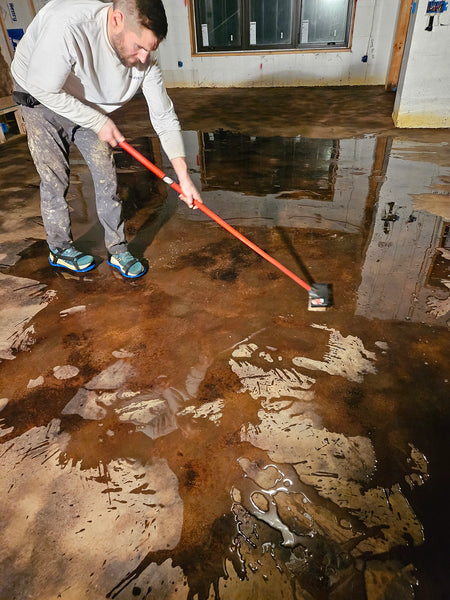
Neutralizing is the step that makes or breaks an acid-stain project — but it’s only half the job. Neutralizing stops the acid reaction and restores the concrete’s pH; the other half is completely removing the residue it leaves behind before you seal. Skip that, and the sealer bonds to leftover residue instead of the concrete — then peels, often within weeks. This is the single most common acid-stain failure our team sees, and it’s almost always mistaken for a “bad sealer.” Here’s how to neutralize concrete acid stain the right way. (One reminder throughout: always wear spiked shoes on un-neutralized stain to avoid leaving footprints in the final result.)
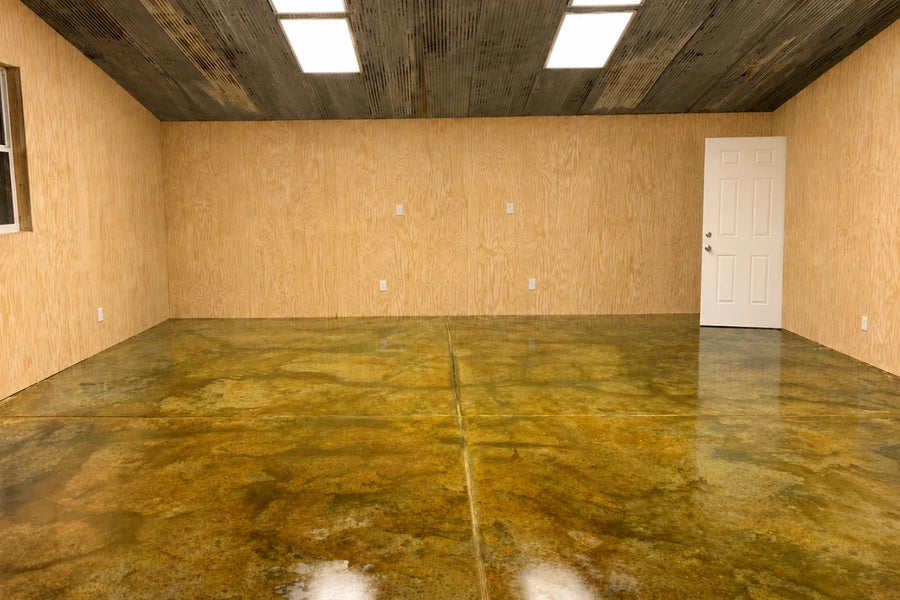
A Malayan Buff and Avocado EverStain™ acid-stained workshop floor with a rich, marbled finish — the payoff for neutralizing and rinsing the residue away before sealing.
Already stained and something’s wrong? This guide covers neutralizing and rinsing before you seal. If the floor is finished and you need to fix or clean it:
- Blotchy, patchy or uneven color → Fixing Acid Stain Problems on Concrete Floors
- Routine cleaning and everyday care → How to Care for Acid-Stained Concrete Floors
- Old tile or adhesive marks showing through → How to Fix Concrete Ghosting
- Sealer peeling, cloudy or blushed → How to Fix a Failed Concrete Sealer
How to neutralize concrete acid stain, step by step
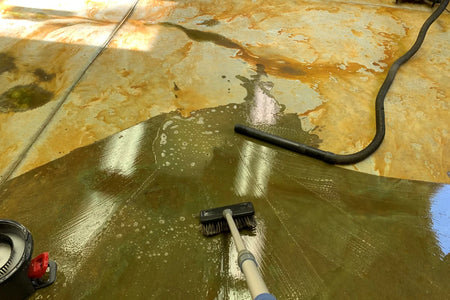
- Saturate the surface with ProClean Neutralizer™ to neutralize the acid and prepare the surface for cleaning.
- Scrub it in gently with a soft nylon-bristle brush (spiked shoes on), and let it sit about 20 minutes for full neutralization.
- Reapply and scrub again. ProClean Neutralizer™ doubles as a cleaner — a second pass lifts more of the loosened residue.
- Rinse and vacuum until the water runs clear. Rinse with clean water and pull it up with a wet/dry shop vac — this is the fastest way to actually remove residue instead of pushing it around. Mopping alone tends to redistribute residue; vacuuming removes it. Repeat until the rinse water comes up clear, not cloudy or tan.
- Do the swipe test. Once dry, wipe a hand or a clean white rag across the surface. If no color or chalky residue transfers, you’re ready. If anything comes off, rinse and vacuum again.
- Let it dry completely before sealing — sealing over damp concrete or leftover residue is what causes hazing and peeling.
Why removing the residue is a must (and how to know it’s gone)
Neutralizing chemically stops the reaction, but it also loosens a film of spent stain and mineral residue. If that residue isn’t rinsed and vacuumed away, your sealer bonds to it — a loose, powdery layer — instead of to solid concrete. The result is a sealer that flakes and peels, sometimes within days of foot traffic or the first mopping. It looks like a sealer failure, but the sealer never had a sound surface to grip.
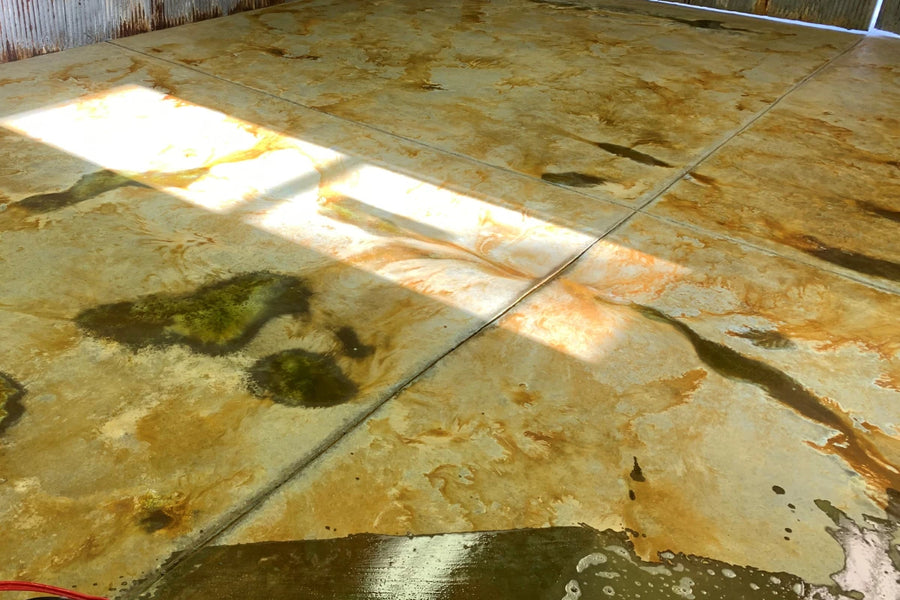
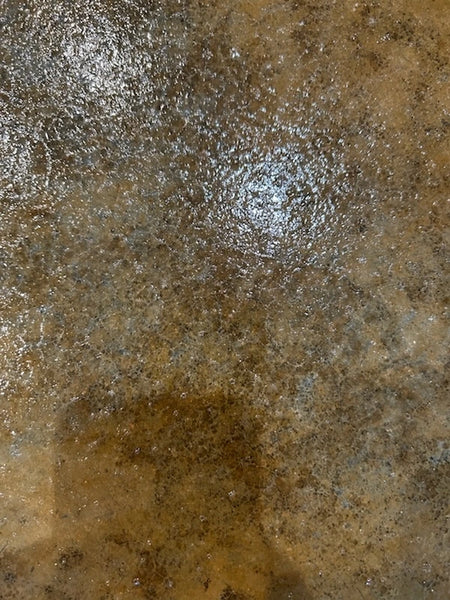
This cloudy, chalky film is the residue the reaction leaves behind — it has to be fully rinsed and vacuumed away. If the sealer goes over it, it bonds to the residue instead of the concrete.
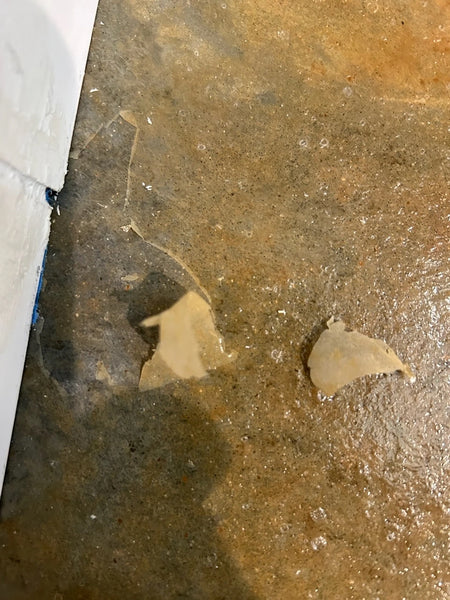
This is the most common problem our customer-service team troubleshoots. The fix at that point is the hard way: strip the failed sealer, clean the slab thoroughly, and reseal. Doing the residue removal right the first time takes an extra 20 minutes and saves the whole project.
Done right, neutralizing and full residue removal set you up for a durable, vibrant, well-bonded finish. For how long to leave each color on before you neutralize, see our acid stain activation times guide.
Neutralizing Acid Stain: FAQs
Do you have to neutralize acid stain?
Yes, always. Neutralizing stops the acid reaction and restores the concrete’s pH so the sealer can bond. Skipping it — or leaving residue behind — leads to a blotchy, peeling finish.
Why is my sealer peeling off my acid-stained concrete?
The most common cause is leftover residue. If the neutralized stain residue isn’t fully rinsed and vacuumed away, the sealer bonds to that loose film instead of the concrete and peels — often within weeks. It looks like a bad sealer, but it’s a surface-prep problem. The fix is to strip the sealer, clean the slab thoroughly, and reseal.
What’s the fastest way to remove rinse water and residue?
A wet/dry shop vac. Vacuuming pulls the dissolved residue up off the surface far more completely than mopping, which tends to just spread it around. Rinse and vacuum until the water comes up clear.
How do you know acid stain is fully rinsed and ready to seal?
Two checks: the rinse water runs clear (not cloudy or tan), and a hand or white rag swiped across the dry floor picks up no color or chalky residue. If anything transfers, rinse and vacuum again.
Can I neutralize acid stain with baking soda or ammonia?
Baking soda (1–2 tablespoons per gallon of water) or ammonia will neutralize, but they can leave their own residue and usually need extra rinsing. ProClean Neutralizer™ neutralizes and cleans in one step for more consistent, reliable results.
How long should the floor dry after neutralizing before sealing?
Let the surface dry completely — typically several hours to overnight depending on temperature, humidity, and airflow. Sealing damp concrete traps moisture and causes hazing or adhesion failure.
What’s Next
- The full method → How to Acid Stain Concrete
- Timing before you neutralize → Acid Stain Activation Times
- Staining floors → How to Acid Stain Concrete Floors
- Shop → ProClean Neutralizer™ · EverStain™ Acid Stains
Direct Colors. Shawnee, OK. Manufacturing the full decorative concrete system since 1997.


